Finding the right slippers manufacturer sounds straightforward enough. Search online, compare prices, place an order. Done. Except it rarely works out that simply. The wrong choice leads to quality problems, delivery headaches, and money wasted on products that don’t meet expectations.
The slipper market spans everything from cheap disposable hotel amenities to premium indoor footwear. Different manufacturers specialize in different segments. And what works for one buyer might prove completely wrong for another. So how does someone navigate all this without learning expensive lessons the hard way?
These five tips offer a practical starting point. Not exhaustive, but certainly the fundamentals worth considering before committing to any supplier.
Tip 1: Evaluate Production Capabilities Thoroughly
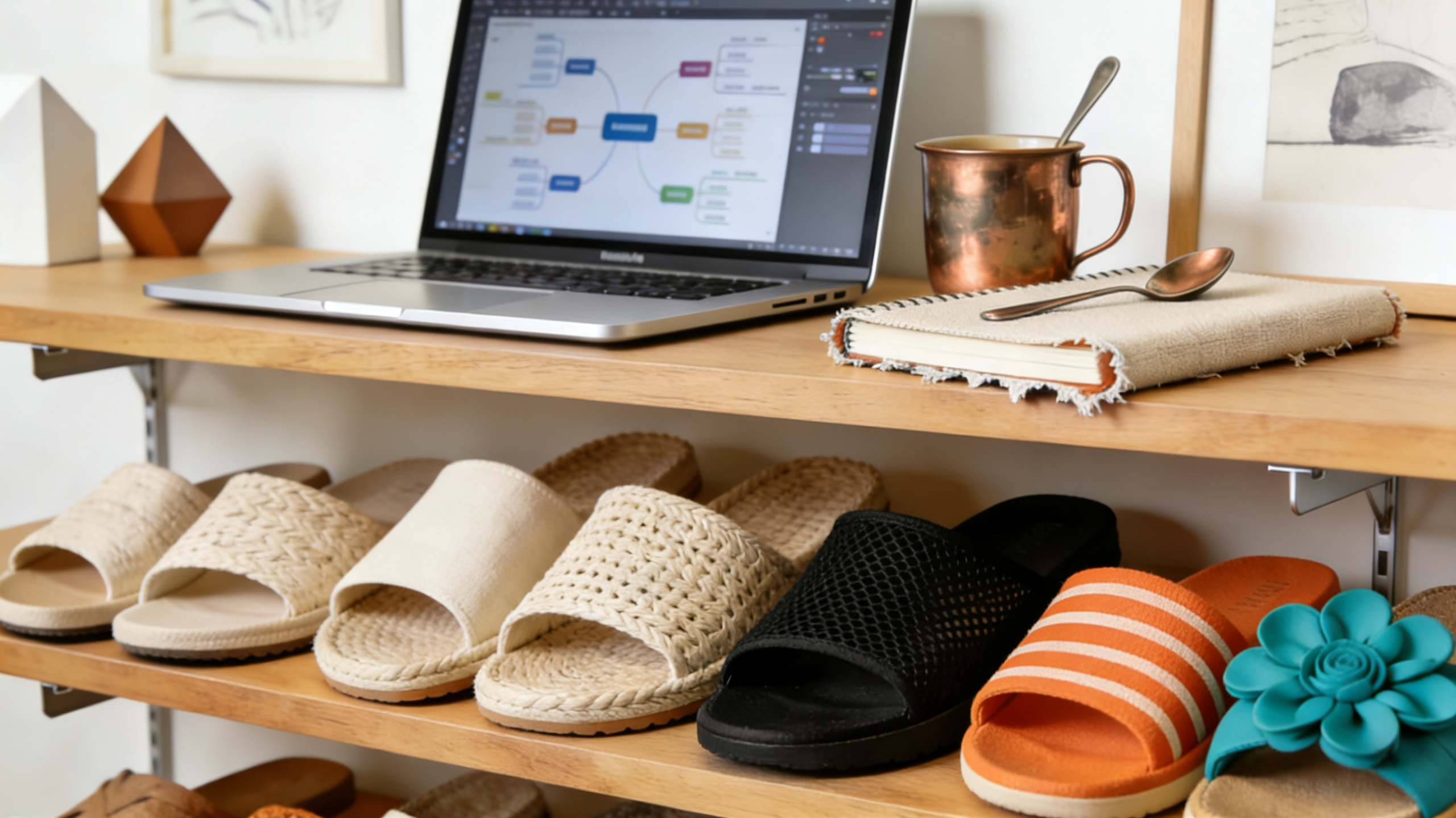
Not every slippers manufacturer handles every product type. Some factories focus exclusively on hotel and spa slippers—high volume, low cost, disposable. Others specialize in premium home slippers with memory foam, quality stitching, and materials that last years.
Before reaching out to anyone, clarity on product requirements helps enormously.
Questions to consider:
What slipper styles are needed (open-toe, closed-toe, flip-flop style)?
What materials make sense for the target market?
Are custom designs required, or will standard templates work?
What volume levels are realistic for initial orders?
A factory producing millions of disposable slippers monthly probably won’t be interested in a 500-pair order of boutique leather slides. Conversely, an artisan workshop won’t match the pricing needed for budget hotel amenities.
Assessing Factory Equipment and Technology
Modern equipment generally means better consistency. Automated cutting machines, precision stitching systems, and quality testing apparatus all contribute to reliable output. Older facilities relying heavily on manual processes can still produce excellent products—but consistency becomes more dependent on individual worker skill.
Some manufacturers invest heavily in technology. Others prioritize craftsmanship. Neither approach is inherently wrong. The key is matching factory capabilities to product requirements.
Tip 2: Investigate Quality Control Standards
Quality control separates professional operations from problematic ones. Any slippers manufacturer can claim high quality. Fewer can actually demonstrate it with documented processes and verifiable standards.
What to look for:
Written QC procedures for each production stage
Defect rate tracking and acceptable quality level (AQL) standards
In-house testing for materials and finished products
Willingness to accommodate third-party inspections
Clear policies for handling quality failures
Factories without structured QC essentially gamble on each batch. Sometimes things turn out fine. Sometimes they don’t. That’s not a comfortable position for buyers counting on consistent product quality.
| QC Indicator | Professional Factory | Risky Factory |
|---|---|---|
| Documentation | Detailed written procedures | Vague or nonexistent |
| Inspection points | Multiple stages checked | Only final product reviewed |
| Defect handling | Clear rejection criteria | “We’ll see” attitude |
| Testing equipment | Dedicated QC tools available | Minimal or none |
| Third-party access | Welcomed and accommodated | Discouraged or blocked |
The difference shows up in delivered products. And in stress levels during the ordering process.
Tip 3: Understand True Costs Beyond Unit Price
Price per pair matters, obviously. But focusing exclusively on unit cost leads many buyers into trouble. The cheapest quote often isn’t the cheapest option once everything gets factored in.
Hidden costs to watch for:
Sample fees – Some charge significantly for pre-production samples
Mold or tooling costs – Custom designs often require upfront investment
Packaging expenses – Quoted prices may assume minimal packaging
Shipping terms – FOB versus CIF versus DDP changes total cost substantially
Payment terms – Deposit requirements affect cash flow
A slippers manufacturer quoting slightly higher per-pair pricing but including packaging, offering better payment terms, and providing free samples might actually cost less overall. The math requires looking at complete landed cost, not just factory gate price.
Volume Discounts and MOQ Flexibility
Minimum order quantities vary wildly across manufacturers. Some require 10,000 pairs minimum. Others accommodate orders as small as 200-500 pairs, though unit costs rise accordingly.
Established relationships sometimes unlock better flexibility. First orders often face stricter minimums than repeat business. Worth asking about—most factories won’t volunteer this information upfront.
Tip 4: Assess Communication and Responsiveness
Communication quality predicts so much about how smoothly partnerships run. Language barriers, time zone differences, response times—all of these affect day-to-day operations.
Warning signs include:
Slow responses to initial inquiries (more than 48 hours)
Vague answers to specific technical questions
Difficulty reaching the same contact person consistently
Reluctance to communicate via preferred channels
Good signs look different:
Quick, detailed responses
Assigned account managers or dedicated contacts
Flexibility across communication platforms (email, WhatsApp, video calls)
Proactive updates during production
A slippers manufacturer might have excellent facilities and competitive pricing. But if communication proves frustrating, the relationship struggles regardless.
Language and Cultural Considerations
Working across cultures requires patience. Direct communication styles don’t always translate well. Questions sometimes get interpreted differently than intended. Building rapport takes time but pays dividends in smoother collaboration.
Factories with experienced export teams generally handle these dynamics better. They understand what international buyers expect and how to bridge communication gaps effectively.
Tip 5: Verify Reliability Through References and Track Record
Anyone can make promises. Track records reveal whether those promises get kept.
Before committing to significant orders, some due diligence makes sense:
Request references from existing customers (and actually contact them)
Check how long the company has been operating
Look for reviews or testimonials from verified buyers
Ask about major clients served (without expecting confidential details)
Consider factory visits if order volumes justify the expense
Newer companies aren’t automatically risky. But established manufacturers with verifiable histories provide more confidence.
Certifications and Compliance
Depending on target markets, various certifications may matter. ISO quality standards, BSCI social compliance audits, Oeko-Tex material certifications—these indicate a factory takes standards seriously.
Not every order requires extensive documentation. But knowing what certifications a slippers manufacturer holds (or can obtain) helps with planning.
Yuchuang Shoes: A Manufacturer Worth Knowing
Speaking of established manufacturers, Yuchuang Shoes represents the kind of operation worth considering. Based in China’s footwear manufacturing hub, they’ve built a reputation over years of serving international clients.
Their focus spans hotel amenity slippers, spa footwear, and home slipper products. Production capacity handles both large commercial orders and smaller boutique requirements—flexibility that not every factory offers.
What stands out about Yuchuang:
Comprehensive in-house production from material sourcing to finished product
Established quality control procedures with documented standards
Experience serving hospitality industry clients worldwide
Customization capabilities for branding and design modifications
Responsive English-speaking export team
They’re not the only option, certainly. But for buyers seeking a reliable slippers manufacturer with proven track record, Yuchuang merits consideration during the evaluation process.
Bringing It All Together
Choosing a slippers manufacturer involves balancing multiple factors. Production capabilities, quality systems, true costs, communication quality, and verified reliability all matter. Shortcuts on any dimension tend to create problems eventually.
The time invested upfront in proper evaluation pays off through smoother orders, better products, and partnerships that actually work. Rushing the decision—or choosing based on price alone—usually costs more in the long run.
Every buyer’s situation differs. These five tips provide a framework, but applying them requires understanding specific needs and priorities. The right manufacturer for one business might be completely wrong for another. That’s just the reality of sourcing.
What remains consistent? Due diligence matters. Questions should be asked. And the cheapest option rarely turns out cheapest in the end.If you want to know more about slippers manufacturer, please read Top 8 Slippers Manufacturers in 2026:A Comprehensive Guide.