close
Choose Your Site
Global
Social Media
Views: 0 Author: Site Editor Publish Time: 2025-12-26 Origin: Site
If you have been in the wholesale game for more than a few seasons, you already know the drill. You find a slippers manufacturer online who promises the moon—rock-bottom prices, premium materials, and two-week lead times—only to receive a sample that smells like burnt rubber and falls apart in your hands. It is a rite of passage for B2B buyers, but it is not one you want to repeat often.
Finding reliable Slippers Manufacturers is less about finding a factory that can make shoes and more about finding a partner who understands your business. Whether you are stocking a boutique hotel chain, supplying a subscription box, or filling shelves for a retail giant, the manufacturing partner you choose becomes the backbone of your reputation.
When you are scrolling through pages of suppliers, they all start to look the same. Everyone claims to be the "leading manufacturer" with "state-of-the-art facilities." But experienced buyers look for the cracks in the façade.
You have to look beyond the shiny B2B portal badge. Here is what actually matters when you are digging into a potential partner:
Communication Style: Send an email with a slightly complex question about material sourcing. Do they answer it directly, or do they give you a copy-paste response about their annual revenue? If they can’t handle a specific question now, they won't handle a production crisis later.
Sample Integrity: A "golden sample" is easy to make. Ask them if they can send a sample from a recent production run for another client (with permission, of course). This gives you a brutally honest look at their average quality control, not just their best work.
The "No" Factor: A manufacturer who says "yes" to everything—every customization, every deadline, every price drop—is a red flag. Reliable Slippers Manufacturers will push back when a request risks quality or safety. You want a partner who knows their limits.

Depending on your specific needs—whether it is high-volume plastic injection or hand-stitched leather—different regions offer different strengths. Instead of looking for a specific name, look for these specific types of factories that have consistently performed well in B2B circles. However, if you are looking for a direct list of specific recommendations, you can check out our guide to the Top 8 Slippers Manufacturers in 2026.
China remains the undisputed king of volume and variety. If you need complex customization or specific synthetic materials, look for suppliers in the eastern provinces.
The Versatile Customizer These factories don't just stick to one type of mold; they handle everything from cozy faux-fur boots to summer slides. They are typically located near Hangzhou or Wenzhou. For a wholesaler looking to build a diverse seasonal catalog without juggling ten different vendors, finding a factory with this breadth is a solid bet. Their customization options are usually robust, making them a favorite for private label brands.
The High-Volume Cost Leader If your bottom line is the primary driver, look for large-scale operations in the industrial hubs. These manufacturers have access to a massive supply chain of raw materials and operate on thin margins but high efficiency. They are competitive on pricing for bulk orders of standard house slippers and flip-flops. They are the kind of partner you go to when you need volume and speed over intricate detail.
The "Comfort" Specialist There is a specific tier of manufacturers in China focusing on the indoor and home slipper market. They seem to have a better grasp of the "comfort" aesthetic that Western markets are demanding right now. If you are selling to a market that values "hygge" or home luxury, seek out factories here that prioritize plush materials over generic synthetics.

Vietnam has become the go-to alternative for buyers diversifying away from China, especially for rubber and EVA-based footwear.
The Mega-Factory You will find massive operations here that are not really designed for the "small batch" buyer. These powerhouses specialize in manufacturing sports shoes and durable slippers. If you are a large retailer needing tens of thousands of units with consistent, standardized quality, their infrastructure is impressive. They handle the kind of volume that would drown a smaller factory.
India is the place to be if your brand leans towards natural materials, leather, or legitimate sustainability.
The Leather Artisan HubsYou cannot talk about leather without mentioning the hubs around Kanpur. Factories here are often some of the oldest players in the game. If your wholesale order involves leather slides or premium men’s slippers, look for manufacturers here with access to high-quality hides. It is a different vibe from the synthetic factories—more artisanal industrialism.
The Eco-Material InnovatorsOn the flip side of leather, there is a rising sector of Indian manufacturers positioning themselves strongly in the "Vegan" and eco-friendly synthetic space. As sustainability becomes a non-negotiable for many consumers, finding a partner here who specializes in non-leather alternatives (that don't feel like cheap plastic) is a massive asset.
Sometimes, the "Made in USA" tag is worth the extra margin, especially for specific demographics.
The Closed-Loop RecyclerThere are fascinating manufacturers in the American South focusing almost entirely on recyclable materials and ergonomic design. Some operate as closed-loop facilities, meaning they recycle their own scraps. For a B2B buyer focusing on eco-footprint or American-made goods, these are arguably the gold standard in the category.
The Boutique Hand-CrafterThis is for the niche luxury buyer. These are smaller operations compared to the Asian giants, often specializing in handmade sheepskin. You wouldn't use them for a discount bin order, but for a high-end boutique wholesale collection, their product tells a story that mass-produced items just can't.
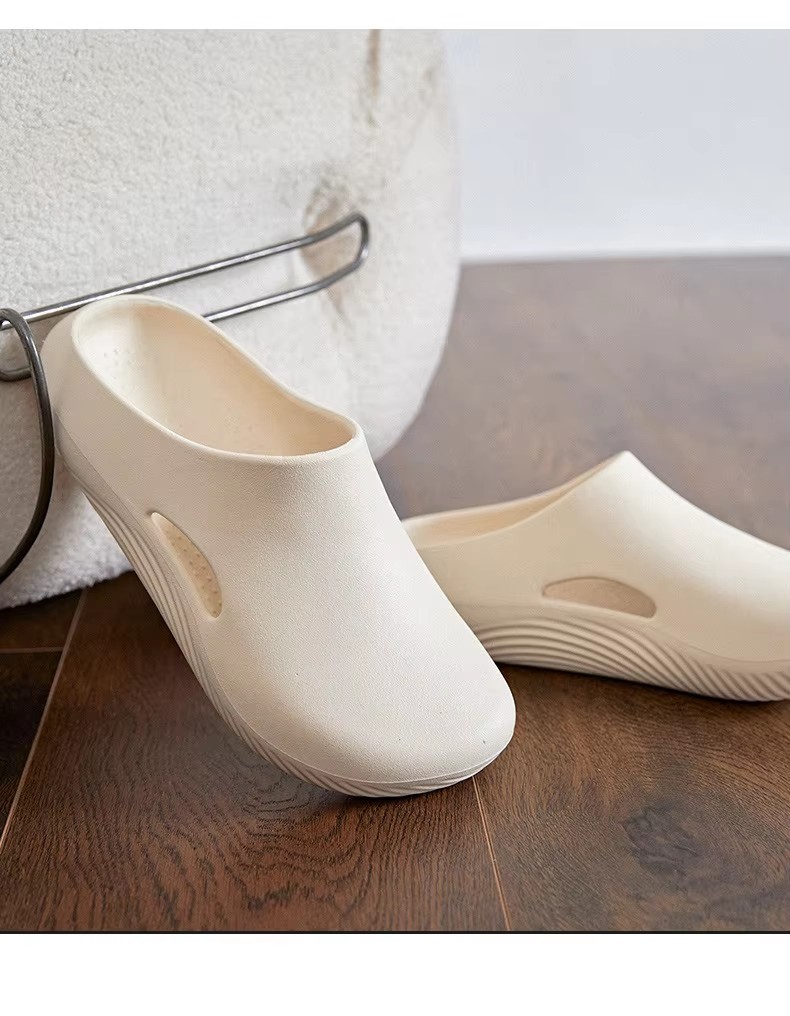
Once you have identified a few potential Slippers Manufacturers, the real dance begins. It’s not just about the price per unit.
MOQ (Minimum Order Quantity): This is where most deals die. A mega-factory in Vietnam might want 5,000 pairs per color, while a versatile customizer in China might be flexible down to 500 if you pay a surcharge. Be honest about your volume. Promising growth you can't deliver destroys the relationship.
Lead Times vs. Reality
In practice, quoted lead times and actual delivery don’t always line up perfectly. It’s not uncommon for raw material availability, production scheduling, or customs clearance to introduce some delays.
More reliable manufacturers tend to quote slightly conservatively and deliver earlier or on time, while overly aggressive timelines sometimes come with higher delivery risk.
Payment Terms
On initial orders, extended payment terms are usually not the norm. Many established manufacturers prefer a partial deposit with the balance settled before or at shipment. As cooperation deepens and trust builds over multiple successful orders, more flexible terms often become negotiable.
Choosing a manufacturer is a lot like dating. You have to go on a few bad dates (or see a few bad samples) to recognize the good ones. The profiles listed above are strong starting points because they represent the best of what each region has to offer. They aren't fly-by-night operations that will vanish with your deposit.
Take your time. Request the samples. Wear them yourself for a week. If you don't love putting them on your feet, your customers certainly won't.