Working with slippers manufacturers involves navigating terms and requirements that aren’t always intuitive. MOQ, lead time, pricing structures—these concepts seem straightforward until the details emerge. And the details matter quite a bit when money and timelines are on the line.
Buyers new to footwear sourcing often discover that factory quotes leave out crucial information. Or that seemingly small variations in requirements dramatically shift costs. Understanding how these elements interconnect saves considerable frustration down the road.
This breakdown covers what most buyers need to know before reaching out to potential suppliers.
Understanding MOQ Requirements from Slippers Manufacturers
MOQ stands for minimum order quantity. Simple enough concept. But the way different slippers manufacturers apply it varies considerably, and that variation creates confusion.
Some factories quote MOQ per style. Others quote per color within each style. Still others set minimums per size within each color of each style. The differences add up quickly.
Consider this scenario: a buyer wants three slipper styles in four colors each with a full size run. If the manufacturer requires 200 pairs per SKU (stock keeping unit), the math looks like this:
3 styles × 4 colors × 6 sizes × 200 pairs = 14,400 total pairs
That’s substantially different from a factory requiring simply 500 pairs per style, which would mean only 1,500 pairs total.
Always clarify exactly how MOQ gets calculated before comparing quotes.
Factors That Influence MOQ Levels
Why do minimums exist at all? Several practical reasons drive these requirements from the manufacturer side:
Production setup costs need spreading across sufficient units
Material purchasing requires minimum quantities from suppliers
Factory scheduling works best with certain batch sizes
Quality consistency improves with larger runs
Administrative overhead stays manageable
Slippers manufacturers focused on mass market products typically maintain higher MOQ thresholds. Their equipment, workforce, and processes optimize for volume. Smaller orders disrupt efficiency.
Smaller factories or those targeting boutique markets often accommodate lower quantities—but charge accordingly for the flexibility.
Negotiating MOQ with Manufacturers
MOQ isn’t always fixed. Room for negotiation exists, especially in certain circumstances:
Initial orders for new customers building relationships
Off-season periods when production capacity sits idle
Standard catalog products versus custom designs
Willingness to accept longer lead times
Payment terms favorable to the manufacturer
Approaching negotiations reasonably helps. Asking a large factory to produce 50 pairs wastes everyone’s time. But requesting flexibility on a 500-pair order when the stated minimum is 1,000? Often possible.
Some slippers manufacturers offer tiered pricing structures—lower MOQ available at higher per-unit costs. This accommodates smaller buyers while protecting factory economics.
Lead Time Realities in Slipper Production
Lead time refers to the period between order confirmation and goods ready for shipment. This timeline depends on numerous factors, and the quoted number rarely tells the complete story.
Typical lead times from slippers manufacturers range considerably:
| Order Type | Typical Lead Time | Key Variables |
|---|---|---|
| Stock products | 3-7 days | Inventory availability |
| Standard designs | 15-25 days | Material availability, production queue |
| Custom designs | 30-45 days | Sample approval, tooling requirements |
| Large volume orders | 45-60+ days | Production capacity, material sourcing |
| Complex customization | 60-90 days | Development time, testing requirements |
These ranges assume everything goes smoothly. Reality often introduces delays.
What Actually Affects Lead Time
Several factors extend production timelines beyond initial estimates:
Material availability – Popular materials sometimes face supply constraints
Sample revisions – Each round of changes adds days or weeks
Quality issues – Rejected batches require reproduction time
Factory capacity – Peak seasons create backlogs across the industry
Holiday schedules – Chinese New Year alone disrupts production for weeks
Shipping logistics – Port congestion, container shortages affect delivery
Experienced buyers build buffer time into their planning. Assuming the quoted lead time represents the actual timeline leads to disappointment more often than not.
Peak Seasons and Production Scheduling
Slippers manufacturers experience predictable demand cycles. Orders surge before major retail seasons—summer collections, holiday inventory builds, back-to-school periods. During these peaks, lead times stretch and flexibility shrinks.
Planning orders during off-peak periods offers advantages:
Shorter lead times
More negotiating room on pricing
Greater willingness to accommodate special requests
Better attention to quality details
Of course, buyer timelines don’t always align with factory preferences. But understanding these rhythms helps set realistic expectations.
Pricing Structures and What Drives Costs
Pricing from slippers manufacturers reflects numerous variables beyond obvious material and labor costs. Buyers focused exclusively on per-pair pricing often miss factors that significantly impact total acquisition cost.
Components of Slipper Pricing
A typical price quote incorporates:
Raw material costs (fabrics, soles, padding, adhesives)
Direct labor for cutting, assembly, finishing
Factory overhead and equipment depreciation
Quality control and inspection processes
Packaging materials and labor
Profit margin for the manufacturer
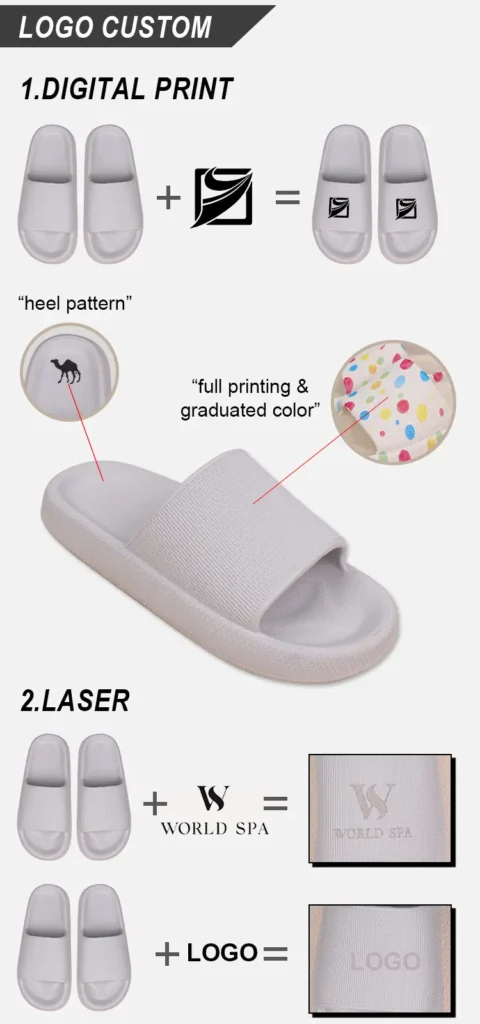
Each component fluctuates based on specifications. Upgrading from basic EVA soles to memory foam insoles adds cost. Opting for natural cotton terry versus synthetic blend changes material expenses. Custom embroidery or printing introduces additional processing steps.
Hidden Costs Beyond Unit Price
The quoted per-pair price represents only part of total cost. Additional expenses commonly include:
Sample charges – Pre-production samples often carry fees
Mold or tooling costs – Custom soles or embossing require upfront investment
Packaging customization – Branded boxes, tissue paper, tags add up
Testing and certification – Compliance documentation for certain markets
Shipping terms – FOB, CIF, DDP dramatically affect landed cost
Slippers manufacturers quote differently on these elements. Some bundle expenses into unit pricing. Others itemize separately. Comparing quotes accurately requires understanding what each includes and excludes.
Volume Pricing Tiers
Larger orders command better per-unit pricing. This seems obvious, but the break points matter.
A manufacturer might offer:
500-999 pairs: $3.20 per pair
1,000-2,499 pairs: $2.85 per pair
2,500-4,999 pairs: $2.55 per pair
5,000+ pairs: $2.30 per pair
The jump from 900 pairs to 1,100 pairs saves 11% per unit—potentially justifying the larger commitment. Understanding these thresholds helps optimize order quantities.
Balancing MOQ, Lead Time, and Pricing
These three elements interconnect constantly. Pushing on one affects the others.
Want lower MOQ? Expect higher per-unit pricing or longer lead times as the factory fits small orders around larger commitments.
Need faster lead time? Paying premium prices may expedite production. Or accepting stock products instead of custom designs eliminates development time.
Seeking lowest possible pricing? Higher volume commitments and flexible timing typically get there.
The buyers who navigate slippers manufacturers most successfully understand these trade-offs explicitly. They prioritize what actually matters for their business model rather than trying to optimize everything simultaneously.
Questions to Ask Potential Manufacturers
Before committing to any supplier, clarifying several points helps avoid surprises:
How exactly is MOQ calculated (per style, per color, per SKU)?
What lead time applies to the specific order type needed?
Are expedited production options available, and at what cost?
How does pricing adjust across different volume levels?
What costs fall outside the quoted unit price?
How are change orders or modifications handled mid-production?
What payment terms apply to new versus established customers?
Getting clear answers upfront prevents misunderstandings later. Reputable slippers manufacturers welcome these questions because they indicate a serious buyer worth investing time in.
Making Informed Sourcing Decisions
The intersection of MOQ, lead time, and pricing determines whether a manufacturing relationship works. Misalignment on any dimension creates friction.
A manufacturer requiring 5,000-pair minimums won’t suit a boutique brand testing new designs. A factory with 60-day lead times won’t serve retailers needing quick replenishment. Pricing that works for premium positioning fails for budget segments.
Finding the right match requires honest assessment of actual needs—not aspirational requirements or worst-case scenarios. The best partnerships develop when buyer requirements genuinely align with manufacturer capabilities.
Understanding these fundamentals transforms conversations with slippers manufacturers from confusing negotiations into productive collaboration. The terminology no longer obscures. The trade-offs become visible. And sourcing decisions improve as a result.If you want to know more about slippers manufacturer, please read Top 8 Slippers Manufacturers in 2026:A Comprehensive Guide.