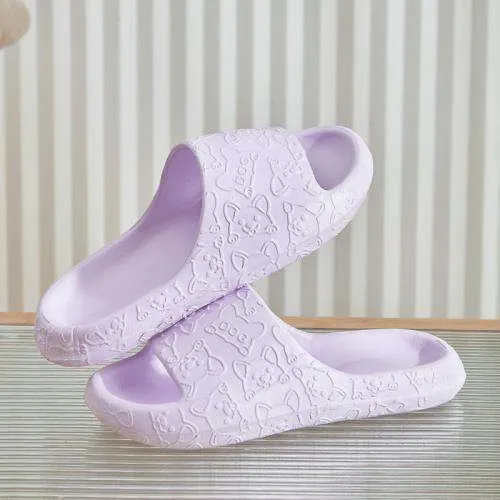
Buying wholesale slippers sounds straightforward enough. Find a supplier, pick a style, place an order. But anyone who’s actually gone through the process knows it’s rarely that simple. Quality inconsistencies, sizing issues, materials that look decent in photos but feel cheap in person—these problems come up more often than suppliers would like to admit.
The stakes get higher with bulk purchases. A bad decision on 50 pairs is annoying. A bad decision on 5,000 pairs? That’s a real problem.H2: Why Quality Matters More Than You’d Think
Slippers might seem like a low-consideration purchase. They’re not luxury goods, after all. But quality issues affect everything downstream—customer complaints, return rates, repeat business, brand reputation. Cheap wholesale slippers that fall apart after a few wears don’t save money in the long run.
Hotels, spas, airlines, and retailers have all learned this lesson. The initial per-unit savings from bottom-tier suppliers often evaporate once you factor in complaints and replacements.
So what should buyers actually look for? Here are five tips that tend to separate successful bulk purchases from regrettable ones.
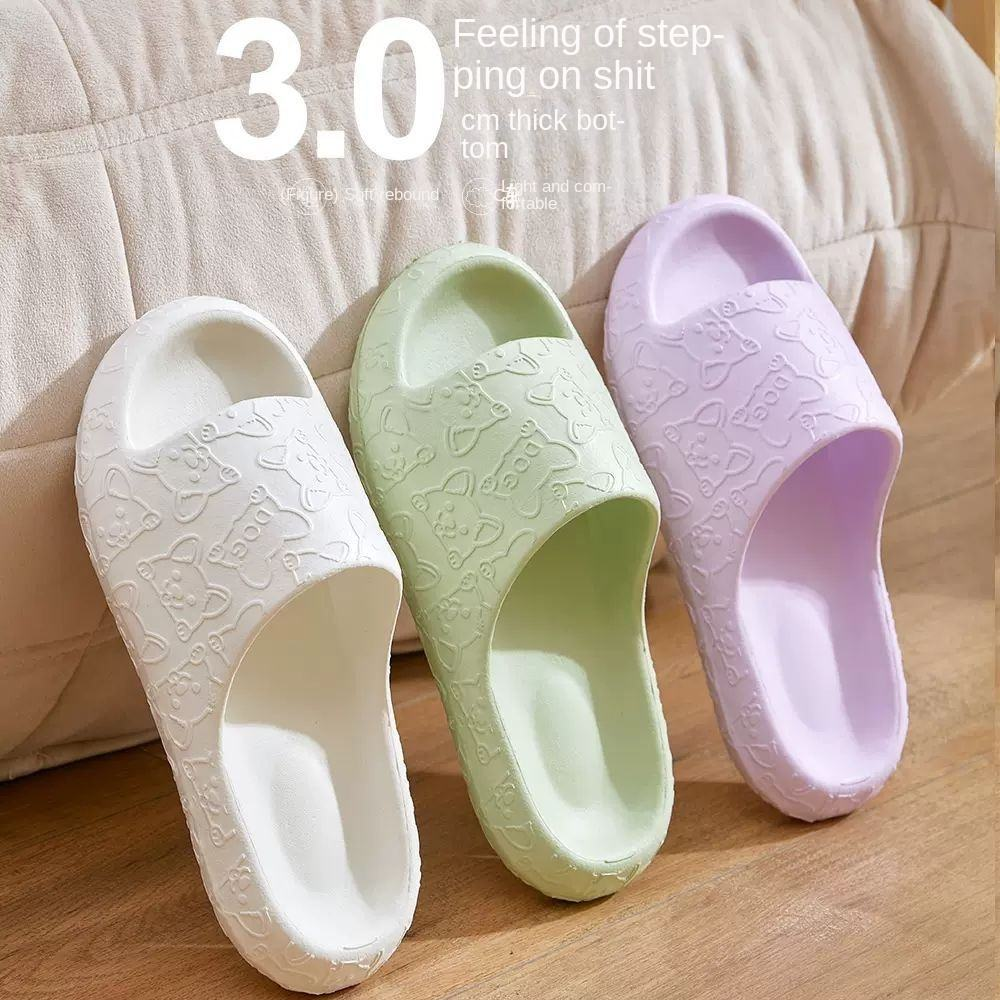
Tip 1 – Examine Material Quality Before Committing
This one seems obvious, but it’s surprising how often it gets skipped. Catalog descriptions and product photos only tell part of the story.
Common Slipper Materials and Their Characteristics
| Material | Durability | Comfort | Cost Level | Best Use Cases |
|---|---|---|---|---|
| Cotton terry | Moderate | High | Low-Medium | Hotels, spas, home use |
| Velour | Moderate | High | Medium | Hospitality, gift sets |
| EVA foam | High | Medium | Low | Poolside, casual outdoor |
| Memory foam | Moderate | Very High | Medium-High | Retail, premium hospitality |
| Rubber sole | High | Varies | Medium | Any setting requiring grip |
| Faux leather | Moderate | Medium | Medium | Retail, fashion-forward styles |
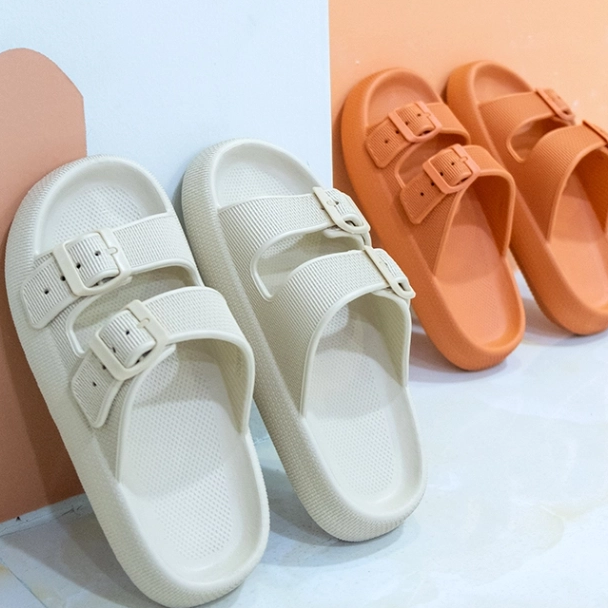
Among the options listed above, EVA stands out for versatility. Lightweight, easy to clean, and surprisingly durable—it works across multiple use cases. Buyers interested in branded footwear often find that EVA Custom Slippers provide the best balance between customization options and cost efficiency.
The material composition affects more than just how slippers feel. It determines:
How well they hold up after washing (relevant for hospitality applications)
Whether they’ll develop odors quickly
How they perform in humid environments
Packaging and storage requirements
Always request physical samples before placing large orders for wholesale slippers. Photos can be misleading—sometimes intentionally so. A sample that arrives looking different from the listing tells you something important about that supplier.
Watch for Material Substitutions
Some suppliers quote prices based on premium materials, then substitute cheaper alternatives in bulk orders. This happens more than it should. Specifying exact material requirements in purchase agreements helps, though it doesn’t eliminate the risk entirely.
Tip 2 – Assess Construction and Stitching Quality
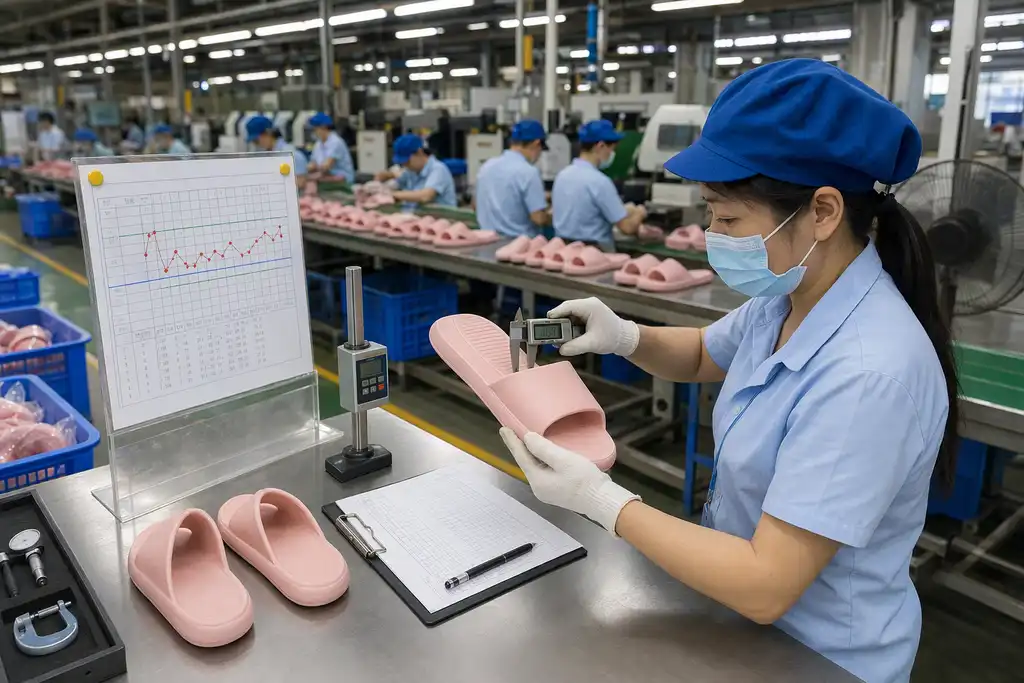
Materials matter, but assembly matters too. Poorly constructed slippers come apart at seams, lose their shape quickly, or have uneven padding that makes them uncomfortable.
Things worth checking on samples:
Seam strength—can you pull the upper away from the sole without much effort?
Stitching consistency—are there loose threads, skipped stitches, or uneven lines?
Sole attachment—is it glued, stitched, or both?
Insole security—does it shift around or stay in place?
Overall symmetry—do left and right actually match?
These details might seem minor. They’re not. Wholesale slippers with construction problems generate complaints and returns at much higher rates than quality-built alternatives.
The feel of a slipper after wearing it for an hour differs from the impression it makes in the first thirty seconds. If possible, actually wear samples around for a day before approving bulk production.
Tip 3 – Verify Supplier Credentials and Track Record
The wholesale slipper market includes everything from established manufacturers with decades of experience to fly-by-night operations that disappear after a few transactions. Telling them apart takes some effort.
Red Flags to Watch For
No physical address or factory location information
Prices significantly below market rates (too good usually means too good to be true)
Reluctance to provide samples or references
Inconsistent communication or vague answers to specific questions
No clear return or quality guarantee policies
Positive Indicators
Suppliers worth considering typically offer:
Factory audit reports or certifications
Clear production capacity information
References from other buyers (especially in your industry)
Transparent pricing breakdowns
Willingness to accommodate customization requests
Trade shows—both physical and virtual—provide opportunities to meet suppliers directly. The interactions often reveal things that email exchanges don’t. How a supplier handles questions, responds to concerns, and presents their products in person gives useful information about what working with them might be like.
Tip 4 – Understand Sizing and Fit Consistency
Sizing inconsistency ranks among the most common complaints in wholesale slipper purchases. A “medium” from one supplier might fit like a “large” from another. Even within a single shipment, variations occur.
Steps to Minimize Sizing Problems
Request size charts with actual measurements (not just S/M/L designations)
Order samples in multiple sizes to verify consistency
Specify acceptable tolerance ranges in purchase agreements
Consider ordering slightly more inventory to accommodate exchanges
For hospitality applications, some buyers stick with open-toe or adjustable designs specifically because they’re more forgiving on fit. It’s a practical workaround, though it limits style options.
Regional sizing differences add another layer of complexity when sourcing wholesale slippers internationally. Asian sizing tends to run smaller than European or American standards. Assuming universal sizing leads to problems.
Tip 5 – Evaluate Total Cost Beyond Unit Price
The per-unit price matters, obviously. But focusing on it exclusively leads to poor decisions. Total landed cost—including shipping, duties, potential quality issues, and handling—gives a more accurate picture.
Cost Factors Often Overlooked
Shipping method and timing (air versus sea makes a huge difference)
Import duties and customs fees
Minimum order quantities and their effect on inventory carrying costs
Payment terms and currency exchange rates
Cost of quality inspection services
Potential returns and replacement expenses
A supplier offering wholesale slippers at $1.50 per pair with slow shipping, high MOQs, and no quality guarantee might actually cost more than a supplier charging $2.00 with better terms and reliable quality.
Negotiation Realities
Most suppliers have some flexibility on pricing, especially for larger orders or repeat business. But pushing too hard on price often results in quality cuts somewhere. Finding the balance takes experience—and sometimes a few costly lessons.
Making the Final Decision
After gathering samples, vetting suppliers, and crunching numbers, the decision still involves some judgment calls. Perfect information rarely exists in wholesale purchasing.
A reasonable approach:
Start with smaller trial orders before committing to massive quantities
Build relationships with two or three reliable suppliers rather than depending entirely on one
Document quality expectations clearly in writing
Plan for some percentage of defects (even good suppliers aren’t perfect)
The wholesale slippers market continues to grow, with more suppliers entering every year. That’s mostly good news for buyers—more options and competitive pressure on pricing. But it also means more variation in quality and reliability. Due diligence takes time. It’s worth the effort.
Rushing into bulk purchases based on attractive prices alone rarely ends well. The tips above won’t guarantee perfect outcomes, but they significantly improve the odds of landing quality products from trustworthy partners.
If you want to know more about wholesale slippers, please read How to Choose the Right Wholesale Slippers.