Personalization has become one of the strongest purchase drivers in casual footwear. Clog-style shoes, with their signature rows of ventilation holes, offer something few other footwear silhouettes can: a built-in canvas that customers can decorate themselves. For footwear brands, retailers, and e-commerce sellers, this creates a rare opportunity to sell not just a shoe, but an ever-expanding accessory ecosystem alongside it. The challenge is that most sourcing teams know how to buy shoes, but far fewer know how to specify, certify, and produce the small snap-on decorations that make this category profitable.
Custom clogs with shoe charms are clog-style shoes engineered with standard ventilation ports that accept snap-on decorative charms, produced together through an OEM or ODM manufacturing program. Brands launch them by partnering with a footwear manufacturer that can supply both the charm-ready clog body and the custom-molded charms, matching hole spacing, materials, and safety compliance from the first sample onward.
The sections below walk through terminology, commercial logic, materials, production, compliance, sourcing, and a practical launch plan.
What Are Custom Clogs with Shoe Charms?
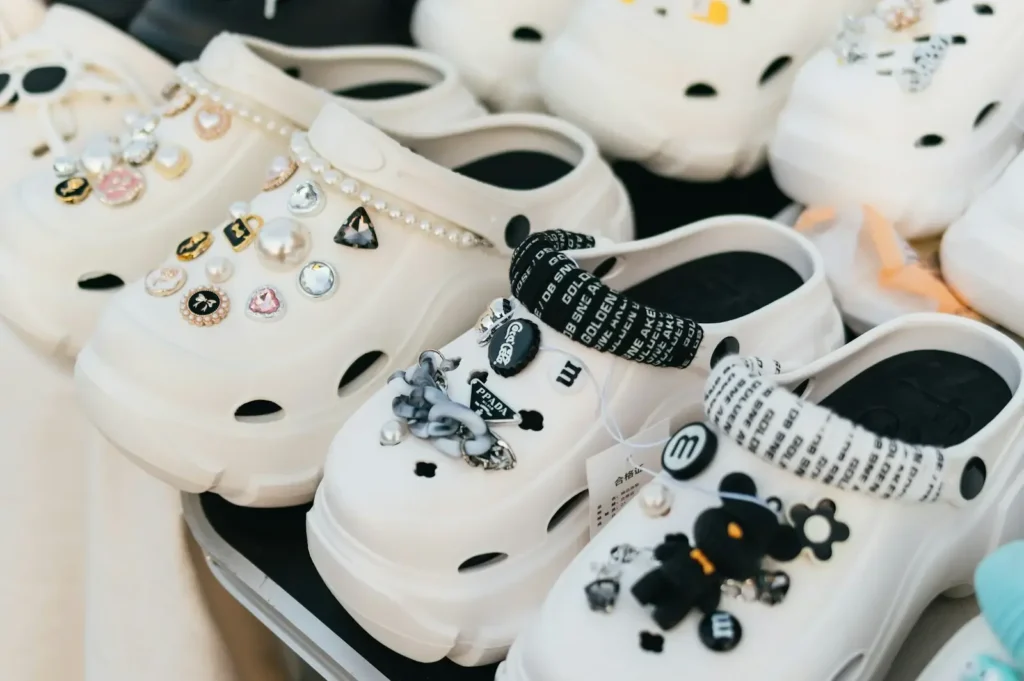
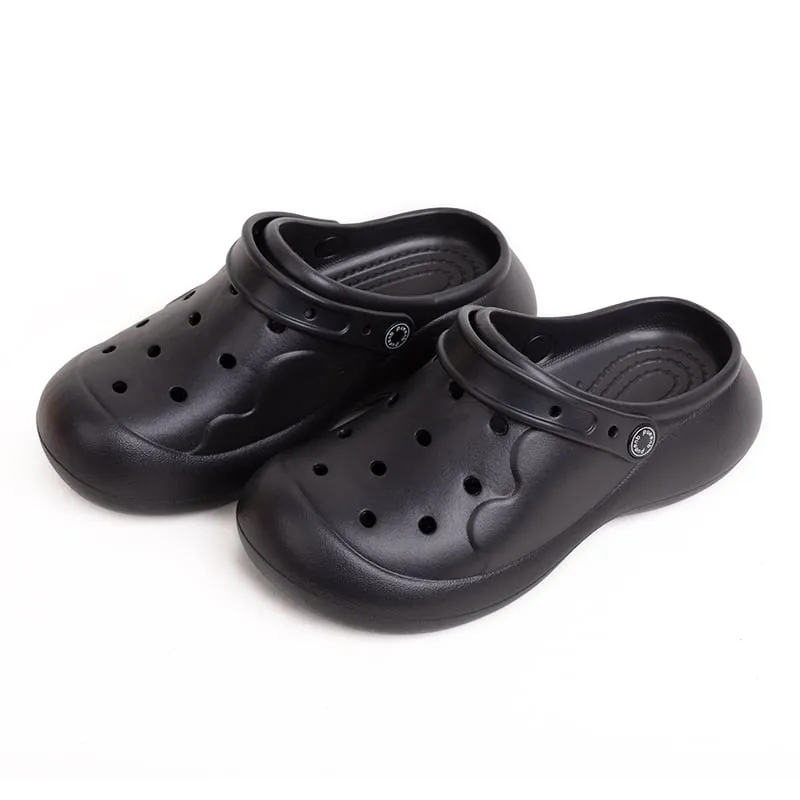
Custom clogs with shoe charms are lightweight molded clogs featuring spaced ventilation holes, sold alongside small decorative charms with a snap-on button base that locks into those holes without tools, glue, or damage to the shoe.
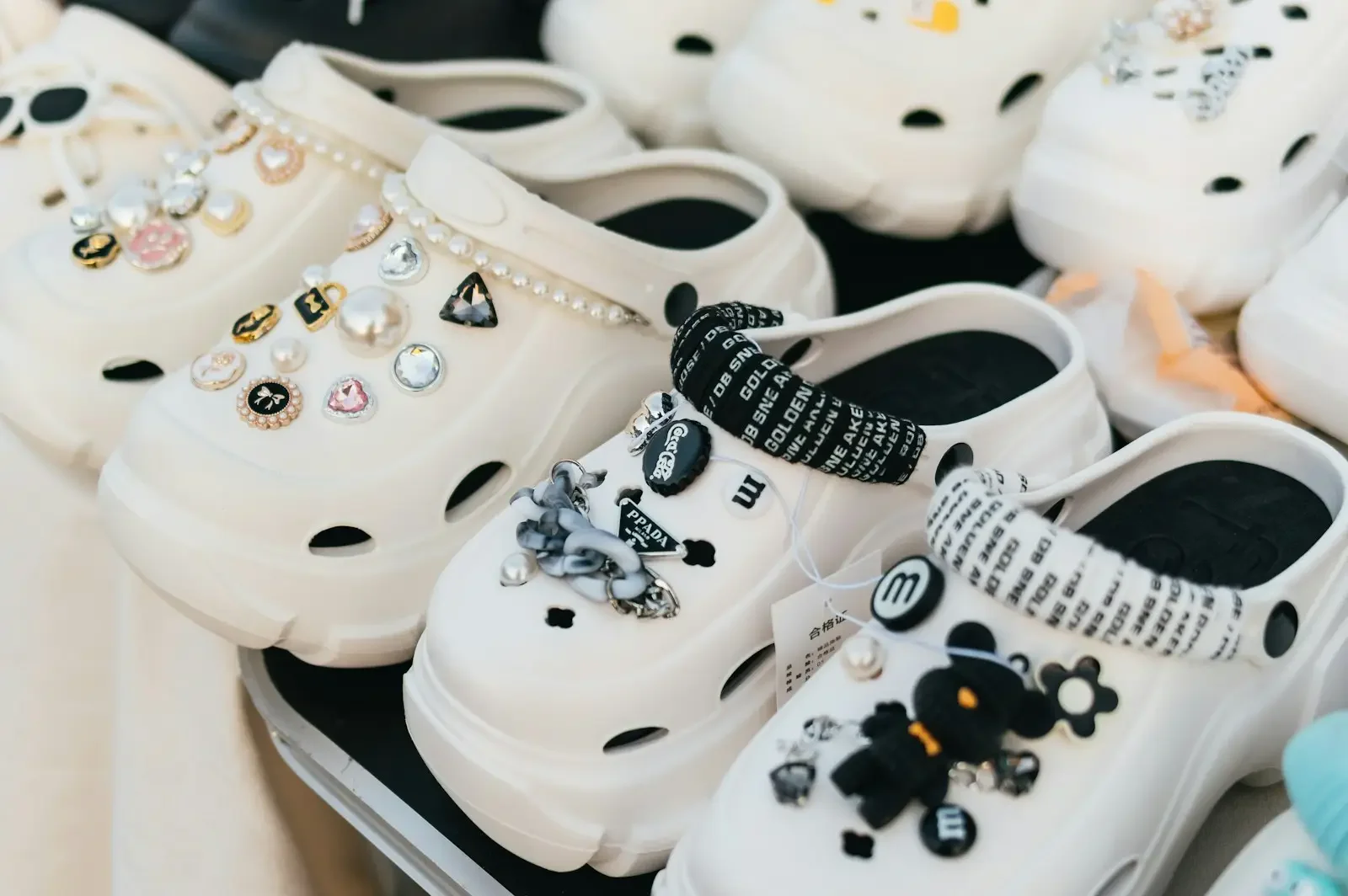
In everyday language the decorations are simply called shoe charms or clog charms, and the footwear itself is often described as charm-ready. Each charm has a rounded button post on the underside; the wearer pushes it into a hole at a slight angle until it pops into place, and removes it by pushing the base out from inside the shoe. Because no adhesive is involved, charms can be swapped endlessly to change the look of a single pair.
This interchangeability is exactly what makes the format valuable commercially. A few practical applications include:
- Retail mix-and-match programs where customers buy a base shoe plus themed charm packs
- Corporate gifts and event giveaways with molded brand logos or mascots
- School and team merchandise featuring emblems, letters, or numbers
- Seasonal and holiday collections that refresh an existing clog body without retooling
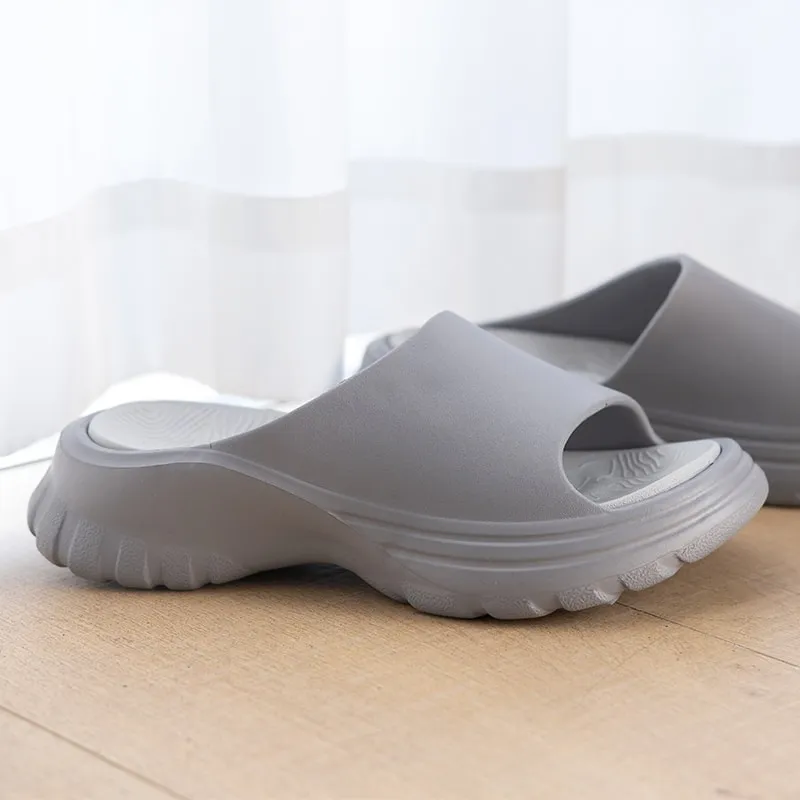
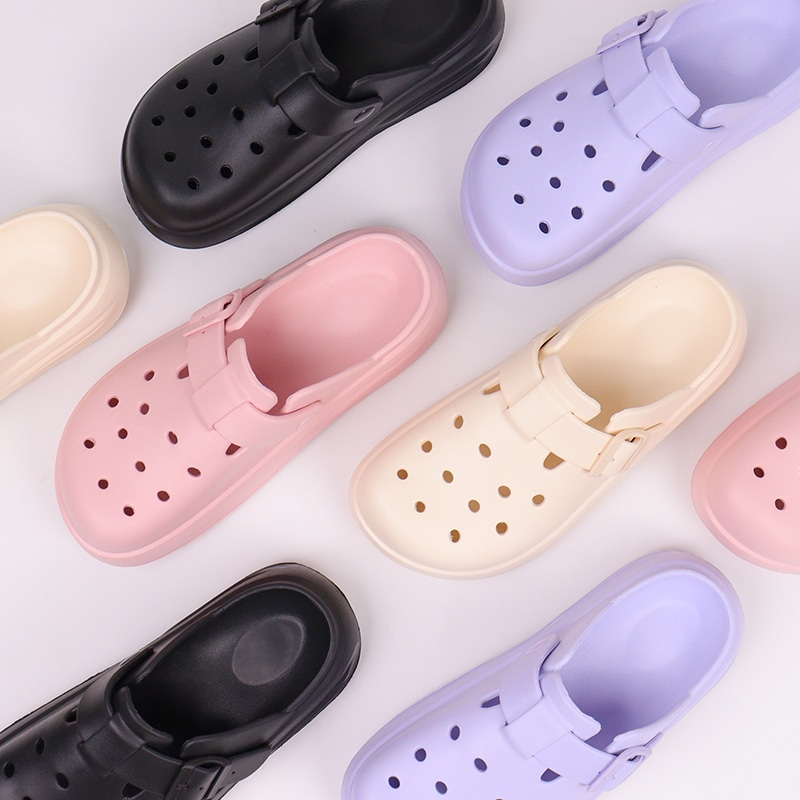
For buyers who want to explore the base shoe side of this category in depth, browsing a dedicated EVA Clogs Wholesale catalog is the fastest way to see available silhouettes, strap configurations, and color options before requesting charm samples.
Why Charm-Customized Clogs Make Sense for Brands
Charm-customized clogs make commercial sense because the charms multiply revenue per customer at very low unit cost, extend product life cycles without redesigning the shoe, and turn buyers into repeat purchasers who collect over time.
The clog began as a carved wooden work shoe and has since evolved into lightweight molded footwear worn across casual, professional, and outdoor settings. What has not changed is the silhouette’s practicality; what has changed is that the ventilation holes, once purely functional, are now a personalization surface.
From a merchandising perspective, the economics are unusual. A molded charm costs a fraction of a shoe, yet a fully decorated pair sells a story, not just a product. Three dynamics matter most for brands:
- Attachment revenue. Charms are impulse-friendly add-ons that raise average order value at checkout, both online and in store.
- Collectibility. Limited themed releases create urgency and bring customers back, without the brand having to launch an entirely new shoe.
- Zero-cannibalization freshness. New charm themes refresh a proven clog body, so the brand avoids the cost and risk of new last development while keeping the catalog visually current.
For gift, tourism, and corporate channels, the same logic applies: one shoe platform can serve dozens of end markets simply by changing the charm set in the box.
What Shoe Brands Allow Customization?
Practically any footwear brand can offer charm customization today, because the capability comes from the manufacturing model rather than from the brand itself: OEM and ODM partners build charm-ready clogs and matched charm programs for private labels of every size.
A brand does not need in-house design or production capacity. What it needs is a clear picture of which manufacturing model fits its resources and timeline:
| Manufacturing model | What it means for your brand |
| OEM | You supply complete designs for the clog and charms; the factory produces them to your specification |
| ODM | The factory proposes existing clog molds and charm designs, which you adjust with colors, logos, and themes |
| Stock-with-charms | You buy finished clogs and add custom charms, the fastest and lowest-commitment entry point |
Across all three models, the dimensions a brand can typically customize include the clog body shape and proportions, hole count and spacing, Pantone-matched colors, heel strap style, and of course the full charm assortment from logo pieces to licensed-style character themes developed from your own artwork.
Materials and Styles for Custom Shoe Charms
Most custom shoe charms are produced in soft PVC or silicone, with TPR and zinc alloy used for specific feel or premium effects, and every design is made in either a flat 2D relief or a sculpted 3D form.
Charm Materials Compared
Material choice drives cost, durability, safety testing, and how the charm feels in the hand, so it should be decided during design rather than after.
| Material | Characteristics and best use |
| Soft PVC | Flexible, colorfast, low mold cost; the industry default for character and logo charms |
| Silicone | Softer touch, heat resistant, well suited to baby and children’s lines |
| TPR | Rubber-like elasticity and good rebound; durable everyday charms |
| Zinc alloy | Metallic weight and plating options for premium, gift-oriented pieces |
2D vs 3D Charm Designs
A 2D charm carries a raised but essentially flat relief, like an embossed badge: it prints fine detail crisply, molds economically, and suits logos, letters, and graphic shapes. A 3D charm is sculpted in the round, giving characters, animals, and food shapes a collectible figurine quality at a higher mold and unit cost. Many successful charm programs mix both: 3D hero pieces for display, surrounded by inexpensive 2D fillers that let customers decorate a whole pair cheaply.
How Custom Clogs with Shoe Charms Are Made
Custom charm-ready clogs are produced in a paired process: the clog body is injection molded in EVA while the charms are separately molded in PVC, silicone, or alloy, then matched, inspected, and packed together.
Although the two components are small, the workflow is a full manufacturing project, and understanding it helps buyers plan realistic timelines:
- Design brief and artwork. The brand submits logos, references, or rough concepts for both clog and charms.
- 3D modeling and rendering. The factory’s design team converts artwork into production-ready 3D models for confirmation before any tooling is cut.
- Mold making. Steel molds are machined for the charm design and, where needed, the clog body; typical mold development takes about 7 to 10 days.
- Sampling. Pre-production samples of both components are produced and shipped for approval, the stage where color accuracy and hole fit are locked.
- Mass production. Clog bodies are injection molded while charms run on their own molding lines; parallel production keeps the overall cycle short, commonly around 10 to 15 days after sample approval.
- Quality control and packaging. Pull tests on charm posts, color checks, and assembly checks precede retail-ready packing, from polybags to printed boxes.
Buyers who are new to the clog side of this workflow often benefit from reading a practical guide to Custom EVA Clogs before requesting quotations, since the clog body decision shapes the entire project budget.
Safety and Compliance Considerations for Charms
Shoe charms intended for children must be treated as children’s products: small-parts choking risk, chemical limits, and labeling requirements all apply, and a compliant factory will build the relevant testing into the project from the start.
Because a charm is a small detachable object, regulators scrutinize it more closely than the shoe it decorates. In the United States, small parts guidance from the Consumer Product Safety Commission addresses exactly this hazard profile, and children’s products fall under CPSIA with testing expectations aligned to the ASTM F963 toy safety standard. In the European Union, the equivalent framework combines the EN71 toy standard with REACH chemical restrictions covering substances such as phthalates in soft plastics.
Practical steps for brands include:
- Confirming the factory can supply recent test reports for the exact charm material, not generic certificates
- Deciding age grading early, since charms marketed to young children face stricter small-parts rules
- Specifying phthalate-free and heavy-metal-free formulations in writing on the purchase order
- Requesting pull-force testing on charm posts so decorations cannot detach in use
Compliance paperwork may feel like friction, but it is also a competitive asset: retailers and marketplaces increasingly require it before listing charm products at all.

Where Can You Get Custom Clogs and Charms Made?
Custom clogs and custom-made shoe charms are sourced from specialized OEM footwear manufacturers and accessory factories, most of them concentrated in established footwear manufacturing clusters, and the right partner is one that can produce both components to matched specifications.
Many buyers ask where to get custom clog charms made, and the honest answer is that supplier selection matters more than geography. A factory that molds charms but cannot produce the shoe, or vice versa, forces you to coordinate fit between two vendors. One-stop suppliers remove that risk by matching hole spacing, color standards, and quality control across both components.
Typical commercial parameters you should expect to discuss with candidates:
| Project element | Typical industry range |
| Charm MOQ per design | About 500 to 1,000 pieces |
| Clog MOQ | About 100 to 500 pairs, style dependent |
| Sample lead time | About 5 to 7 working days |
| Mold development | About 7 to 10 days |
| Bulk production | About 10 to 15 days after sample approval |
When evaluating suppliers, look for in-house mold workshops, documented safety testing, Pantone color matching capability, and willingness to protect your artwork under NDA. Reviewing a proven style such as EVA Comfort Slip-On Clogs during supplier talks also reveals how well a factory communicates construction details, sizing, and finish quality. Finally, before committing to a first order, it is worth studying Common Mistakes When Buying Wholesale Clogs, since most first-time charm program failures trace back to clog-side sourcing errors rather than the charms themselves.
How to Launch a Charm-Ready Clog Line
A successful launch sequences the project so that design decisions, compliance work, and production risks are resolved in the cheapest possible order: concept, sample, pilot order, then scale.
A practical launch path looks like this:
- Define the customer and theme. Pick one clear audience, such as school communities, gift shoppers, or outdoor casual buyers, and design the first charm set around their identity.
- Choose the manufacturing model. Match OEM, ODM, or stock-with-charms to your budget and deadline rather than defaulting to full custom tooling.
- Validate samples in person. Test charm fit, insertion effort, color accuracy, and finish on the actual clog body, not on photos.
- Run a pilot order. A restrained first production run proves sell-through and surfaces quality issues before capital is committed at scale.
- Plan packaging and replenishment. Decide how charms are boxed, bundled, and restocked, because the accessory rotation, not the shoe, is what sustains the program.
Brands that treat the charm line as a living assortment, refreshed with seasonal themes while the clog body stays stable, consistently outperform those that launch a single decorative set and stop.
FAQ
How much do custom shoe charms cost at wholesale?
Unit prices scale steeply with volume. Small trial batches of a custom PVC charm typically cost well under one dollar per piece, while orders above a few thousand pieces can push the price down to a few cents each after amortizing the mold. Silicone and zinc alloy designs run higher. The mold fee, usually a modest fixed cost, is the main barrier separating low-volume and high-volume economics.
Will frequently swapping charms damage the ventilation holes?
Quality charms will not. The button post is rounded and the base materials are soft, so repeated insertion and removal does not cut or enlarge the holes. Problems arise from cheap hard-plastic charms with rough-edged posts, which is one more reason to request pull tests and sample-fit checks before mass production.
Can charms and clogs be ordered from the same supplier?
Ideally, yes, and it is the recommended arrangement. A single factory producing both components guarantees that hole spacing, post diameter, and color matching are coordinated from the mold stage, simplifies quality control to one inspection point, and consolidates shipping, which shortens lead times and reduces the coordination risk of managing two vendors for one product.