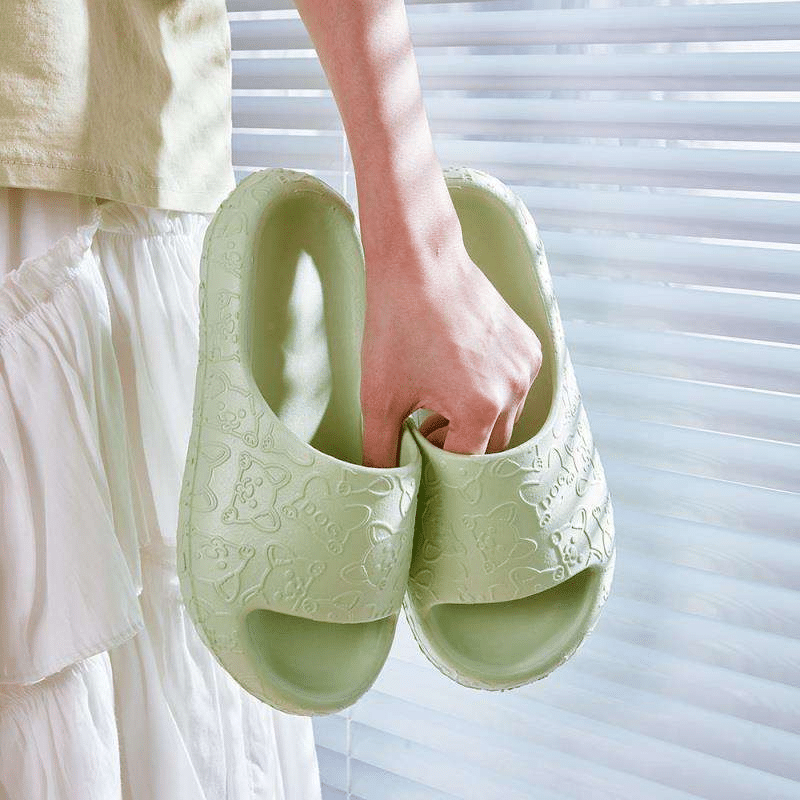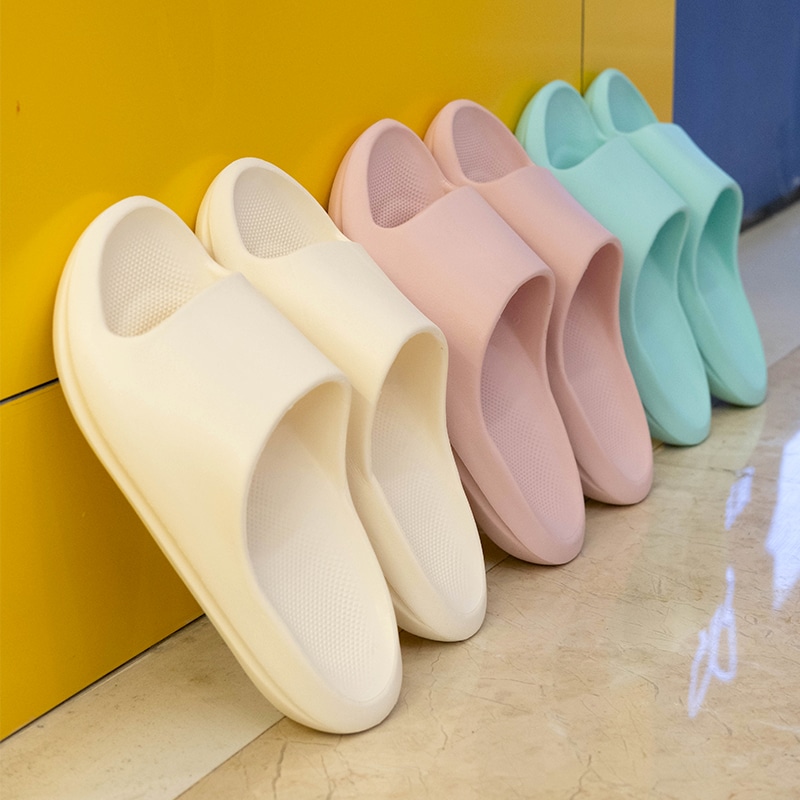
Sourcing EVA footwear from the right manufacturing partner is one of the bigger decisions a brand, retailer, or wholesaler makes. EVA (ethylene-vinyl acetate) dominates the lightweight, cushioned footwear market — slides, clogs, flip flops, recovery sandals. Finding a manufacturer that delivers consistent quality and fair pricing is not a simple Google search away. The industry is fragmented across regions, with factories ranging from small workshops to large-scale facilities, and the wrong choice can cost months of delays and thousands in replacement orders. Review a comprehensive EVA footwear catalog to understand the range of products available from established manufacturers.
EVA footwear manufacturers are concentrated in China’s coastal manufacturing hubs — Fujian, Guangdong, and Zhejiang provinces — plus Vietnam, Indonesia, and India. The most reliable way to find them combines B2B platforms like Alibaba and Global Sources, factory audits at trade fairs like the Canton Fair, referrals from industry contacts, and targeted searches using terms like “EVA slippers OEM manufacturer” or “custom EVA clog factory.” Manufacturers that run their own mold development and digital printing lines tend to offer faster turnaround and lower minimum order quantities for custom work.
This article covers each sourcing channel in detail, explains how to evaluate a manufacturer before committing, and goes through practical considerations like MOQ, lead times, quality control, and compliance standards.
What Are the Main Sourcing Channels for EVA Footwear Manufacturers?
The five main channels for finding EVA footwear manufacturers are B2B online platforms, trade exhibitions, industry referrals, direct factory outreach, and sourcing agents. Each channel fits a different buyer profile and budget.
B2B Online Platforms
Alibaba.com is the largest global hub for EVA footwear manufacturers, with thousands of supplier listings from China, Vietnam, and Southeast Asia. Its verification badges (“Assessed Supplier” and “Trade Assurance”) provide a basic filter, but experienced buyers know that verified status does not guarantee product quality. Global Sources is a strong alternative, especially for higher-end manufacturers targeting North America and Europe. Made-in-China.com and 1688.com (Alibaba’s domestic platform, Chinese-language interface required) offer deeper factory inventories at lower price points.
On these platforms, experienced buyers filter for manufacturers that publish their own factory audits, third-party inspection reports, and product testing certificates. A supplier that puts SGS, Bureau Veritas, or Intertek inspection results on their profile is generally more transparent than one that does not. Many listings also advertise OEM footwear services as a way to attract buyers looking for custom production runs.
Trade Exhibitions
The Canton Fair in Guangzhou, held twice yearly in April and October, is the single largest sourcing event for EVA footwear manufacturers. Phase 2 features the footwear and shoe materials section, where hundreds of EVA slipper, clog, and sandal factories exhibit samples and production capabilities. The Magic Show in Las Vegas and the GDS Shoe Fair in Dusseldorf are the main alternatives for buyers targeting North America and Europe respectively.
Trade fairs let buyers inspect material quality in person, evaluate mold libraries, and build relationships with factory owners — relationships that carry weight in Chinese business culture. First-time buyers should walk the floor with a checklist covering MOQs, lead times, customization capabilities, and certification compliance. Exhibitors often showcase their footwear manufacturing solutions through case studies and product displays.
Industry Referrals and Trade Networks
Referrals from existing industry contacts consistently produce better matches than cold outreach. Trade associations, LinkedIn groups focused on footwear sourcing, and regional chambers of commerce (especially in Fujian and Guangdong) maintain informal networks of vetted manufacturers. An introduction from a trusted contact helps in negotiating payment terms and often unlocks factories that do not advertise on public platforms.
Direct Factory Outreach to Manufacturing Hubs
Buyers with sourcing experience can identify EVA footwear manufacturing clusters by region and reach out directly. Jinjiang City in Fujian Province is widely known as China’s EVA slipper and sandal manufacturing capital, with hundreds of specialized factories within a 20-kilometer radius. Wenzhou in Zhejiang Province is better known for its shoe machinery and mold-making ecosystem, making it a strong choice for custom mold development. Direct outreach can reduce per-unit pricing by 15 to 30 percent compared to B2B platform quotes, since there are no middlemen or platform fees.
Sourcing Agents and Third-Party Inspectors
Professional sourcing agencies based in Guangzhou and Shenzhen offer end-to-end factory vetting, price negotiation, quality inspection, and logistics coordination. Their fees typically range from 3 to 8 percent of the order value. The trade-off is that agents add communication overhead, but for buyers placing their first few container-load orders, the risk reduction often justifies the cost.
How to Evaluate an EVA Footwear Manufacturer’s Capabilities
A manufacturer’s true capability shows in their mold library, production line setup, quality control processes, and certification portfolio. Four factors separate legitimate factories from trading companies posing as manufacturers.
Mold Library and Customization Depth
EVA footwear manufacturing is mold-driven. Each shoe design needs a dedicated aluminum or steel mold, and manufacturers with larger mold libraries can produce existing designs with zero tooling costs. When evaluating a factory, ask to see their mold catalog. A legitimate manufacturer will have 500 to 2,000 active molds covering standard slipper, clog, and sandal shapes.
Customization capability is the next layer. Digital printing on EVA, heat transfer printing, laser engraving, and screen printing each require different equipment. A factory with in-house digital printing lines can produce full-color custom patterns in 7 to 14 days, compared to 20 to 30 days for factories that outsource printing.
Production Line Configuration
EVA footwear production involves injection molding machines (horizontal or vertical), compression molding lines for EVA foam sheets, and assembly lines for strap and buckle attachment. The number of injection molding machines a factory operates is a direct indicator of capacity. Visiting an EVA manufacturing facility gives you a clear picture of whether the operation can handle your order volume:
- Small workshop: 5 to 10 machines, capacity of 5,000 to 15,000 pairs per day
- Medium factory: 15 to 30 machines, capacity of 20,000 to 50,000 pairs per day
- Large operation: 50+ machines, capacity of 80,000 to 200,000 pairs per day
Consistent order fulfillment requires backup production lines. A factory running at 90 percent capacity with no backup carries a higher risk of delayed orders than one operating at 65 percent with redundant lines.
Quality Control Infrastructure
Walk through the QC station during a factory visit. A properly equipped EVA footwear factory has three inspection checkpoints: incoming raw material inspection (EVA resin consistency), in-process inspection (mold temperature, injection pressure, cycle time), and final inspection (dimensional accuracy, weight consistency, color matching, adhesion testing). Factories that follow AQL (Acceptable Quality Limit) sampling standards — AQL 2.5 for critical defects and AQL 4.0 for minor defects — show systematic quality management.
Certifications and Compliance
Export-ready manufacturers should hold ISO 9001 (quality management), BSCI (social compliance), and any region-specific certifications your target market requires. The European market needs REACH and CE compliance for EVA materials. The North American market requires California Proposition 65 compliance. Factories that list these certifications on their profiles are generally more experienced with international compliance documentation.
What Are the Typical MOQ, Pricing, and Lead Time Expectations?
Standard minimum order quantities for EVA footwear factories range from 500 to 3,000 pairs per design, with pricing between $1.50 and $6.00 per pair FOB depending on material grade, customization complexity, and order volume. Lead times run from 25 to 50 days from order confirmation.
Minimum Order Quantity by Product Type
- Basic EVA slides (one color, no logo): 500 to 1,000 pairs per design
- Printed EVA slippers (digital or heat transfer): 1,000 to 2,000 pairs per design
- Custom EVA clogs with private mold: 2,000 to 3,000 pairs per design
- OEM orders with multiple colorways per design: 3,000 to 5,000 pairs total across all color splits
Factories with “low MOQ” listings of 100 to 300 pairs per design typically charge a premium of 30 to 50 percent over standard pricing to cover mold setup and line changeover costs. For smaller runs of custom EVA slippers, look for manufacturers that maintain in-house mold libraries covering common sizes and styles.
Pricing Breakdown
Per-unit price is driven by four factors:
- Material grade: Virgin EVA pellets cost 20 to 40 percent more than recycled EVA blends but deliver better consistency in color, density, and compression set resistance.
- Customization method: Heat transfer printing adds $0.10 to $0.25 per pair. Digital printing adds $0.30 to $0.60 per pair. Laser engraving adds $0.15 to $0.30 per pair.
- Order volume: The price break between a 1,000-pair order and a 10,000-pair order is 15 to 25 percent.
- Packaging: Individual polybag packing, inner boxes, and export cartons add $0.20 to $0.80 per pair depending on complexity.
Lead Time by Order Type
- Existing mold, stock material: 20 to 30 days
- Existing mold, custom color run: 25 to 35 days
- New mold development plus production: 35 to 50 days
- Full private mold with custom packaging: 45 to 60 days
Add 7 to 14 days for sea freight from Chinese ports to North American or European destinations.
How to Verify a Factory Is Legitimate Before Committing
The most common pitfall in EVA footwear sourcing is placing an order with a trading company posing as a factory. Direct verification through video calls, third-party audits, and on-site visits eliminates this risk before any payment is made.
Request a Video Factory Tour
A legitimate manufacturer can walk you through their production floor, mold storage area, QC station, and warehouse in a single uninterrupted video call. Trading companies cannot show an active production floor — their tours end at a showroom or warehouse. Specific things to ask for on video: injection molding machines running with identifiable product, mold storage racks with visible mold numbers, and raw material storage with EVA resin bags labeled with supplier info.
Use Third-Party Inspection Services
Companies like SGS, Bureau Veritas, Intertek, and QIMA offer pre-shipment inspection. For $300 to $600 per inspection day, an inspector visits the factory, verifies production capacity, and inspects finished goods against your specifications. This matters most for first-time orders. A factory that refuses third-party inspection is a red flag.
Check Business Licenses and Export Records
Chinese manufacturers operate under a unified social credit code that can be cross-referenced with the National Enterprise Credit Information Publicity System (www.gsxt.gov.cn). Export records can be verified through China Customs data services, which track a factory’s declared export volumes by destination country. A factory claiming to export 50 containers per month with customs records showing only 5 is likely inflating their numbers.
Sample Order Protocol
Before committing to bulk production, order 5 to 10 sample pairs. Evaluate the sample itself, the communication process, lead time accuracy, and packaging quality. A factory that communicates clearly during the sample phase will likely handle bulk order issues the same way. Pay attention to how they handle sample defects. A factory that points out minor imperfections and suggests improvements is showing genuine manufacturing experience.
What Compliance and Regulatory Standards Apply to EVA Footwear?
EVA footwear imported into the European Union must comply with REACH regulations for chemical substance restrictions. Products entering the United States must meet CPSC guidelines and California Proposition 65 requirements for phthalates and heavy metals. Manufacturers serving the hospitality industry need additional fire safety certifications.
European Market (REACH and CE)
REACH regulates chemical substances in manufactured products. For EVA footwear, the restrictions apply to phthalates (plasticizers), PAHs (polycyclic aromatic hydrocarbons), and heavy metals. Manufacturers serving the EU market should provide a REACH compliance declaration and, on request, third-party lab test results.
CE marking for PPE applies to EVA footwear marketed as safety footwear — for example, anti-slip clogs for healthcare or food service. Standard EVA slippers and slides do not require CE marking unless specific safety claims are made.
North American Market (CPSC and Prop 65)
The Consumer Product Safety Commission enforces the CPSIA, which requires children’s footwear to undergo third-party testing for lead and phthalates. California Proposition 65 requires warnings about exposures to chemicals that cause cancer, birth defects, or reproductive harm. EVA footwear with certain plasticizers above safe harbor levels must carry a Prop 65 warning label in California.
Hospitality Industry Standards
EVA slippers supplied to hotels, resorts, and spas often need additional testing: slip resistance (DIN 51130 or ASTM F2913), flammability (CA TB 117 or BS 5852), and bacterial resistance for reusable slipper programs. Manufacturers that supply the hospitality sector usually provide these certifications as standard documentation. Choosing an experienced slippers manufacturer and supplier ensures these compliance requirements are handled from the start.
FAQ
Is it better to source EVA footwear from China or Vietnam?
China’s EVA footwear manufacturing ecosystem, especially in Fujian province, offers the widest selection of specialized factories and the fastest lead times for custom orders. Vietnam has competitive labor costs and preferential tariff treatment under the CPTPP for some markets, but its EVA footwear factory density is lower and mold development options are more limited.
Can I get custom EVA slippers made with my own logo and packaging without meeting a high MOQ?
Yes. Many manufacturers offer entry-level customization with MOQs as low as 300 to 500 pairs for simple logo printing (screen printing or heat transfer) on existing mold designs. Full private mold development and custom packaging generally need higher MOQs in the 2,000 to 3,000 pair range. Factories that market themselves as “low MOQ EVA slipper manufacturers” usually have a catalog of in-house molds that can be branded with your logo at reduced quantities.
How do I handle quality issues if defective products arrive after shipment?
Include an AQL inspection clause in your purchase contract. If inspection fails (defect rate exceeds the agreed AQL level), the factory is responsible for replacing defective goods or issuing a credit. Having a third-party inspection company perform the check at the factory before shipment is strongly recommended. After shipment, replacement lead times run from 25 to 40 days for the same production line.