Slippers are designed for comfort, but regular indoor use can gradually leave them smelling less than fresh. Feet naturally produce sweat, while soft linings, foam insoles, and enclosed slipper designs can hold moisture for hours. Add repeated daily wear, dead skin, limited airflow, and insufficient drying time, and unpleasant odors can develop even when the slippers do not look dirty.
To keep slippers from smelling, focus on controlling moisture, cleaning them according to their material, drying them completely, maintaining good foot hygiene, and allowing enough time between wears. Mild odors can often be managed with airing and baking soda, while persistent smells usually require deeper cleaning of the lining or insoles.
The best way to solve slipper odor is to understand where it comes from first, then remove both the smell and the conditions that allow it to return.
Why Do Slippers Start Smelling?
Slippers usually start smelling because sweat and moisture remain trapped inside the lining, creating conditions where odor-producing microorganisms can multiply. The problem becomes more noticeable when slippers are worn for long periods without enough time to dry.
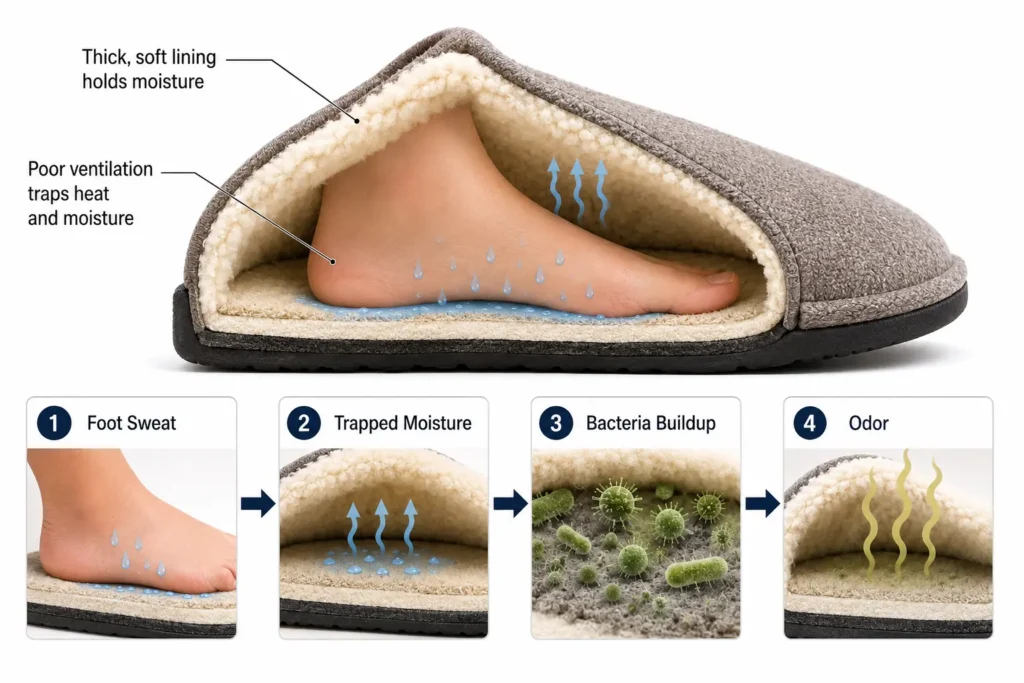
Sweat itself is not necessarily strongly scented. The unpleasant smell develops mainly when moisture, skin debris, and microorganisms remain together inside warm footwear. Public health guidance on smelly feet and moisture control similarly recommends keeping feet clean and dry and allowing footwear to dry fully before it is worn again.
Sweat and Moisture Build Up Inside Slippers
Feet contain many sweat glands, so they can produce moisture even when you are relaxing indoors rather than exercising.
Soft slippers often contain fleece, textile linings, memory foam, or padded insoles that absorb part of this moisture. If the same pair is worn every morning and evening, the inside may never become completely dry.
This is also why some people ask, “Why do my feet stink when I wear slippers?” The slippers may not be the only cause. If your feet sweat easily, the enclosed environment can hold that moisture against the skin instead of allowing it to evaporate.
Bacteria Thrive in Warm, Damp Conditions
Warm and damp footwear provides a favorable environment for bacteria and some fungi. As microorganisms interact with sweat and skin debris, noticeable odors can develop.
This does not mean that every pair of smelly slippers has a fungal problem. In many cases, the issue is simply accumulated moisture and inadequate drying. However, controlling moisture is important for both odor management and general foot hygiene. Guidance on keeping feet clean and dry also highlights regular shoe and sock changes as useful hygiene practices.
Slipper Materials Affect Moisture Retention
Some slipper constructions dry faster than others.
Breathable uppers may allow moisture to escape more easily, while thick synthetic linings and dense foam can retain it for longer. Construction matters as much as the outer material. A slipper with a thick padded interior may take much longer to dry than a lightweight open-back design.
No material is completely odor-proof. Even breathable slippers can smell if they are repeatedly worn while damp.
How Can You Get the Smell Out of Slippers?
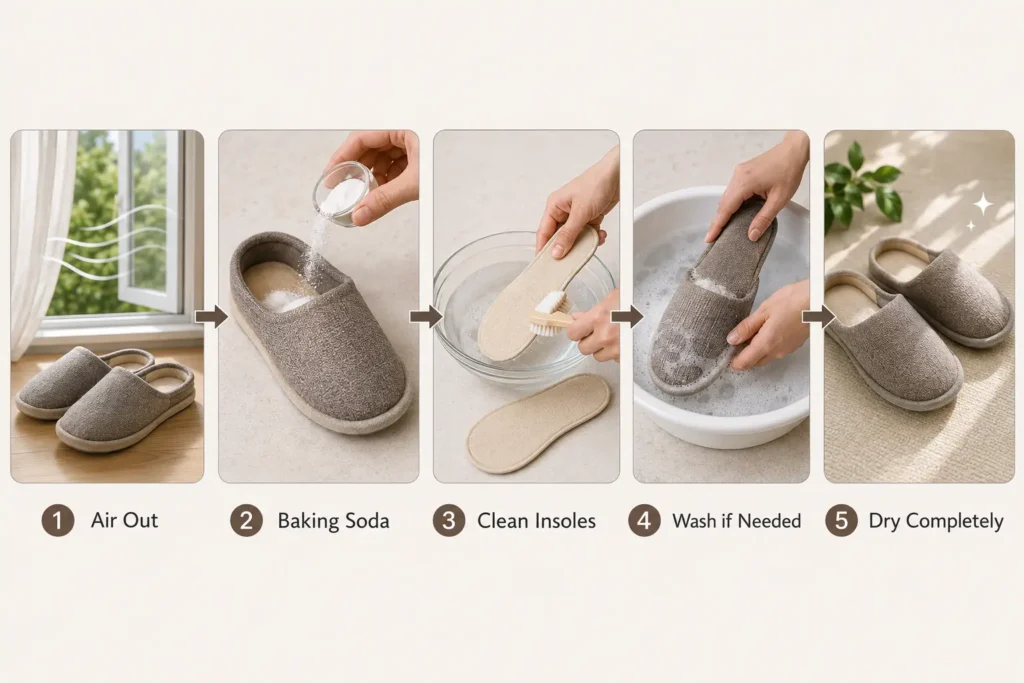
To get the stink out of slippers, begin by drying and airing them thoroughly. For mild odor, an odor-absorbing treatment such as baking soda may be enough. Stronger or recurring smells usually require cleaning the lining, insoles, or entire slipper according to the care instructions.
Avoid simply covering the smell with fragrance. A scented spray may temporarily make slippers smell different, but it does not necessarily remove moisture or accumulated residue.
Air Out the Slippers Completely
After wearing your slippers, leave them in a dry and well-ventilated area.
Open the upper as much as possible so air can reach the inside. If the slippers have removable insoles, take them out and allow them to dry separately.
Avoid putting recently worn slippers directly into a closed cabinet, storage box, or bag. These spaces can slow evaporation and keep moisture trapped inside.
If the slippers feel damp, allow them to dry completely before wearing them again.
Use Baking Soda for Mild Odors
Baking soda is commonly used as an odor absorber and can be useful when the slippers smell stale but do not yet require full washing.
A simple method is:
- Make sure the slippers are dry.
- Sprinkle a small amount of baking soda inside.
- Distribute it lightly across the footbed.
- Leave it for several hours or overnight.
- Shake or vacuum out the powder thoroughly before wearing.
Avoid using excessive amounts, especially in slippers with delicate, difficult-to-clean linings.
Clean Removable Insoles Separately
Insoles often absorb more sweat than the visible upper.
If your slippers have removable insoles, check whether they can be hand washed or wiped clean. Cleaning them separately also allows air to reach areas that normally remain covered.
If an insole remains strongly odorous after repeated cleaning, feels permanently damp, or has started to break down, replacing the insole may be more practical than repeatedly treating it.
Wash the Slippers When Necessary
When airing and dry deodorizing are no longer enough, the slippers may need washing.
Always check the care label first. Some textile slippers can tolerate gentle machine washing, while others contain adhesives, foam, suede, leather-like materials, or structured soles that can be damaged by soaking or machine agitation.
Use a mild cleaning method whenever possible and avoid high heat unless the care instructions specifically allow it.
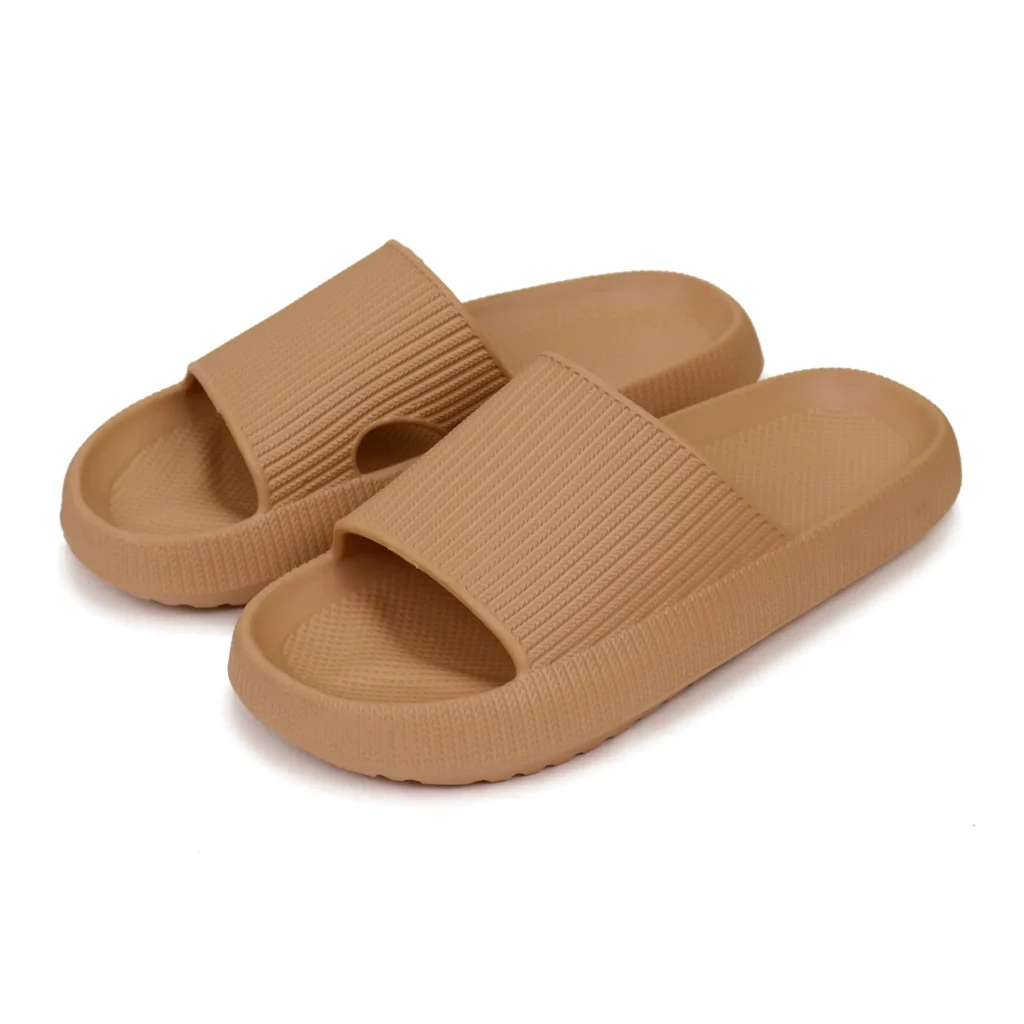
How Should You Clean Different Types of Slippers?
The correct cleaning method depends on the slipper’s upper, lining, insole, foam, and sole construction. There is no single washing method that is safe for every pair, so the manufacturer’s care instructions should take priority.
The following table provides a general starting point rather than a replacement for the product care label.
| Slipper Type | Suggested Cleaning Approach | Main Precaution |
|---|---|---|
| Fabric slippers | Gentle hand wash or machine wash if permitted | Avoid excessive heat |
| Memory foam slippers | Spot clean or gentle surface cleaning | Avoid soaking the foam |
| Wool slippers | Gentle cleaning with a suitable mild detergent | Avoid hot water and aggressive agitation |
| Suede slippers | Dry brushing and careful spot cleaning | Avoid saturation |
| Synthetic slippers | Wipe or wash according to the care label | Dry thoroughly before reuse |
Fabric Slippers
Fabric slippers are often among the easiest types to clean, but construction still matters.
If the care label allows machine washing, use a gentle cycle and mild detergent. If not, hand cleaning gives you greater control over the amount of water used.
Avoid assuming that a textile upper means the entire slipper is machine washable. The sole, foam, glue, or decorative components may require different care.
Memory Foam Slippers
Memory foam can absorb water deeply and may take a long time to dry.
For this reason, spot cleaning or light hand cleaning is usually more appropriate than fully soaking the slipper unless the care instructions specifically state otherwise.
Excess water can also make it difficult to determine when the center of the foam is truly dry.
Wool Slippers
Wool generally requires gentler treatment.
Hot water, strong agitation, and unsuitable detergents can affect the fibers and change the shape or texture. Use cool or lukewarm water when appropriate and allow the slippers to dry naturally.
Suede Slippers
Suede should generally be kept from becoming saturated.
Start with a dry brush to remove surface debris, then use a suitable spot-cleaning method for specific marks or odor-prone areas. Excess water may change the texture or appearance of the material.
Why the Care Label Matters
Two slippers that look almost identical can react very differently to washing.
Their adhesives, inner foam, outsole materials, trims, and dyes may have different temperature or moisture limits. Following the product-specific care instructions reduces the risk of shrinking, warping, delamination, or damaging the lining.
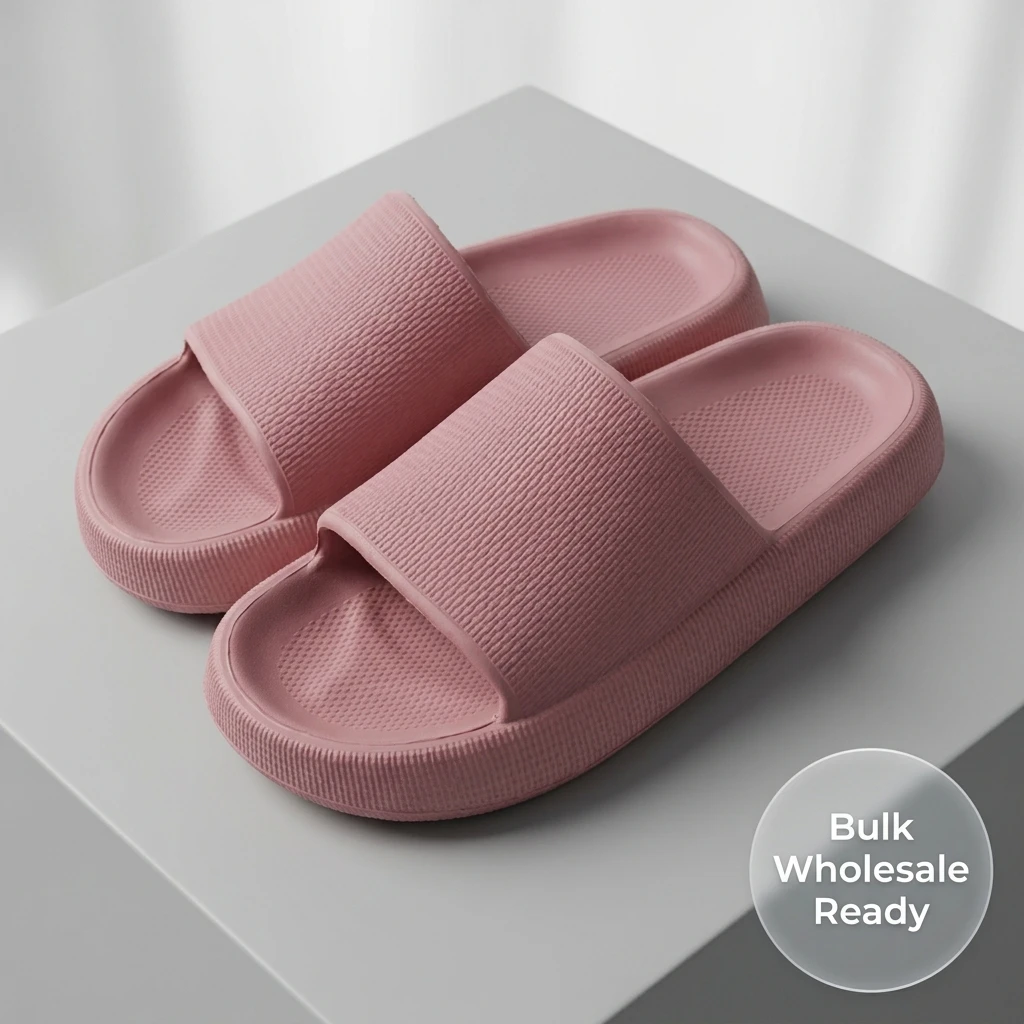
Why Do My Slippers Smell Even After Washing?
If slippers still smell after washing, they may not be completely dry, odor may remain deep inside the insoles or foam, or the source may be continued foot moisture rather than the surface of the slippers alone.
Washing only works when the areas holding moisture and residue are actually cleaned and then dried thoroughly.
The Slippers Did Not Dry Completely
This is one of the most common reasons odor returns quickly.
A thick lining can feel dry on the surface while the inner foam remains damp. Wearing the slippers again too early brings heat and moisture back into the material and can restart the odor cycle.
Allow extra drying time for thick or padded slippers.
The Insoles Still Hold Odor
The upper is not always the smelliest part of a slipper.
Footbeds and insoles receive direct contact with the feet and can absorb repeated cycles of sweat. If the upper is washed but the deeper insole material is not cleaned effectively, the smell may remain.
Pay particular attention to removable insoles and heavily padded footbeds.
The Cleaning Method Did Not Reach the Source
Light wiping works well for regular maintenance, but it may not remove residue that has accumulated inside a heavily used lining.
At the same time, aggressive washing is not automatically better. Using too much water or an unsuitable washing cycle can damage the slippers while still leaving moisture trapped inside.
The goal is appropriate cleaning followed by complete drying.
The Odor May Be Coming From Your Feet
If freshly cleaned slippers begin smelling again very quickly, consider your foot-care routine as well.
Wash your feet regularly and dry them thoroughly, including between the toes. If your feet sweat heavily, breathable footwear and moisture-managing socks can also help. Medical guidance on sweaty feet likewise recommends breathable footwear and appropriate socks to help control moisture.
Persistent itching, scaling, cracked skin, unusual redness, or recurring strong odor may indicate a foot condition rather than simply dirty slippers. In that situation, professional medical advice may be appropriate.
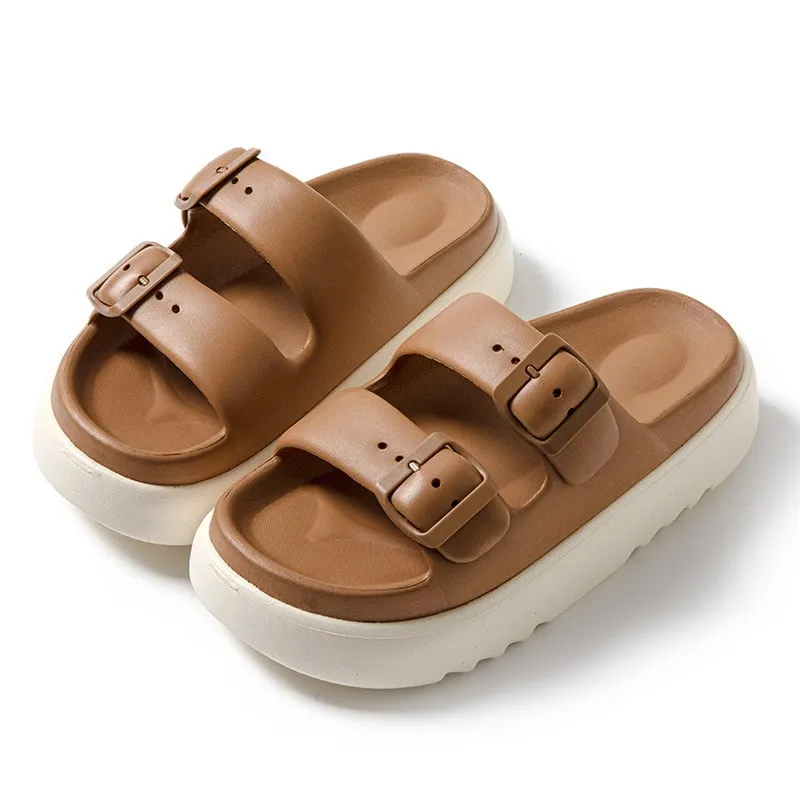
How to Stop Slippers from Getting Stinky
The most effective way to stop slippers from getting stinky is to reduce the amount of moisture entering them and make sure they have enough time to dry between wears. Regular foot hygiene, ventilation, rotation, and suitable slipper construction can greatly reduce recurring odor.
Prevention is usually easier than repeatedly trying to remove a strong established smell.
Wash and Dry Your Feet Before Wearing Slippers
Clean feet transfer less sweat residue and skin debris into the lining.
After washing, dry your feet thoroughly before putting slippers on. Pay particular attention to the spaces between the toes.
Putting freshly washed but still damp feet straight into thick slippers can introduce moisture immediately.
Let Slippers Air Out After Every Use
Give your slippers breathing time.
Place them somewhere with reasonable airflow rather than leaving them under furniture or immediately returning them to a closed cabinet. If possible, open the slippers and lift removable insoles.
Even a simple daily airing routine can help prevent moisture from accumulating over several days.
Rotate Between Two Pairs
If you wear slippers for many hours each day, alternating between two pairs can be useful.
One pair can dry while the other is being worn. This is particularly helpful for thick winter slippers that require more time to release absorbed moisture.
Wear Clean Socks When Appropriate
Clean socks create an additional layer between your feet and the slipper lining.
They can absorb part of the moisture that would otherwise enter the footbed. If the socks become damp, change them rather than continuing to wear them for the rest of the day.
Moisture-wicking socks may be helpful for people whose feet sweat easily.
Choose Breathable Slippers
When replacing slippers, consider more than appearance.
Look at the lining, upper construction, ventilation, washability, and whether the insoles can be removed. A design that dries easily is usually simpler to maintain over time.
Breathability alone will not prevent every odor problem, but it makes moisture management easier.
When Should You Replace Smelly Slippers?
You do not need to replace slippers simply because they develop odor once. Replacement becomes more reasonable when strong smells repeatedly return after correct cleaning and complete drying, or when the internal materials have deteriorated too much to clean effectively.
Slippers are consumable footwear, and their foam and lining gradually change with use.
Signs Cleaning May No Longer Be Enough
Consider replacement when you notice several of the following:
- Strong odor returns immediately after complete cleaning and drying.
- The foam has become compressed or badly degraded.
- The lining feels permanently damp or greasy.
- The inside surface is cracked, peeling, or difficult to clean.
- Removable insoles are badly worn and cannot be replaced separately.
- The slippers have lost their original structure or comfort.
Replacing badly worn slippers can be more practical than repeatedly applying deodorizing treatments without solving the underlying problem.
FAQ
Can You Use Vinegar to Deodorize Slippers?
Diluted vinegar is sometimes used for household odor control, but it is not suitable for every slipper material.
Acidic liquids may affect dyes, finishes, suede, leather-like surfaces, adhesives, or foam. Before using vinegar, check the care instructions and test a very small hidden area. For delicate slippers, a material-appropriate cleaner is generally safer.
Do Scented Sprays Permanently Remove Slipper Odor?
Usually not.
Fragrance can temporarily mask an unpleasant smell, but it does not automatically remove absorbed sweat, trapped moisture, or residue inside the lining. For lasting results, address the source through drying, cleaning, and moisture control.
A deodorizing product is better treated as a supplementary measure rather than a substitute for proper care.
How Should You Store Slippers Between Seasons?
Clean and completely dry the slippers before long-term storage.
Remove loose dirt, clean the footbed if necessary, and make sure no internal moisture remains. Store them in a cool, dry area with some airflow rather than sealing damp slippers inside a plastic bag.
For slippers that tend to hold odor, allowing extra drying time before storage can help prevent musty smells when they are used again.