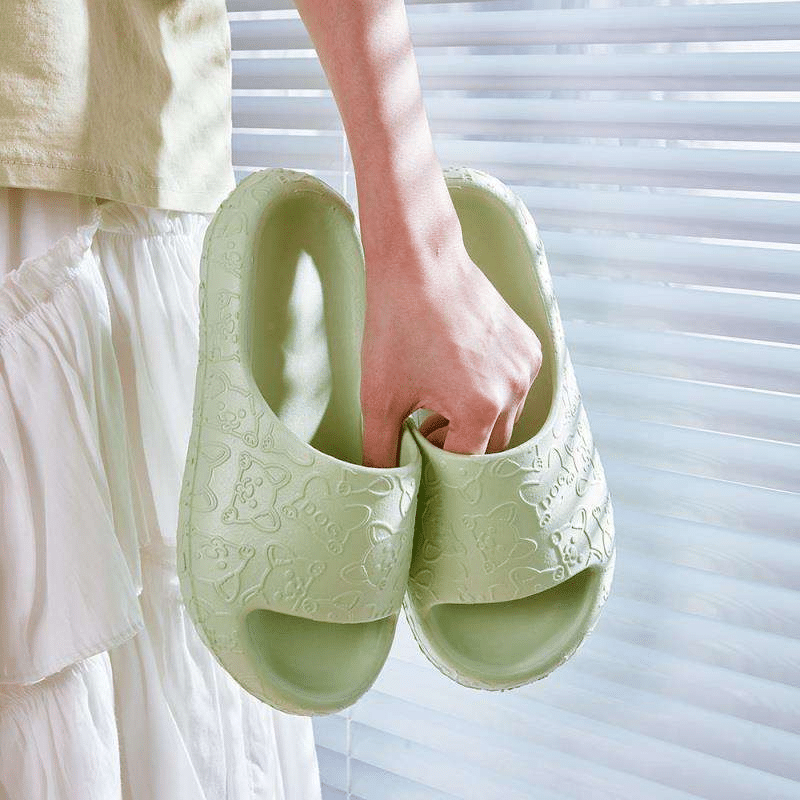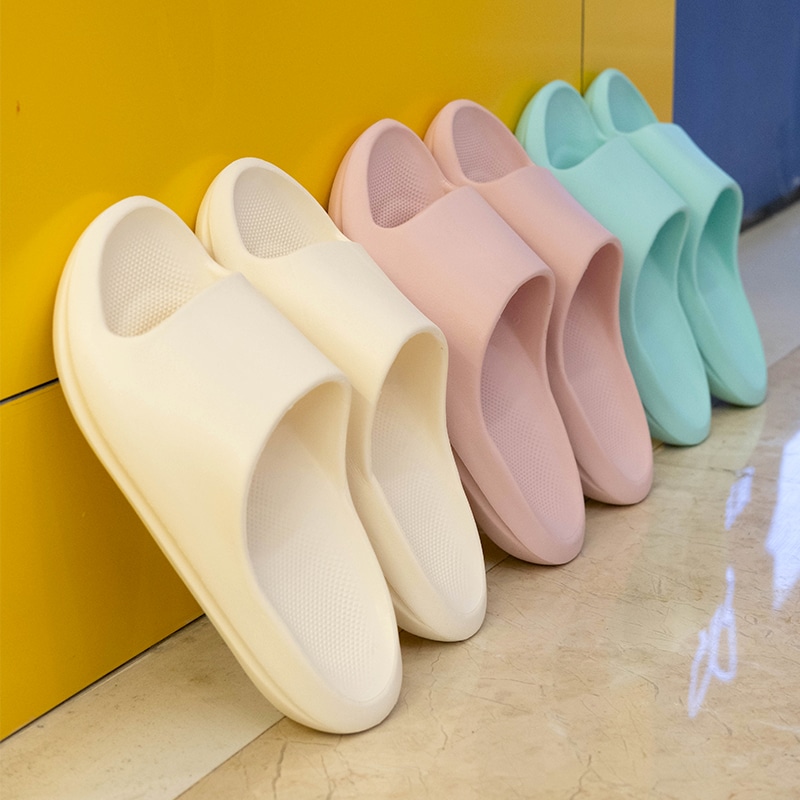
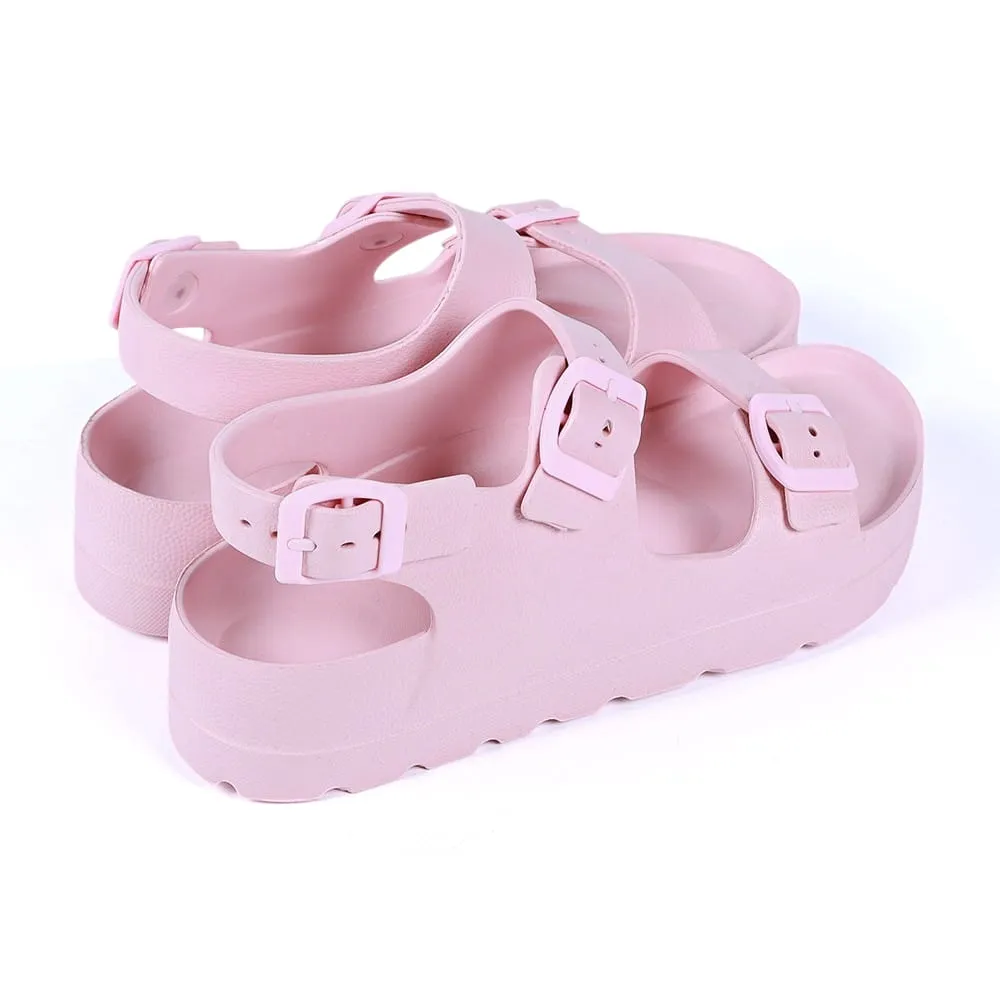
When sourcing sandals for a brand, retail line, or wholesale catalog, the material choice directly affects cost, durability, comfort, and customer satisfaction. Among the many options available, EVA (ethylene-vinyl acetate) has become one of the most widely used materials in the footwear industry. But questions remain for buyers who need to balance performance with price. Is EVA genuinely a good choice for sandals, or is it simply cheap?
Yes, EVA is an excellent material for sandals. It is lightweight, waterproof, shock-absorbent, and highly moldable, making it the dominant choice for soles and an increasingly common upper material in the sandal category. No other single material matches EVA’s combination of low cost, low weight, and high cushioning performance at scale. The real question is not whether EVA works — it is where and how to use it to maximize product value.
This guide examines EVA’s properties, compares it to alternative materials, and outlines what buyers should consider when evaluating EVA sandals for their product lines.
What Is EVA and Why Is It Used in Sandals?
EVA, or ethylene-vinyl acetate, is a closed-cell foam copolymer that expands during molding to create a lightweight, rubber-like material with excellent cushioning properties. It was first commercialized in the 1950s and entered footwear production in the 1970s, but its use in sandals expanded dramatically over the last two decades as molding technology improved and costs dropped.
EVA’s appeal for sandals comes down to four physical properties that other materials cannot replicate at the same price point. First, its closed-cell structure makes it naturally waterproof — it does not absorb water like leather or fabric. Second, its foam composition provides consistent shock absorption across the full sole surface. Third, it can be injection-molded into complex shapes with precise thickness variations, which allows manufacturers to build arch support and contour directly into the footbed. Fourth, finished EVA parts weigh roughly half as much as rubber or PVC equivalents of the same volume.
For brands sourcing wholesale sandals, these properties translate into lower shipping costs, fewer comfort complaints, and broader climate suitability.
Key Advantages of EVA for Sandals
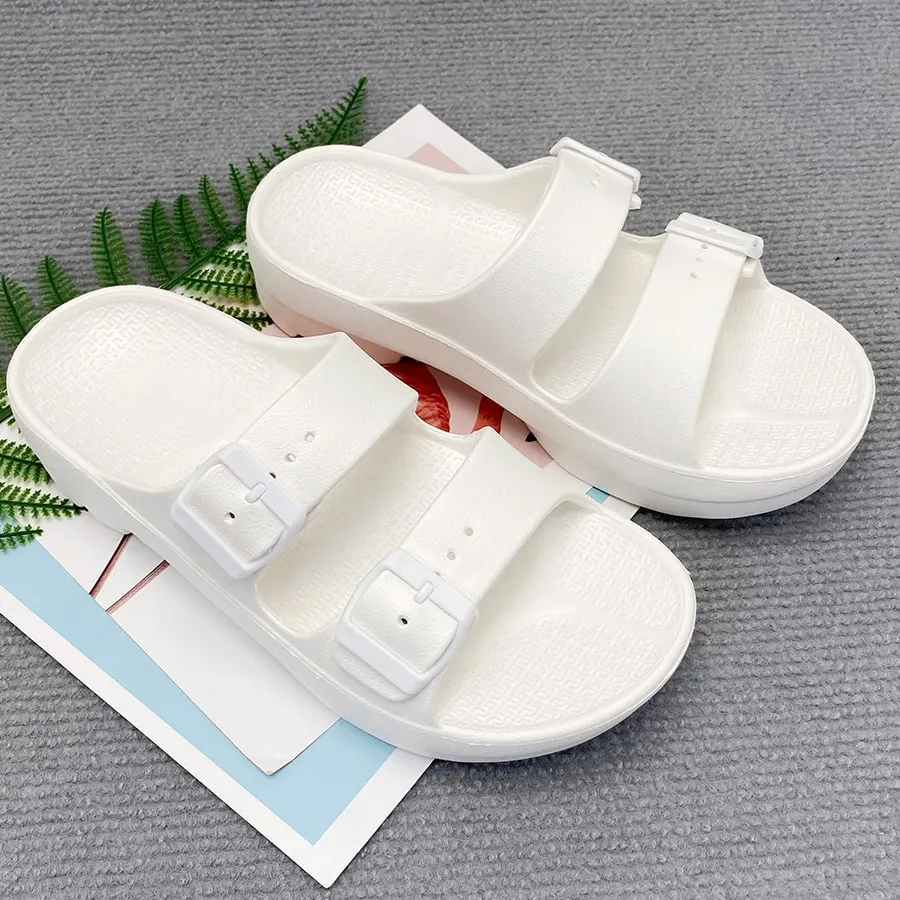
EVA delivers three advantages that directly impact sandal performance: weight reduction, water resistance, and impact absorption. Each of these matters differently depending on the sandal category and target market.
Lightweight Comfort
EVA sandals typically weigh 30 to 50 percent less than sandals made with rubber or PVC soles of comparable thickness. This difference is noticeable to the end consumer, especially in warm-weather markets where sandals are worn for extended periods. A lighter sandal causes less walking fatigue, which directly correlates with lower return rates. For bulk buyers, the weight difference also reduces freight costs by a measurable margin on container-level orders.
Water Resistance and Quick-Drying
Because EVA is a closed-cell foam, it does not absorb moisture. A sandal left wet after a day at the beach or an accidental submersion dries within minutes rather than hours. This makes EVA sandals practical for poolside, shower, and marine environments where leather or textile sandals would degrade quickly. The material also resists mold and bacterial growth better than absorbent alternatives, which is a meaningful hygiene factor for shared-use sandals in hospitality settings.
Shock Absorption and Cushioning
EVA compresses under load and rebounds to its original shape, absorbing impact energy that would otherwise transfer to the wearer’s joints. The material’s compression set — the degree to which it permanently flattens after repeated use — is lower than polyurethane foam and significantly better than standard rubber. For sandals marketed as all-day wear, this cushioning performance is a genuine selling point rather than a marketing claim.
Durability and Longevity of EVA Sandals
EVA sandals are durable enough for everyday casual use but will wear faster than rubber or leather in high-abrasion conditions. Understanding wear patterns helps buyers select the right grade for the intended use.
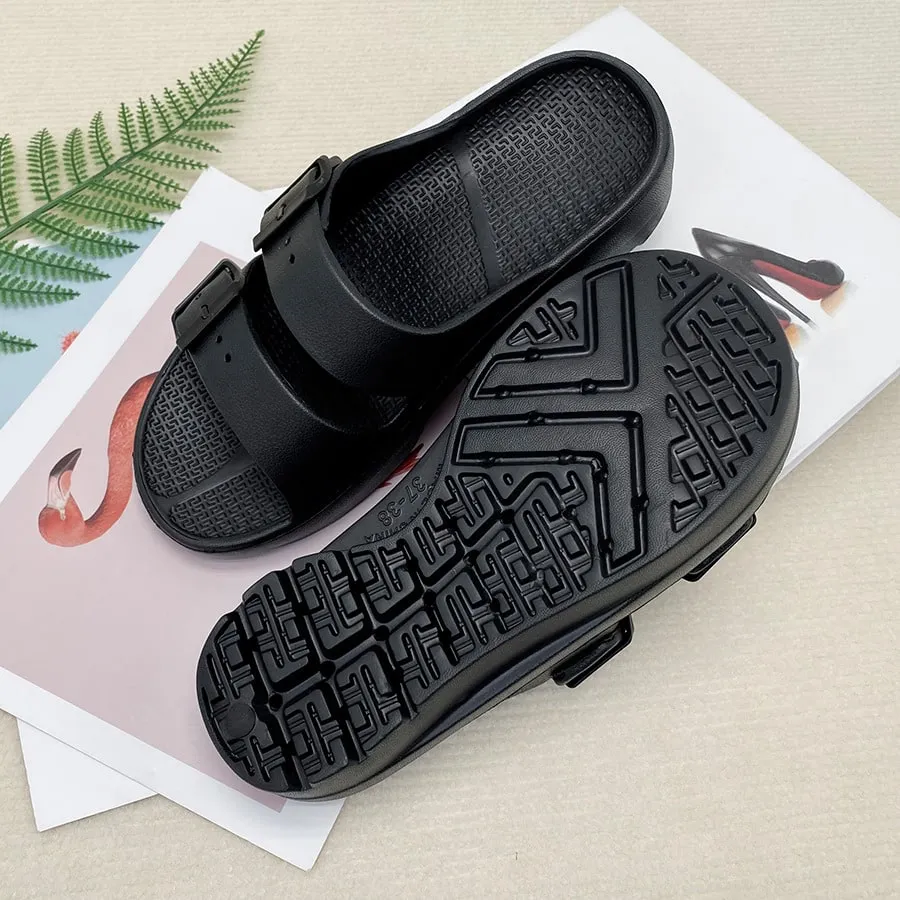
Standard EVA (density 0.12 to 0.18 g/cm³) works well for casual sandals worn on paved surfaces. The material’s abrasion resistance is adequate for urban walking but drops noticeably on rough concrete or gravel. Premium EVA blends incorporate additives that improve wear resistance by 15 to 25 percent without sacrificing cushioning. These are typically specified in sport sandals or recovery sandals aimed at active users.
The most common failure point in EVA sandals is not sole wear but upper separation. When a thin EVA strap pulls away from the sole at the insertion point, the sandal is effectively destroyed. This can be mitigated by reinforcing the anchor points during mold design. A custom EVA sandals manufacturer that uses through-hole strap anchoring rather than surface bonding produces sandals with significantly longer functional lifespans.
EVA vs. Other Sandal Materials
Compared to rubber, PVC, leather, and polyurethane, EVA offers the best balance of weight, cushioning, and cost for volume sandal production. Each alternative material has specific advantages that make it the better choice in certain segments.
| Property | EVA | Rubber | PVC | Leather | Polyurethane |
|---|---|---|---|---|---|
| Weight | Very light | Heavy | Moderate | Moderate | Light |
| Water resistance | Excellent | Excellent | Excellent | Poor | Good |
| Cushioning | Excellent | Poor | Poor | Fair | Excellent |
| Abrasion resistance | Fair | Excellent | Good | Good | Good |
| Moldability | Excellent | Fair | Good | N/A | Good |
| Cost per pair (sole) | Low | Moderate | Low | High | Moderate |
| Typical lifespan (casual use) | 12-18 months | 24+ months | 12-18 months | 24+ months | 18-24 months |
Rubber remains the standard for heavy-duty sandals where abrasion resistance is the top priority. Leather commands the premium segment but requires maintenance and performs poorly in wet conditions. PVC competes on cost but lacks cushioning and flexibility in cold temperatures. Polyurethane offers comparable cushioning to EVA at a higher price point and is typically used in footwear with a higher retail price.
For the mid-volume wholesale market — sandals priced between $3 and $12 FOB — EVA is the optimal choice. The cost savings versus polyurethane or rubber allow brands to invest in better strap hardware, packaging, or logistics.
Customization Options with EVA Sandals
EVA accepts a wider range of customization techniques than most sandal materials, making it the preferred substrate for branded and private-label sandal programs.
Color is the simplest customization. EVA can be pigmented during the compounding stage to produce any Pantone-matched color, with no post-production painting or coating required. This eliminates the peeling and fading issues common with painted rubber sandals.
Surface decoration options include digital printing, heat transfer printing, screen printing, and laser engraving. Digital printing produces full-color, photorealistic graphics directly on the EVA surface, which is the preferred method for complex logos and patterns. Heat transfer and screen printing work well for simple two-to-three color designs at lower per-unit costs. Laser engraving burns the surface to create permanent, high-contrast marks without adding any material or weight.
For brands that need custom shapes, EVA’s moldability is a decisive advantage. A new sandal mold costs significantly less than the tooling required for injection-molded rubber or multi-layer leather construction. This makes custom sandals services accessible even for first-time importers testing a new product line.
Are There Any Downsides to EVA Sandals?
EVA has three real limitations: lower abrasion resistance than rubber, compression set over extended heavy use, and reduced flexibility in cold temperatures. None of these are dealbreakers for most sandal applications, but they matter in specific use cases.
Abrasion resistance is the most common concern. EVA soles on sandals worn daily on rough pavement will show visible edge wear within six to eight months. Buyers targeting construction-adjacent environments or rugged outdoor use should specify rubber outsole layers bonded to EVA midsoles, a hybrid construction that combines the cushioning of EVA with the wear resistance of rubber.
Compression set refers to the permanent flattening of EVA foam after repeated loading. In sandals worn eight to ten hours daily by heavier users, the heel area may lose 10 to 15 percent of its original thickness within a year. This is not a failure — the sandal remains functional — but the reduced cushioning can affect comfort perception.
Cold temperature performance is sometimes overlooked. EVA stiffens noticeably below 5 degrees Celsius, which reduces its shock absorption and flexibility. Sandals made entirely from EVA are not ideal for cold-weather markets unless they spend most of their time indoors.
How to Evaluate EVA Quality Before Buying
EVA quality varies significantly between suppliers, and the visible differences are not obvious to first-time buyers. Three specifications matter most: density, compression set, and Shore hardness.
Density determines weight and durability. Lower-density EVA (0.10 to 0.14 g/cm³) is softer and lighter but wears faster. Higher-density EVA (0.16 to 0.22 g/cm³) is firmer and more durable but heavier. The ideal range for most sandal applications is 0.14 to 0.18 g/cm³.
Compression set is measured as a percentage. A compression set below 15 percent after 24 hours at 50 degrees Celsius indicates good-quality EVA. Values above 25 percent suggest the foam will flatten noticeably within months of regular use.
Shore hardness (measured on the C scale for soft foams) should fall between 45 and 65 Shore C for sandal soles. Below 45, the sole is too soft and will compress unevenly. Above 65, it loses the cushioning benefit that makes EVA attractive in the first place.
A reputable EVA sandals manufacturer should be able to provide these specifications on request. If a supplier cannot quote density or compression set for their EVA compound, it is a reliable indicator that they are using commodity-grade material with inconsistent quality.
Conclusion
EVA material works well for sandal production across most use cases, especially where weight, cushioning, and water resistance matter. Its low cost and moldability make it a practical choice for bulk orders, and its performance fits both casual consumers and commercial buyers in hospitality, resort, and retail channels. For applications requiring more durability on rough terrain, hybrid designs with rubber outsoles offer a middle ground. As with any B2B sourcing decision, checking material density, supplier quality control, and customization options will determine whether EVA sandals meet your requirements.
FAQ
Can EVA sandals be recycled?
EVA is technically recyclable through mechanical grinding and remolding, but the infrastructure for post-consumer EVA recycling is limited. Most EVA sandals end up in landfills. Some manufacturers now offer take-back programs where returned sandals are ground into filler material for industrial mats or playground surfaces. Bio-based EVA blends, which replace a portion of petroleum content with plant-derived ethanol, are gaining traction as a more sustainable alternative.
How do you clean EVA sandals?
EVA sandals can be cleaned with mild soap and warm water. Harsh chemicals, bleach, and solvent-based cleaners should be avoided as they can degrade the foam structure. For stubborn marks, a soft-bristle brush with baking soda paste works effectively without damaging the surface. EVA sandals should not be machine-washed or dried in direct sunlight for extended periods.
Do EVA sandals stretch over time?
EVA does not stretch like leather or fabric. Once molded, the material maintains its shape throughout its lifespan. If an EVA sandal fits snugly at purchase, it will not loosen with wear. This is why fit feedback from samples is critical before committing to full production — sizing adjustments must be made at the mold stage, not after the fact.