Why EVA Slippers Continue to Dominate the Market
It always seems easy to source footwear on a spreadsheet. In reality, it often means sample boxes that smell faintly of chemicals, weeks of dragging out MOQ negotiations, and a quiet suspicion that the “factory” on the other end of the email is actually a trading desk in a co-working space. Finding the right EVA slippers manufacturer does not come from a secret directory. It comes from knowing where real production clusters are, how to search them properly, and what questions expose the difference between a factory and a middleman.
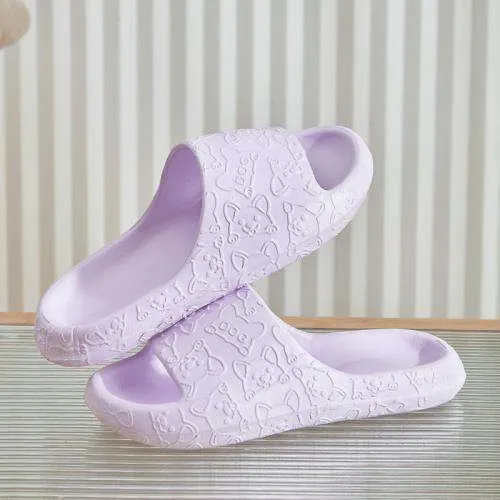
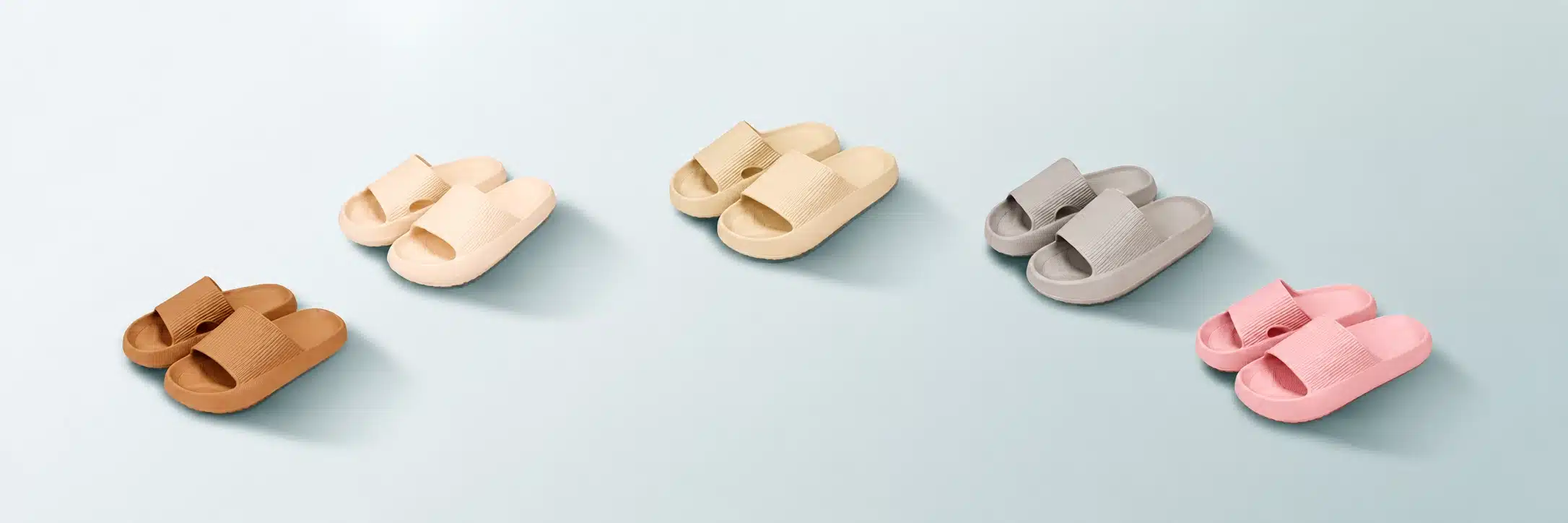
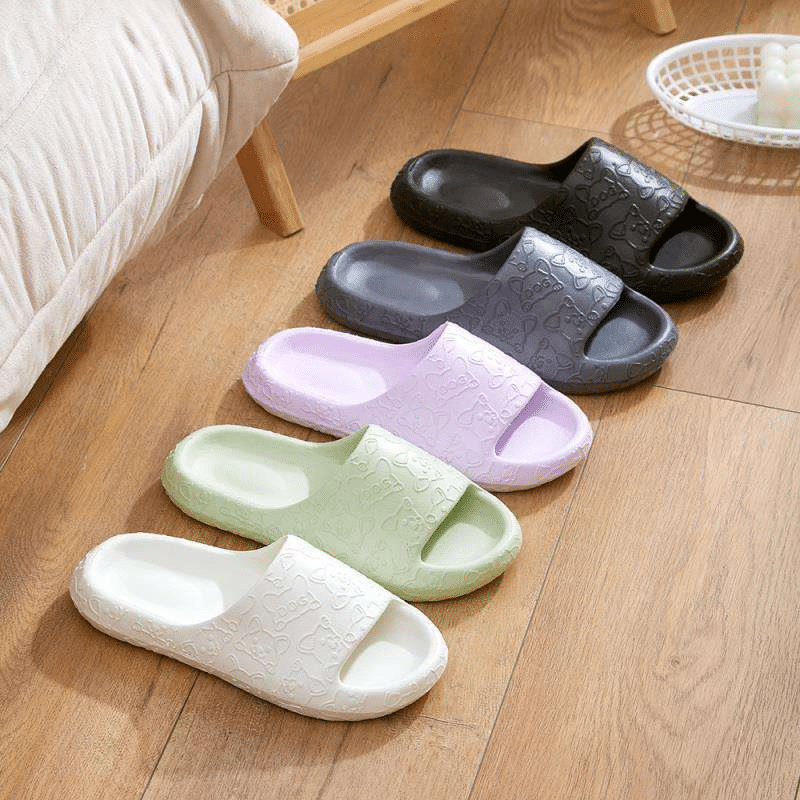
There’s a reason EVA has become the go-to material for casual footwear. It is light enough to keep shipping costs down, naturally water-resistant, and surprisingly durable when formulated correctly. Go to almost any beach town, spa, or hotel pool area and the footwear on display tells the same story: EVA slides, clogs, and flip-flops have replaced a lot of the old rubber and PVC comfort styles.
According to industry reporting from Grand View Research, the EVA foam market continues to grow steadily, with footwear remaining one of the biggest application areas. For brands, the material also offers something less obvious: mold flexibility. A skilled supplier can use the same core tooling logic to make minimalist pool slides, chunky clogs, or more fashion-driven sandals, which makes scaling a product line far easier than with stitched or cemented constructions.
Where EVA Slippers Are Commonly Sourced
Most buyers start with China, and for good reason: the country has a deep footwear supply chain, experienced mold makers, and a wide range of production capacities. Other Asian manufacturing hubs also offer EVA footwear, though the level of specialization can vary.
What Buyers Usually Compare
Before narrowing down a supplier list, it helps to compare a few practical factors:
- production capacity
- MOQ flexibility
- customization support
- material consistency
- lead time stability
- export experience
| Region | Typical Strengths | Common Risks | Best For |
|---|---|---|---|
| China | Mature supply chain,customization,stable output | Many intermediaries in the market | Private label and bulk orderes |
| Vietnma | Competitive labor and footwear experience | Fewer highly specialized EVA factories | Mid-scale production |
| Other Asian hubs | Flexible manufacturing in some cases | Capacity and consistency may vary | Trial projects or diversified sourcing |
Where to Start Your Search
The easiest way to find a manufacturer is to begin with a few common sourcing channels. Each one has its own strengths.
1.Google Search
Google is often the fastest starting point. Simple search terms such as:
- EVA slippers manufacturer
- EVA slippers factory
- custom EVA slippers supplier
- wholesale EVA slippers manufacturer
can reveal factory websites, product pages, and company profiles. This method is useful because it helps buyers see whether the supplier has a real online presence beyond a marketplace listing.
2.B2B Platforms
Platforms like Alibaba, Made-in-China, and Global Sources are also common places to begin. They can help buyers compare multiple suppliers in one place, request quotes, and quickly check product ranges.
According to Alibaba’s sourcing guidance, buyers should review company profiles, response speed, verification status, and sample support before moving forward. That kind of basic screening helps reduce risk early.
3.Trade Shows and Industry Events
Trade fairs remain valuable for buyers who want to speak directly with suppliers. Footwear exhibitions often make it easier to compare materials, ask about tooling, and judge whether a company is a true factory or only a sales agent.
What Separates a Reliable Manufacturer from a Middleman
This is probably the single most frustrating aspect of sourcing. Middlemen aren’t inherently problematic—some offer real value through quality control and logistics coordination—but paying factory-gate prices to an intermediary who doesn’t add either technical oversight or accountability is a fast way to erode margins.
Some signs that should be given more attention are:
- Willingness to show real-time factory floor video rather than polished showroom photos
- Direct engineering conversations about mold steel type, cavity count, and cycle time—middlemen typically deflect these
- Transparent breakdowns of material cost vs. processing cost in quotations
- Registered business scope that explicitly includes “manufacturing” when checked against Chinese business registriesWhen evaluating a potential partner for custom EVA slippers, the mold development conversation often reveals everything. A genuine factory will discuss gate placement, cooling channel design, and EVA compounding ratios. A middleman will talk about price per pair and ask for a deposit. The difference isn’t subtle once you know what to listen for.
Evaluating Quality Before You Commit
Samples tell a story, but you need to know which chapters to read. EVA quality varies dramatically depending on the resin grade, blowing agent type, and cross-linking density used during production.
| Quality Checkpoint | What It Reveals |
|---|---|
| Compression recovery(squeeze and release) | Cross-linking density;higher quality rebounds faster |
| Shore hardness consistency across the sole | Even material mixing and curing |
| Odor after 24 hours out of packaging | Residual blowing agents;strong chemical smell suggests incomplete curing |
| Surface finish uniformity | Mold maintenance standards and ejection system quality |
| Color matching between left and right shoes | Production consistency;surprisingly common failure point |
Requesting material certification upfront isn’t unreasonable. Reputable suppliers will provide SGS, Intertek, or equivalent third-party test reports covering key restricted substances—especially important if the product is destined for EU or North American markets where regulations like REACH and CPSIA apply. The testing standards for footwear materials are well-documented by organizations like SATRA, whose guidelines many established manufacturers follow as a baseline.
The Customization Conversation: What to Prepare
Walking into a customization discussion without preparation tends to result in inflated mold quotes and unnecessarily long sampling timelines. Here’s what should be ready before that first call:
- Technical drawings or reference samples with key measurements—heel height, strap thickness, overall weight target
- Target shore hardness range (typically 45–65 Shore C for comfort-focused slippers)
- Estimated annual volume across all planned colorways and sizes
- Packaging and labeling requirements, including barcode placement and hangtag specifications
- Compliance standards the finished product must meet for the destination market
Mold costs for EVA injection can range from $800 to $3,000 per cavity depending on complexity and steel grade. That upfront investment makes it worth confirming the manufacturer can actually deliver consistent production before committing to tooling.
Common Pitfalls When Sourcing EVA Footwear
The most frequent complaint from buyers isn’t about price—it’s about consistency. First production runs arrive looking pristine, and by the third reorder, the material feels different, colors drift slightly, and the packaging isn’t quite the same. This happens when manufacturers substitute resin grades or adjust blowing agent ratios to manage their own cost fluctuations without informing the buyer.
Another recurring issue involves shrinkage rates. EVA naturally shrinks after demolding, and experienced factories account for this in mold dimensions. Less experienced ones might deliver a size 42 that fits closer to a 41, which creates a wave of returns that nobody wants to deal with. Asking for shrinkage rate documentation—and verifying it against sample measurements—catches this problem early.
FAQ
How can buyers verify an EVA slippers manufacturer without visiting the factory in person?
Independent third party inspection services provide pre-shipment and during-production audits at a much lower cost than international travel. Ask for a detailed audit report — one that comes with photos of the production lines, the conditions under which raw materials are stored, and the density of workers on the factory floor. Some buyers also ask for a live walkthrough video to be done, focusing on specific equipment serial numbers that were previously photographed to help ascertain that the footage is indeed current.
What’s the relationship between EVA material density and long-term durability?
Contrary to common perception, density and durability do not run in a straight line. A low-density EVA formulation with proper cross-linking can in fact last longer than a poorly cured denser one. The vital metric is resilience—how well the material springs back to its original shape after being compressed many times. This is much more important for slippers that will be worn daily than the initial cushioning feel, which usually gets overrated during sample evaluation.
Are there sustainable EVA alternatives that don’t compromise on the comfort consumers expect?
Commercially viable grades are now available from several manufacturers who reduce fossil fuel dependency by 30–50% with bio-based EVA formulations that incorporate ethylene derived from sugarcane. The other option is recycled EVA content, but consistency remains challenging. In this application, post-industrial scrap tends to perform more predictably than post-consumer material. The price premium of the trade-off is currently about 15–25%, though that gap is narrowing as production scales.