| Type | Upper structure | Typical materials | Primary use |
| Flip-flop | Y-shaped toe post | Rubber, EVA, PVC | Beach, pool, casual |
| Slide | Single wide instep band | EVA, rubber, textile | Home, gym, recovery |
| Scuff | Open back, low vamp | Wool, fleece, suede | Bedroom |
| Mule | Closed front, open heel | Leather, suede, felt | Indoors, smart-casual |
| Clog | Closed toe, perforated or solid | EVA, PVC, rubber | Kitchen, clinic, garden |
| Classic slip-on | Full back, low collar | Textile, memory foam | Everyday indoor |
| Ballerina | Thin sole, low-cut vamp | Fabric, velvet, satin | Travel, hospitality |
| Moccasin | Stitched apron, soft sole | Suede, leather, wool | Cold floors |
| Bootie | Ankle coverage, closed back | Fleece, knit, suede | Winter indoor |
| Novelty and therapeutic | Shaped or contoured | Plush, foam, cork | Gifting, foot support |
The ten main types of slippers are flip-flops, slides, scuffs, mules, clogs, classic slip-ons, ballerina slippers, moccasins, booties, and specialty styles split between novelty and therapeutic designs. They sort into three families, open-back, closed-toe, and specialized, and each family is defined by the material of its upper and sole, which decides where the product can realistically be used.
The table above lays out all ten; style sets the silhouette, material sets the performance, and the intended use case decides whether the two are compatible at all.
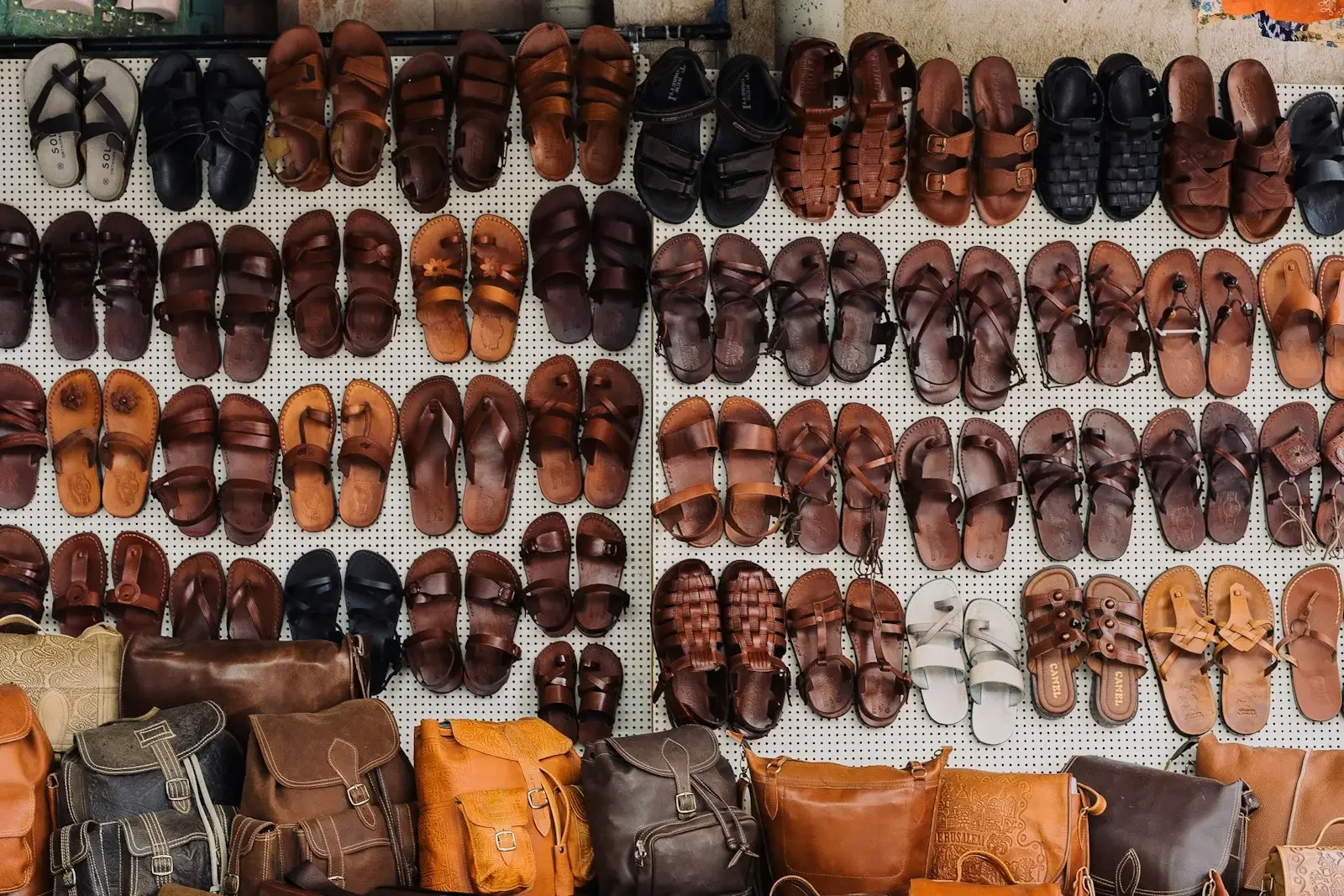
What Are the 10 Main Types of Slippers?
All ten answer one question differently: how much of the foot is enclosed, and how is the shoe actually held on. Open-back styles rely on a band, a strap, or a deep heel cup; closed-toe styles wrap the upper around the foot; specialty styles modify either structure for a narrower job such as gifting or orthotic support. That retention method separates a slipper you can walk in from one you cannot.
Open-Back Styles: Flip-Flops, Slides, Scuffs, and Mules
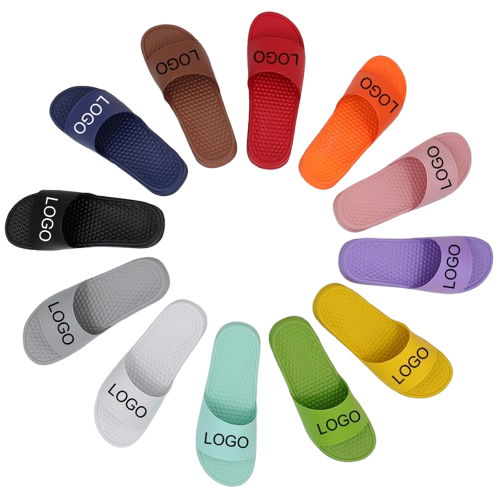
A flip-flop grips through a toe post, the least stable attachment of any slipper, which is why the style belongs to short distances on soft or wet ground. A slide replaces the post with a wide band across the instep, spreading load over a larger area and making the style genuinely walkable; this is why wholesale slides have become the default base for recovery and house footwear. A scuff drops the back and keeps a low vamp, prioritising step-in speed, while a mule closes the front and leaves the heel open.
Closed-Toe Styles: Clogs, Slip-Ons, Ballerina, Moccasin, and Bootie
Closed-toe construction trades ventilation for protection. The clog is the most engineered of the group: a moulded body, a raised toe box that deflects spills, drainage or ventilation openings depending on the model, and often an optional heel strap that turns a slip-on into something close to a shoe. That combination is why EVA clogs wholesale volume concentrates in kitchens, clinics, and gardens rather than bedrooms. Slip-ons and ballerina slippers sit at the opposite end, using a thin sole to keep weight and cost down, while moccasins and booties add stitched uppers and ankle coverage for warmth.
Specialty Styles: Novelty and Therapeutic Slippers
Novelty slippers are a gifting category first and footwear second, so surface appeal and sizing tolerance matter more than durability. Therapeutic slippers run the other way. They carry a contoured footbed, a defined heel cup, and a firmer midsole, all of which tighten size tolerance and raise tooling cost, because a support feature that lands in the wrong position is worse than no feature at all.
Slipper Materials and How Each One Performs
No single material is best, because each one wins on a different property and loses on another. EVA dominates volume for being light, waterproof, and cheap to mould; PVC wins on abrasion resistance per unit of cost; rubber wins on wet grip; textile and wool win on warmth and moisture handling; leather and cork win on perceived value and shape retention. The right choice is the one whose weakest property still clears the requirement of the intended use.
| Material | Weight | Water resistance | Breathability | Warmth | Relative cost | Strongest fit |
| EVA foam | Very light | High | Low | Low | Low | Home, bathroom, slides |
| PVC | Moderate | High | Very low | Low | Lowest | Hotel, high-turnover use |
| Rubber and TPR | Moderate to heavy | High | Very low | Low | Moderate | Beach, wet floors |
| Textile and fleece | Light | Low | Moderate | High | Low | Bedroom, winter indoor |
| Wool and felt | Light | Low | High | High | Moderate | Cold climates |
| Leather and suede | Moderate | Low to moderate | Moderate | Moderate | High | Premium indoor |
| Cork-latex | Moderate | Low | Moderate | Moderate | High | Support footbeds |
EVA and Blown Foam
EVA is a closed-cell foam, meaning the gas bubbles inside are sealed, so water does not travel through the body of the sole. That one property explains most of its market position: it moulds into a complete slipper in a single shot, it floats, it dries quickly, and an adult slide commonly lands between 100 and 200 grams. It also accepts colour, texture, and printed graphics directly in the mould, which makes custom EVA slippers practical at moderate volumes without a separate decorating step.
The limits matter. EVA softens with sustained heat, so storage in a hot vehicle is a real risk, and it takes a permanent compression set under load, which is why a heavily used pair flattens under the heel before the upper shows wear.
PVC, Rubber, and TPR
PVC is denser and harder than EVA, resists abrasion well, and costs less, which is why it dominates high-turnover public and hospitality use; the trade-offs are stiffness, a cold feel underfoot, and recycling difficulty. Rubber compounds deliver the best wet grip and stay effective on poolside tile, at the cost of weight. Standardised testing exists for exactly this claim: ASTM F2913-24 measures the dynamic coefficient of friction of a whole shoe against a flooring surface, a far more defensible basis for a slip-resistance claim than a photograph of a tread pattern.
Textile, Wool, Leather, and Cork
Textile uppers solve the problem foam cannot: moisture. Cotton and terry absorb perspiration, wool wicks it while regulating temperature, and both keep a foot comfortable in a way a sealed foam surface never will. The cost is washability, because a bonded textile upper rarely survives the same cycle as a moulded one. Cork-latex is the outlier: firm rather than soft, and gradually conforming to the arch, which is why contoured footbeds almost always use it instead of foam.
Matching Slipper Types to Real Use Cases
The use case should be fixed before the style, because it dictates which properties are non-negotiable. A bathroom needs drainage and wet grip, a hotel needs quietness and cleanability, a beach needs UV resistance, and a workplace needs oil resistance and easy disinfection. Once those requirements are set, the choice of style narrows to two or three options rather than ten.
| Use case | Recommended types | Non-negotiable requirement |
| Home and bedroom | Scuff, mule, slip-on, bootie | Light weight, quiet outsole |
| Bathroom and shower | Slide, clog, perforated slip-on | Drainage, quick drying, wet grip |
| Hotel, resort, and spa | Ballerina, mule, slide, wrapped slip-on | Cleanability, low noise, consistent sizing |
| Beach, pool, light outdoor | Flip-flop, rubber slide, clog | UV stability, water resistance |
| Medical, food service, workplace | Enclosed clog, strap clog | Disinfection tolerance, oil resistance |
Home, Bedroom, and Dormitory
Indoor-only use relaxes almost every requirement except two: weight and noise. A hard PVC outsole on a timber floor is audible from the next room, so a softer EVA or textile-soled construction is usually the better specification. Fit should be close but not compressive, since an oversized slipper forces the toes to over-grip.
Bathroom and Shower
This is the most demanding indoor environment and the one where cheap specifications fail fastest. Water needs somewhere to go, which means drainage channels, perforations, or a sole profile that does not trap a film of water underneath. Drying speed matters as much as grip, because a slipper that stays damp develops odour and breaks down at the bond line.
Hotel, Resort, and Spa
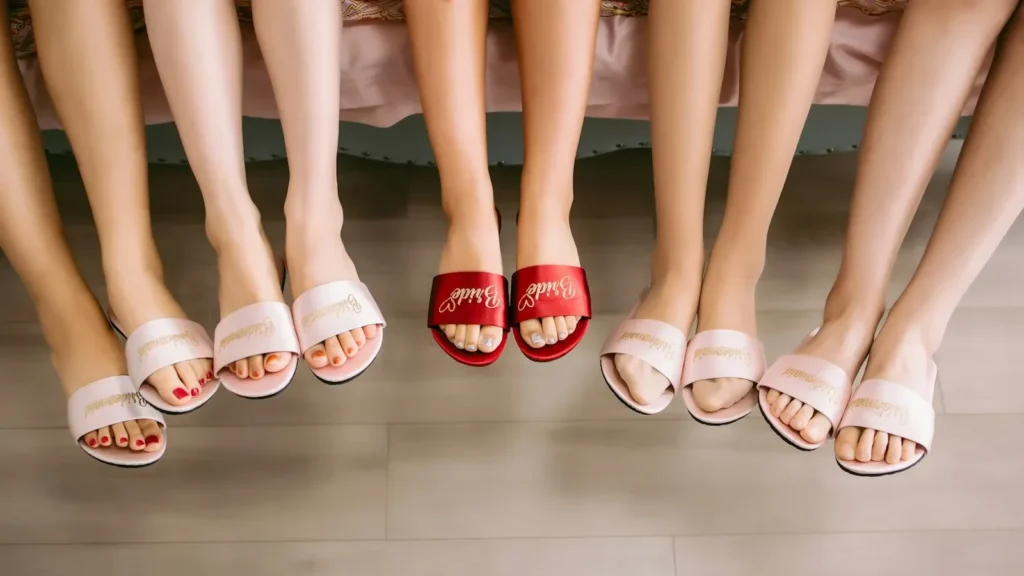
Hospitality splits into two product lines with almost nothing in common. Single-use slippers optimise for cost, flat packing, and a clean unboxing experience; reusable wholesale spa slippers optimise for laundering cycles, colourfastness, and size consistency across a property. Quietness is an underrated specification, because a hard-soled slipper in a corridor at night is a guest complaint.
Beach, Pool, and Light Outdoor
Sun exposure degrades foam faster than abrasion does, so UV stabilisers and colour-fast pigments matter more than tread depth. Sand and salt also attack bonded joints, which favours single-piece moulded construction over multi-part assembly.
Medical, Food Service, and Workplace
This is the one segment where a slipper has to behave like a shoe. Closed toes protect against spills, heel straps keep the foot seated during long shifts, and the compound must tolerate repeated disinfection without hazing or cracking. Oil and grease resistance separates a kitchen specification from a household one.
What Slippers Do Podiatrists Recommend?
Podiatrists converge on structure rather than on any particular style. The recurring recommendation is a slipper with a defined heel cup, a raised and firm arch, a midsole that resists compression, and a retention system that keeps the foot from sliding, which in practice points to enclosed heels, deep heel cups, or an adjustable strap. Backless, flat, and highly compressible slippers are the ones most often advised against for extended wear.
Walking barefoot or in a flat slipper on a hard floor loads the plantar fascia continuously, and because the tissue shortens overnight, the first steps of the morning concentrate that load at its attachment point. A supportive indoor slipper holds roughly the same foot position as an outdoor shoe, so the transition between the two no longer involves a sudden drop in support.
The Features That Decide Support
- Heel cup depth: at least 10 mm of rim, enough to hold the fat pad in place.
- Arch height: a raised medial arch that contacts the foot, not a decorative bump.
- Midsole firmness: press it with a thumb; it should resist rather than bottom out.
- Retention: enclosed heel first, deep heel cup second, flat band last.
- Outsole grip: specified against a measurable friction standard, not a pattern.
Styles Podiatrists Favour, and the Exceptions
Enclosed clogs, mules with a deep heel cup, and structured slides with a contoured footbed appear consistently in clinical recommendations, and podiatrist-recommended slippers increasingly use a removable insole so a custom orthotic can be transferred from outdoor shoes. Two exceptions are worth flagging. Anyone with diabetes or peripheral neuropathy should avoid open heels and thin soles entirely, because unnoticed pressure points carry disproportionate risk. Knit sock-style slippers, while comfortable, function closer to hosiery than footwear.
For buyers who need a third-party reference, the APMA Seal Program reviews submitted footwear against foot-health criteria and publishes accepted products in a searchable database, a useful benchmark even though the absence of a seal does not by itself indicate a poor product.
Which Slipper Types Are Trending Now?
Thick-soled EVA slides remain the volume leader, recovery slides with contoured footbeds are the fastest-growing premium tier, minimalist flat slides and low platforms cover the fashion-led segment, and lower-impact materials have moved from a marketing angle to a purchasing requirement. Comfort has stopped being a category and become a baseline expectation across every price band.
Cloud and Pillow Slides
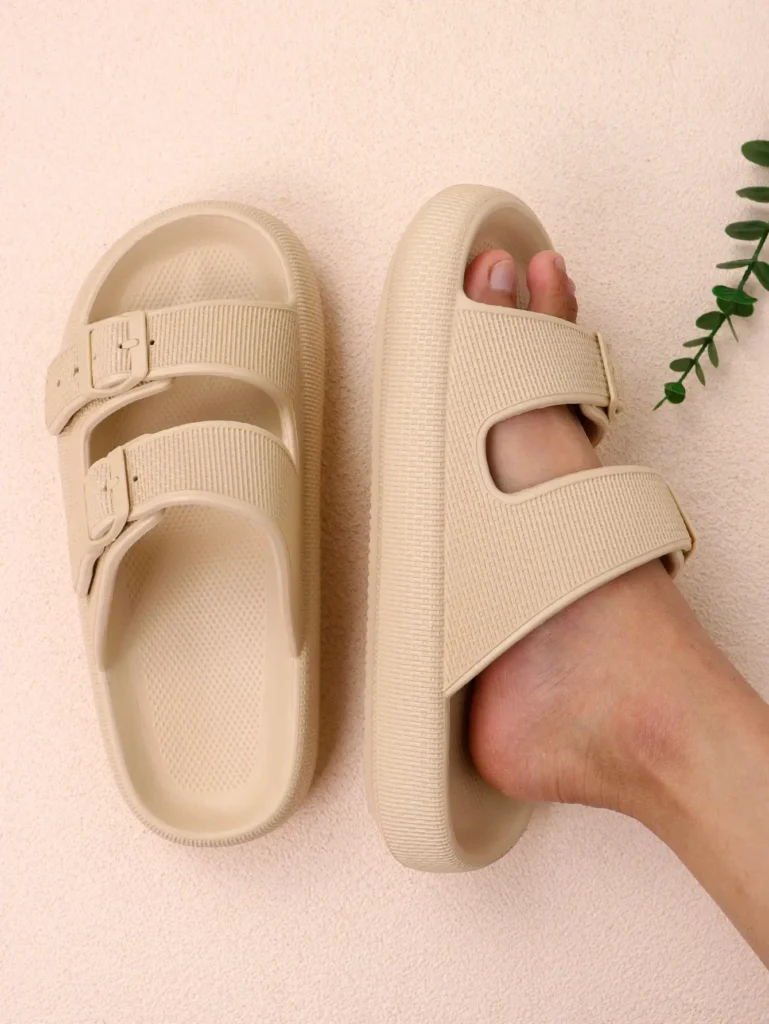
The thick, single-piece EVA slide has moved past its viral phase into a stable staple, and marketplace data shows the category concentrating in a narrow retail band rather than spreading upward. For a buyer that concentration is the signal: competition sits on price and repeatable quality at the entry tier, not on novelty. The engineering differentiator is sidewall height, because a taller wall holds the foot centred instead of letting it roll over the edge.
Recovery and Footbed-Led Slides
This is where the margin has moved. Recovery products borrow from running footwear: dual-density midsoles with a firmer core, anatomical arch shaping, and a heel cup deep enough to stabilise the rearfoot. They cost more to tool, but they carry a higher price ceiling and a clearer reason to buy, which is why the segment keeps growing while plain foam slides flatten out.
Minimalist Slides, Platforms, and Lower-Impact Materials
The minimalist side favours square toes, woven straps, and muted finishes for customers who want a slipper that reads as a shoe. The platform side adds 1.5 to 2 inches of lift while trying to keep the footbed soft, a harder problem than it looks, since height reduces stability and the sole needs a wider base to stay walkable. Alongside both, recycled EVA, bio-based feedstocks, and washable reusable constructions are shifting from optional to expected. The practical version is not a new polymer but a simpler product: fewer bonded components, mono-material construction, and a documented material declaration.
How to Evaluate Slipper Quality Before a Volume Order
Quality is decided by a small number of measurable properties, and nearly all of them can be checked on a pre-production sample. Bond strength, outsole hardness, strap tensile strength, colourfastness, and weight tolerance between pairs predict field failure far better than appearance does.
| Checkpoint | Method | Practical benchmark |
| Outsole hardness | Durometer reading on the finished sole | Consistent across the pair |
| Bond strength | Peel test on multi-part uppers | No separation after sustained flexing |
| Strap tensile | Pull test at the anchor point | Holds load without elongation at the fixing |
| Colourfastness | Rubbing and light exposure | No transfer to a white cloth |
| Slip performance | Whole-shoe friction testing to ASTM F2913 | Meets the stated friction threshold |
The risk profile changes with construction. A single-piece moulded slipper fails through material fatigue, compression set, and heat deformation, so the sample review should focus on density consistency and wall thickness. A multi-part slipper fails at the joints, so bond strength and adhesive compatibility become the deciding checks. Specifying the test and the benchmark in the purchase order, rather than describing the desired feel, is what converts a sample into a repeatable product.
FAQ
The differences behind these three answers all come down to the same two variables: how the footwear retains the foot, and how much load the sole is engineered to carry over time. Change either one and the product stops being interchangeable with the version beside it.
What is the difference between a slipper and a sandal?
A sandal is built to be walked in outdoors, so it uses a secured fastening such as a buckle, strap, or thong anchored to a structured sole. A slipper is designed for indoor, low-speed use and prioritises easy entry over retention, which is why many slipper constructions would fail as sandals. Slides and clogs cross both categories, but the intent behind the retention system is the reliable dividing line.
Why are hotel slippers usually thinner than home slippers?
Hotel slippers are specified for a single stay and a limited number of steps, so thickness adds cost and shipping volume without adding value the guest will notice. Thin soles also pack flat, which matters when a property orders in volume. Home slippers face repeated use on hard floors over months, so the sole has to resist compression set.
How do you keep moulded foam slippers from shrinking or warping?
Heat is the main cause, not water. Storing foam slippers in a hot vehicle, on a sunlit balcony, or near a radiator can deform them permanently, and the change is not reversible once the cell structure has collapsed. Wash in cool water, air dry away from direct sun, and avoid mechanical drying. Keep pairs flat in storage so the midsole does not take a set before it is worn.