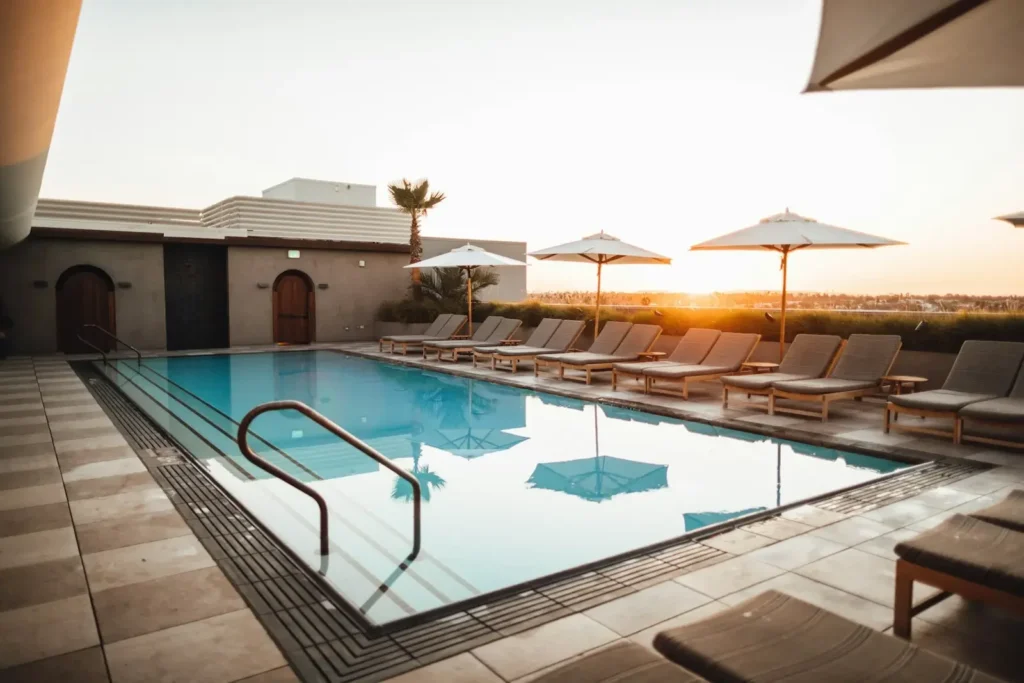
Every property with a wet deck runs into the same quiet procurement problem. Guests arrive without footwear, cross hot paving and slick tile barefoot, lose what they brought, and the pool area turns into a safety note and a service complaint at the same time. Buying pool slides for a hotel, resort, or water park is therefore not the same task as buying house slippers for the rooms. The product lives in chlorine, sun, and constant washing, it is seen by every guest, and it carries the property’s name on a surface no bigger than a strap.
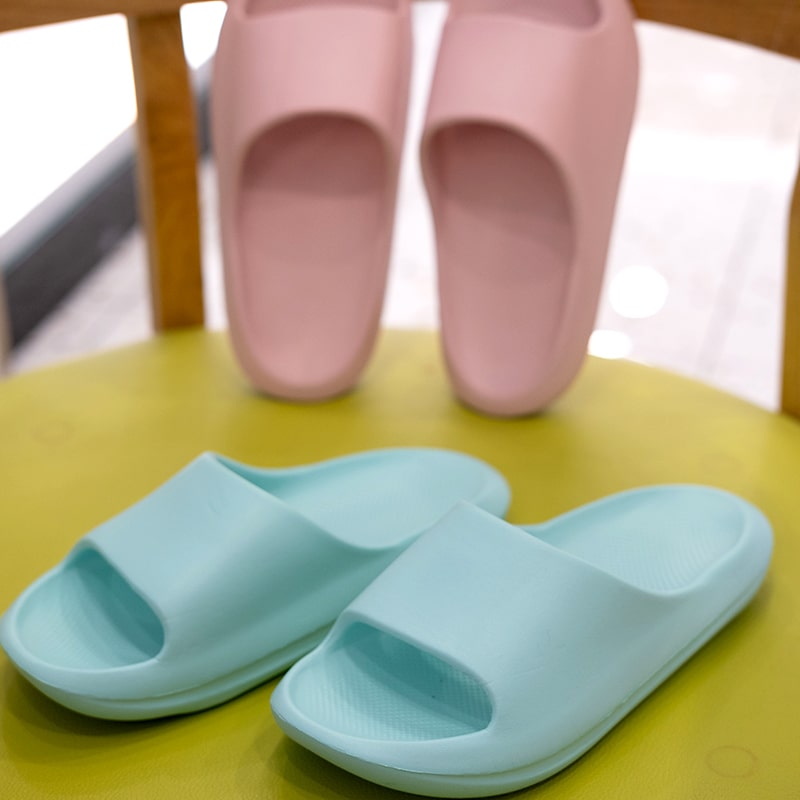
Custom pool slides for resorts and water parks are wide-band, slip-on sandals molded from EVA or PVC and produced to a property’s own colors, logo, and packaging. Wholesale pricing typically sits between USD 1.50 and USD 8.00 per pair FOB, with minimum order quantities of 300 to 1,000 pairs per style and 30 to 45 days of production after sample approval.
What follows is the specification sequence that keeps a poolside footwear program on budget, on brand, and safe underfoot, from the first style decision to the sealed sample.
What Custom Pool Slides Mean for Hospitality Buyers
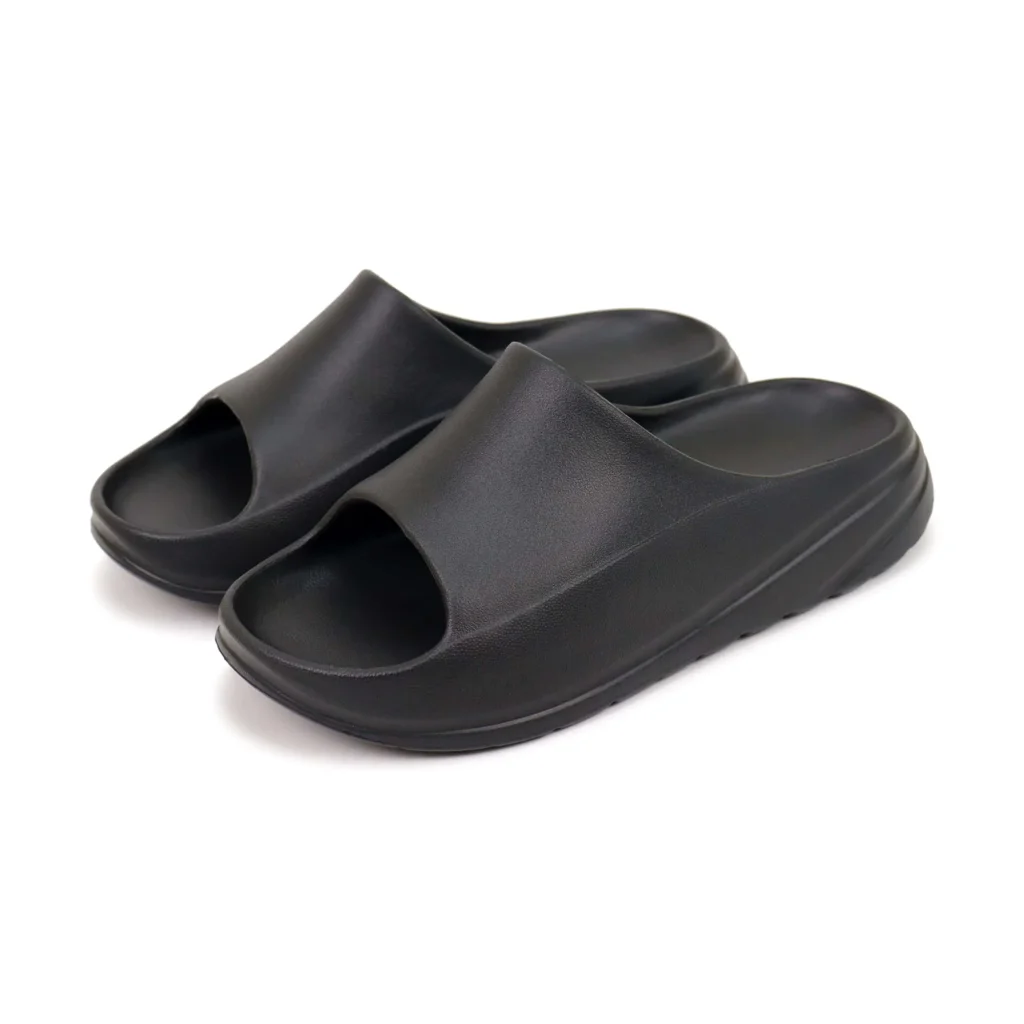
A custom pool slide is a single-band sandal with an open toe and a molded footbed, made in the property’s colors and marked with its logo. Resorts and water parks order the same basic construction in three different roles, and each role sets a different brief.
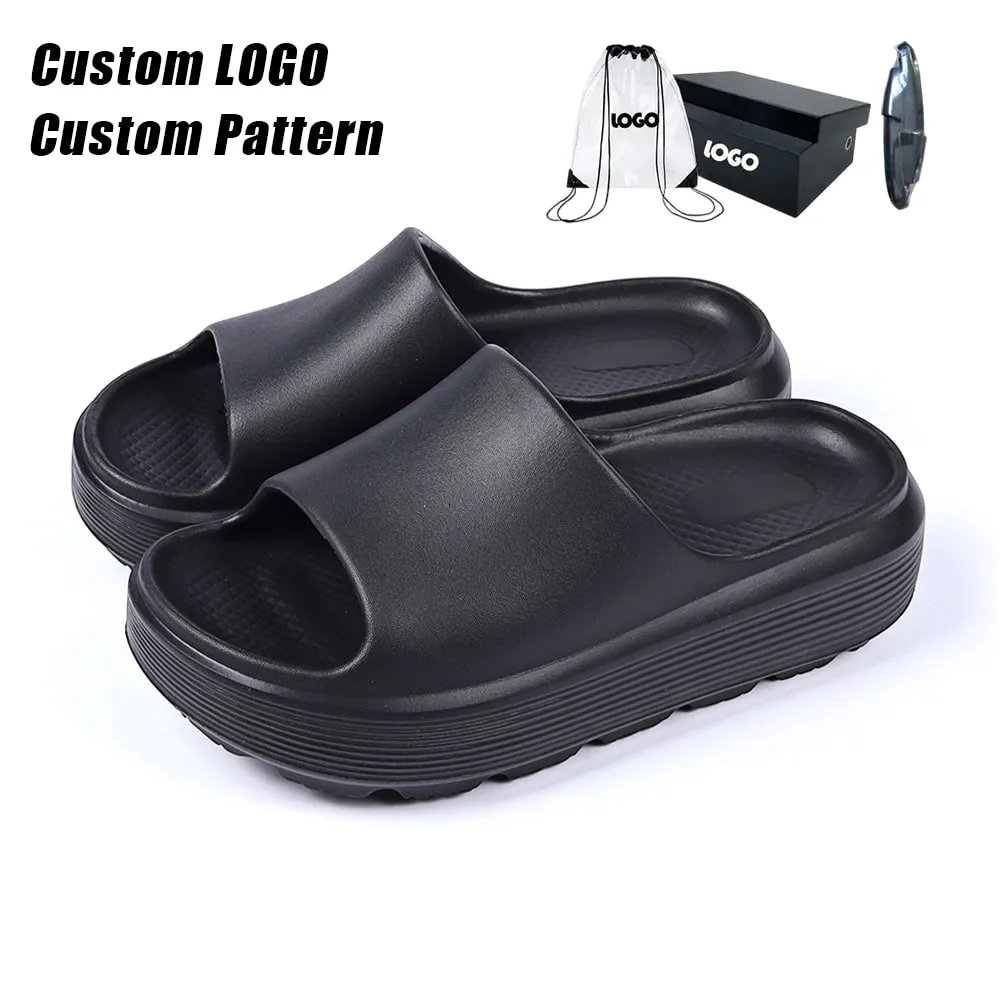
Because the three roles carry different economics, one specification rarely serves all of them. A pair that is handed out once and thrown away should be cheap and beautifully packed; a pair that is washed and reissued forty times should be dense and plain. Most properties run two of the three at once, which is why the brief is best written per zone rather than per property.
- In-room amenity: one pair per guest per stay, where unit cost and packaging presentation matter more than multi-season durability.
- Poolside loan stock: washed, sanitized, and returned to circulation, which demands closed-cell foam, a stable strap, and a managed size run per outlet.
- Retail and souvenir: sold at the pool bar or boutique, judged on appearance, size assortment, and packaging that survives handling.
Which Slide Styles Fit Which Guest Zones
Style selection follows the deck rather than the catalogue. The strap width, sole thickness, and tread pattern that suit a family splash area are the wrong choice for an adults-only spa terrace, so match the model to the guest zone first and choose color and branding afterwards.
A property usually has four surfaces: hot stone at the main pool, shaded timber at the cabanas, porcelain in the spa, and rough service paving at the back of house. The matrix below maps common constructions onto them.
| Style | Where it works and why |
| Classic single-band slide, 20 to 25 mm sole | Main family pool. The wide band holds the foot without toe grip, and the thin sole drains fast. |
| Thick platform slide, 35 to 45 mm sole | Spa terraces and cabana walkways where decks stay hot. Cushioning over heat, at a higher material cost. |
| Two-tone or dual-density slide | Design-led properties that want pool slides to read as part of a retail line, not an amenity. |
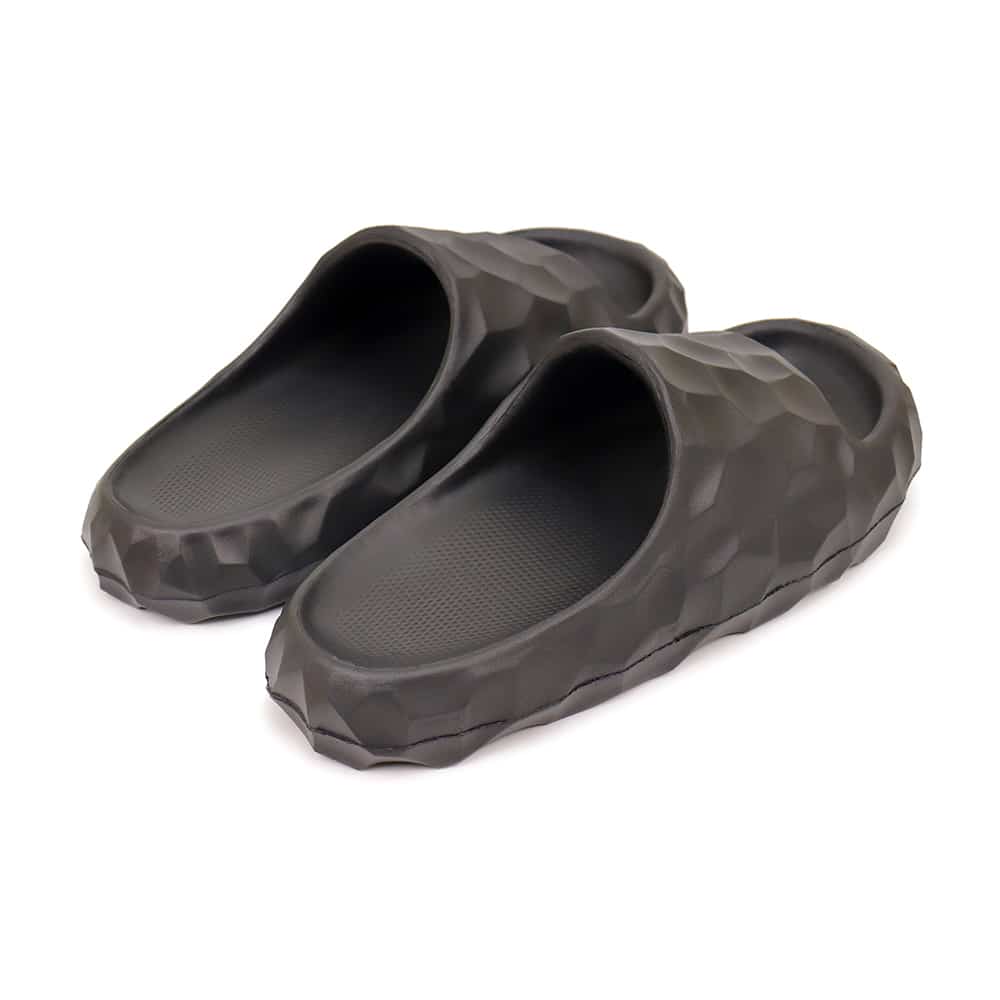
| Textured or perforated footbed | Heavy-traffic wet zones. Drainage channels stop water pooling under the foot and speed drying. |
| Children’s slide on a small last | Kids clubs and splash areas. Smaller molds, softer foam, less strap pressure. |
First-time buyers usually start from the Wholesale Slides Shoes range and narrow it by zone, since one last can be finished for a spa or a family pool without new tooling.
Which Material Survives Chlorine, Sun, and Daily Cleaning
EVA is the default for poolside programs: it stays light, flexes in air conditioning and heat alike, contains no plasticizers, and dries quickly. PVC competes on abrasion resistance and price, while rubber and TPE fill narrower roles where grip or a sustainability claim is the priority.
Material choice sets the replacement cycle, not just the invoice. A dense molded EVA pair of pool slides on a shaded deck can run two or three seasons; the same geometry in a soft, low-density foam can flatten within a single summer under constant loan use. Ask for density, rebound, and colorfastness figures rather than a generic description of the compound.
| Material | Behaviour on a chlorinated deck |
| Molded EVA, closed cell | Soft underfoot, no water absorption, reliable wet grip, no plasticizers. Moderate abrasion and gradual compression set. |
| PVC | Harder surface and strong chemical and abrasion resistance at low cost, but a stiffer feel and plasticizer migration over time. |
| Rubber outsole with EVA footbed | Best wear on rough paving and long boardwalks, heavier, slower to dry. |
| TPE or recycled blends | Middle ground on cost and grip, useful where a verified recycled content claim supports the brand. |
How to Specify Wet-Deck Slip Resistance
Slip resistance is a system rather than a line on a spec sheet. It comes from tread depth and groove direction working against a particular deck surface, and it has to be verified by a wet trial on the property’s own tiles, supported by a standard test method.
Practically, a hospitality slide wants 2 to 3 mm of tread relief, siped grooves running across the forefoot, and a rubber content high enough to stay grippy once the surface is wet and covered in sunscreen. Lab data is the starting point: ask for results to ASTM F2913, the standard test method for measuring footwear friction on wet surfaces, or an equivalent report from a footwear testing laboratory such as SATRA. Neither replaces the site trial, because friction depends on the deck, the water film, and the way guests actually walk.
The trade-off is real. Deeper, sharper tread holds grip on smooth tile but traps water, collects sand, and wears faster on rough paving. For a property that mixes porcelain and textured stone, one compromise is a medium tread with a soft compound, tested on the worst surface rather than the best one. Properties that need a documented anti-slip construction usually specify it up front and compare Custom Anti-Slip Slides Wholesale samples side by side on the same tile.
What Branding, Color, and Packaging Options Are Available
Branding on a pool slide is limited by the material. Molded EVA takes embossed and debossed marks that never peel, print covers wider areas with full color, and for in-room programs the packaging carries most of the perceived value.
The method should follow the role. Loan stock needs a mark that survives dozens of wash cycles, which points to in-mold tooling; retail stock can afford graphics that read well on a shelf. Color is the second control point: send a Pantone reference, agree a tolerance, and approve a production proof rather than a screen rendering, because EVA shifts slightly between batches.
| Method | Durability and best use |
| Molded emboss or deboss | Part of the sole itself and lasts the product life. Best on strap and footbed, requires tooling. |
| Screen print | Sharp on flat strap surfaces with good rub resistance, strongest at two or three colors. |
| Heat transfer or digital print | Full-color graphics and gradients, better suited to retail than to heavy loan use. |
| Footbed print under a clear layer | Large brand marks that stay visible through washing, common in amenity programs. |
Packaging usually decides the guest’s first impression. Poly bags suit back-of-house and bulk storage, non-woven pouches and printed boxes suit four and five star rooms, and a size sticker on the outside saves housekeeping time on every single pair.
How MOQ, Unit Cost, and Lead Time Are Structured
Unit cost is driven by foam density, sole thickness, logo method, packaging, and quantity. Minimum order quantities usually start at 300 to 1,000 pairs per style and fall once tooling exists, while production takes 30 to 45 days after the sample is approved.
Two numbers surprise buyers pricing custom pool slides for the first time. Tooling is a one-off charge outside the unit price, so a new mold looks expensive on a small first order until it is spread across later seasons. And a wide size run multiplies SKU count without multiplying volume, which is why some factories quote per size ratio rather than per pair.
| Cost driver | Effect on the quote |
| Foam density and sole thickness | The largest material lever, roughly proportional to sole volume. |
| Logo method | Molded tooling is a one-off; print adds a per-pair cost. |
| Packaging | A printed box can exceed the cost of the foam in low-density styles. |
| Order quantity | Tiered pricing improves as volume crosses container thresholds. |
| Size ratio breadth | More sizes per style means shorter runs and a higher unit cost. |
Map the timeline before the season is booked:
- Concept and specification: style, material, colors, logo placement, packaging.
- Sampling: 7 to 10 days for a development sample, longer if a new mold is required.
- Sealed sample and purchase order: the approved pair becomes the reference for later shipments.
- Material preparation and molding: 15 to 20 days, the longest single block.
- Printing, assembly, and packing: 10 to 15 days.
- Final inspection and dispatch: book space before this point, not after.
Properties running a first program often start with an existing mold through the Custom Slides Wholesale route, which removes tooling cost and shortens the first lead time.
How Many Pairs to Stock and How to Run a Reuse Program
Stock follows the provisioning model. A property that places slides in every room needs one pair per guest per night plus a 10 to 15 percent buffer, while a poolside loan program needs roughly one pair per two loungers in a three to five size run.
The loan model is the one that repays attention. Because molded EVA has no fabric lining or absorbent layer, a pair can be rinsed, sanitized, dried, inspected, and returned to circulation, and the whole cycle costs minutes of housekeeping time. What breaks the model is not wear but missing pairs and mixed sizes, so most operators tag sizes and count stock at each collection round.
- Wash protocol: rinse, sanitize, air dry in shade. Never machine dry, because heat warps the sole.
- Retirement criteria: tread relief under 1 mm, visible compression set, stretched strap, or permanent staining.
- Storage: cool, shaded, ventilated, loosely stacked. Long compression under weight flattens the foam.
- Size mix: track which sizes disappear first and rebalance seasonally; family resorts and adults-only properties differ sharply.
How to Vet a Supplier and Control Quality
Vet a supplier on documentation, sampling discipline, and in-line inspection rather than on the showroom pair. Ask for test reports, a sealed sample, and a written inspection level before the order is placed, and treat all three as contractual.
The documentation request is short and separates serious factories from traders: material safety data, chemical compliance for the destination market, colorfastness to chlorinated water, strap pull strength, density or hardness certificates, and a recent factory audit. Compliance paperwork is not a formality at customs, and a shipment held for a missing declaration costs far more than the certificates themselves.
Quality is then held at three points rather than one. Incoming material is checked for density and color, in-line production is checked for strap attachment and footbed finish, and the final inspection applies a stated acceptance level to the packed cartons. A factory that can describe those three gates without prompting is usually the one that also answers emails in the third season. Buyers comparing candidates often use the criteria in this guide to a Slides Manufacturer as a shortlist filter before requesting samples.
FAQ
Three questions come up once the specification is settled.
Where can resorts and water parks buy pool slides in bulk?
Three routes work. Factory-direct programs give the widest customization and the best unit cost at volume, hospitality supply distributors bundle footwear with other operating supplies and shorten delivery, and wholesale markets suit small replenishment orders where brand accuracy is secondary. Factory-direct is worth the extra lead time when the logo, color, and packaging all have to match an existing brand standard.
How are pool slides different from standard hotel house slippers?
House slippers are built for carpet and a single short stay, so they prioritize softness and low cost. Pool slides meet water, chlorine, hot paving, and repeated washing, which shifts the priority to closed-cell foam, tread depth, and strap strength. A house slipper used on a wet deck becomes slick within minutes, which is exactly the failure the poolside specification exists to prevent.
Can a property start with a small trial order?
Yes, and it is usually the right move. A trial of 300 to 500 pairs in one or two sizes lets a property test wet grip on its own deck, check how housekeeping handles the wash cycle, and see how guests respond before committing to a season. Expect a higher unit cost and existing tooling on a trial order, then negotiate pricing once the style is proven.