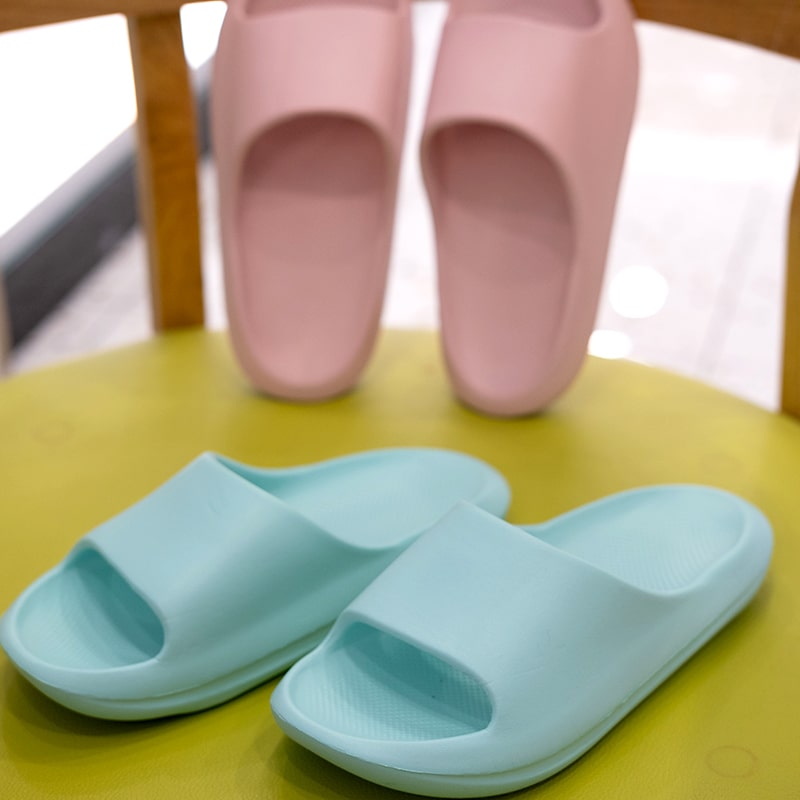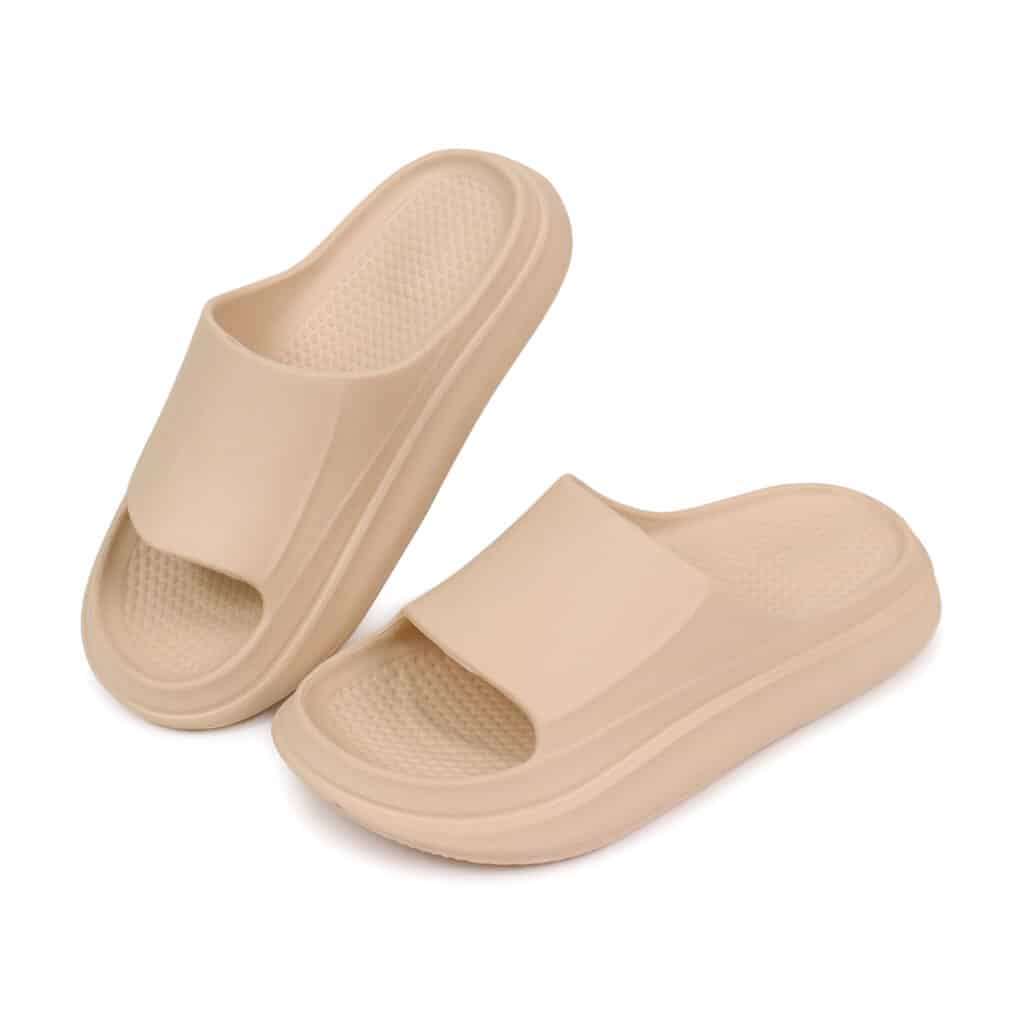
Pool and spa operators replace deck footwear more often than almost any other amenity item, yet it is usually bought the way bathroom slippers are: a colour, a size run and a promise on the carton. That holds up until a guest comes off the third pool step at speed, or an insurer asks for evidence that the footwear was specified for a wet, sloped, barefoot surface. Pool areas punish assumptions: the floor is never fully dry and never fully clean.
Non-slip slippers for swimming pool areas are selected by matching three things to the zone where they will be worn: outsole geometry, compound hardness and water evacuation. A pool-grade outsole needs a multi-directional tread at least 3 mm deep with open drainage channels, a closed-cell EVA or rubber compound in the 45 to 60 Shore A range, a heel cup that limits lateral drift and a strap that holds the forefoot through push-off. Grip is then confirmed by a wet-tile walk test, never by the word non-slip on a carton.
The sections below follow the decisions in the order a buyer actually meets them, from what causes poolside slips to the wording of a specification a factory can quote against.
Why Pool Decks Are Unforgiving for the Wrong Slipper
A pool deck is a surface in permanent transition between wet and dry, walked on barefoot and coated with chlorine, sunscreen and body oil residue, so grip depends less on what a slipper is made of than on how its outsole behaves once a water film sits between tread and tile.
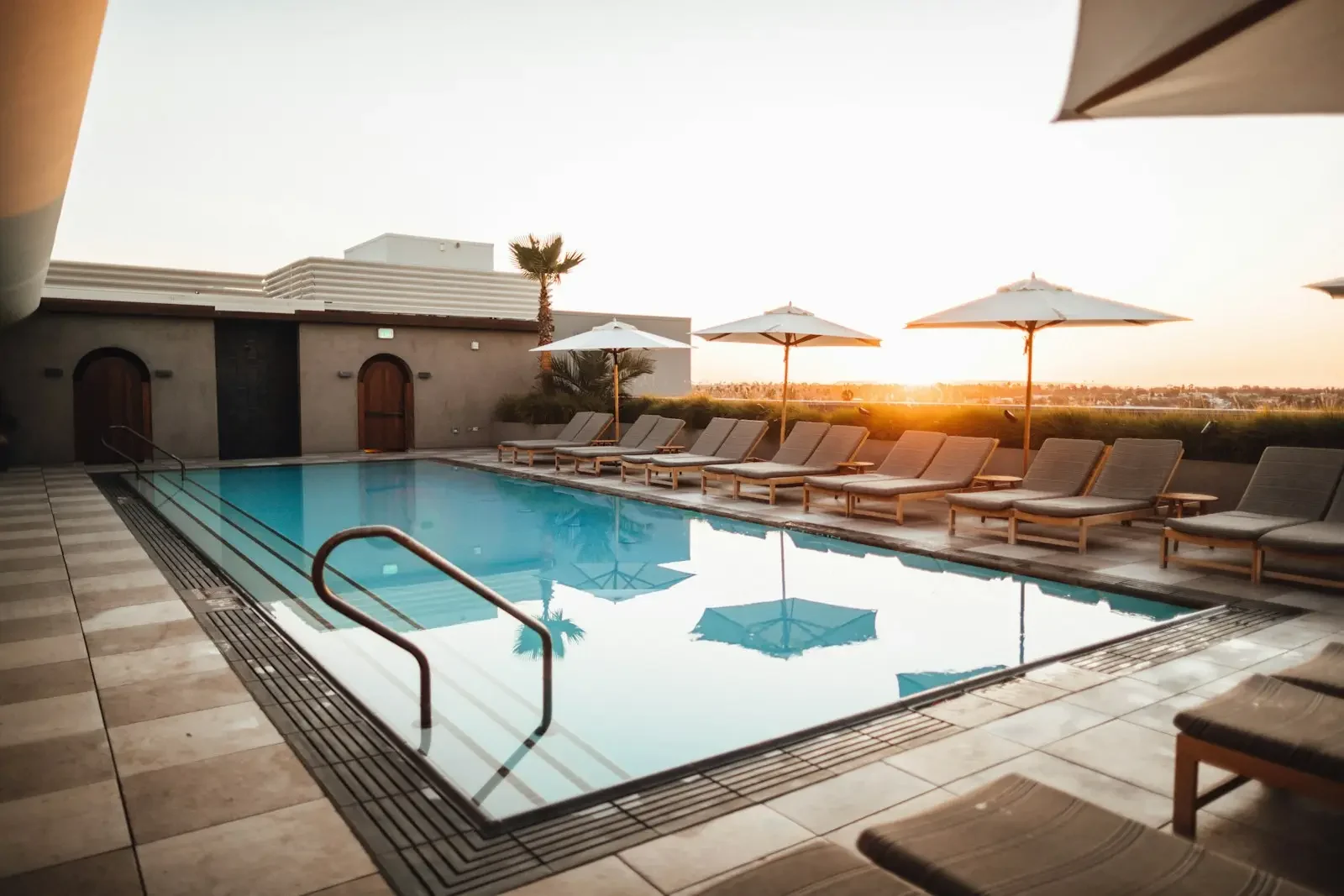
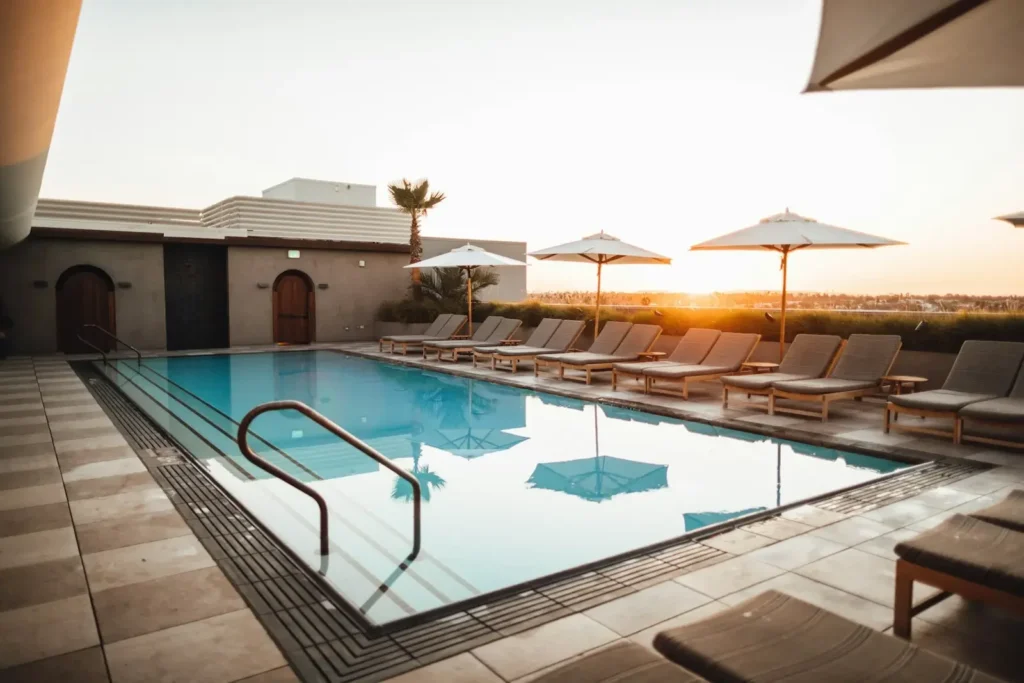
Slips rarely happen in the middle of a flat deck. They cluster where the foot changes angle or load: the first and last pool step, the lip of an overflow gutter, the shower exit, and the ramp into a children’s pool.
Standards bodies treat this as a separate problem from ordinary floor slip resistance. The DIN 51097 barefoot ramp test grades surfaces for wet bare feet by the angle at which a trained tester slips on a soap-wetted ramp: Class A holds to 12 degrees, Class B to 18 and Class C to 24. Pool surrounds are normally specified at Class B, while steps, ramps and sloped entries call for Class C. Footwear issued into those zones has to hold a bare foot stable at the top of that class.
A slip at the water’s edge is a fall toward water, and the World Health Organization estimates roughly 300,000 drowning deaths worldwide each year. Four conditions make footwear the weak link: water that cannot drain, a smooth or worn outsole, a foot that shifts inside the sandal, and a sole soft enough to fold.
What Features Define the Best Poolside Slippers?
The best poolside slippers combine a deep, interrupted tread with a compound firm enough to resist folding, drainage that empties the footbed within seconds, and a heel-and-strap system that stops the foot travelling forward when wet. Colour and platform height come after those four, because neither prevents a fall.
These are the criteria worth putting on a purchase order, in a form a supplier can be held to.
| Criterion | Pass line for pool use |
| Tread depth | 3 mm or more, cut in at least two directions |
| Compound hardness | 45 to 60 Shore A |
| Water evacuation | Open ports, side slots or midsole channels |
| Heel containment | Rim of 5 mm or more around the heel |
| Strap retention | No lateral slide at push-off with a wet foot |
Outsole Geometry and Tread Depth
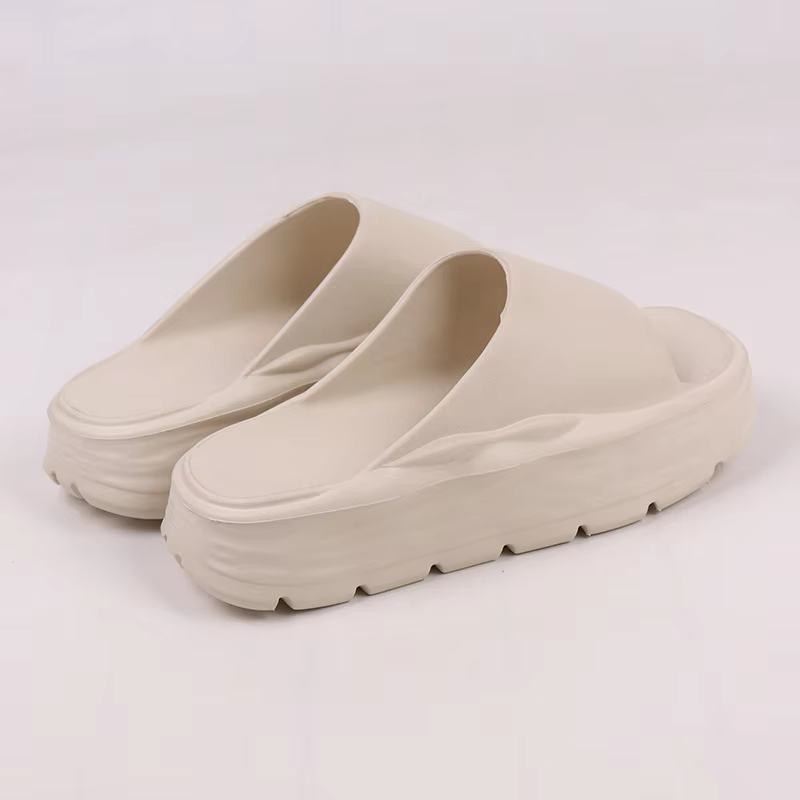
The strongest predictor of grip is how quickly a tread moves water out from under the foot. Asked what the best anti-slip slippers share, the answer is a pattern rather than a material: separated lugs rather than continuous ribbing, grooves that run across the walking direction as well as along it, and a heel edge that breaks contact cleanly. A non-slip EVA slides outsole uses wave or stud geometry for this reason, while glossy finishes and shallow decoration read as grip in a photograph and behave as slicks in service.
Compound Hardness and Wet Grip
Softer foam feels safer than it is. Below roughly 40 Shore A the sole conforms to the tile under load, squeezes the water film sideways instead of expelling it, and rolls at the heel on step edges. Above 60 Shore A it stops conforming to surface texture, and grip falls away on smooth porcelain. Density matters as much as hardness: low-density EVA of the right hardness still collapses under a heavy wearer after weeks of chlorine.
Drainage, Heel Cup and Strap Retention
Water left in the footbed defeats every other feature, because it lubricates the foot against the sole from inside. Open ports through the sole, side slots at the arch or a channel moulded into the midsole clear it within seconds of stepping out. Heel containment then decides whether the foot stays where the tread intended: a rim of 5 mm or more and a strap that crosses the instep remove most of the forward slide that turns a stumble into a fall on a step.
Which Footwear Type Suits Each Pool Zone?
Slides with a heel strap suit steps and sloped entries, flat single-band slides suit the deck and shower block, aqua socks suit learner pools and ramps, and enclosed clogs belong in back-of-house areas rather than at the water’s edge. The right type is decided by the zone, not by the style a buyer prefers.
A single property often needs three of these types across five zones. The wholesale slides shoes range covers the deck categories; the comparison below shows where each type fails.
| Footwear type | Best suited zone | Common failure on a pool deck |
| Single-band slides | Deck, lounger, shower block | Foot slides forward when wet, no heel hold |
| Flip flops | Dry deck, beach edge | Toe grip fails on steps and ramps |
| Aqua socks | Pool entry, ramps, learner pools | Thin sole wears through on rough aggregate |
| Deck sandals with heel strap | Steps, gutters, sloped entries | Adjusters corrode if the slipper is not rinsed |
What Should You Wear on Your Feet Inside the Pool?
Inside the water, almost all public pools require bare feet, and footwear is confined to the deck, the shower and the transition zones. Where a facility does allow footwear in the water, it is a closed aqua sock or a drainage sandal specified for ramps and learner areas, never a foam slide.
The barefoot rule is not arbitrary. Pool water is dosed on the assumption that the load entering it is predictable, and footwear carries deck residue, cleaning chemicals and changing-room debris into the basin.
Operators therefore split the journey into three legs. A guest walks to the water in a deck slipper, removes it at a rack at the pool edge, and crosses the wet surround barefoot. On the return leg the slipper goes back on while the foot is still wet, which is when a shallow heel cup and a slack strap cause the fall. Facilities that issue slippers for showers and changing areas should treat those as a separate specification, because tiled floors and pool steps load the sole differently.
Which Materials Hold Grip After Chlorine Exposure?
Closed-cell EVA and rubber hold wet grip longest in chlorinated environments, PVC loses it as plasticiser migrates and the surface hardens, and TPR sits between them. Material choice matters less for day-one grip than for grip in month six, which is when most deck footwear is actually judged.
Chlorine, ultraviolet light and repeated wet-dry cycling attack compounds differently. Understanding how to make slippers non-slip at the mould stage explains why two slippers with identical tread depths can diverge so far after a season.
| Material | Wet grip | Chlorine and water ageing | Weight | Notes |
| Closed-cell EVA | Good when textured | Stable, no hydrolysis | Very light | Odour-free at adequate density |
| PVC | Moderate | Plasticiser migration, hardening | Medium | Can turn glossy and slick with wear |
| Rubber | Very good | Excellent | Heavy | Strongest choice for steps and ramps |
| TPR | Good | Good | Medium | Holds fine tread detail well |
Construction matters as much as compound. A one-piece moulded slipper has no seam for water to enter, while a glued upper creates a channel where chlorine collects and the bond eventually fails.
How Do Buyers Verify Grip Before a Bulk Order?
Grip is verified by testing the actual production sample on wet tile at the angles the slipper will meet in service, not by accepting a compound datasheet. A five-step protocol covers certification, physical simulation, batch sampling and retained reference samples.
Laboratory figures describe a clean specimen on a standard surface, while a deck carrying sunscreen and biofilm behaves worse. The UK Health and Safety Executive makes the same point in its guidance on checking whether a floor is slip resistant: what matters is the surface as used and maintained.
- Request the compound and tread documentation, including any ramp-test classification the outsole pattern has been assessed against.
- Walk the counter-sample on wet ceramic tile laid at 10 degrees, with the tester’s feet wet, at normal walking pace.
- Repeat the walk on the same tile after 40 wet-dry cycles to expose hardness drift.
- Pull three pairs from each production batch and measure tread depth at five points per sole.
- Retain a sealed reference pair per batch so a later complaint can be compared against what was approved.
| Check | Method | Reject if |
| Tread depth | Depth gauge at five points per sole | Under 2.5 mm at any point |
| Wet grip | Ramp walk on wet tile at 10 degrees | Any slip at walking pace |
| Drainage | Pour 50 ml of water into the footbed | Water still standing after 30 seconds |
| Strap hold | Push-off test with a wet foot | Foot moves more than 5 mm sideways |
| Hardness | Shore A durometer at three zones | Outside the 45 to 60 range |
How Should a Pool Slipper Spec Sheet Be Written?
A pool slipper specification should state tread depth and pattern, compound and hardness range, drainage geometry, heel rim height, strap type and its pull strength, colour fastness under chlorine, and packing. Anything left vague will be resolved by the factory in its own favour.
Buyers working with a slippers manufacturer on a first order usually face one structural decision: adapt an existing mould, which shortens development and lowers minimum quantity, or cut a private mould, which buys tread geometry designed from the start for a specific deck. The first suits a hotel group standardising a consumable, the second a brand selling the slipper itself. Either way the specification should name the zone each size serves: one SKU across a spa, a leisure pool and a water park will be wrong in at least two of them.
How Do You Keep Grip Through the Season?
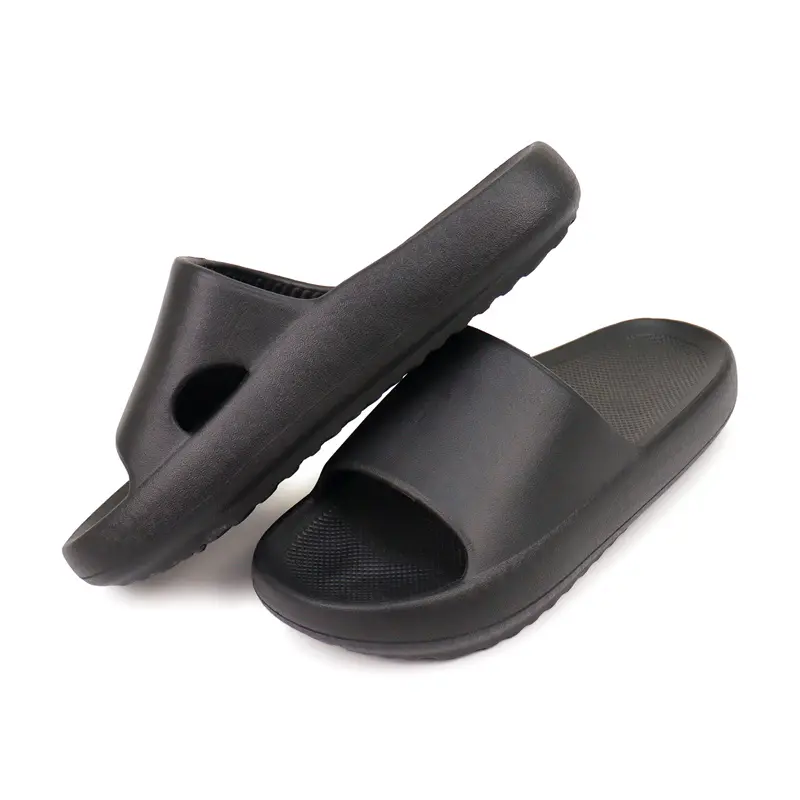
Grip is lost to residue before it is lost to wear. Rinsing chlorinated water out after each shift, removing sunscreen and body oil with a mild detergent, and drying in shade rather than in sun keeps a tread pattern working for its intended life.
Two residues do most of the damage. Sunscreen and body oil fill the grooves with a slick film that water cannot displace, while calcium from hard water leaves a mineral skin that polishes the lug faces; a soft brush and a weekly wash restore most of the texture. Heat is the other enemy: EVA left on a hot deck softens and loses the shape that held the heel.
Replace rather than refresh when three signals appear together: tread depth falls below 2 mm at the ball of the foot, the compound no longer springs back when pressed, or the heel rim has collapsed so the foot sits flat. At that point it still looks serviceable and has already stopped being non-slip.
Frequently Asked Questions
Three questions surface once a deck specification is agreed, and none of them is settled by the tread pattern alone.
Can the same slipper be used on a hot outdoor deck and in a sauna? Not usually. Sauna floors reach temperatures that soften standard EVA and can shrink it permanently, so a heat-stabilised compound or a rubber outsole is needed. A slipper rated for a wet deck is not rated for a 90 degree bench.
Should pool slippers be sized up for wet feet? Size for a secure fit, not a loose one. Wet skin swells slightly, but the greater risk is a slipper long enough that the heel sits off the back rim, which removes the containment the design depends on. Where a size run sits between two fittings, keep the heel inside the cup.
Is a thicker platform safer on pool steps? No. Added stack height raises the centre of gravity exactly where the foot is already changing level, and a thick soft platform can compress unevenly on a step edge. Steps and ramps favour a lower, firmer sole with a defined heel rim over a taller, softer one.