Sourcing custom slippers often feels like navigating a maze of numbers. You find a design you like, request a quote, and suddenly the factory quotes a minimum order quantity of 1,000 pairs per color, or tells you that adding one extra size doubles the MOQ. For B2B buyers, e-commerce sellers, hotel procurement teams, and startup footwear brands, the minimum order quantity is one of the most misunderstood figures in slipper sourcing, yet it directly determines inventory risk, cash flow, and how quickly a new product line can reach the market.
In custom slipper manufacturing, the MOQ is driven by three variables: the style you choose, the number of colors you order, and the size range you cover. A single style in one color with a standard size ratio typically starts at 500 to 1,000 pairs, while factories that support small-batch production can bring that figure down to 300 to 500 pairs per style and color combination. The more styles, colors, and sizes you add, the higher your total order quantity climbs.
The sections below break down exactly how each of these three dimensions shapes your minimum order, and what you can do to keep quantities, and risk, under control.
What Is MOQ for Custom Slippers?
MOQ, or minimum order quantity, is the smallest number of pairs a factory will accept for one production run, usually calculated per style and color combination. For custom slippers, typical minimums range from 300 pairs at flexible small-batch factories up to 1,000 pairs or more for fully custom production that requires new tooling.
Every slipper factory sets an MOQ for the same underlying reasons: raw materials must be purchased in bulk, molds and cutting dies must be tooled, production lines must be scheduled, and skilled labor must be booked for a continuous run. If an order is too small, the setup cost is spread over too few pairs and the factory loses money on the job. Industry discussions among footwear makers consistently show that orders under 100 pairs rarely cover production line and overhead costs, with margins falling below one dollar per unit, which is why the 300 to 500 pair range is widely regarded as the realistic entry point for quality factories that work with emerging brands. The same economics apply to the broader wholesale slippers market, where MOQ tiers, pricing, and lead times move together as one negotiating package.
The table below summarizes the most common MOQ tiers you will encounter when ordering customized slippers:
| Order Type | Typical Quantity | Best Suited For |
| Sample order | 10 to 50 pairs | Quality checks, photography, market testing |
| Low MOQ run | 50 to 300 pairs | Startups and niche tests, limited factory availability |
| Standard custom run | 500 to 1,000 pairs | Established e-commerce brands and retailers |
| Bulk production | 2,000 pairs and above | Retail chains, hotel groups, distributors |
Understanding where your business sits in this table is the first step. The next step is understanding how your product decisions, starting with style, move you up or down these tiers.
How Slipper Styles Affect MOQ
The style of your custom slipper determines which molds, materials, and production lines the factory must use, so complex styles carry higher minimums than simple ones. Styles built on existing molds can start around 300 to 500 pairs, while fully custom shapes that require new tooling push the MOQ to 1,000 pairs or more.
Common Custom Slipper Styles
A slipper is any lightweight indoor or casual shoe designed for comfort, but within that definition sit several distinct constructions, and each one is produced differently. Before you finalize a design for a custom slippers wholesale order, you need to know how each style is made and what it demands from the factory:
| Style | Key Features | Main MOQ Driver |
| Mule or backless slipper | Closed toe, open heel, soft upper | Cutting dies and sewing capacity |
| Slide | Wide single strap on a molded footbed | Injection mold |
| Flip flop | V-strap thong on a molded sole | Injection mold |
| Bootie slipper | Ankle coverage, more upper material | Extra material, more sewing steps |
| Spa or hotel slipper | Terry or waffle fabric, simple construction | Low complexity, lowest minimums |
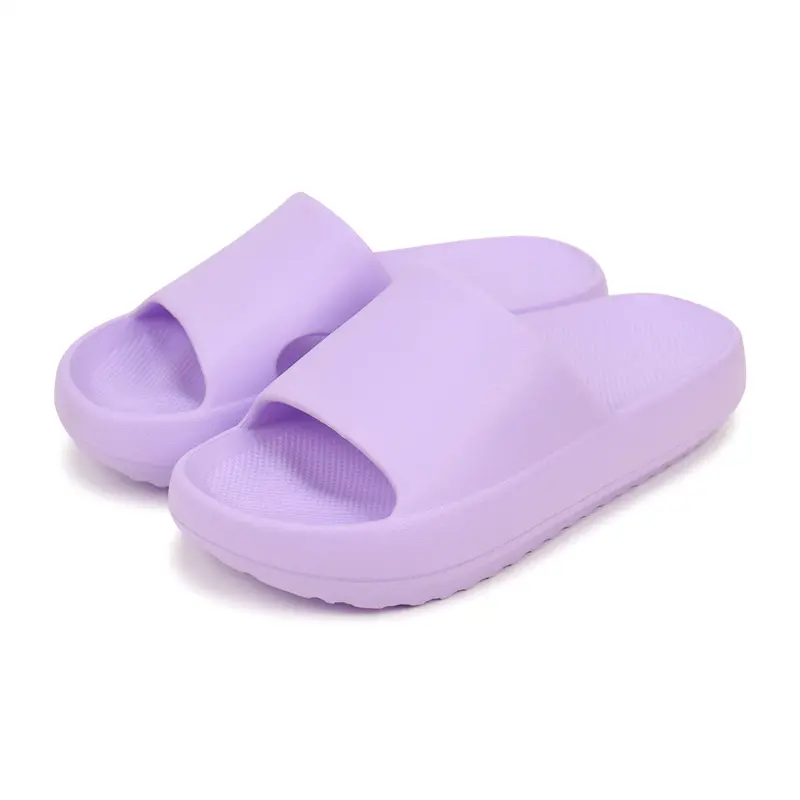
| Cloud slipper | Thick cushioned foam sole | Thick-sole molding |
Spa slippers and simple mule slippers usually sit at the lower end of the MOQ range because they use standard patterns and basic materials. Molded styles such as slides and cloud slippers depend on tooling, and the question of whether that tooling already exists becomes the single biggest factor in your minimum order.
Why Styles Change the Minimum Order Quantity
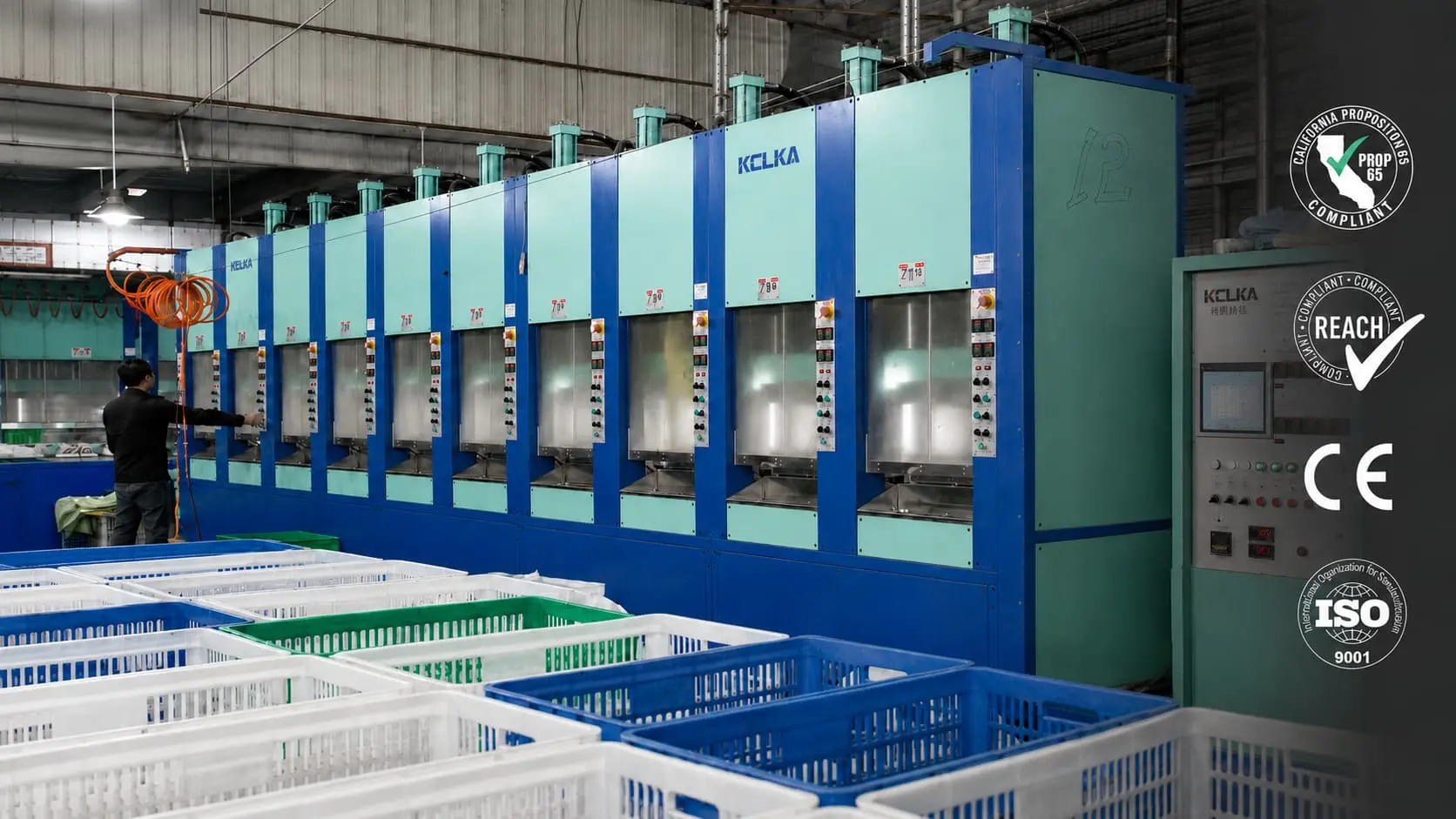
Molded footwear is produced through injection molding of materials such as ethylene-vinyl acetate, a lightweight foam polymer. When you choose an existing mold, the factory only pays for material and machine time, so the MOQ reflects a normal production run. When you request a custom shape, a new footbed contour, or an original strap design, the factory must machine a new mold, and that tooling cost must be recovered through a larger order. This is why the existing mold versus custom mold decision can change your MOQ by a factor of two or three.
Sewn styles follow the same logic with different inputs. A mule slipper needs cutting dies for the upper, fabric rolls in your chosen color, and sewing line time. The more pieces the design contains, the longer the assembly time per pair and the higher the practical minimum for the run to make economic sense.
How Colors Affect Your Custom Slipper MOQ
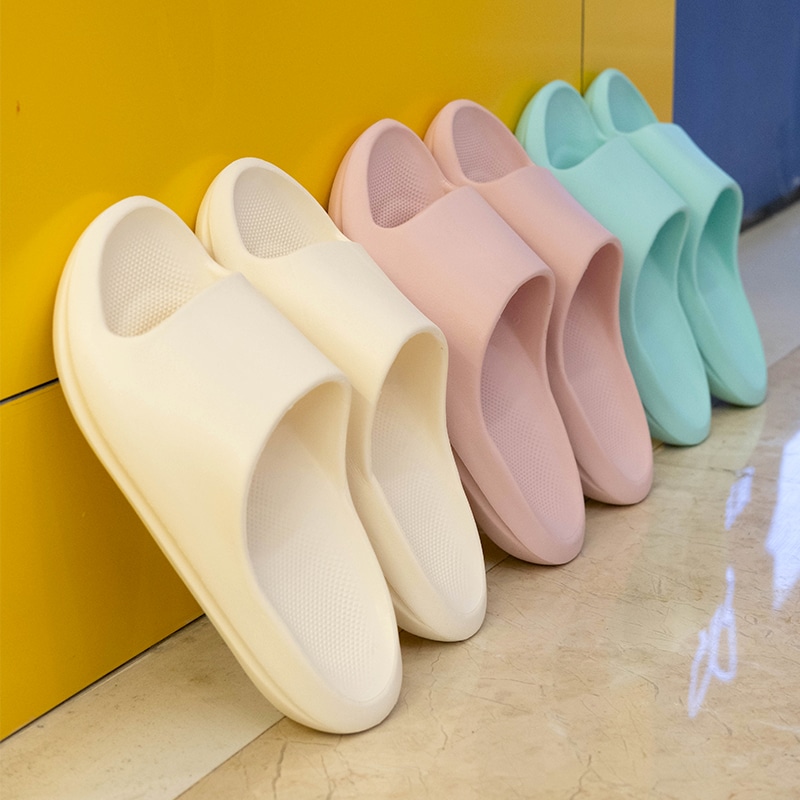
Most factories calculate the MOQ per style and color combination, so each additional colorway effectively becomes its own production run. Standard stock colors can usually be produced freely, while custom Pantone-matched colors require separate dyeing batches and additional setup that raise the per-color minimum.
The multiplication effect is what catches many first-time buyers off guard. One style in one color at 500 pairs is a single run. That same style in three colors is three runs of 500 pairs each, or 1,500 pairs total, because each color needs its own material batch, its own molding or cutting schedule, and its own quality check. If your plan involves a private label slippers collection with a signature palette, color planning becomes an MOQ strategy in itself.
Color choices generally fall into two categories. Standard colors are shades the factory already stocks, such as black, white, navy, and grey, and they add little or nothing to the minimum. Custom colors are matched to a specific Pantone reference for brand consistency, and they typically require the factory to commission a dye lot, produce a physical color swatch for approval, and run a small test batch before full production. Each of these steps adds cost and pushes the per-color MOQ upward.
Decoration technique matters as well. Consider how your logo and colorway will be applied:
- Screen printing: cost effective at high volumes, but each color needs its own screen, which favors large runs
- Heat transfer printing: flexible for multicolor logos, efficient even at moderate quantities
- Digital printing: no screens or plates at all, ideal for small batches, gradients, and photo-quality artwork
- Embroidery: premium look for logos, priced per stitch rather than per setup
For brands that want rich visuals without large commitments, digital printing has effectively lowered the color barrier to entry, allowing one design across multiple colorways at quantities that screen printing could not support.
How Sizes Affect MOQ for Custom Slippers
The wider your size range, the more lasts, molds, and cutting patterns the factory must prepare, which raises the minimum order. Most suppliers solve this with pre-packed size ratios, so the MOQ is spread across a balanced size curve instead of being ordered size by size.
Standard Slipper Size Systems
Custom slippers are built around the same measurement systems as everyday footwear, primarily US, EU, and UK sizing, each of which uses a different scale as described in this overview of shoe size systems. Men’s slippers commonly run from US 7 to 13, women’s from US 5 to 12, and children’s ranges sit below those. For B2B buyers, the practical question is not which system to use but how wide a range to cover, because every size in your chart needs its own tooling and its own inventory position.
Most factories will not let you hand-pick quantities for every individual size on a small order. Instead, they offer pre-packed size ratios, sometimes called assorted size packs, that distribute the MOQ across the sizes your market actually buys. A typical men’s pack looks like this:
| Size | US 7 | US 8 | US 9 | US 10 | US 11 | US 12 |
| Pairs per pack | 1 | 2 | 3 | 3 | 2 | 1 |
Working with these ratios is one of the most effective ways to manage a wholesale slipper sizes order, because the ratio is already tuned to real-world demand and you avoid ending up with a warehouse full of unpopular sizes. If your market research shows a different demand curve, for example a heavy concentration of small sizes in Southeast Asia, discuss a customized ratio with your supplier before the order is confirmed.
Is It Better to Size Up or Down for Slippers?
For the end consumer, the general rule is that slippers should match your regular shoe size or go slightly larger, never smaller, because an open-back design with insufficient length causes the heel to hang off the footbed. For a B2B buyer, this consumer behavior has direct consequences: undersized inventory in your best-selling middle sizes creates returns and negative reviews, while oversized inventory in fringe sizes ties up cash. Building your size curve around where demand actually concentrates, rather than spreading quantities evenly, is a core part of slipper sourcing strategy.
Practical Ways to Lower Your Custom Slipper MOQ
You can reduce your effective minimum order by starting from an existing mold, limiting your launch palette to one or two colors, choosing a standard pre-packed size ratio, and combining multiple styles in a single shipment to reach the factory’s total order threshold.
Use these strategies in combination to bring a first order within reach:
- Start with an existing mold. Choose a factory’s proven last and modify colors, logos, and packaging instead of the shape. This alone often halves the MOQ.
- Launch with one or two colors. A single core colorway at 500 pairs is a very different commitment from three colorways at 1,500 pairs.
- Use a standard size ratio. Pre-packed ratios avoid the tooling and inventory penalties of hand-picked sizes.
- Mix styles in one shipment. Many factories count total pairs across styles toward the order minimum, so a 500 pair order could combine slides and mule slippers.
- Order samples first. A paid sample run of 10 to 50 pairs validates quality and fit before any large commitment.
- Partner with small-batch factories. Some manufacturers are structured for agile, smaller runs, and they trade a slightly higher unit price for a lower entry quantity.
The arithmetic behind the multiplication effect shows why restraint wins at launch. Compare these two first orders:
| Scenario | Styles | Colors | MOQ per Combination | Total Order |
| Restrained launch | 1 | 1 | 500 pairs | 500 pairs |
| Expanded launch | 2 | 2 | 500 pairs | 2,000 pairs |
Both orders reach the same customers initially, but the second one quadruples inventory exposure before a single pair has sold. The most successful slipper brands start narrow, confirm which style, color, and size combinations their market actually buys, and then expand the range from a position of real sales data.
Frequently Asked Questions
Can I mix different slipper styles to meet the MOQ?
Often yes, but it depends on the factory. Many suppliers count total pairs across styles toward the order minimum as long as the styles share materials and processes, such as two sewn slipper styles in the same fabric. Styles from different production lines, like an injection-molded slide and a sewn mule, may be counted separately. Confirm in writing which styles can be combined before you place the order.
How many colors should a first custom slipper order include?
One to two colors is the safest launch range. A single signature color tests the market with minimal exposure, while two colors, usually one neutral and one brand shade, give customers a basic choice without doubling your inventory risk. Save multi-color collections and Pantone-matched custom shades for reorder stages, when sales data can tell you which directions actually deserve investment.
Do custom sizes cost more than standard sizes?
Yes, in most cases. Sizes outside the factory’s standard range require additional lasts, molds, or cutting patterns, and those tooling costs are either billed separately or absorbed into a higher MOQ. Extended sizes, half sizes, and width variations all add production complexity. If your brand genuinely needs a non-standard range, expect to pay tooling fees upfront or commit to a larger order volume to amortize them.