A quick note before the guide: if you are a retailer, brand owner, or wholesale buyer, use this page both ways — to understand how your end customers will size your slippers, and to plan the size runs you order from your supplier. Skip to the wholesale sections if that is you.
Slippers look like the simplest product in footwear — no laces, no break-in period, no performance requirements. But sizing mistakes are the number one cause of returns, negative reviews, and unsold inventory in the slipper business. Whether you are a shopper trying to avoid a pair that flops off your heels, or a wholesale buyer deciding how many of each size to stock, getting slipper sizes right starts with the same fundamentals: accurate foot measurements, a reliable size chart, and an understanding of how slipper construction differs from regular shoes.
In this guide, we cover how to measure feet at home, men’s / women’s / kids’ slipper size charts with international conversions, how slippers should actually fit by style, and — for wholesale buyers — how to plan size runs and choose size ranges for your target market.
Is Your Slipper Size the Same as Your Shoe Size?
This is one of the most common questions shoppers ask, and the short answer is: not always.
Most slippers are designed to roughly match your usual shoe size, but several factors can throw things off:
- Material and stretch: Wool or knit slippers may loosen with wear, while leather and memory foam may stay firmer. Our guide to choosing slipper materials for wholesale breaks this down by material.
- Design: Open-toe slippers allow more room, so sizing up isn’t always necessary. Closed-toe or bootie-style slippers, however, benefit from a snugger fit.
- Brand differences: A size 8 from one brand may feel more like a 7.5 from another. Always double-check the brand’s sizing guide.
In general, slippers should feel slightly roomy for comfort, but not so loose that they slip off your feet. If you’re between sizes, you’ll usually want to size up rather than down — especially with cushioned slippers that have thicker lining, or fluffy styles whose thick padding effectively makes the interior smaller.mfort, but not so loose that they slip off your feet. If you’re between sizes, you’ll usually want to size up, especially with cushioned slippers that have thicker lining.
How to Measure Your Feet for Slippers
Getting your slipper size right begins with accurate foot measurements. Here’s a quick step-by-step guide you can do at home:
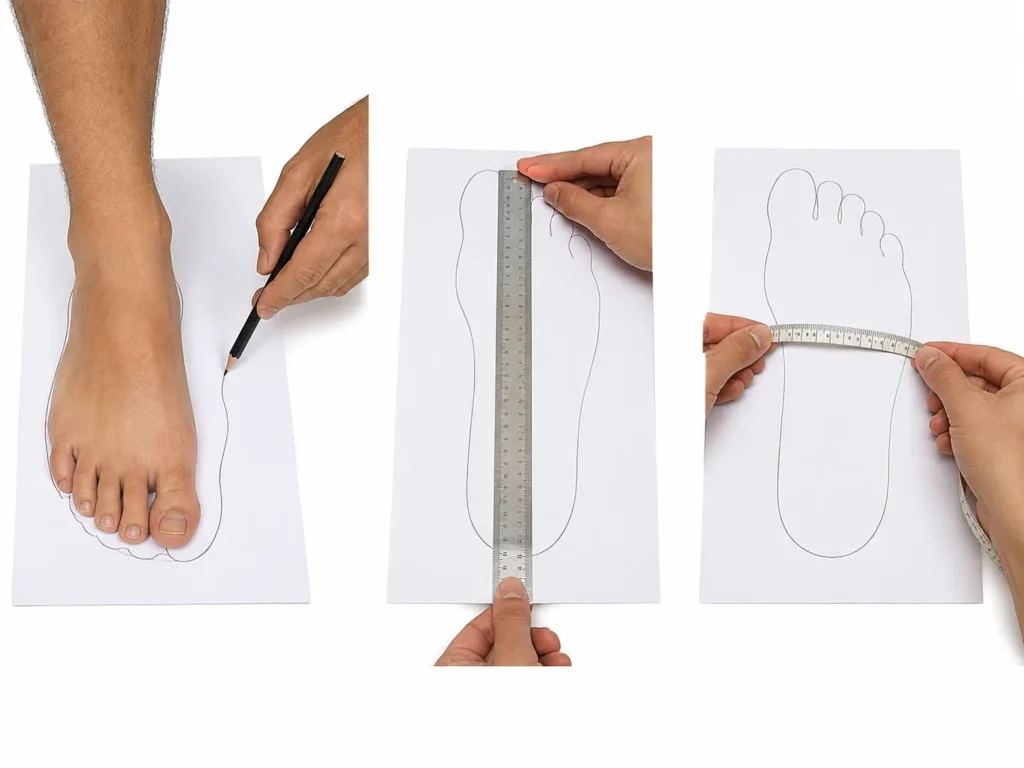
Step 1 – Gather Tools
All you need is a sheet of paper, a pencil, a ruler, and a flat surface. If you typically wear socks with slippers, keep them on during measurement.
Step 2 – Trace Your Foot
Stand with your full weight on the paper and gently trace around your foot. This ensures the outline reflects your true size when standing.
Step 3 – Measure Length and Width
Use the ruler to measure from the back of your heel to the tip of your longest toe (length). Then measure the widest part of your foot (width). Record both in centimeters and inches.
Step 4 – Add a Little Extra
Add about 0.5 to 1 cm for comfort. This extra space gives your feet breathing room, especially with indoor footwear that might be worn for hours at home.
Easy Slipper Size Chart
Once you’ve got your measurements, compare them against a general slipper size chart. Slipper sizes are not fully standardized across brands — even ISO’s own conversion tables are published as a guideline rather than a definitive answer — so treat these tables as a starting point and always confirm the sizes against the factory’s own chart before ordering.
Women’s Slipper Size Chart
| Foot Length (cm) | US (Women) | EU | UK | Japan / JP | China / CN | Mexico / MX |
|---|---|---|---|---|---|---|
| 22.2 | 5 | 35 | 3 | 22 | 35 | 2 |
| 22.9 | 6 | 36 | 4 | 23 | 36 | 3 |
| 23.5 | 7 | 37 | 5 | 23.5 | 37 | 4 |
| 24.1 | 8 | 38 | 6 | 24 | 38 | 5 |
| 24.8 | 9 | 39 | 7 | 25 | 39 | 6 |
| 25.4 | 10 | 40 | 8 | 25.5 | 41 | 7 |
| 26.0 | 11 | 42 | 9 | 26 | 42 | 8 |
| 26.7 | 12 | 43 | 10 | 26.5 | 43 | 9 |
Men’s Slipper Size Chart
| Foot Length (cm) | US (Men) | EU | UK | Japan / JP | China / CN | Mexico / MX |
|---|---|---|---|---|---|---|
| 24.5 | 7 | 40 | 6 | 25.5 | 40 | 5.5 |
| 25.4 | 8 | 41 | 7 | 26 | 41 | 6.5 |
| 26.2 | 9 | 42 | 8 | 26.5 | 42 | 7.5 |
| 27.1 | 10 | 43 | 9 | 27 | 43 | 8.5 |
| 27.9 | 11 | 44 | 10 | 27.5 | 44 | 9.5 |
| 28.8 | 12 | 45 | 11 | 28 | 45 | 10.5 |
| 29.6 | 13 | 46 | 12 | 28.5 | 46 | 11.5 |
| 30.5 | 14 | 47 | 13 | 29 | 47 | 12.5 |
Kids’ Slipper Size Chart
Kids’ feet grow fast — check their size every 2–3 months for toddlers and every 4–6 months for school-age children. When buying for children, most parents size up by about 0.5–1 cm to get a few extra months of wear, but avoid going further than that or the slipper becomes a tripping hazard.
| Foot Length (cm) | US (Kids) | EU | UK | Age (approx.) |
| 14.5 | 8.5C | 24 | 7.5 | 2–3 yrs |
| 15.0 | 9C | 25 | 8 | 3 yrs |
| 15.6 | 10C | 26 | 9 | 3–4 yrs |
| 16.5 | 11C | 28 | 10 | 4–5 yrs |
| 17.5 | 12.5C | 30 | 11.5 | 5–6 yrs |
| 18.5 | 13.5C | 31 | 13 | 6–7 yrs |
| 19.5 | 1Y | 32 | 13.5 | 7–8 yrs |
| 20.5 | 2Y | 34 | 2 | 8–9 yrs |
Pro tip: If your length falls between two sizes, it’s often better to size up—especially for cushioned slippers or fluffy styles that tend to run smaller due to thick padding.
How Should Slippers Fit?
A well-fitting pair of slippers should feel comfortable immediately, without squeezing your toes or sliding off your feet. Your heel should stay in place when walking, and there should be enough room for natural movement. The fit standard changes with the style, though:
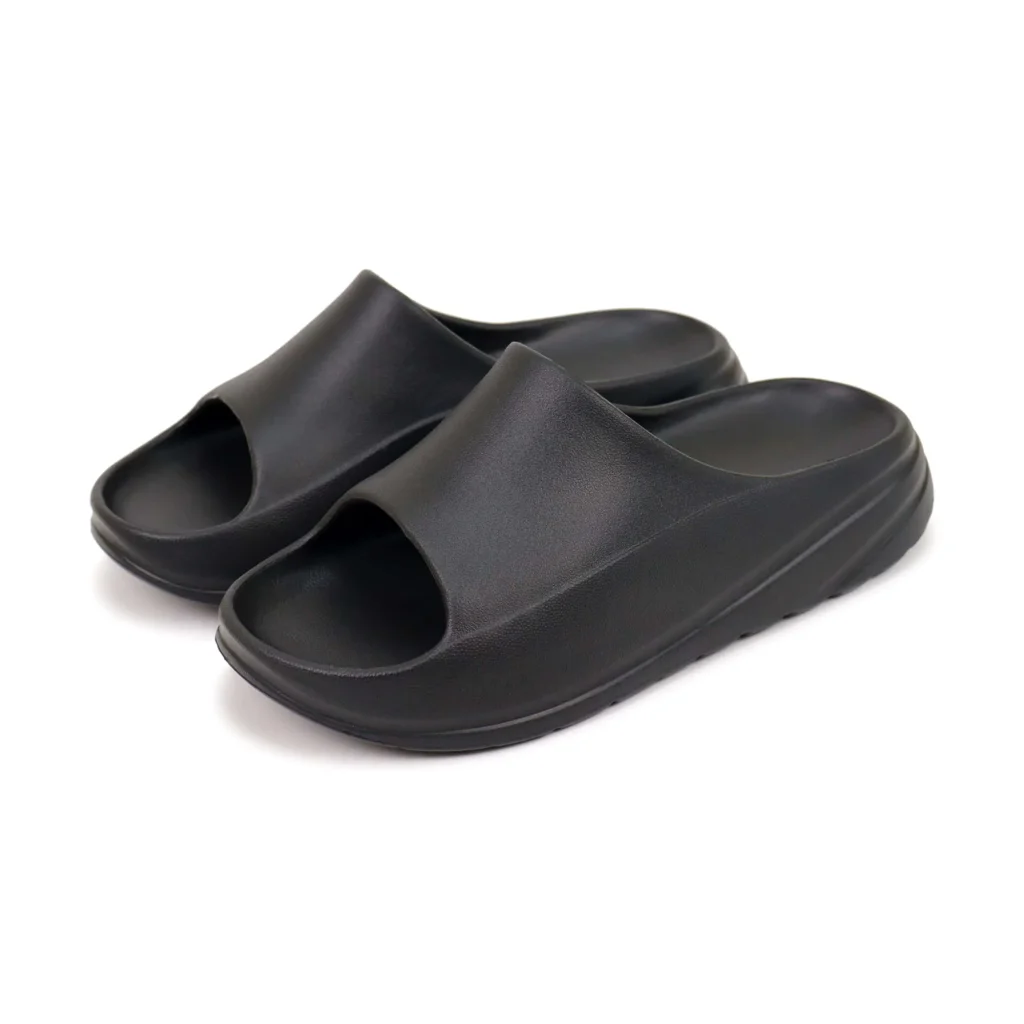
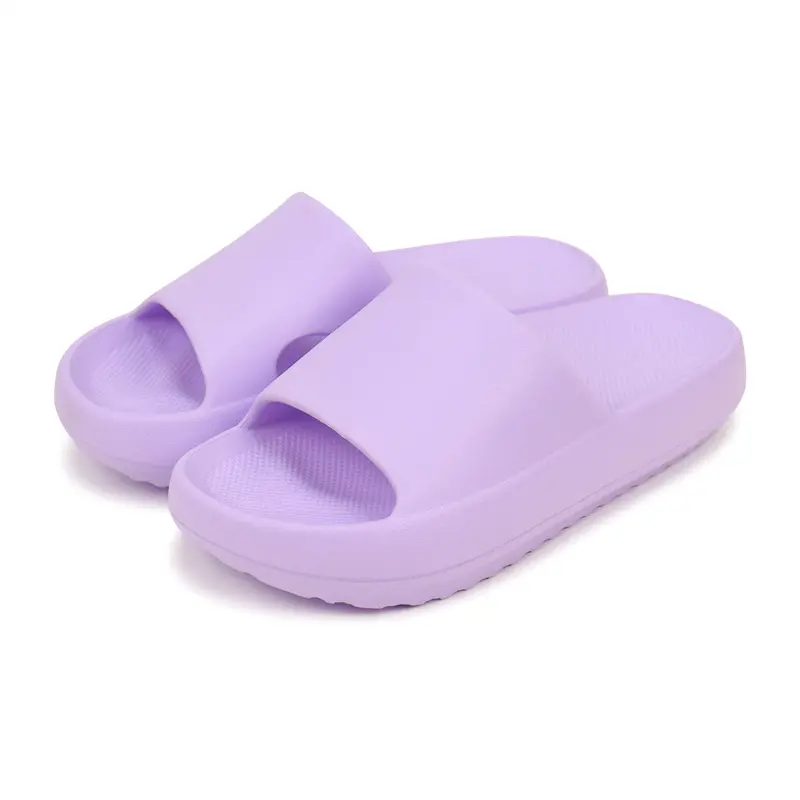
- Open-toe slippers / slide slippers: A little extra space in front is fine. What matters most is the strap fit across the instep and heel coverage at the back.
- Closed-toe slippers: The front should give toes about 0.5–1 cm of clearance without pressing. The opening should be snug enough that the slipper stays on when you walk.
- Bootie / ankle-wrap slippers: These should fit closest to true size, because the whole foot is enclosed — too large and they flop, too small and they pinch the ankle.
- EVA / foam slippers: These mold slightly to the foot over the first week. True-to-size is usually correct; avoid sizing up unless between sizes.
- Plush / terry slippers: Thick lining compresses over time, so a snug-to-slightly-roomy fit on day one is the sweet spot.
Cushioning level also changes how a given size feels underfoot — our comparison of soft cushioning vs. firm support footbeds explains which construction suits which customer.
How to Plan Size Runs When Ordering Wholesale Slippers
For wholesale buyers, choosing the right sizes is not just about individual fit — it is about ordering the right distribution of sizes so that stock sells through evenly. Order too many extreme sizes and you will be discounting them at season’s end.
Follow the demand curve. Foot sizes in any population follow a bell curve. For women’s slippers in the US market, the core sizes are US 6–10, with size 8 typically the single best seller. For men’s, the core is US 9–11, peaking around size 10. A common starting ratio for a 12-pair prepack is:
- Women’s: 1-2-3-3-2-1 across sizes 6–11
- Men’s: 1-2-3-3-2-1 across sizes 8–13
- Kids’: even distribution works better, since purchases cluster by age rather than by a single peak size
Adjust for your channel and market. Boutique retailers selling to older customers may need to shift the curve up; family-value channels move more kids’ and women’s units. If you have sales history from previous seasons, replace these generic ratios with your own sell-through data — that beats any rule of thumb.
Mind the MOQ and prepack rules. Most slipper factories set a minimum order quantity per style, and size runs are usually packed in fixed ratios. If your market needs an unusual size range (for example, extended women’s sizes up to US 12, or extra-narrow fits), confirm before production that the factory’s size range covers it, and ask whether the ratio can be customized. A supplier with in-house development can usually adjust the prepack mix, but only if you ask before the production slots are booked.
Choosing Size Ranges for Your Target Market
If you import slippers, size standards are part of your product specification, not an afterthought:
- US market: Label US sizes, and be aware US women’s and men’s scales differ — a US women’s 8 is not a US men’s 8.
- EU / UK market: EU sizing dominates in Europe, but UK buyers still expect UK sizes on the label. A dual-size label (UK + EU) is common practice.
- Asia-Pacific market: Japan uses centimeter sizing (22.0, 22.5…), and China uses millimeter-based sizes (220, 225…) alongside EU sizes. CM/JP labeling is the safest universal reference because it is unambiguous.
- Conversion tolerance: US–EU–UK conversions are approximate, and every factory’s last (foot mold) is slightly different. Before committing to a full production run, request a sample pair in your core size and physically verify it against a conversion chart.
When in doubt, build your own size chart from the factory’s actual sample measurements — footbed length in centimeters is the anchor — and publish it on your product pages. This single step measurably reduces size-related returns.
Additional Tips for the Perfect Fit
Finding the right slipper size isn’t only about numbers. Here are some extra tips to make sure your next pair fits like a dream:
Try them later in the day: Feet naturally swell after walking around, so testing slippers in the evening gives you a truer sense of fit.
Think about material: Cotton and knit fabrics stretch more, while leather or structured slippers may stay rigid. Wool slippers might shrink slightly if washed incorrectly.
Mind the style: Open-toe slippers tolerate a looser fit. Closed-toe or house booties should be snug without squeezing.
Check reviews and brand charts: Customer reviews often reveal if a style runs small, large, or true to size.
When in doubt, remember the goal: slippers should provide warmth, support, and ease. A good pair of comfort slippers will feel natural the moment you slip them on.
Common Slipper Sizing Mistakes to Avoid
- Assuming shoe size equals slipper size. It usually does, but padding, materials, and open toes shift the effective fit.
- Measuring feet in the morning. Feet swell by up to half a size during the day. Measure — or try on — in the late afternoon or evening.
- Ignoring sock habits. If slippers will be worn with thick winter socks, that adds 0.5 cm or more of effective foot volume.
- Sizing up “for growing room” in kids’ slippers. More than 1 cm of extra room turns slippers into a safety hazard on stairs and smooth floors.
- Copying a competitor’s size chart wholesale. Their chart reflects their factory’s lasts, not yours.
- Skipping the sample check on bulk orders. A size run that is off by half a size across 3,000 pairs is an expensive problem to discover after delivery.
Conclusion
Slippers might seem simple, but choosing the right size can make all the difference in comfort and longevity. By measuring your feet properly, comparing with a reliable size chart, and keeping brand-specific quirks in mind, you’ll avoid the annoyance of ill-fitting footwear.
Whether you’re buying cushioned slippers for chilly mornings or lightweight indoor footwear for summer evenings, the right fit means you can relax at home without distractions. Next time you shop, you’ll know exactly how to find your slipper size—and enjoy that “ahh” feeling the moment you slide into them.