For brands, hotels, retailers, and promotional buyers, the logo is often the first detail that separates a generic slipper from a sellable product. But once artwork is finalized, buyers face a practical question that directly affects cost, quality, and order size: how should that logo actually be applied to the slipper? Manufacturers typically offer three core branding methods for custom slippers: printing, embossing, and molded branding. Each method uses a completely different production process, produces a different visual effect, and carries different minimum order quantities and unit costs. Choosing the wrong one can mean faded logos after one season, unnecessary tooling costs for small orders, or a premium product that looks flat and generic on the shelf.
Printing applies ink to the slipper surface and is the most flexible and affordable option for colorful, detailed artwork; embossing presses a three-dimensional mark into the material for a subtle, premium tactile effect; and molded branding forms the logo as a structural part of the slipper itself, making it the most durable and permanent option, though it requires the highest minimum order quantities. In practice, printing suits promotional and fashion-driven orders, embossing suits minimalist premium products, and molded branding suits large-volume private label programs.
The sections below explain how each method works, compare durability, color capability, cost, and MOQ side by side, and outline how to choose the right method for a specific custom slipper project.
What Is the Difference Between Printed, Embossed and Molded Logos on Slippers?
The main difference lies in how the logo is created: printing adds ink on top of the material, embossing physically deforms the material with heat and pressure, and molding builds the logo into the slipper’s structure during the forming process. This single distinction drives every practical trade-off between the three methods, from color range to lifespan to order economics.
A printed logo sits on the surface. It can reproduce gradients, photographs, and multi-color designs, but it can wear away over time. An embossed logo is pressed into the surface, creating a raised or recessed mark that cannot peel or flake, though it is normally limited to one color, the color of the base material. A molded logo is part of the slipper itself, formed when raw material such as EVA is injected or compressed into a steel mold that already carries the logo in negative. Because the logo exists within the material rather than on it, it lasts for the entire life of the product.
The following table summarizes the practical differences buyers evaluate when planning a Custom Slippers Wholesale project:
| Factor | Printed Logo | Embossed Logo | Molded Logo |
| How it is created | Ink applied by screen, heat transfer, or digital print | Die pressed into material with heat and pressure | Logo carved into the production mold |
| Visual effect | Flat, colorful, graphic | Three-dimensional, subtle, tactile | Integrated, structural, seamless |
| Color capability | Multiple colors and gradients | Single color (base material color) | Single or dual color, material-based |
| Durability | Moderate, fades with abrasion | High, cannot peel or flake | Highest, lasts the product lifetime |
| Unit cost | Low | Medium | Low at volume, high tooling cost |
| MOQ level | Low | Medium | High |
| Best for | Promotions, colorful artwork, small runs | Premium minimalist branding | Large-volume brand collections |
For buyers weighing these methods against total sourcing costs, unit price alone is misleading. Printing has almost no setup investment, which keeps small orders viable. Embossing requires a die, and molding requires a steel tool, so both methods spread fixed costs across the order quantity. The larger the order, the more the economics favor embossing and molding.
Printed Logos: Colorful and Cost-Effective Branding
Printed logos are the best choice when the artwork is colorful, detailed, or promotional in nature, because printing is the only one of the three methods that can reproduce multiple colors, fine lines, and photographic elements at a low minimum order quantity.
Printing covers a family of techniques, and manufacturers usually recommend one based on the complexity of the artwork and the quantity ordered. Two sub-methods dominate custom slipper production: silk-screen printing and heat transfer or digital printing.
Silk-Screen Printing
Silk-screen printing pushes ink through a stenciled mesh screen onto the slipper surface, with one screen per color. It is a long-established industrial technique, and its printing principle remains the backbone of footwear branding. For slipper buyers, its advantages are practical:
- Sharp, solid color reproduction matched to specified Pantone references
- Very low per-unit cost at medium to large quantities
- Reliable results on EVA soles, straps, and fabric slipper uppers
- Fast setup compared with tooling-based methods
The trade-off is that each color requires a separate screen, so artwork with many colors or gradients becomes expensive or technically difficult. Screen printing is best for logos with one to four solid colors and clean edges, such as brand wordmarks, simple icons, and bold promotional graphics.
Heat Transfer and Digital Printing
Heat transfer printing first prints the artwork onto carrier film, then bonds it to the slipper with heat and pressure. Digital printing extends this by printing artwork directly from a digital file without screens. These methods are the standard answer for:
- Gradient colors, photographic images, and character artwork
- Full-coverage designs across straps or the entire upper
- Short runs and seasonal collections where per-color setup costs would be prohibitive
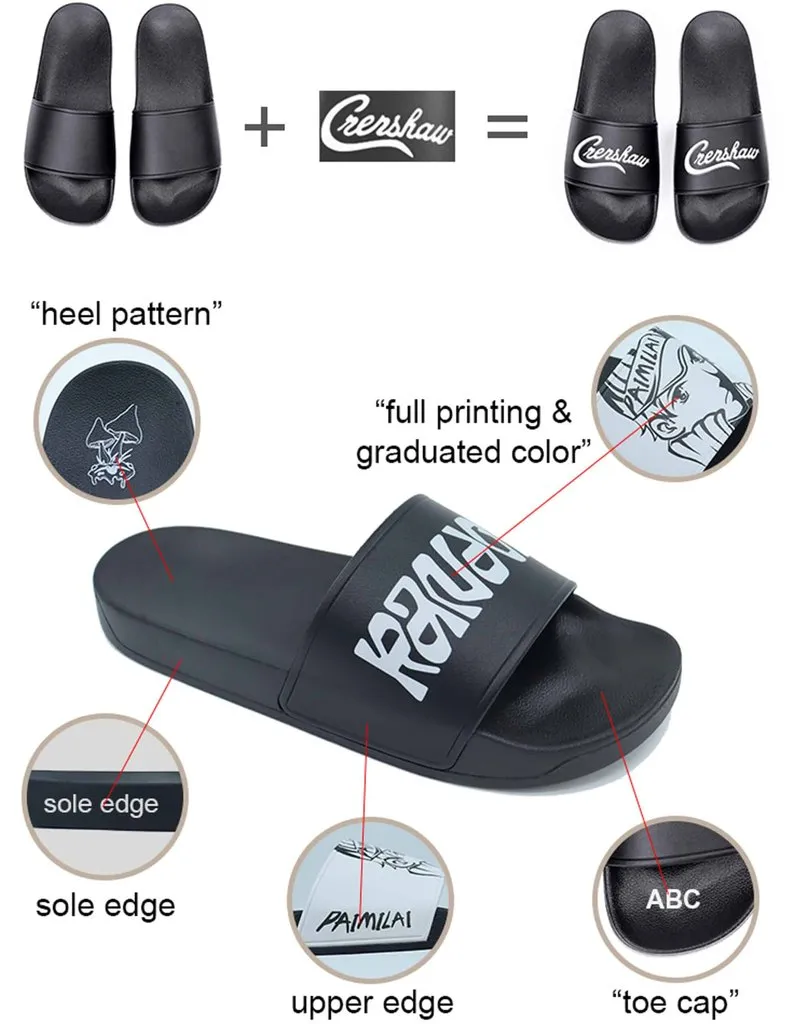
A typical example is branded EVA slides, where a single Custom Logo and Color EVA Slides order may combine a multi-color upper print with a contrasting sole color. The limitation is durability: printed layers sit on the surface, so heavy abrasion, repeated washing, and long sun exposure gradually wear the design down. Printed logos are therefore best positioned on areas with moderate friction, such as the strap or heel panel, rather than the tread surface.
Embossed Logos: Subtle and Tactile Branding
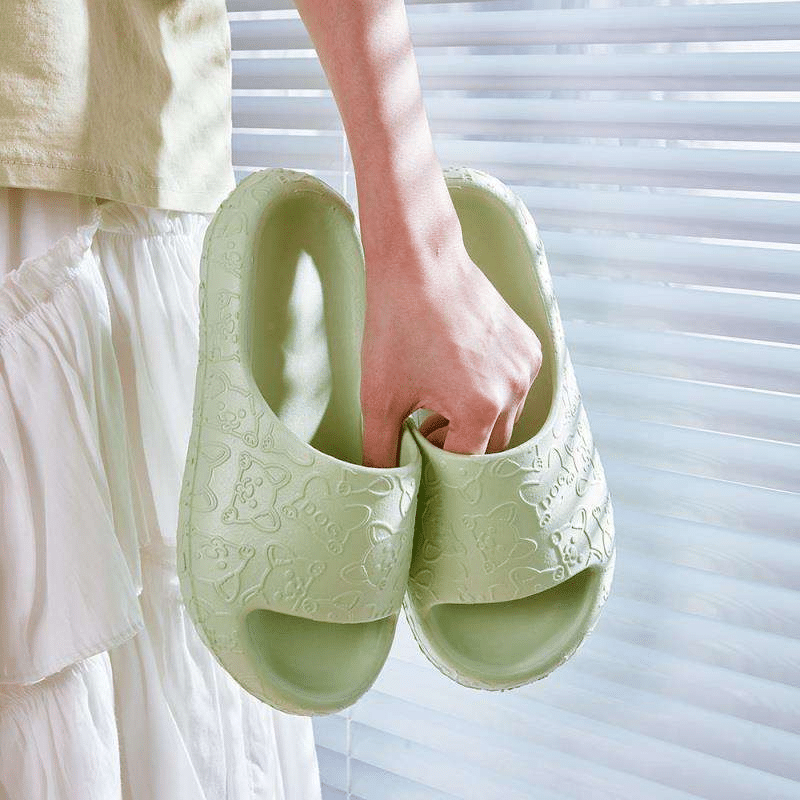
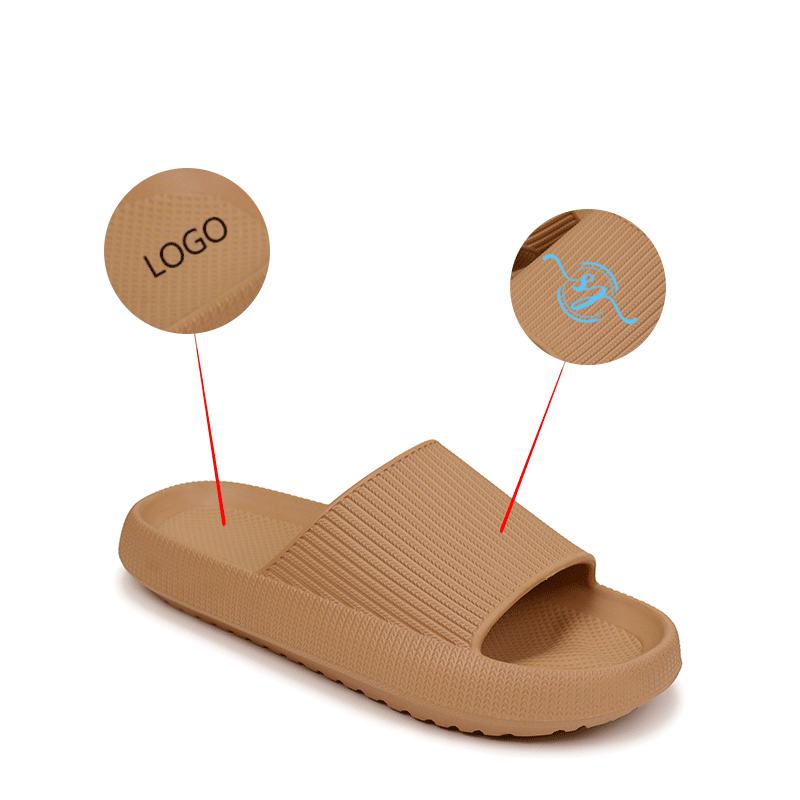
Embossing presses the logo directly into the slipper material using a heated die, creating a raised or recessed mark that becomes part of the surface rather than a layer on top of it, which makes it far more durable than printing while giving the product a quieter, more premium look.
An embossed logo is produced by pressing a metal die carrying the logo against the slipper material under controlled heat. When the logo stands out from the surface, the result is embossed; when it is pressed below the surface, the result is debossed. Both variants are common on custom slippers, and manufacturers often recommend debossing for insoles and embossing for straps and heel panels.
The strengths of embossing are clear:
- The mark cannot peel, crack, or fade because no ink is involved
- The tactile effect communicates quality in ways flat printing cannot
- It works on EVA, rubber, TPR, and leather-look surfaces
- It suits minimalist brand marks, monograms, and geometric logos
Because embossed marks follow the base material color, they tend to stay legible for the life of the slipper. This makes embossing a common choice for hotel programs, spa collections, and premium house slippers, where the branding must survive repeated commercial laundering. The main design constraint is artwork: extremely fine lines and small text lose definition when pressed into soft foam materials, so logos for embossing are usually simplified before tooling.
Can Embossed Logos Show Multiple Colors on Slippers?
On their own, embossed logos are single-color, because the mark is created by pressure rather than ink and simply takes on the color of the surrounding material. However, multi-color effects are achievable when embossing is combined with a printing step, most commonly by embossing the logo first and then screen printing or heat transferring color into the recessed or raised areas.
This combined approach is often called color-fill embossing. It preserves the three-dimensional texture while adding contrast, and it is popular for logo placements where a plain single-color mark would be too subtle, such as a debossed insole logo filled with a contrasting ink. The cost sits between pure printing and pure embossing, and durability is high because the ink sits inside the pressed area, which physically shields it from abrasion. Buyers planning this technique should confirm during sampling that the fill color bonds well with the base material, since ink adhesion on EVA requires the correct ink system and surface preparation.
Molded Logos: Permanent Structural Branding
Molded branding forms the logo as an integral part of the slipper itself, by building the artwork directly into the steel mold used to shape the product, which produces the most durable logo option available but requires the highest minimum order quantities and tooling investment.
Unlike printing and embossing, which are applied after the slipper body exists, molded branding happens during forming. For EVA and PVC slippers, the raw material is injected or compressed into a mold whose cavity already carries the logo in negative, following the same forming logic as industrial injection molding. When the material cools and is released, the logo emerges as a raised or recessed feature of the surface, seamless with the surrounding texture.
Common placements for molded logos include:
- The insole surface, where a molded brand mark is felt underfoot
- The outsole, where tread patterns and logo geometry are molded together
- The strap surface of slides and EVA slippers
- Packaging-linked design features, such as molded size or brand panels
Molded logos accept dual-color effects in one specific way: multi-color EVA production can layer contrasting material colors so the raised logo appears in a different color from the base, without any ink. The material properties of EVA, including its closed-cell foam structure and color-molding stability, are what make this layered look possible.
Durability of Molded Branding
Molded branding is the most durable slipper logo method available, because the logo and the product are a single piece of material and there is no applied layer to wear off, peel, or fade. A molded logo survives abrasion, washing, chlorine exposure, and UV in a way printed logos cannot match, and it typically remains legible for the entire usable life of the slipper. Embossed logos rank second in durability, since the mark is pressed into the surface and protected from peeling, though deep wear can gradually soften fine embossed detail. Printed logos rank third, with screen printing generally outlasting heat transfer prints under friction and washing. For products destined for hard use, such as pool slippers, beach programs, and hotel amenity slippers, molded branding is usually the specified method precisely because logo failure is not an option.
What MOQ Is Needed for Molded Slipper Branding?
Molded slipper branding normally requires the highest MOQ of the three methods, typically starting around 1,000 to 2,000 pairs per design for factories with an existing compatible mold, and 3,000 pairs or more when a new custom mold must be opened, because the steel tooling cost must be amortized across the order.
The decisive factor is the mold itself. When a manufacturer already has a mold whose texture or logo panel can be adapted, buyers avoid most tooling cost and the MOQ stays closer to standard production minimums. When the design requires a fully custom mold, the buyer bears tooling fees and the factory insists on higher volumes to make the run efficient. This is the core question behind the choice between an Existing Mold vs. Custom Mold strategy: existing molds lower the entry cost but limit exclusivity, while custom molds deliver a fully proprietary product at a higher order commitment. Lead time also lengthens with custom molds, since mold fabrication and first-article sampling add several weeks before bulk production begins.
How to Choose the Right Logo Method for Your Custom Slipper Project
The right logo method is determined by four factors working together: the complexity of the artwork, the positioning of the product, the available budget, and the realistic order quantity, and in most successful projects these factors point clearly toward one primary method, sometimes supported by a secondary technique.
A practical selection checklist looks like this:
- If the artwork is multicolor, photographic, or promotional, choose printing
- If the brand identity is minimalist and premium, choose embossing
- If the order is large and durability is critical, choose molded branding
- If the budget is tight or the order is a first test run, choose printing
- If the product will face water, washing, and heavy wear, choose embossing or molding
- If exclusivity matters, choose a custom mold with molded branding
The selection also depends on commercial terms. Comparing Wholesale Slippers MOQ, pricing, and lead time structures across methods shows why the decision should be made before artwork is finalized, not after. A buyer who designs an intricate multicolor logo first may be forced into digital printing even when the brand positioning calls for a premium tactile mark.
Once the method is chosen, the production path is generally consistent across manufacturers:
- Submit logo artwork in vector format, with placement and size references
- Confirm the logo method, placement, and color specifications with the factory
- Review a physical sample that shows the actual logo effect on the chosen material
- Approve packaging details and begin bulk production
Combining methods is also a proven strategy. A frequent premium configuration pairs a molded insole logo with an embossed heel mark and printed packaging, creating layered brand visibility at a controlled cost. The key discipline is to keep each logo instance simple, because every method rewards clean, legible artwork and penalizes fine detail.
FAQs
Can I combine multiple logo methods on one custom slipper design?
Yes, combining methods is common in private label programs. A typical combination uses molded branding on the insole or outsole for permanence, embossing on the strap for a tactile premium feel, and printing on packaging or a secondary panel for colorful communication. Manufacturers can confirm during sampling which combinations work on the chosen material, and combining methods usually raises unit cost only moderately since each technique is priced independently.
What logo file formats do manufacturers need for slipper branding?
Vector files such as AI, EPS, or PDF are strongly preferred for all three methods because they scale without quality loss and can be converted directly into screens, embossing dies, or mold tooling. Raster files such as PNG or JPG can be accepted for reference or heat transfer printing, but they usually require redrawing before tooling. Providing Pantone color references alongside the artwork shortens the approval cycle and reduces sampling rounds.
How long does slipper logo sampling take before bulk production?
For printing and embossing, logo samples typically take one to two weeks because setup involves screens or dies rather than production tooling. For molded branding on an existing mold, sampling is similar, but a fully custom mold adds mold fabrication time, usually extending the pre-production phase by several weeks. Buyers planning seasonal launches should build this difference into their timelines and confirm sampling schedules in writing before committing to bulk orders.