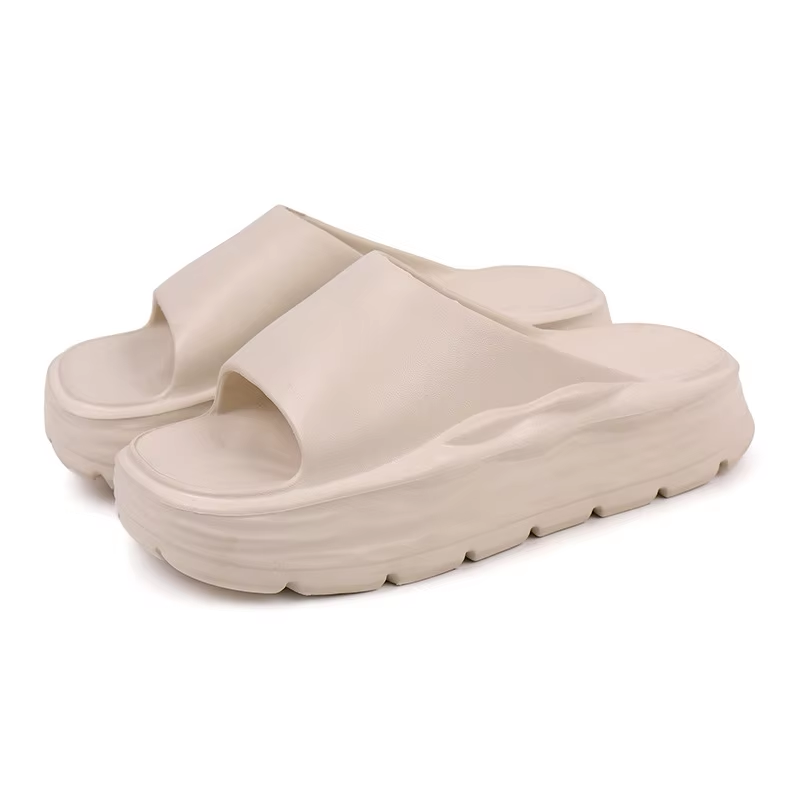
EVA clogs have moved from a niche garden shoe to a mainstream category stocked by footwear brands, hotel groups, retailers, and direct-to-consumer sellers around the world. For any business planning a clog collection, the first question is almost always financial: what will each pair actually cost to produce, and which decisions on the specification sheet move that number up or down.
A standard custom EVA clog made from an existing factory mold typically costs US1.50 to US3.00 per pair at commercial order quantities. Adding custom colors or logos usually brings the price to US2.00 to US3.50, while thicker or platform styles can reach US2.50 to US5.00 or more. A completely new proprietary design adds a one-time tooling investment of roughly US2,500 to US5,000 on top of the unit price.
The sections below explain where those figures come from, how each cost component breaks down, and how to turn a factory quote into a realistic landed-cost budget.
Are Clogs Made of EVA?
Many modern clogs are made of EVA, but not all of them. The classic comfort clog sold today is usually an injection-molded EVA foam shoe, yet the category also includes wooden clogs, leather clogs, and premium cork-latex models.
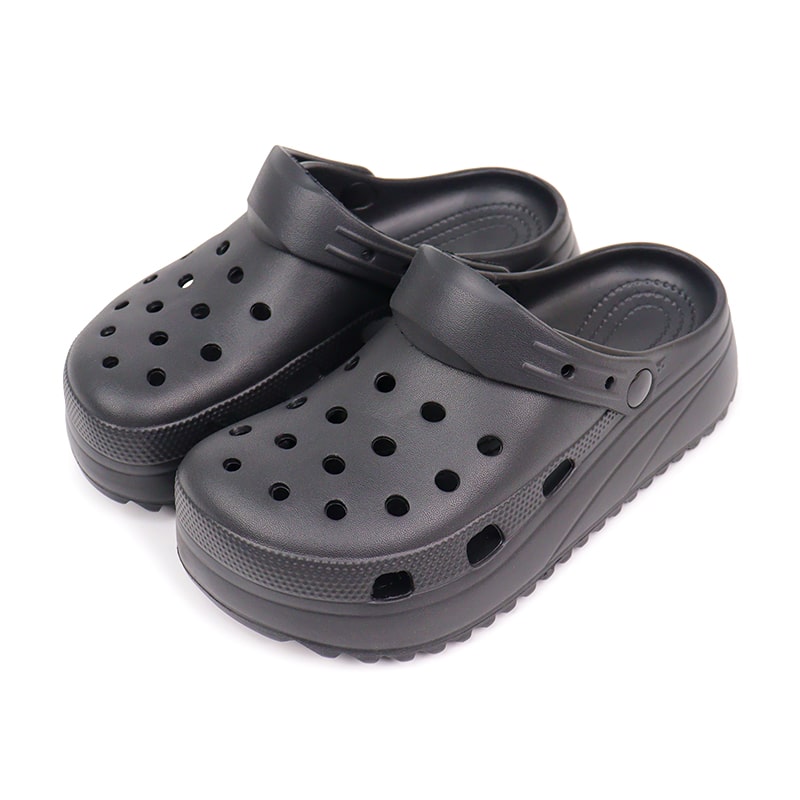
EVA, or ethylene-vinyl acetate, is a copolymer foam that is lightweight, flexible, water-resistant, and shock-absorbing. Those properties make it especially suitable for clogs worn around water, gardens, hospitals, and homes, because the shoe can be hosed off and dried quickly while still providing cushioning.
The material matters for cost because it determines the production method. A one-piece EVA clog is molded rather than stitched, which removes most of the cutting, sewing, and bonding labor that traditional footwear requires. That single difference explains why the cost structure of an EVA clog looks nothing like that of a leather shoe.
What Is the Average Cost to Manufacture EVA Clogs?
At typical commercial volumes, a custom EVA clog costs about US2 to US4 per pair FOB when produced from an existing mold, with the exact figure determined by configuration, weight, and decoration.
The following ranges are a practical starting budget rather than fixed market prices:
| Customization type | Typical factory price (FOB) |
| Existing mold, basic configuration | US$1.50 – 3.00 per pair |
| Existing style + custom color or logo | US$2.00 – 3.50 per pair |
| Thicker or platform EVA clog | US$2.50 – 5.00+ per pair |
| Completely new proprietary design | Unit price + tooling and development fees |
These figures are most useful for early planning. A factory calculates the final quotation from your exact specifications, order quantity, packaging, and development requirements, so two clogs that look similar in product photos can receive very different quotes. Reviewing an EVA clogs wholesale catalog before you request pricing is a quick way to benchmark styles, weights, and construction options against realistic factory outputs.
EVA Clog Cost Breakdown Per Pair
Materials are the largest single cost component, and a standard unisex EVA clog in molded form totals roughly US2.60 to US4.35 per pair at moderate volumes, before freight and duties.
A representative per-pair breakdown for a standard unisex clog produced in Asia looks like this:
| Cost component | Estimated cost (USD) | Notes |
| EVA foam material | 1.10 – 1.60 | Grade-dependent: standard vs. antimicrobial or UV-resistant |
| Injection molding (tooling amortized) | 0.40 – 0.70 | One-time mold cost of US$2,500 – 5,000 spread over the MOQ |
| Labor (production and QC) | 0.30 – 0.50 | Molding, trimming, and inspection |
| Packaging | 0.45 – 0.80 | Custom printing increases the cost |
| Overhead and factory margin | 0.20 – 0.35 | Standard markup |
| Total per pair | 2.60 – 4.35 | Varies by spec, MOQ, and customization |
Injection molding keeps this structure simple. Because the upper, footbed, and sole are formed as one piece, the process avoids the stacked labor charges of cut-and-sew construction. When volumes rise, the same tooling produces more pairs, which is why material grade and order size dominate the final number more than anything else.
Material density and shoe weight deserve special attention, because they move the largest line in the table. A clog with a thicker sole, a larger upper, a heavier construction, or a platform outsole simply consumes more EVA compound per pair than a lightweight basic model. Formulation matters as well: different EVA specifications are blended for softness, resilience, rebound, and durability, and a brand that requires a particular underfoot feel or a denser, longer-wearing compound will see that requirement reflected in the quotation. This is why two clogs that look almost identical in product photos can carry meaningfully different factory prices.

These figures are quoted FOB, meaning the price covers the finished goods delivered to the port of loading, with the buyer responsible for ocean freight, insurance, destination charges, and import duties. Some suppliers quote EXW instead, which excludes even inland transport and export clearance in the country of origin. Always confirm which basis a quotation uses before comparing it with another, because a difference of a few cents per pair can disappear once the missing services are priced in.
Existing Mold vs. Custom Mold Development
Using an existing factory mold keeps development costs near zero, while a new clog design requires a one-time mold investment of US2,500 to US5,000 that is reusable for roughly two to three years of reorders.
With an existing mold, the manufacturer only adjusts the color, adds your logo, changes selected components, or customizes packaging. The shoe structure already exists, so sampling is faster and the tooling line item disappears from the quotation. A completely new design is a different project: the factory develops a 3D model, cuts the mold, produces samples, tests the construction, and revises it before mass production begins.
Tooling economics favor volume. A US3,000 mold adds US3.00 per pair on a 1,000-pair order, but only US$0.30 per pair at 10,000 pairs. For a deeper comparison of the two routes, this article on the existing mold vs. custom mold decision walks through the trade-offs for growing brands. A common pattern is to launch on an existing mold, prove demand, then invest in a proprietary shape once reorders are predictable.
How Order Quantity Affects Unit Price
Unit price falls as order quantity rises, because tooling preparation, machine setup, and other fixed costs are spread across more pairs.
A publicly listed EVA clog quotation illustrates how steep the curve can be:
| Order quantity | Unit price (FOB) |
| 500 – 2,999 pairs | US$2.99 |
| 3,000 – 5,999 pairs | US$2.68 |
| 6,000 – 19,999 pairs | US$2.28 |
| 20,000+ pairs | US$1.88 |
The gap between a small trial order and a full production run is close to 40 percent, which is why a 500-pair test should never be judged by the same unit-price expectation as a 20,000-pair program. At the same time, ordering more pairs purely to chase a lower unit cost ties up cash in sizes and colors that may sell slowly. Match the order size to realistic demand, then scale the quantity as the sell-through data justifies it.
For first-time buyers, an entry-level order of around 1,000 pairs usually offers the best balance between cost and risk. It is large enough to reach a meaningful pricing tier and amortize any setup charges, yet small enough to test the market without committing to a full season of inventory. Established programs moving to 5,000 pairs or more unlock the steeper discounts, where long-term contracts and consolidated production runs reduce the unit cost further.
Customization, Size Range and Packaging
Customization raises the custom EVA clogs cost in proportion to the number of additional materials, colors, and production steps each pair requires.
Colors, Logos and Accessories
Common branding options and their cost impact include:
- Custom Pantone colors, which may require dedicated material batches
- Printed or embossed logos on the upper, heel strap, or insole
- Molded-in branding and textured panels
- Custom heel straps, buckles, and other attached components
- Multi-color combinations on a single pair
- Decorative charms and custom sole patterns
A one-color clog with a simple logo is far cheaper to produce than a multi-color design that involves several components and extra processes. Every added step is a line on the factory costing sheet, so a clear specification before quoting is essential.
Size Range and Packaging
A capsule collection covering one focused adult size range is easier to develop and plan than a full line across men’s, women’s, and children’s sizes, since each size band can require its own mold cavity and sampling round. Packaging is the other frequently underestimated item. Quotations may assume anything from a polybag to a retail box with tissue, hangtags, barcode labels, and printed inserts. Two factories quoting “identical” clogs often differ only in their packaging assumptions. A practical custom EVA clogs guide for OEM buyers covers how to lock these details into a quotation.
How EVA Clog Costs Compare With Other Footwear
EVA clogs are among the least expensive footwear to manufacture, typically US2 to US5 per pair FOB, compared with US15 to US40 for ordinary cut-and-sew shoes and considerably more for hand-assembled premium sandals.
| Footwear type | Typical factory cost per pair | Main cost driver |
| Injection-molded EVA clogs | US$2 – 5 | Material grade and volume |
| Casual canvas or synthetic shoes | US$15 – 40 | Cut-and-sew labor and components |
| Handcrafted European cork-latex sandals | Far higher | Manual assembly, domestic wages |
The comparison answers two questions buyers often ask. First, on the manufacturing cost of the big-name foam clog brands: leading players in that segment report gross margins in the range of 58 to 60 percent, which implies a production cost of roughly 40 percent of the retail price once distribution and marketing are considered. Second, on premium cork-latex sandals: those products involve around fifty manual steps per pair and labor can approach 45 percent of total production cost, since they are largely made in high-wage European facilities rather than molded in Asia.

From Factory Quote to Landed Cost
The factory unit price is only part of the real cost. Samples, freight, and import charges can add 40 to 60 percent to a first order, so the landed cost must be budgeted separately.
A worked example for a 1,000-pair first order using an existing mold:
| Cost item | Calculation | Budget |
| Base clogs | 1,000 x US$3.00 | US$3,000 |
| Logo decoration | 1,000 x US$0.35 | US$350 |
| Individual packaging | 1,000 x US$0.25 | US$250 |
| Samples and setup | Fixed allowance | US$200 |
| Freight | Estimated allowance | US$900 |
| Subtotal before import charges | US$4,700 |
The US3 factory shoe becomes a US4.70 first-order budget per pair, and duties, clearance, and inspection fees are still excluded. Shipping terms widen the differences further: an EXW offer, an FOB sea-freight quote, and a DDP delivered price cover very different responsibilities, so confirm the exact Incoterms rule rather than comparing a single unit price.
A few additional line items belong in any realistic budget. Pre-production samples and revisions are sometimes charged separately, though many factories credit the sample fee against the bulk order. Third-party inspection before shipment typically costs a few hundred dollars and protects the value of the entire order. Currency movement and quotation validity also matter: most quotes hold for 30 days, so a delayed confirmation can arrive at a revised price.
When you source custom slippers wholesale, give every supplier the same brief: style reference, quantity, size breakdown, colors, logo artwork, packaging preference, and destination port. Request itemized quotes that separate one-time development charges from recurring production costs, and the comparison becomes meaningful.
FAQs
How long does it take to produce custom EVA clogs?
Sampling typically takes 15 to 20 days for an existing mold, and bulk production runs 45 to 50 days after order confirmation. A new mold adds several weeks for 3D modeling, tooling, and sample revisions, so brands launching a proprietary design should plan for a longer development calendar.
What is the typical MOQ for custom EVA clogs?
Most factories require 1,000 to 2,400 pairs per style or color for customized orders, with lower MOQs available for stock designs. Mold-based customization sits at the higher end of that range because each production run must justify the setup and tooling allocation.
How can I reduce EVA clog manufacturing costs without lowering quality?
Start with an existing mold and a focused size range, consolidate colors and orders to reach better pricing tiers, and standardize packaging where your channel allows. Providing a complete specification up front also avoids re-sampling fees, which are one of the most common hidden costs in a first production run.