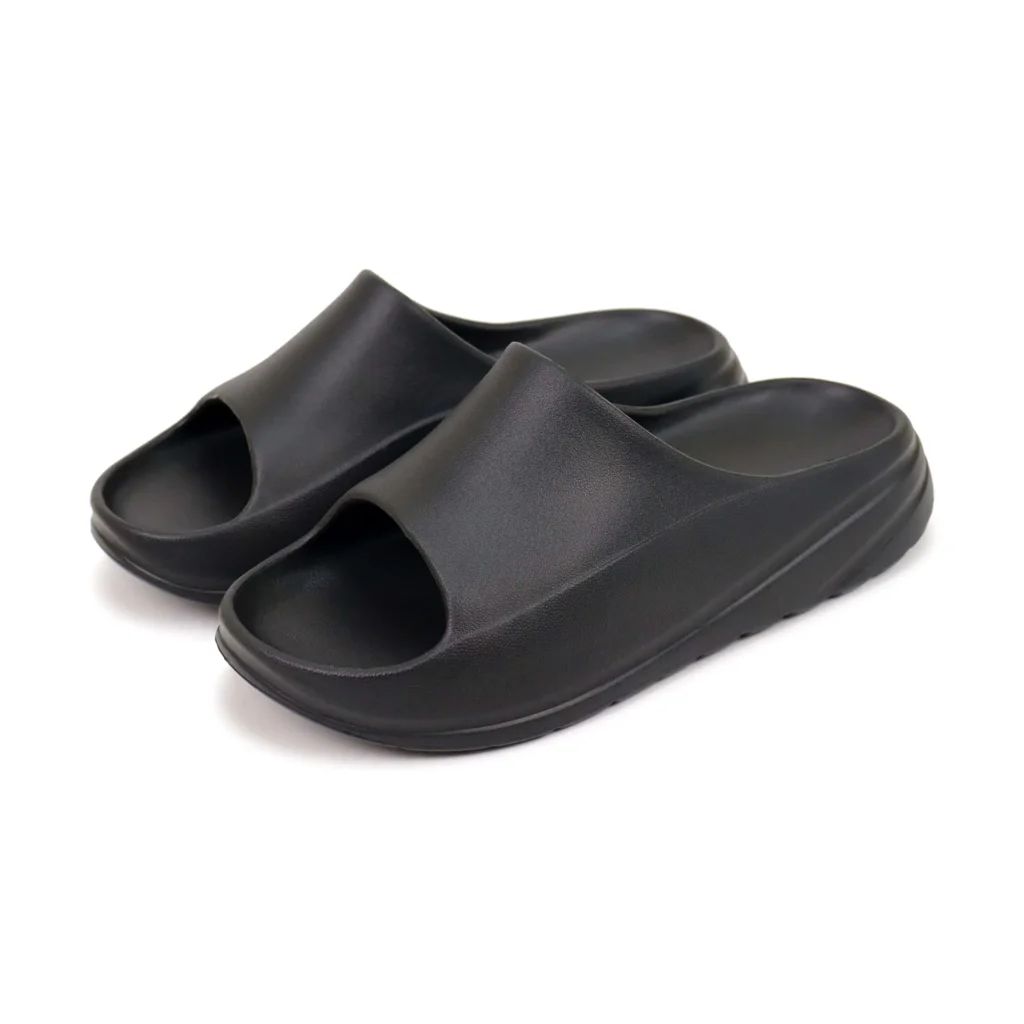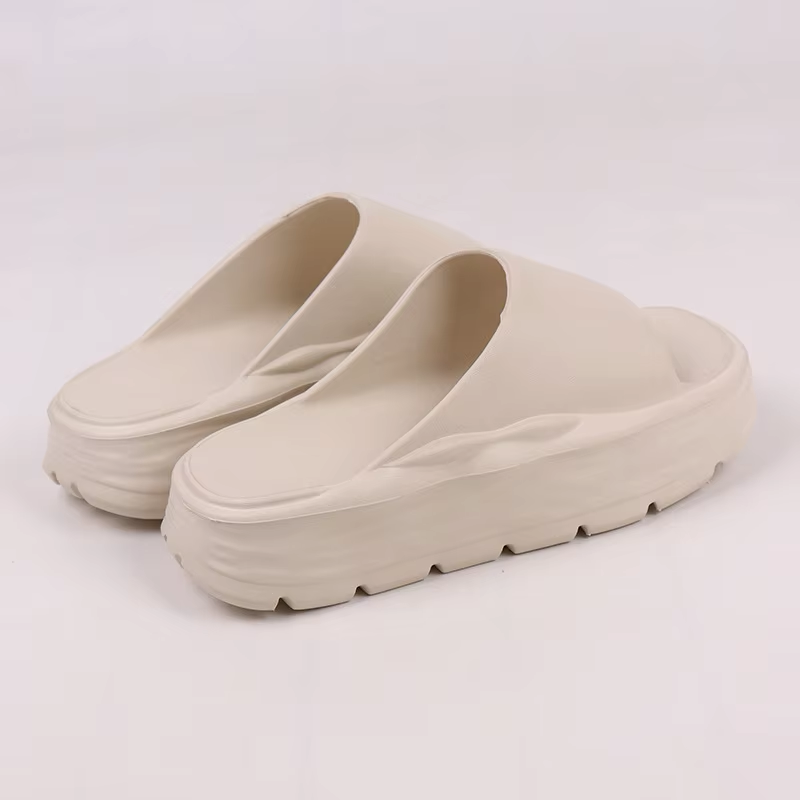
Every slipper brand eventually faces the same fork in the road. A factory offers a catalog of ready-made styles with attractive prices and short lead times, while a custom design promises exclusivity but demands bigger budgets and longer waits. New importers usually gravitate to the first option, established brands dream about the second, and few take the time to compare them properly before committing. The wrong choice either locks a brand into designs that competitors can copy, or burns cash on molds that never pay for themselves.
An existing mold is the right choice when you need fast, low-cost, low-volume production, while a custom mold is worth the investment when brand exclusivity, unique design, and long-term product ownership matter more than speed and price. For most new brands, existing molds provide the smartest starting point, but a custom mold becomes the natural upgrade as sales grow.
This guide compares both paths across cost, lead time, flexibility, and branding impact, so you can decide with numbers instead of guesswork.
What Is an Existing Mold?
An existing mold is a tool the factory has already produced and owns, ready for immediate production of a standard slipper style that any buyer can order.
Factories maintain mold libraries built up over years of serving many customers. Each mold corresponds to a specific sole shape, footbed contour, and side profile, and the factory can run it whenever an order arrives. Buyers choose from the catalog, pick colors, add a logo, and move into production without paying any tooling fee. This is the dominant model in custom slippers wholesale, where speed and cost efficiency matter more than exclusive shapes.
The trade-offs are straightforward. Existing molds eliminate the mold cost entirely and compress lead times dramatically, often to a fraction of what custom tooling requires. The downside is that the same style is available to other buyers, so your product will not be unique. Catalog styles also limit your ability to control the fit, the silhouette, and the details that define a distinctive brand.
What Is a Custom Mold?
A custom mold is a tool developed exclusively for your brand, from your own design, so only you can produce that exact slipper style.
Custom mold development starts with a design or sketch, moves through 3D modeling, and ends with a steel or aluminum tool machined to your specifications. The factory produces it once, and the tool becomes your asset, owned by you or held in trust by the factory for your exclusive use. Any brand that wants a signature silhouette, a patented footbed, or a one-of-a-kind look needs this route. Factories that specialize in this model offer private mold slippers development with flexible support from sampling to mass production.
The cost structure changes completely. You pay a mold development fee upfront, and the price per pair is often slightly higher until the mold cost is spread across large volumes. Lead times stretch because tooling takes weeks. In return, you gain exclusivity, full design control, and an asset that no competitor can order from the same factory.
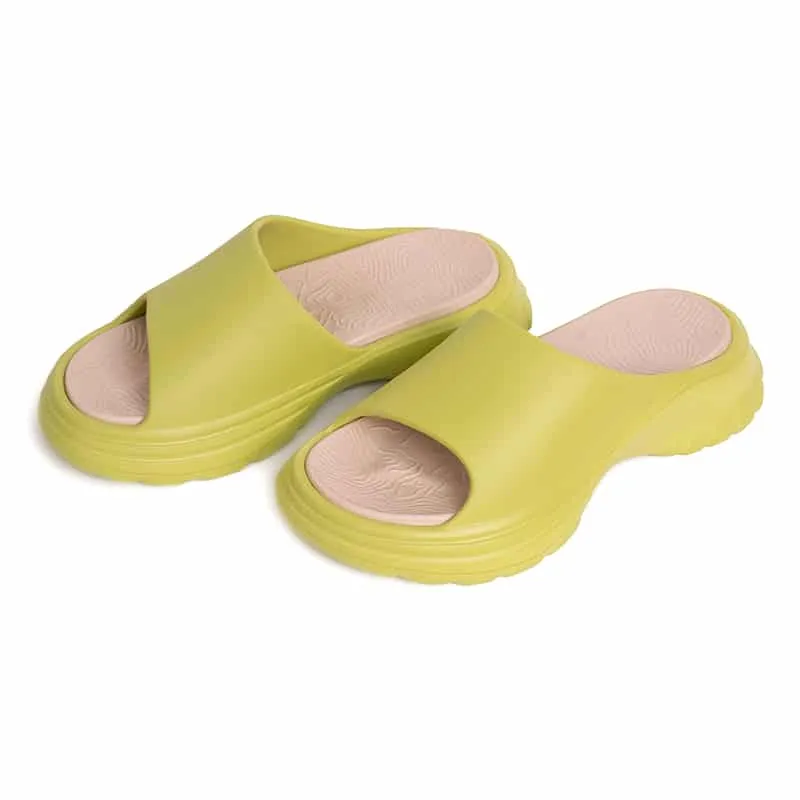
Existing Mold vs. Custom Mold: Key Differences at a Glance
The two paths differ most sharply on cost structure, lead time, exclusivity, and volume requirements, and each factor points to a different kind of buyer.
| Factor | Existing Mold | Custom Mold |
|---|---|---|
| Mold cost | None | Paid upfront by the brand |
| Lead time | Short, often 2 to 4 weeks | Longer, typically 4 to 10 weeks |
| Exclusivity | None, shared with other buyers | Exclusive to your brand |
| Design control | Limited to catalog options | Full control over silhouette and fit |
| Minimum order | Lower, flexible MOQs | Higher MOQs to amortize tooling |
| Price per pair | Lower at small volume | Competitive at large volume |
| Brand identity | Relies on logo and color | Built into the product shape itself |
| Risk | Low financial risk | Higher upfront risk, higher reward |
This comparison explains why both models coexist in the market. Wholesale slippers buyers who prioritize cash flow naturally prefer existing molds, while brands planning a long product lifecycle lean toward custom development.
When an Existing Mold Makes Sense
Choose an existing mold when you are testing a market, entering a new region, or launching a promotional line where speed and low cost outweigh the need for a unique silhouette.
Testing a New Market
Entering a new country or sales channel involves real uncertainty about demand. An existing mold lets you place a small order, measure sell-through, and adjust before committing serious capital. If the style works, you scale up; if it does not, your loss is limited to inventory, not tooling.
Building a Catalog Quickly
Retailers and distributors often need a broad assortment within one season. Catalog styles allow you to launch ten or twenty designs at a fraction of the cost and time of custom development. A reliable slippers manufacturer can supply multiple existing-mold styles from a single production run, which keeps logistics simple.
Promotional and Hospitality Programs
Hotel slippers, event giveaways, and corporate gifts rarely justify custom tooling. The product is consumed quickly, the volume is moderate, and the branding lives on the logo rather than the shape. Existing molds deliver the required quality at the right price point for these programs.
When a Custom Mold Is Worth the Investment
Invest in a custom mold when your brand competes on design, when you plan to sell the same style for multiple seasons, or when you need a fit and silhouette that no catalog style can provide.
Building a Distinctive Brand
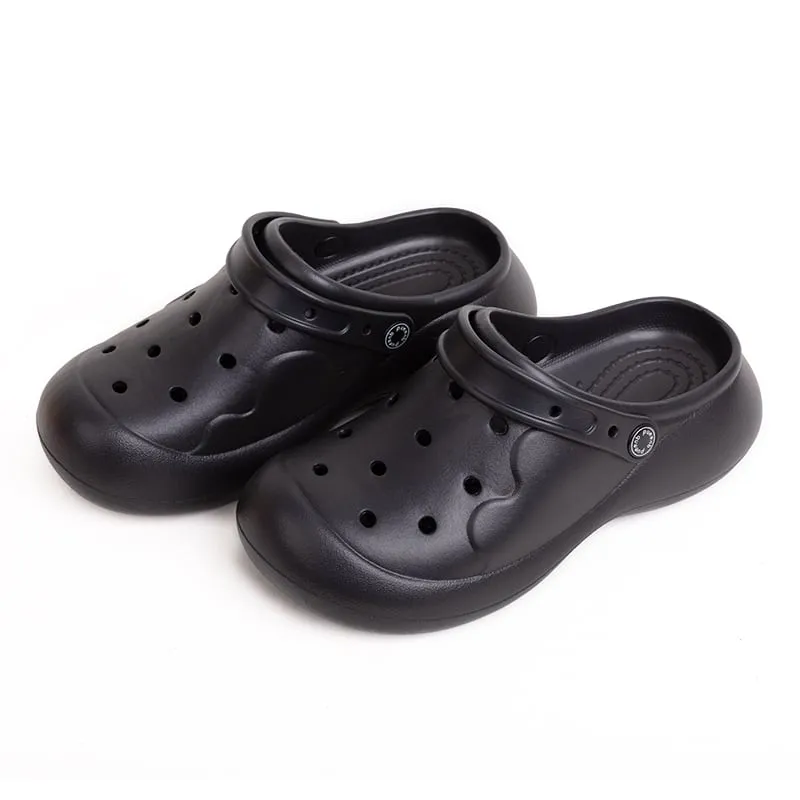
A recognizable silhouette is one of the strongest brand assets in footwear. Think of the visual identity carried by signature slides and clogs in the market today. A private mold slipper customization process turns your concept into a shape customers can recognize without reading the label, and that recognition compounds across seasons.
Controlling Fit and Quality
Catalog styles are designed for a general audience, not for your specific customer. A custom mold lets you tune the arch support, the toe box, the heel depth, and the material density. If your market research shows a need for wider fits, deeper cushioning, or a specific platform height, only custom tooling delivers it.
Long Product Lifecycles
A style that stays in your lineup for years spreads the mold cost across massive volume. The per-pair cost of the mold shrinks with every reorder, and exclusivity prevents copycats from eroding your price position. For core products, the mold fee becomes a small fraction of total cost, and the payoff grows with every season.
How to Decide: A Practical Framework
Score your situation on budget, timeline, volume, and brand ambition, and let the results point you toward existing or custom molds.
Budget
Be honest about what you can risk. Existing molds require almost no tooling investment, which protects cash flow in the early days. Custom molds demand capital that you may need for inventory, marketing, and operations. If a mold fee would strain your cash reserves, start with existing molds.
Timeline
Ask how soon you need product in hand. Seasonal deadlines do not wait for tooling. If you need samples in weeks, existing molds are the only realistic path. If you can plan a launch six months ahead, custom development becomes feasible.
Volume and Price Position
Estimate your first-year volume per style. Below roughly 2,000 to 5,000 pairs per style, the mold cost rarely amortizes enough to justify custom tooling. Above that range, exclusivity and design control start paying for themselves. Also consider your price position; premium brands recover mold costs through higher margins, while value brands typically cannot.
Decision Checklist
- Do you need product in under a month? Choose an existing mold.
- Is your first order per style below a few thousand pairs? Choose an existing mold.
- Will the same style sell for more than two seasons? A custom mold becomes attractive.
- Does your brand compete on silhouette and fit? A custom mold is the stronger choice.
- Can you fund the mold without endangering inventory? Only then consider custom development.
Working through these questions with a factory that offers both paths is easier than it sounds, because experienced slippers factory teams can estimate volumes, lead times, and amortized costs from real production data rather than theory.
How to Work with a Manufacturer on Mold Decisions
Share your volume plans and sales outlook openly, ask for amortization scenarios, and verify that the factory can protect your exclusive tooling.
A good manufacturer treats mold selection as a partnership decision. Provide your realistic sales forecast, target markets, and price points, and ask the factory to model both options: the total landed cost of existing-mold production over two seasons, and the comparable cost of custom tooling spread across the same volume. The comparison often reveals that custom molds become cheaper per pair than expected once volume is steady.
Verify tooling protection before paying a mold fee. The contract should specify that the mold is your asset, that the factory will not produce your style for other buyers, and what happens to the tool if you switch suppliers. Reputable factories also document OEM slippers services terms clearly, covering mold ownership, sampling rounds, and revision rights.
Finally, think about the future of your product line. A custom mold today can support a family of designs tomorrow, because minor variations such as custom EVA slippers with different colors or straps can run on the same tool. Factories with in-house design teams often guide this evolution, turning a single mold investment into a broader collection.
FAQ
Can I switch from an existing mold to a custom mold later?
Yes, and it is a common path. Many brands launch with existing molds to validate demand, then develop custom tooling for their best-selling styles once volumes justify the investment.
Who owns the mold if I stop ordering?
Ownership depends on your agreement. Most reputable factories specify mold ownership in the contract, and many will release the tool to you or transfer it to another factory under agreed conditions. Always confirm this before paying the mold fee.
Are custom molds always more expensive per pair?
Not necessarily. The per-pair cost depends on volume. At low volumes, custom molds add meaningful cost per pair, but at steady volume the tooling cost spreads thin and exclusivity can even support a higher retail price, making the economics favorable.