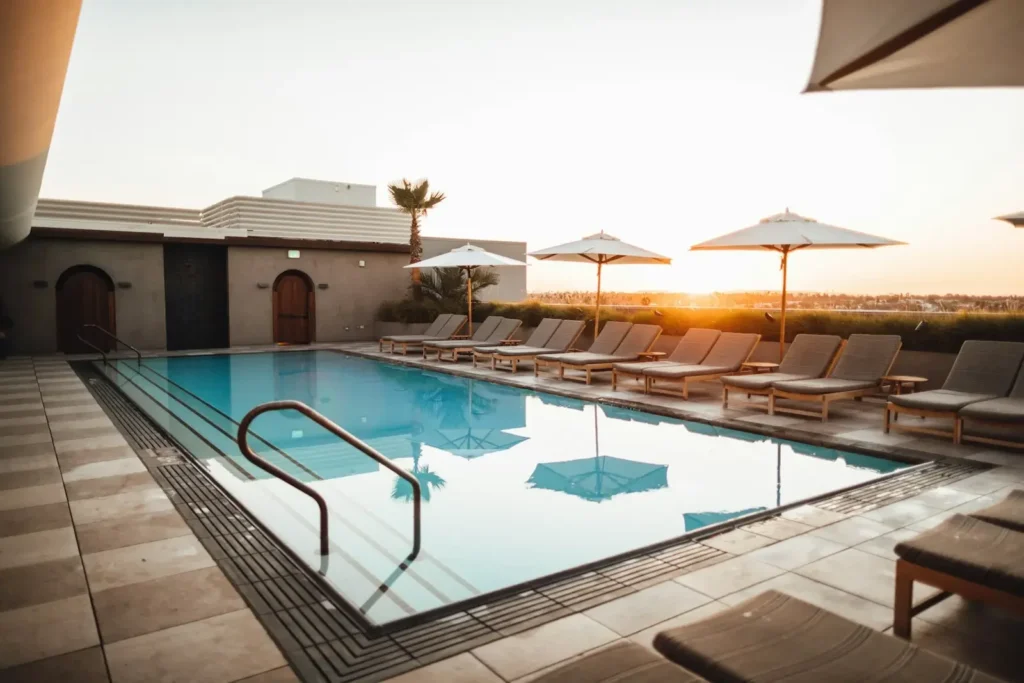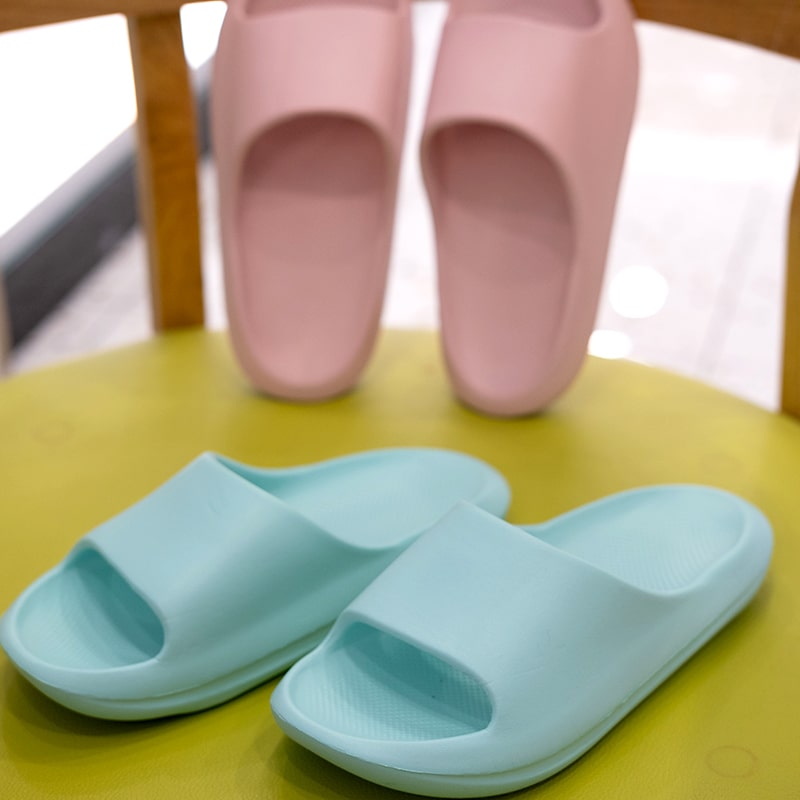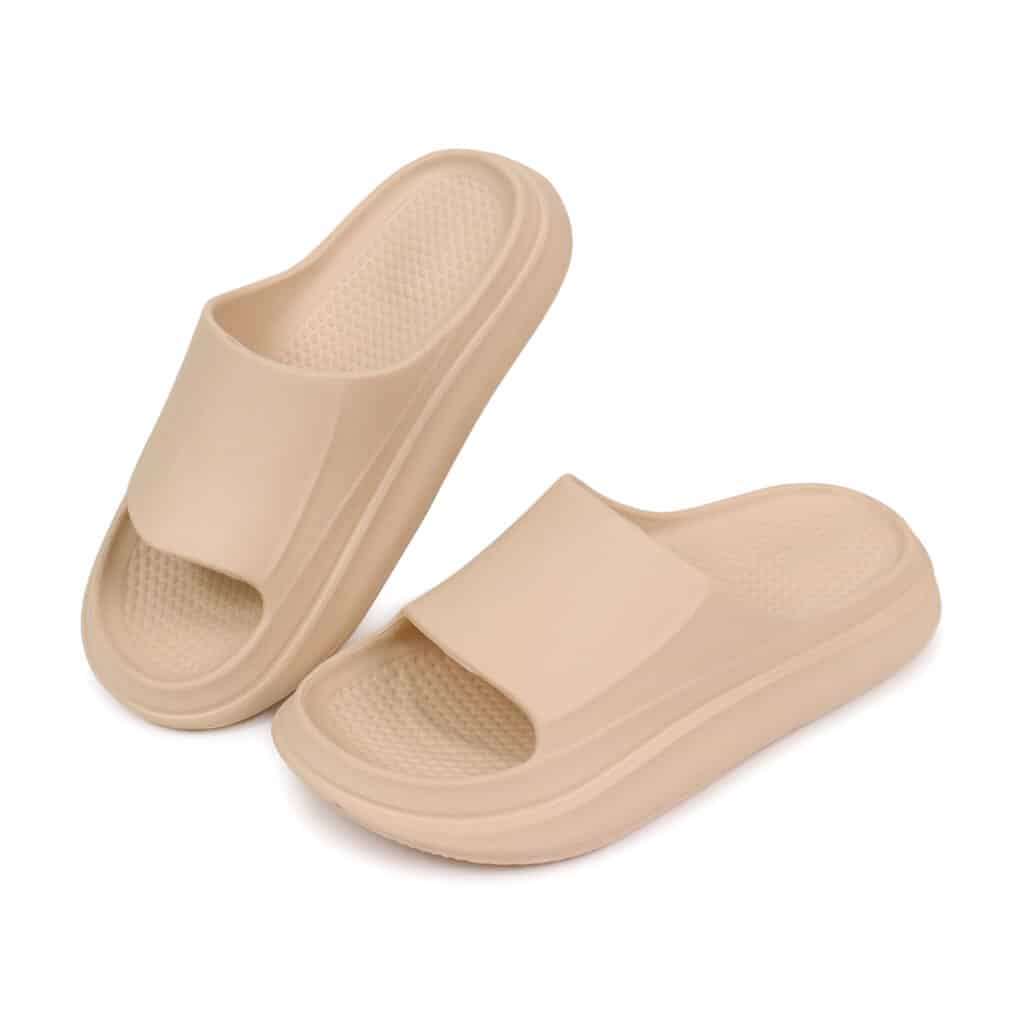
Facility buyers rarely question the towel budget, yet the slipper line is where sauna and steam room operators absorb their quietest losses: pairs that harden within a month, guests who walk barefoot rather than wear footwear they do not trust, and incident reports filed at the threshold between the wet room and the changing area. A sauna or steam room concentrates heat, humidity and bare feet onto a few square meters of tile, and footwear built for a hotel bedroom does not survive that combination.
Choose non-slip slippers that are closed-cell, molded in one piece and fitted with a textured rubber or dense EVA outsole: a compound that stays firm when warm, tread grooves at least three millimeters deep that channel water to the side of the sole, a cupped footbed with a strap or heel cup that stops the foot sliding inside, and a construction that can be rinsed and dried between guests. Treat slip resistance as a measured wet coefficient of friction, not a phrase on a catalog page.
The sections below take those decisions in the order a buyer meets them, from the behaviour of a wet hot floor to the specification sheet you send a factory.
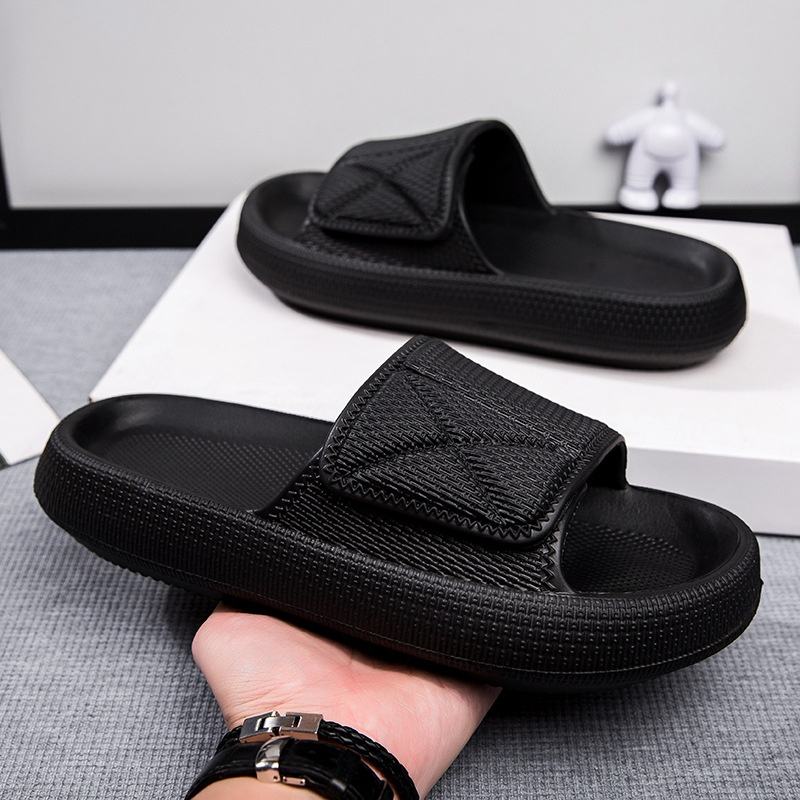
Why Sauna and Steam Room Floors Demand a Different Slipper
Heat and water attack traction from two directions: warm soles soften and conform under body weight, while condensation lays a continuous film a dry-floor sole never has to cut through. A dry sauna and a saturated steam room fail in different ways, so one generic pair rarely covers both.
The two rooms are often treated as interchangeable, yet their floor conditions are not close. A dry sauna runs hot air at low humidity, so the floor stays far cooler than the air and the water a guest brings in arrives as sweat, pooling under the foot. A steam room holds air close to saturation at a much lower temperature, so every surface is wet, tile joints stay filled, and cleaning residue softens into the film. Bare feet, smooth tile and a water layer are the least forgiving combination in any building: no sole pattern, no ankle support, nothing to recover a slide.
Building codes acknowledge the problem without solving it. Guidance from the U.S. Access Board on saunas and steam rooms requires floor surfaces in these rooms to be stable, firm and slip resistant, and requires bench seats in wet locations to be slip resistant and not to accumulate water.
| Condition | Dry sauna | Steam room |
| Air temperature | 80 to 100 C | 40 to 45 C |
| Relative humidity | Low, often under 20 percent | Close to saturation |
| Floor state | Mostly dry, sweat pooling in patches | Continuous water film over tile |
| Dominant hazard | Hot surfaces, sudden sweat patches | Condensation, cleaning residue |
Facilities running both rooms behind one reception desk usually resolve the mismatch at the specification stage, buying a wholesale spa slippers program built for wet zones rather than issuing one bedroom pair everywhere.
Which Sole Material Holds Grip in Wet Heat
Closed-cell EVA molded in one piece with a textured outsole gives the best balance of wet grip, heat tolerance and drying speed. Where a fall carries real liability and budget allows, a rubber or TPR outsole bonded to the same upper delivers the highest wet friction, at higher unit cost and with a bond line heat can attack.
EVA, or ethylene-vinyl acetate, is a closed-cell foam that absorbs almost no water, which is why it dries in minutes and resists the bacterial growth that plagues absorbent uppers. Its weakness is softness, not water: a very soft compound deforms under load, and on a wet surface that deformation presses the tread flat instead of letting the pattern edges cut into the film. Harder compounds with sharp tread edges displace water better, which is why extra-soft cushioning sells in a bedroom and fails in a steam room.
| Material | Wet grip | Behaviour in heat |
| Molded closed-cell EVA, textured | Good to very good | Stable, softens above roughly 60 C |
| EVA upper with rubber or TPR outsole | Very good | Outsole unaffected, bond line is the weak point |
| Fabric or terry sole | Low | Absorbs water, dries slowly |
Tread Geometry That Channels Water Away
Tread does the work a compound cannot, because it gives water somewhere to go. Specify grooves at least three millimeters deep, cut in more than one direction, with channels that exit at the side of the sole rather than trapping water under the arch.
A pattern running only front to back grips when a guest walks straight ahead and fails the moment weight shifts sideways, as when someone turns on a bench step. Multi-directional blocks, thin siping cuts that break surface tension, and a continuous heel zone cover the three movements behind most wet-room falls: pushing off, turning, and reaching back for a step.
- Measure groove depth at heel and ball; require 3 mm or more when new.
- Confirm at least two tread directions so sideways shear meets an edge.
- Look for open side channels or drainage ports, not closed pockets.
- Check that a solid heel block stays in contact when weight moves backward.
- Ask for siping, the thin cuts that let a block flex and shed the film.
- Confirm block edges are rounded, since sharp edges wear away first.
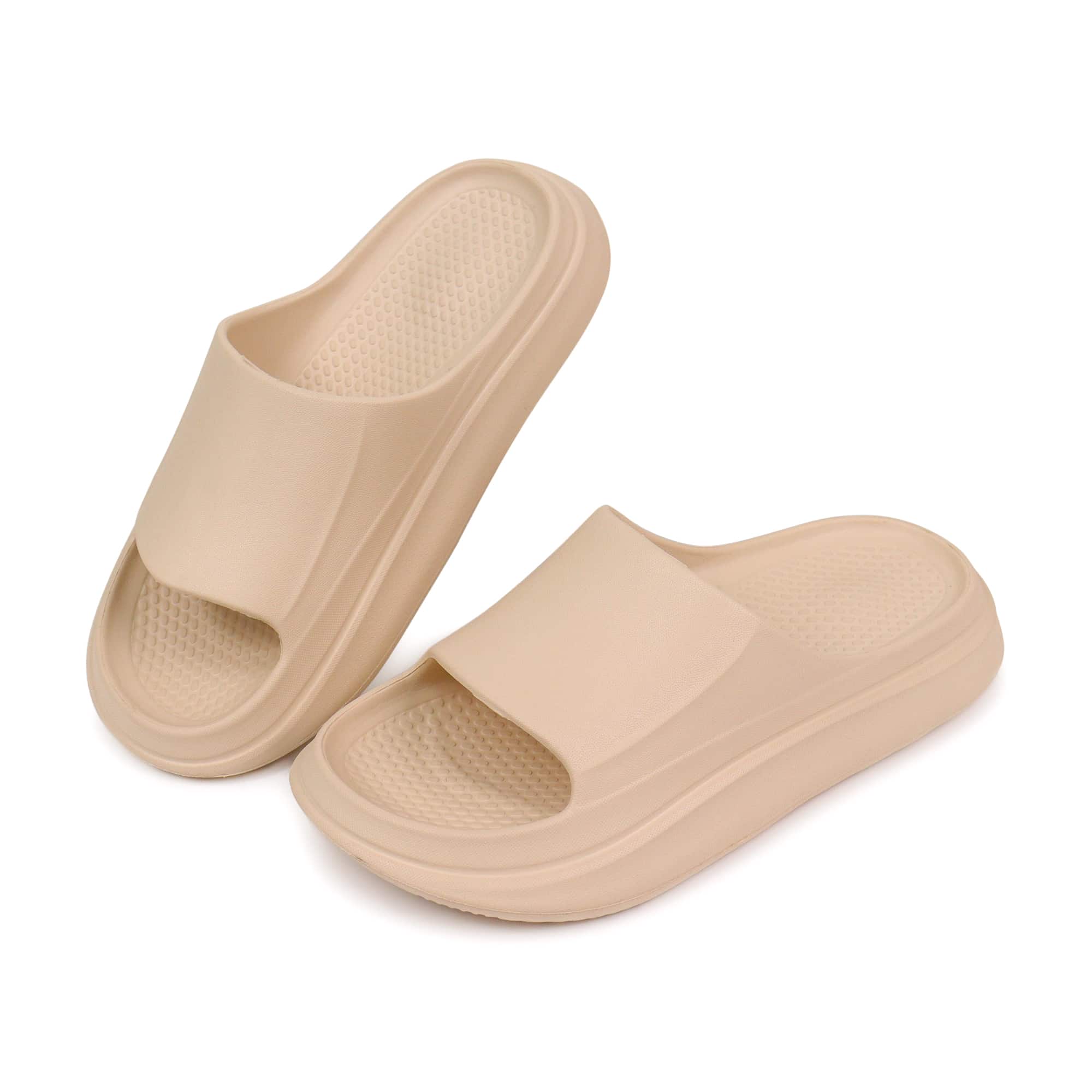
When comparing non-slip slippers, ask suppliers for the measured coefficient of friction on wet tile rather than dry flooring. Hospitality procurement commonly treats roughly 0.5 as the practical threshold, and standards for barefoot wet areas such as DIN 51097 use a ramp test that records the angle at which a barefoot walker loses grip, then sort results into classes. A supplier who can quote a class and a test method has tested something; one who calls the sole anti-slip has described a word. Molded options such as custom non-slip EVA slides show the geometry worth asking for: side drainage and a continuous heel zone on a single-piece body.
Fit and Footbed: Keeping the Foot Inside the Slipper
A sole that grips the floor still fails if the foot slides inside the slipper, so fit belongs in the same specification. Require a cupped footbed, a strap or heel cup that holds the midfoot, and enough length that the toes never reach the front edge on a descent.
Wet heat removes the friction between skin and footbed that a dry slipper relies on. Sweat and condensation both lubricate, and the backless slide, the commonest shape in amenity programs, is the one most likely to stay behind when a guest steps forward. Oversizing compounds it: a loose pair makes the guest grip with the toes, shortening the stride and raising the chance of catching the front edge on a threshold.
How to Stop Slippers From Slipping
Treat it as two interfaces, not one. Compound and tread settle the sole-to-floor interface; shape settles the foot-to-slipper interface.
- Add a heel strap or closed back for any room with steps or bench platforms, with an adjustable strap so one size range covers a wider spread of feet.
- Specify a recessed footbed with a raised outer edge, which resists lateral movement better than a flat bed.
- Keep a 5 to 8 mm gap at the toe, since excess length is a trip hazard.
- Texture the footbed, because a polished surface turns slippery once wet.
What Podiatrists Recommend
Foot health guidance converges on the same short list: a contoured arch, a deep heel cup, a sole that bends only at the ball of the foot, and cushioning firm enough to keep its shape through a long visit. In a hot room the last point matters most. Foam soft enough to feel luxurious compresses within minutes and leaves the arch unsupported for the rest of the session, which is why a firmer, thinner footbed beats a thick pillow. Buyers comparing constructions can check what podiatrist-recommended slippers share before committing to a sample.
Heat, Sweat and Odor Control
Above 40 C a slipper stops being a comfort item and becomes a moisture-management decision. Closed-cell foam, no fabric lining, minimal adhesive-heavy decoration and open drainage form the construction that survives repeated wet-heat cycles.
Heat does two things to a cheap pair: it softens the foam, so the footbed takes a permanent set within weeks, and it attacks the adhesives holding uppers and logos, which is why decoration fails before the sole wears out. Odor works differently: the foam does not smell, but moisture trapped between footbed and foot feeds bacteria, and warmth accelerates the growth.
What Type of Slippers Are Best for Sweaty Feet
Open-cell sponge and fabric linings absorb sweat and hold it against the skin. Closed-cell foam with a smooth, non-absorbent footbed does the opposite, and side drainage ports let water leave instead of pooling under the arch. Socks make it worse in a wet room, since cotton keeps moisture against the skin.
What Kind of Slippers Do Not Get Too Hot
Perceived heat depends on thermal mass and surface color more than thickness. A thin, light-colored sauna slipper with an open toe and no lining stays cooler than a thick dark one, because it stores less heat and reflects more radiant energy from a heater. Avoid metal eyelets, dense foam platforms and dark dyed footbeds where air temperature climbs above 80 C.
Reusable or Single-Use in a Wet-Heat Environment
Reusable molded slippers suit sauna and steam room programs, but only where the facility can dry a pair fully between guests. When drying capacity is the constraint, single-use pairs issued at the wet threshold are the honest option, because a damp reusable pair is worse than a fresh disposable one.
| Factor | Reusable molded EVA | Single-use nonwoven |
| Drying time | Minutes after a wipe and air dry | Not applicable |
| Cost model | Higher unit cost, amortized over many visits | Low unit cost, recurring |
| Typical failure | Compressed footbed, worn tread | Thin sole, limited wet grip |
The health logic behind a strict cycle is well documented. The Centers for Disease Control and Prevention notes that the organisms behind athlete’s foot thrive in warm, dark, moist environments such as communal bath areas, and recommends keeping feet clean and dry and wearing protective footwear in shared wet spaces. A slipper is that protective layer only if it is dry when issued.
A Specification Sheet to Send to Suppliers
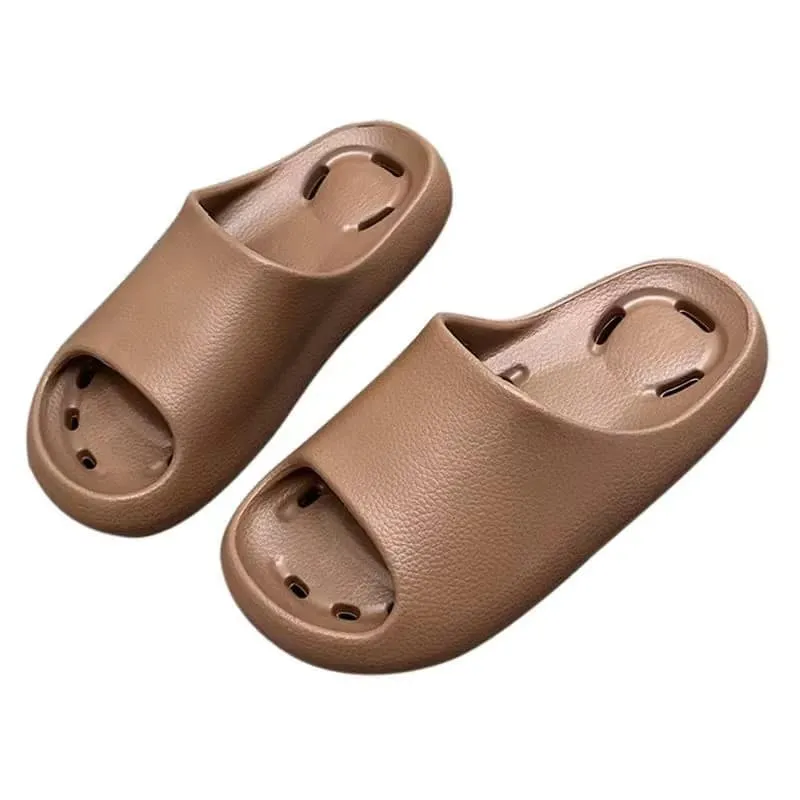
Convert every requirement into a number a factory can confirm, because slip resistance, heat tolerance and drying speed cannot be judged from a photograph.
- Sole compound and hardness, stated on a Shore scale with a tolerance range.
- Tread depth in millimeters, plus a pattern drawing that shows where channels exit.
- Wet coefficient of friction, with the test method, substrate and test date.
- Heat aging at 70 C for seven days, then a report on hardness change and shrinkage.
- Construction type, single-piece molded or bonded, with an adhesive heat rating if bonded.
- Footbed geometry: cup depth, arch height, surface texture and drainage openings.
- Size range and last width, with the shrinkage allowance stated after molding.
- Decoration and packaging proven against heat and moisture, with pairs individually wrapped and kept dry.
Sampling, Testing and Bulk Order Checks
Test before committing. Request physical samples in every size, wet a quarry tile or a stainless tray, and walk each pair up a gradually tilted surface until it releases, then score all suppliers against the same result on the same day.
Par levels should follow drying time rather than guesswork: a facility turning over a wet room every 90 minutes needs one pair in use and one drying per guest at peak, plus a buffer of 10 to 15 percent. Replace by tread depth and footbed compression rather than appearance, because non-slip slippers can look new while the water channels have already smoothed flat. Batch consistency, documented test reports, minimum order quantity and lead time belong in the same conversation, and a slippers manufacturer with wet-zone experience will usually raise the drying question before you do.
Frequently Asked Questions
Three questions surface once the specification is agreed, and each one changes what gets ordered.
Can terry or fleece slippers be used inside a steam room?
Not for guests who walk into the wet room itself. Absorbent uppers gain weight, dry slowly and lose what little grip the sole had, so reserve fabric slippers for dry lounges and keep a molded wet-area pair at the threshold.
How many pairs should a facility hold per guest?
Plan on two to three pairs for every guest using the wet zone at once, because the constraint is drying capacity rather than guest count. A facility that cannot dry pairs overnight needs more stock or a single-use fallback.
Do non-slip slippers work on wooden sauna benches and hot surfaces?
Tread is designed for tile, not bench slats, and a rubber outsole tolerates a warm bench better than thin foam. Guests should still sit on a towel, and slippers should never be stored against a heater.