Winter is the strongest season for closed footwear, and clogs have grown from a niche comfort item into a core seasonal category for wholesalers, retail chains, and private label brands. At the same time, winter clogs are a risky product to source: styles that look warm in a catalog can leak heat, slip on ice, or arrive with inconsistent sizing, and any of these faults turns a seasonal best seller into unsold stock by February.
The best winter clogs for wholesale combine an insulating liner, a waterproof shell, a slip-resistant outsole, and consistent sizing across the run. For most volume channels, EVA constructions with removable warm liners offer the best balance of price, comfort, and reorder reliability, while rubber-soled and leather-look styles serve premium retail. Before ordering, verify quality through samples, confirm MOQ and lead times, and check the supplier’s compliance documents.
The sections below break each of those decisions down, from 2026 trend signals to material comparisons, quality control, and supplier evaluation.
What Are the Clog Trends for 2026?
The main clog trends for 2026 are chunky platform silhouettes, plush shearling-style linings, studded and textured uppers, and a continued shift toward lined molded clogs that sell through the cold season rather than after it.
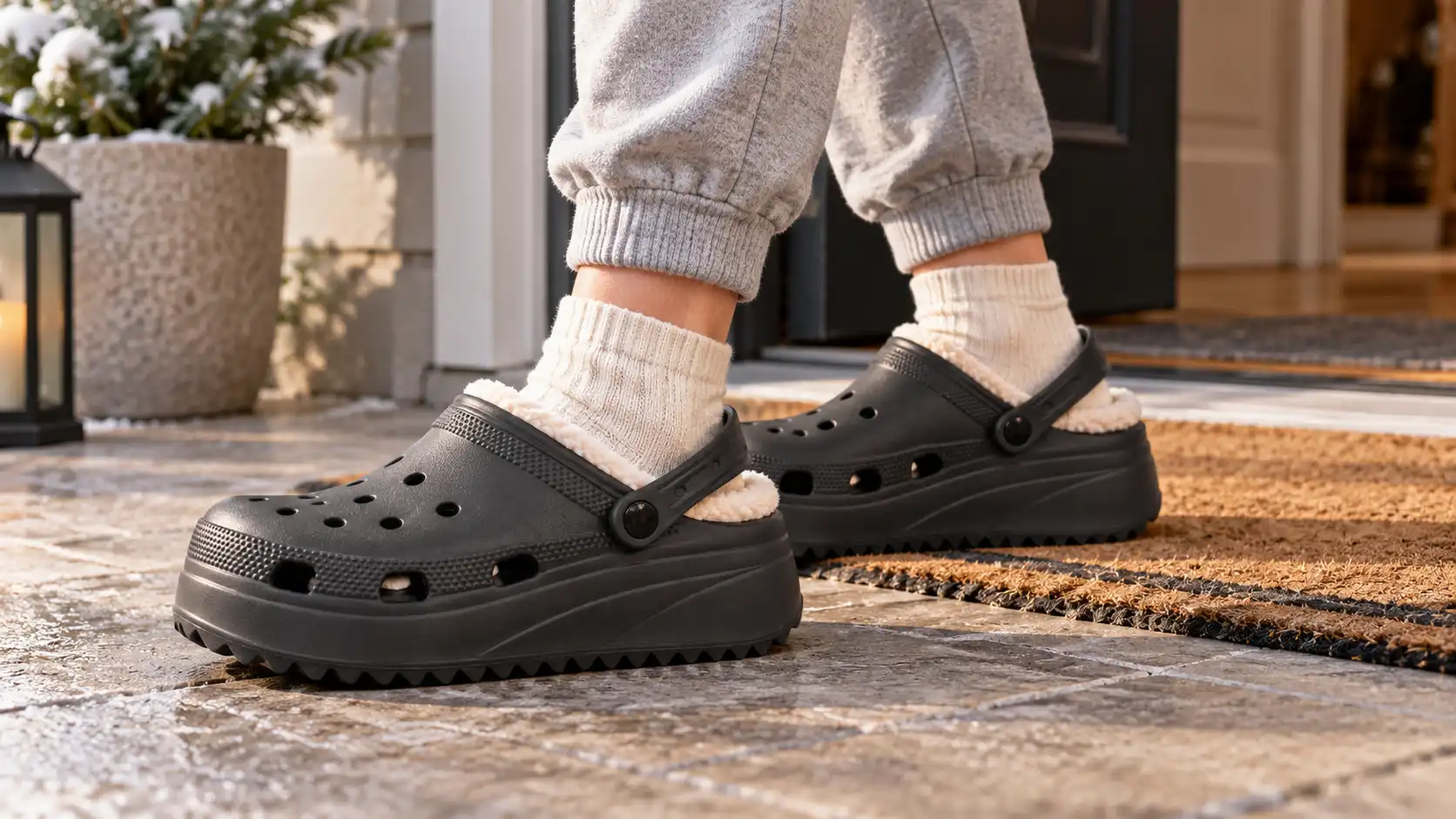
Fashion media have placed chunky clogs among the defining shoes of 2026, with fur-lined and platform versions appearing in both runway collections and mass-market ranges. The clog itself is far from new: wooden versions originated centuries ago as protective work footwear before molded foam and leather designs carried the silhouette into mainstream wardrobes. For a wholesale buyer, the trend matters less as a style statement than as a demand signal. Lined clogs are now an expected part of cold-weather assortments in supermarkets, e-commerce, and gift retail, not an optional add-on. Within that demand, foam-based styles in the EVA clogs wholesale category still drive the highest unit volumes because they combine a low landed cost with high perceived comfort. A balanced winter program usually carries one trend-led style for impulse purchases and one basic lined clog for steady replenishment.
Which Material Is Best for Winter Clogs?
For most wholesale programs, EVA is the best winter clog material because it is lightweight, waterproof, and inexpensive to mold, while rubber outsoles and leather or wool uppers serve heavy-duty and premium segments better.
Material choice should follow the wearing environment and the price position of the channel rather than trend coverage alone. Many buyers ask is EVA good for clogs before committing, and the honest answer is that it depends on climate and use case rather than on the material alone.
EVA vs. Rubber vs. Leather for Winter
| Construction | Winter performance and best-fit channel |
| Molded EVA shell | Lightweight, fully waterproof, low cost; pairs with a warm liner for indoor and light outdoor use; best for value retail and e-commerce |
| EVA shell with rubber outsole | Adds grip and abrasion resistance on wet pavement and ice; best for commuter and garden channels |
| Rubber or PU clog | Durable and slip resistant with strong chemical resistance, but heavier; best for occupational and food-service buyers |
| Leather upper with wool or shearling lining | Premium look and insulation but only water resistant; best for fashion and lifestyle retail |
EVA also dries quickly and can be rinsed clean, which reduces odor complaints in enclosed-liner styles. The main trade-off is heat sensitivity: EVA deforms if left in a hot container or warehouse, so carton handling matters more than it does for rubber.
Insulation and Lining Options
The liner determines most of the warmth a customer actually feels:
- Artificial fur or sherpa-style lining: warm, soft, and inexpensive to produce, which makes it the default for fashion winter clogs.
- Wool or wool-blend felt inserts: better moisture management and a premium hand feel, suited to higher price points.
- Removable liners: allow separate drying, replacement, and cross-season wear, the most practical option for wholesale because it reduces returns and supports accessory sales.
Ask suppliers for the lining weight in grams per square meter, and test the same clog with and without the liner during sample evaluation, since a liner that is too thick changes the fit of the entire size run.
What Features Define the Best Winter Clogs?
A genuine winter clog needs verifiable insulation, effective waterproofing at the seam line, and an outsole pattern proven on wet and icy surfaces, not merely a summer clog with a liner added.
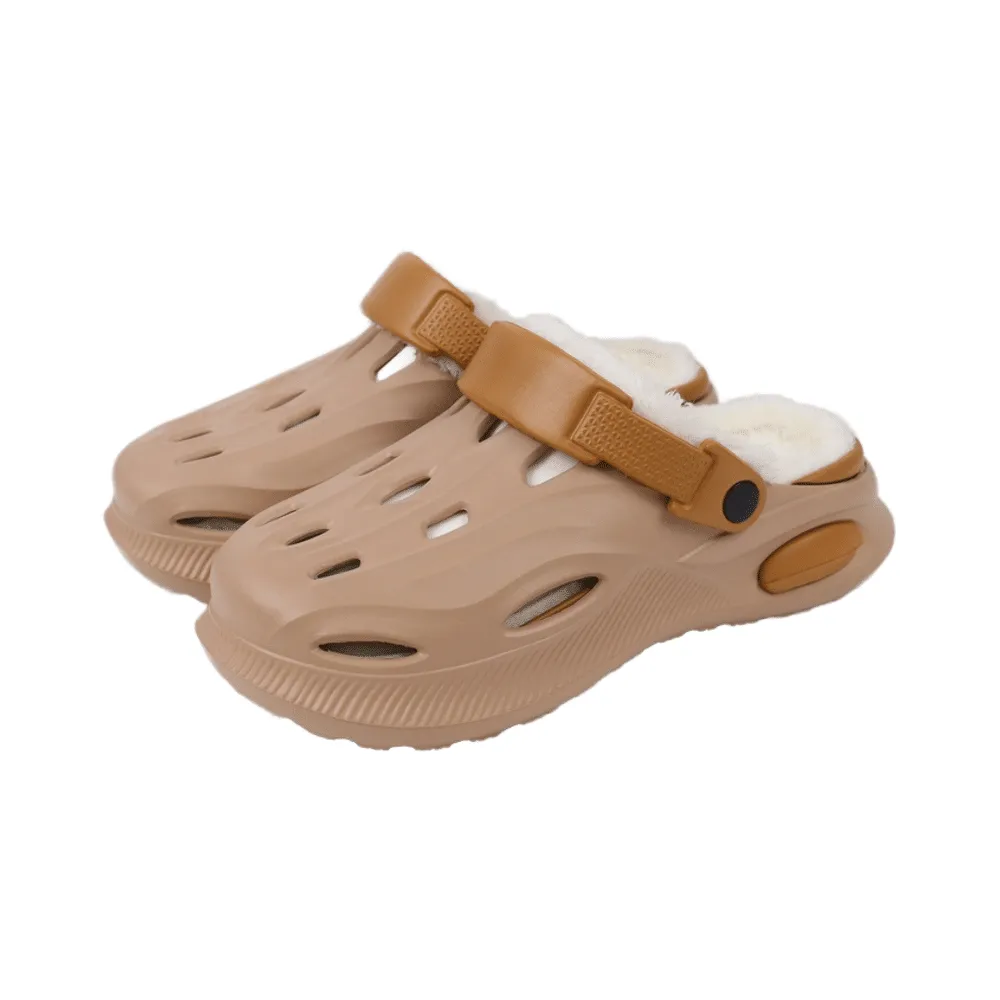
Three checks separate real winter performance from marketing copy. First, insulation should be measured: lining weight, insole thickness, and heel coverage all affect warmth, and a low-cut heel opening leaks heat even when the footbed is plush. Second, waterproofing must be tested at the construction level. A molded one-piece shell is inherently waterproof, but any bonded seam, stitched strap, or decorative perforation becomes an entry point for slush. Third, slip resistance should be backed by a recognized test method rather than a label. Standards such as ASTM F2913 measure footwear traction on contaminated surfaces, and suppliers who can share the test conditions are safer partners than those who simply describe a sole as non-slip. Styles like winter warm anti-slip clogs show how these three features are usually combined on a single molded platform.
Fit, Sizing, and Who Should Not Wear Clogs
Fit drives winter returns more than any other feature. Cold-weather customers wear thick socks, so a winter clog should be roomy without heel slip, and the size run should be checked across several sizes rather than a single sample pair. Sizing consistency between production batches matters more for clogs than for laced shoes because there is no fastener to compensate for a small variance.
Some customers should not wear clogs at all, and a buyer who understands this can steer the assortment instead of absorbing the returns. In general, clogs are unsuitable for people with severe balance or instability conditions, for those who need full heel and ankle protection in heavy industrial work, and for anyone whose foot specialist has ruled out open-heel footwear. Clogs also perform poorly in deep snow unless the shaft height and sealing are designed for it. Stocking a closed-back or strap-secured clog alongside the open style covers part of this audience without changing the product platform.
How to Evaluate Quality Before a Bulk Order
Quality evaluation for winter clogs should happen in three stages: approve a sealed reference sample, agree a written specification, and inspect production pairs against that specification before shipment.
A pre-production sample proves design intent, but it does not prove that 2,000 production pairs will match. Before ordering, document material grades, lining weight, outsole pattern, logo placement, size grading, packaging, and the acceptable level of cosmetic variation. During production or final inspection, check:
- Weight and density consistency between pairs and cartons, since under-filled EVA foam softens and compresses quickly.
- Bonding at the outsole and strap attachment points, the two most common failure points in winter use.
- Colorfastness and liner shedding, which drive complaints in light-colored winter assortments.
- Size accuracy across at least three sizes, including the overlap between size brackets.
- Pair matching, size labels, and carton marks, including protection against deformation in transit.
For slip-resistant claims, request the test method and report scope rather than accepting a general non-slip description, and repeat a basic wet-surface check yourself on the approved sample.
MOQ, Lead Times, and Seasonal Ordering
Most winter clog suppliers set MOQ between 500 and 1,000 pairs per style and color, with trial orders negotiable, so the real constraint is usually the calendar: winter assortments must be ordered in spring or early summer to land before the season starts.
MOQ should be judged together with replenishment capacity. A moderate MOQ from a supplier who can re-run an approved color is worth more than a low MOQ from one who cannot. Where the first order is a test, buyers can reduce risk by using an existing mold, choosing standard colors, accepting mixed-size cartons, and limiting custom packaging until sell-through is proven.
Seasonal timing works backward from the shelf date:
| Order milestone | Typical timing before season |
| Sample approval and order confirmation | 5 to 6 months |
| Bulk production | 3 to 4 months, including liner sourcing |
| Sea freight and customs | 4 to 8 weeks depending on destination |
| Warehouse intake and distribution | 2 to 3 weeks |
A late order does not merely arrive late; it misses the selling window entirely and converts directly into off-season inventory. Air freight can rescue a small late order, but it usually erases the margin on low-priced foam clogs, so treat it as a tool for topping up a best seller rather than a plan for the season.
Customization and Private Label Options
Customization for winter clogs ranges from simple logo application on an existing style to fully custom molds, and each step up the ladder increases MOQ, lead time, and the minimum revenue needed to justify the order.
For private label buyers and brand owners, the practical ladder is:
- Stock style with a printed or debossed logo, custom hangtag, and barcode: the fastest entry, usually within existing MOQ.
- Custom colors, strap treatments, liner fabric, or insole printing: a moderate MOQ increase and a good way to differentiate without new tooling.
- Custom mold or modified last: the highest cost and longest development schedule, justified only for a proven best seller or a brand with a defined fit identity.
Packaging should match the channel: bulk polybags for wholesale distribution, retail-ready boxes for supermarket shelves, and protective packaging for e-commerce shipping. Confirm packaging minimums separately from the shoe MOQ, because they are often quoted independently, and verify that approved colors can be combined across styles when planning the assortment.
How to Choose a Reliable Winter Clogs Supplier
A reliable winter clogs supplier shows evidence rather than adjectives: documented samples, defined inspection points, repeat-order capability, accurate export paperwork, and chemical compliance files such as REACH documentation for the EU market.
Evaluate shortlisted suppliers on verifiable criteria:
| Evaluation area | Strong evidence |
| Product capability | Clear category structure, material options, and a written customization process |
| Sample control | Sealed approval samples with a revision record |
| Quality process | Defined inspection points and a corrective-action procedure |
| Replenishment | Repeat-order records and material continuity for approved colors |
| Export support | Accurate packing data and responsive documentation |
Chemical compliance deserves specific attention. If the clogs will be sold in the European Union, request REACH-related documentation; the framework managed by the European Chemicals Agency defines the substance restrictions these products must meet, and a supplier who cannot produce the files becomes a customs risk. For a structured approach to shortlisting partners, a guide on how to select a clogs wholesaler covers the due diligence questions in more depth. Start with a controlled trial order and keep written records of quotations, approvals, and inspection findings so the sourcing decision stays auditable when it is time to scale.
FAQ
How much should I budget for a first wholesale winter clogs order?
Most programs start with 500 to 1,000 pairs of a single style in two or three colors. Beyond the quoted unit price, budget for sample fees, freight, import duty, and a margin of 5 to 10 percent for defective or unsellable pairs. A trial order at this scale is large enough to test real sell-through while small enough to exit without heavy losses.
Can the same winter clog SKU sell outside the cold season?
Yes, if the liner is removable. A clog with a detachable warm liner converts into a standard molded clog for spring, which extends the selling window and reduces end-of-season markdowns. Fully integrated plush linings sell best in genuinely cold markets and should be cleared before spring collections land.
How do I handle size charts when selling winter clogs in different countries?
Ask the supplier for the actual last measurements in millimeters rather than relying on the marked size, and compare them against the standard of your target market. Order mixed-size ratios per carton matched to your channel’s customer profile, and spot-check the overlap sizes, where mismatches between size systems cause most returns.