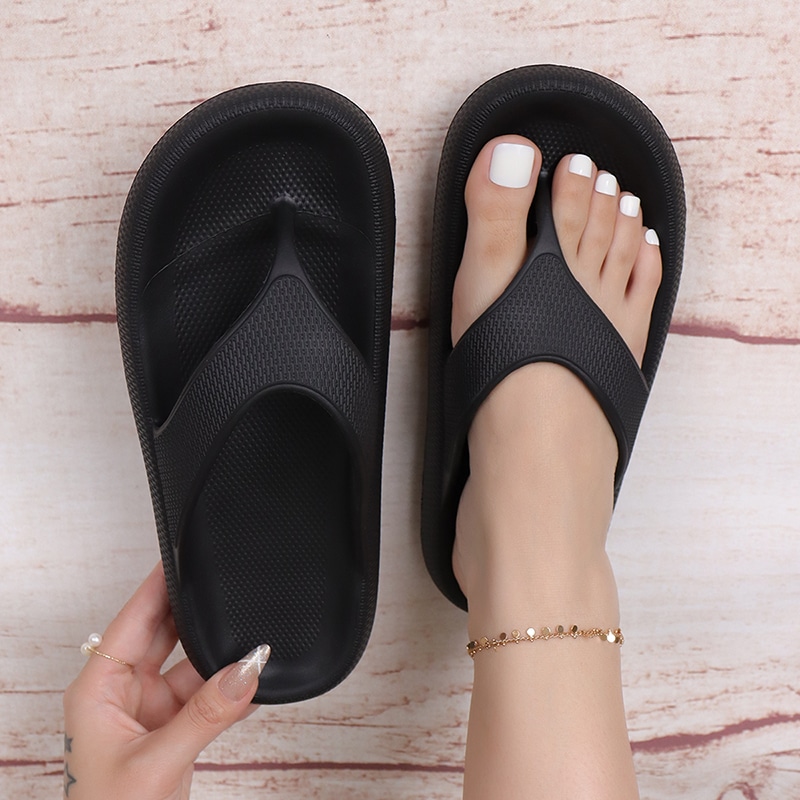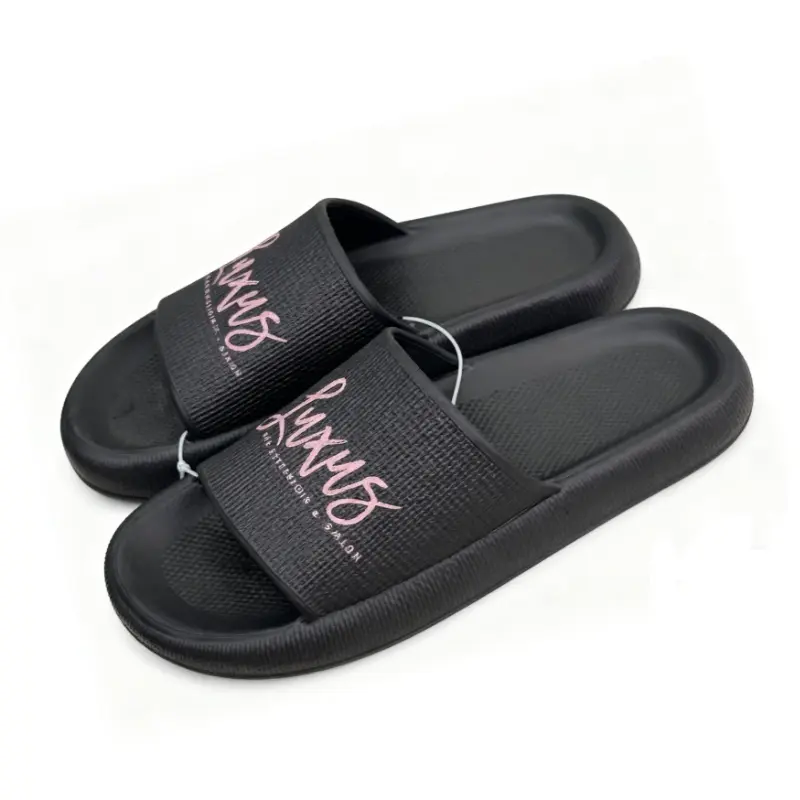
Custom slippers have become a staple branded product for hotels, spas, retailers, and direct-to-consumer brands, and the logo is the single most visible element on every pair. Unlike a hidden construction flaw, a logo that is off-center, blurry, faded, or peeling is the first thing customers notice, and it directly shapes how they judge the brand behind it. For buyers placing bulk orders, logo quality problems discovered after shipment are among the most expensive and least fixable defects, because reworking branded footwear usually means destroying and remaking the affected pairs.
To check logo quality on custom slippers, compare the physical sample against your approved artwork first, verify size, placement, and color with measurable references, run physical tests such as tape adhesion, rub, and flex tests on the actual material, and then control bulk production through staged inspections and AQL sampling rather than a single visual glance.
The sections below break that process into six practical stages, from visual criteria to bulk defect classification.
What Defines Good Logo Quality on Custom Slippers?
Good logo quality on custom slippers means the mark is sharp, correctly positioned, symmetrical across the pair, consistent in color, and durable enough to survive repeated wear and washing.
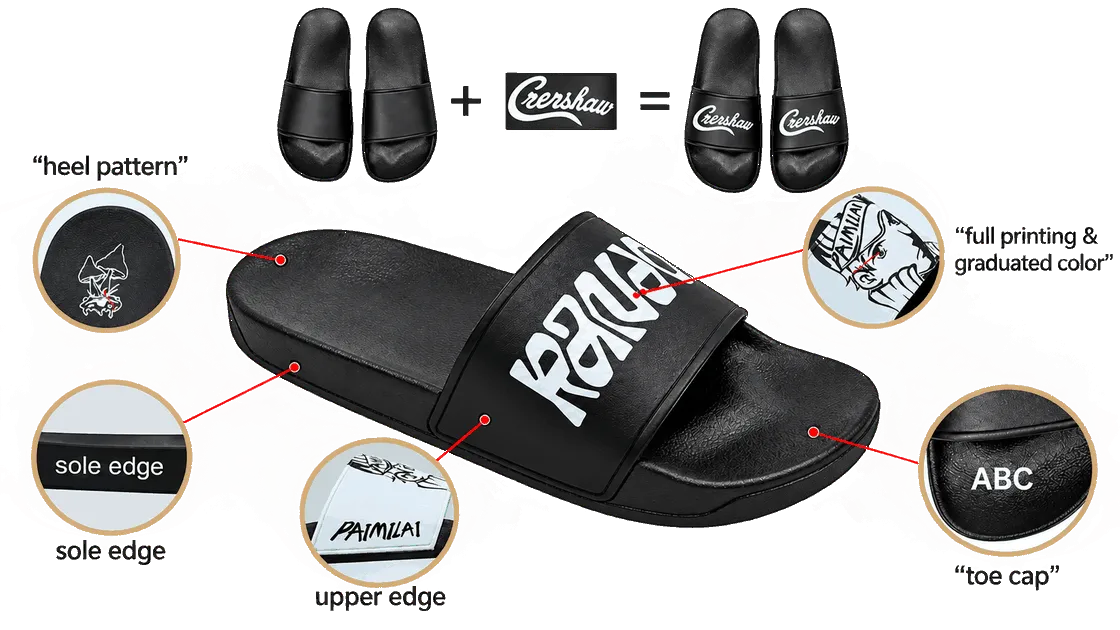
Logo quality is measurable, not a matter of taste. Before an order moves to sampling, agree on written standards with your slippers manufacturer so that both sides judge the finished product against the same criteria instead of vague descriptions such as “looks good.” The core criteria that separate an acceptable logo from a defective one are:
| Quality criterion | What to look for |
| Clarity | Logo is legible at arm’s length, with no blurred lines or filled-in detail |
| Contrast | The logo stands out clearly against the base material in daylight |
| Placement | Position matches the spec sheet, measured from fixed reference points |
| Symmetry | Left and right slippers mirror each other in size, height, and orientation |
| Color accuracy | Thread or ink color matches the approved physical reference |
| Durability | No peeling, cracking, or fading after adhesion, rub, and flex tests |
Each criterion needs a number behind it. “Legible at arm’s length” gives an inspector a concrete test; “centered” needs a measured distance from the strap or heel seam. A criterion that cannot be checked the same way by two different people is not a standard, and it will cause disputes when the bulk goods arrive. Attach the agreed criteria to your purchase order so they become part of the acceptance contract.
Check the Logo Against Your Approved Artwork
The most reliable logo check happens before production starts: compare every physical sample against one approved artwork file, never against memory, a website image, or a screen render.
Most logo quality disputes trace back to ambiguous references. Supply vector artwork (AI, EPS, PDF, or SVG with fonts outlined), and keep strict version control, because a factory using “final-2” instead of “final-3” can produce an entire batch with an outdated logo. Brands ordering private label slippers should require the factory to confirm the exact file name, revision date, and color references in writing before cutting or printing anything.
Size and Placement Accuracy
Measure the logo on the finished sample with a ruler or caliper. Record the width and height of the mark, and its distance from at least two reference points, such as the strap edge, toe line, or heel seam. Never accept descriptions like “roughly centered” in a spec sheet. Most footwear specifications allow a placement tolerance of a few millimeters, and anything outside that tolerance should be flagged before approval, not debated after delivery.
Color Accuracy and Consistency
Check color in natural daylight, not under office or warehouse lighting, and compare the logo against a physical swatch rather than a screen. Color systems such as Pantone provide a shared reference language between buyer and factory, but the same reference can render differently on embroidery thread, screen-print ink, and heat-transfer film. Always approve color on the actual production material, and require the factory to keep a signed approval sample as the reference for every subsequent batch.
Physical Tests That Prove Logo Quality
A logo that looks perfect in a photo can still fail within weeks of real use, so run adhesion, rub, and flex tests on the actual sample material before approving bulk production.
Visual inspection confirms how a logo looks; physical tests confirm how it performs. The three tests below require no laboratory equipment and can be done on a desk in minutes, yet they expose the failures that cause customer complaints: peeling prints, color bleeding, and cracked transfers.
Adhesion Tape Test
Press a strip of clear adhesive tape firmly onto the printed or heat-transferred logo, then peel it away in one smooth motion. If any ink or film lifts onto the tape, the print was under-cured or the transfer was not pressed correctly, and the logo will peel in normal use. Test several points, including edges and corners where lifting starts first.
Rub and Colorfastness Test
Rub the logo firmly with a dry white cloth for twenty to thirty strokes, then repeat with a damp cloth. Any visible color transfer onto the cloth indicates poor colorfastness, which means the logo will fade and stain surrounding material during wear or washing.
Flex and Wear Test
Crumple and bend the logo area repeatedly, roughly simulating a week of walking, then stretch the material gently if the base fabric is flexible. Cracks in the ink or transfer film mean the coating is too thick or lacks elasticity. For slippers intended for washing, run one care-label wash cycle and re-check the logo afterward.
| Test | Pass standard |
| Tape test | No ink or transfer film lifts onto the tape |
| Dry rub test | No visible color transfer after thirty strokes |
| Wet rub test | No bleeding onto the damp cloth |
| Flex test | No cracking after repeated bending and stretching |
| Wash test | Logo fully intact after one care-label wash cycle |

Method-Specific Checks: Embroidery, Printing, and Heat Transfer
Each branding method fails in its own characteristic way, so apply method-specific checks: inspect stitch quality on embroidered logos and edge or registration quality on printed and heat-transferred logos.
A single checklist cannot cover every method, because the physics of thread and ink are completely different. A dense logo that embroiders beautifully on flat fabric may sink into high-pile plush, while fine gradients that screen printing handles well can look muddy when heat-transferred onto textured EVA foam. Run the checks below on the sample, and repeat them on the first pieces of bulk production.
Embroidery Quality Checks
Inspect the front of the design for even stitch density with no gaps, no puckering of the surrounding fabric, and no broken or looping threads. Turn the slipper over: the bobbin thread should sit flat and the backing material should be neatly trimmed with no stiff edges that could irritate the foot. Finally, place the left and right slippers side by side to confirm both logos are identical in size, height, and orientation.
Print and Heat Transfer Quality Checks
Examine logo edges under good light: they should be crisp with no bleeding into the pile or fibers. On multi-color designs, check registration, meaning every color layer aligns perfectly with no gaps or overlaps between them. For white or light logos on dark slippers, verify opacity, since a thin ink deposit looks grey and translucent. Press around the edges of a heat transfer to confirm no corners lift, and stretch the area slightly to confirm the film flexes with the material.
Verify Logo Quality During Bulk Production
Logo quality must be controlled in stages during bulk production, with checks at incoming materials, first article, in-process, and final inspection, and acceptance decisions based on statistical sampling rather than a full-lot glance.
An approved sample guarantees nothing about the ten thousand pairs that follow it. Drift happens gradually: screens wear, tensions loosen, and placement jigs shift. Logo checks should therefore be built into the normal slipper quality control sequence at four stages:
- Incoming material check. Verify that threads, inks, transfer films, and labels match the approved references before production starts, so the wrong color never enters the line.
- First article inspection. Compare the first finished pieces against the signed approval sample for artwork version, size, placement, and color before the line runs at full speed.
- In-process patrol checks. Inspect a few pairs every hour or per batch for position drift, alignment errors, and skipped operations while the run can still be corrected.
- Final inspection. Sample the packed lot using an AQL plan. The acceptance quality limit framework defined in ISO 2859-1 is the international standard for deciding how many pairs to sample and how many defects the lot may contain before it is rejected.
Final inspection should always be performed against the physical approval sample, and pairs should be checked as pairs, since a logo can be perfect on each individual slipper yet sit at different heights on the left and right foot.
Common Logo Defects and How to Classify Them
Classify every logo defect as critical, major, or minor before deciding on rework or rejection, because the severity level determines the remedy and who bears the cost.
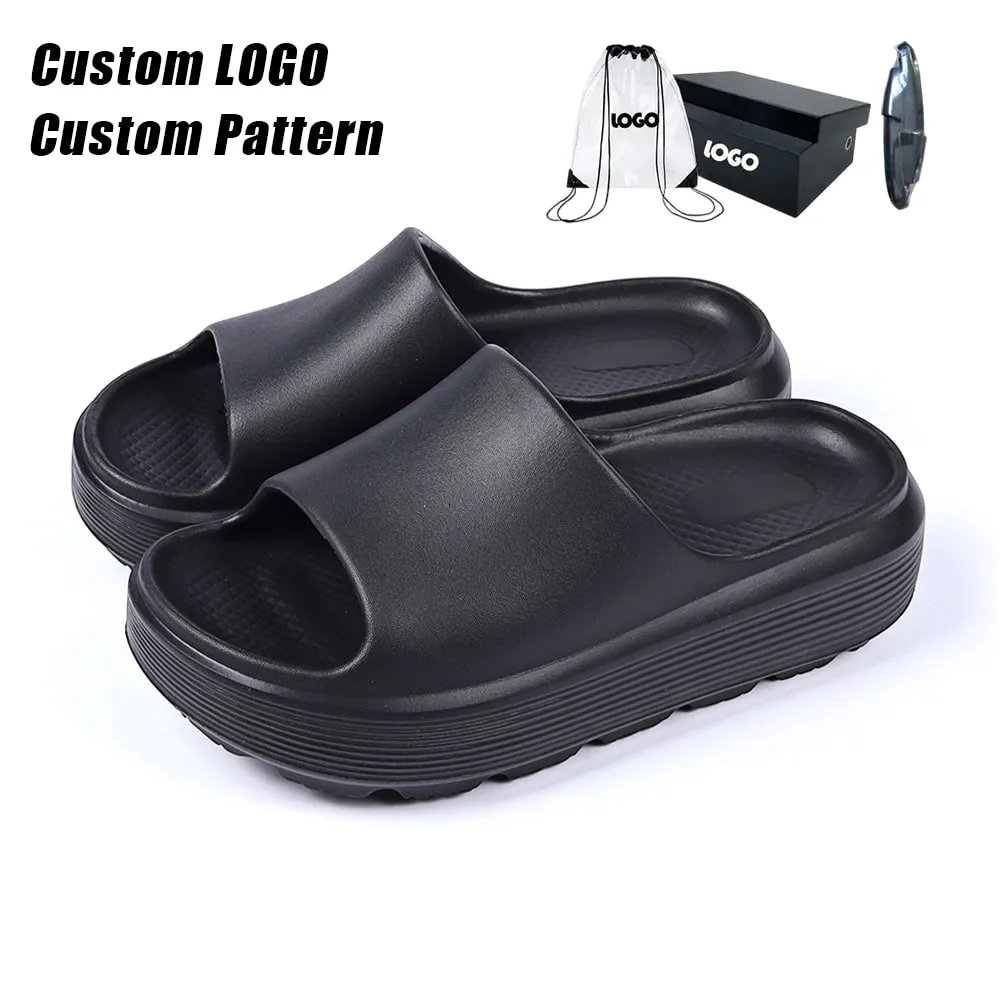
Defect classification must be defined in writing before inspection begins, not negotiated after problems appear. A useful baseline for branded slippers:
| Defect | Severity | Typical remedy |
| Wrong logo or outdated artwork version | Critical | Reject the affected batch |
| Logo reversed or upside down | Critical | Reject or remake affected pairs |
| Wrong logo color | Major | Rework, replace, or price adjustment |
| Placement outside agreed tolerance | Major | Rework where possible |
| Slight color drift on a few units | Minor | Accept with written note |
| Loose thread ends, minor trims | Minor | Accept or trim at packing |
Critical defects involve brand identity itself and justify rejecting a batch outright. Major defects are visible faults that undermine the brand but may be correctable. Minor defects are cosmetic issues most customers would overlook. Whether you are placing a first trial run or a large custom slippers wholesale program, writing these definitions into the purchase agreement turns a potential dispute into a routine decision that an inspector can make without escalation.
FAQs
How can I verify the authenticity of a logo before production?
Confirm you legally own the mark or hold a license before sending it to any factory. Search official trademark registries in your target markets to check the mark is registered and correctly attributed, and keep an internal record of the original design files and creation dates. Only the official vector file from your verified brand asset source should ever be shared with a manufacturer, which protects both parties if ownership is later questioned.
How much logo placement tolerance is acceptable?
For upper and strap logos on slippers, buyers commonly accept a tolerance of two to three millimeters from the specified reference points, and one to two millimeters for small insole marks. The right number depends on the logo size and application method: embroidery shifts slightly with hooping, while molded or debossed logos follow the tool exactly. State the tolerance in the spec sheet and measure it on the sample rather than relying on visual judgment.
Should I approve a pre-production sample or only inspect the bulk goods?
Both steps are necessary and serve different purposes. The approved sample defines the standard that production must match, while bulk inspection verifies the factory actually held that standard across thousands of pairs. Skipping the sample means inspecting against no reference; skipping bulk inspection means trusting that nothing drifted. Budget time and cost for both stages before production starts, since together they cost far less than remaking a defective batch.