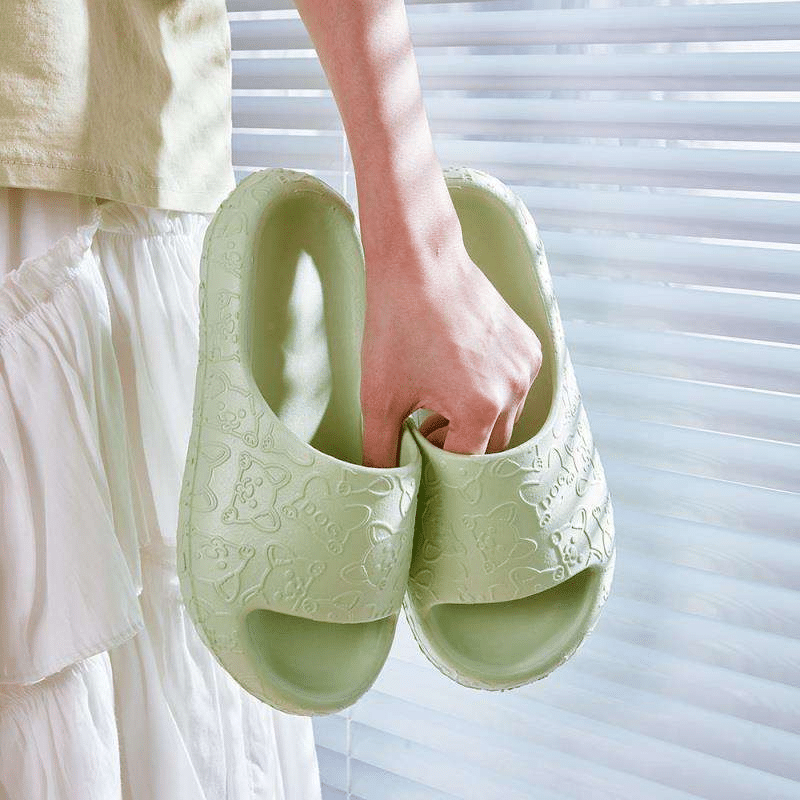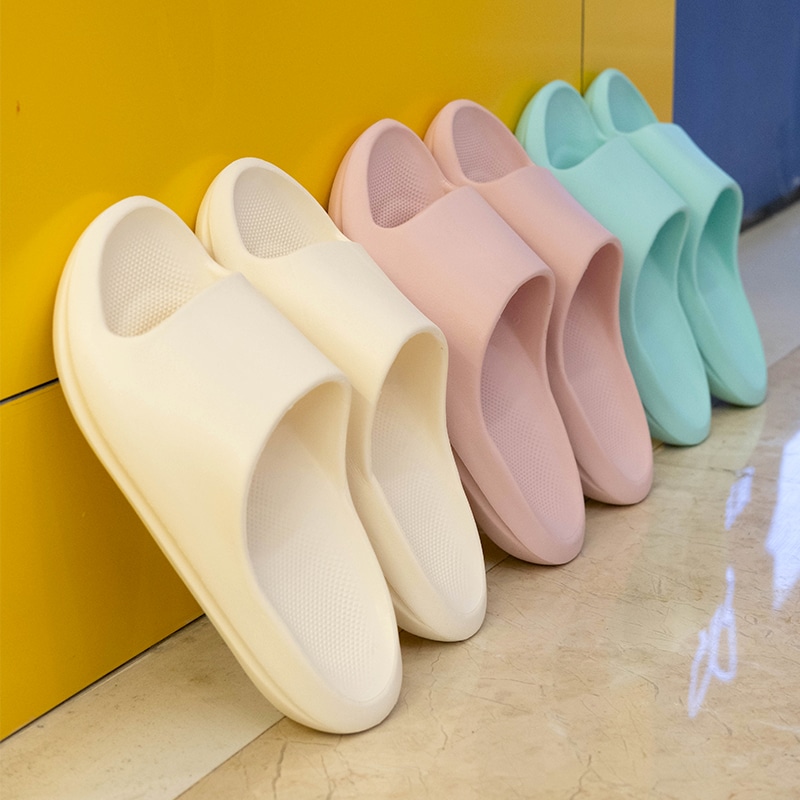
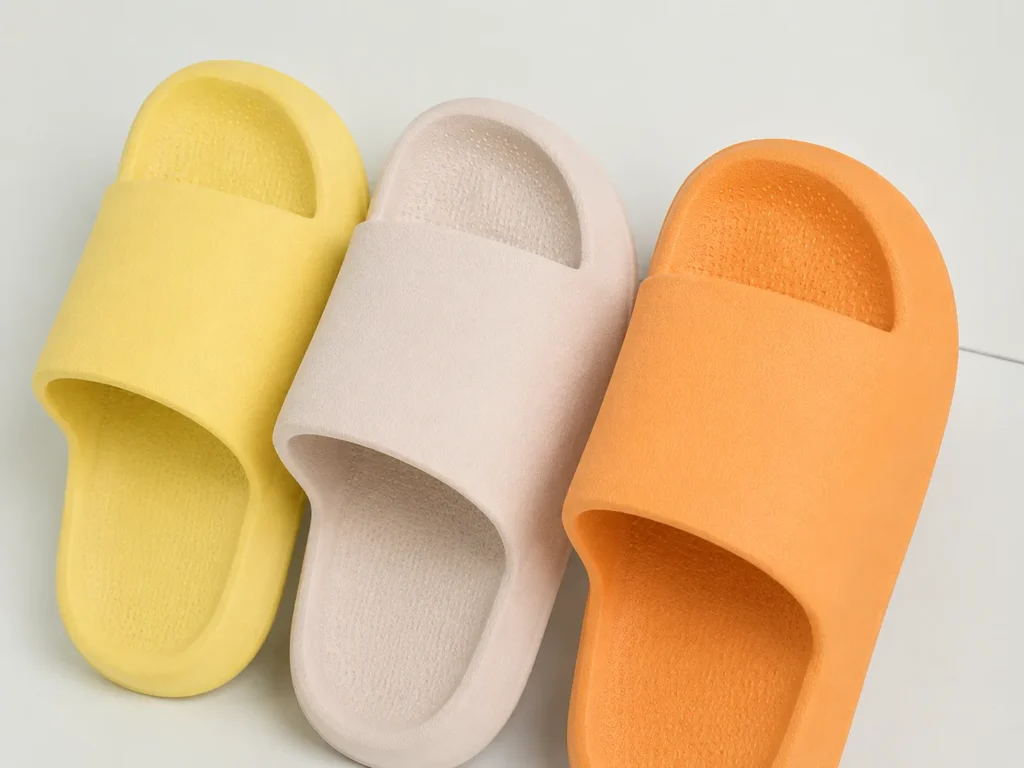
Slippers look like one of the simplest products in footwear, yet every pair is the result of a carefully engineered combination of materials and production techniques. For retailers, brand owners, and sourcing teams, understanding how slippers are actually made matters in practical ways: it explains why quotes differ between factories, why lead times stretch when a new mold is involved, and where quality problems usually begin. Material choices alone can change the entire production route, from a fully automated molding line to a labor-intensive sewing workshop.
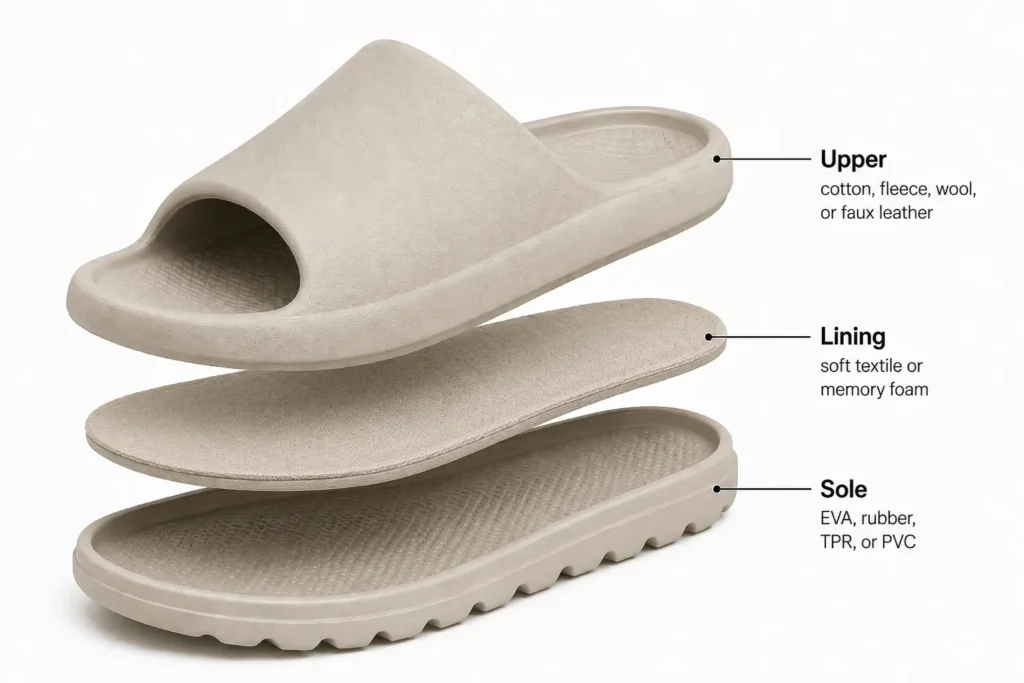
Slippers are made from three component groups: the upper, the lining, and the sole. Common materials include EVA foam, PVC, rubber, TPR, cotton, fleece, and wool. Production follows one of two routes: molded slippers are shaped directly from heated compounds through injection or compression molding, while fabric slippers are cut from patterns, sewn together, and then glued or stitched to the sole. Both routes end with branding, quality control, and packaging, and an experienced slippers manufacturer typically runs both lines to serve different market segments.
The sections below walk through the materials first, then follow the production flow from design to finished carton, so the full picture of how a pair of slippers comes together emerges step by step.
What Materials Are Slippers Made Of?
Every slipper is built from an upper (the part that covers the foot), a lining (the layer against the skin), and a sole (the part that touches the floor). The materials chosen for these three components determine the slipper’s comfort, durability, cost, and even which manufacturing method the factory must use.
Upper and Lining Materials
Upper and lining materials are mostly textiles, chosen for softness, warmth, and breathability. Common options include:
- Cotton and terry cloth: breathable and absorbent, widely used for spa and summer slippers.
- Fleece and plush polyester: soft, warm, and inexpensive, the default choice for budget winter slippers.
- Wool: naturally insulating and moisture-wicking, typically reserved for premium models.
- Suede and faux leather: durable with a premium appearance, often paired with stitched construction.
- Memory foam insoles: added for cushioning and pressure relief in comfort-focused designs.
Because lining and shell fabrics directly affect how a slipper feels in daily wear, sourcing teams usually compare several combinations before confirming a style. A closer look at the best material for room slippers can help narrow the options for indoor collections.
Sole Materials
Sole materials carry most of the performance burden: cushioning, grip, weight, and wear resistance. The four most common options are compared below.
| Sole Material | Comfort | Durability | Key Strength | Typical Use |
| EVA | High | Medium | Lightweight, waterproof, easy to mold | Indoor and poolside slippers |
| Rubber | Medium | High | Strong grip and abrasion resistance | Outdoor and bathroom slippers |
| TPR | Medium | High | Rubber-like grip at lower cost | Indoor and outdoor hybrid soles |
| PVC | Medium | Medium | Cheap, glossy, waterproof | Budget and hotel slippers |
EVA deserves special attention because it dominates modern slipper production. Its low density and moldability make it the default for mass-produced styles, and understanding EVA in footwear explains why so many factories build entire production lines around this single material.
How Are Slippers Made? The Manufacturing Process Step by Step
The slipper manufacturing process runs through six connected stages: design and mold development, material preparation, forming, assembly, branding and finishing, and finally quality control with packaging. Machines handle molding, cutting, and printing, while skilled workers supervise stitching, assembly, and inspection.
| Stage | Main Activity | Key Output |
| 1. Design and mold development | Translate the design into patterns or a production mold | Approved patterns or mold |
| 2. Material preparation | Mix and heat compounds, or lay out fabrics | Production-ready material |
| 3. Forming | Mold soles and bodies, or cut fabric components | Slipper components |
| 4. Assembly | Attach the upper to the sole | Complete slipper |
| 5. Branding and finishing | Print logos, trim, and clean | Finished pair |
| 6. QC and packaging | Inspect, pair, and pack | Ready-to-ship cartons |
For a deeper stage-by-stage walkthrough of tooling and molding operations, a full slipper manufacturing process guide covers each phase on the factory floor. In practice, the exact route a pair takes depends on which material system it belongs to.
Molded Slippers: Injection and Compression Molding
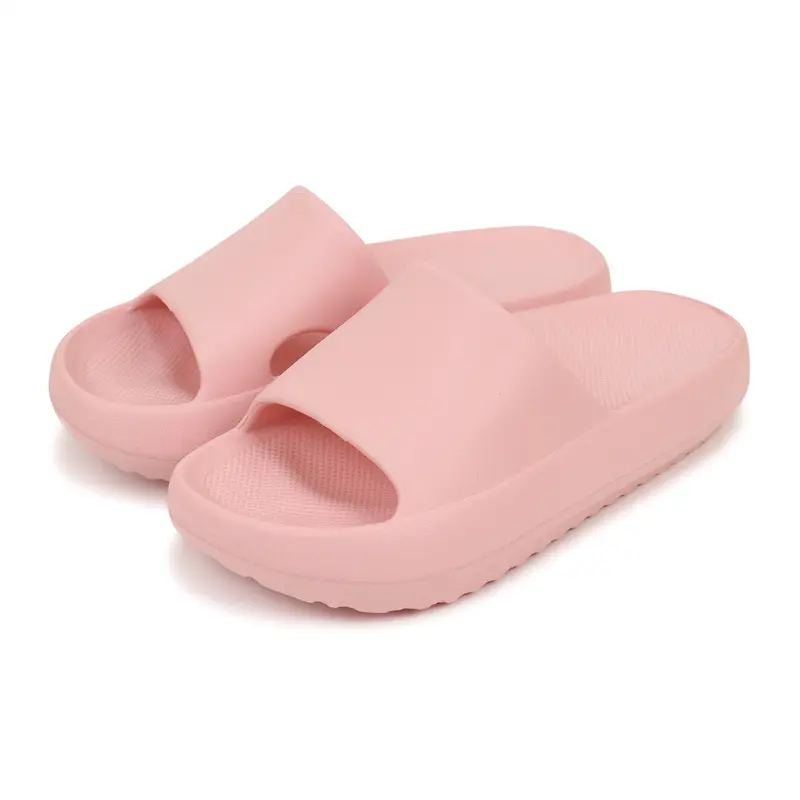
Molded slippers are made from thermoplastic compounds, almost always EVA or PVC. In injection molding, the heated compound is injected under pressure into a closed steel mold, where it cools into the final shape. The cycle is fast and highly consistent, which suits high-volume orders. In compression molding, a pre-measured amount of material is placed in an open mold that closes under heat and pressure; cycles are slower, but the method gives better control over density and thickness, making it common for two-layer soles. Either way, the mold defines every surface detail, so decoration such as embossed logos and tread patterns is decided at the tooling stage. The same molding science applies across the EVA footwear category, including slides and clogs.
Cut-and-Sew Fabric Slippers
Fabric slippers follow a completely different flow. Patterns are laid onto rolls of fabric and cut, either by hand or with computerized cutting machines for greater precision and less waste. Sewers then stitch the upper pieces together, attach the lining, and add reinforcements before the completed upper is bonded to a pre-made sole with adhesive, or stitched for extra durability. Because this route needs no steel tooling, it suits small orders and fashion-driven styles, while the choice between an existing mold and a custom one mainly affects molded production, where tooling cost and exclusivity trade off against each other.
How Long Does Slipper Production Take?
A standard slipper order takes roughly 20 to 45 days from confirmed design to shipment, depending on quantity, material availability, and whether a new mold must be built. Custom mold development alone can add two to four weeks for tooling and sample approval.
A typical timeline breaks down as follows:
- Sampling and confirmation: 5 to 10 days using existing molds.
- Mold development: 15 to 30 days if a new or exclusive mold is required.
- Mass production: 15 to 25 days depending on quantity and process.
- Final inspection and packaging: 3 to 5 days.
Buyers comparing suppliers should evaluate MOQ, lead time, and pricing together, because the lowest quote often reflects longer production queues or skipped inspection steps rather than genuine efficiency.
Quality Control and Material Compliance
Slippers pass through several checkpoints before shipment: incoming material inspection, in-line checks during forming and assembly, and a final random inspection covering bonding strength, stitching, size consistency, and appearance. For export orders, material safety testing is equally important.
Reputable factories verify that textiles and foams are free of restricted substances, and certifications such as OEKO-TEX provide third-party confirmation of chemical compliance. Slip resistance is another critical check, and standardized test methods such as ASTM F2913 give buyers a consistent way to compare outsole performance across suppliers. Requesting test reports alongside the quotation is a simple habit that prevents most compliance surprises later.
FAQ
Which country produces the most slippers?
China remains the largest producer of slippers by volume, supported by mature EVA and PVC molding clusters and complete textile supply chains. Vietnam, India, and Indonesia have grown rapidly as footwear production diversifies, and many suppliers now split orders across multiple countries to balance cost and capacity.
Can slippers be made from recycled materials?
Yes. Recycled EVA from production waste, reclaimed rubber outsoles, and fabrics knitted from recycled PET bottles are all in commercial use. Recycled content usually costs slightly more and may limit color options, so it works best as a distinct product line alongside standard materials.
Is making slides different from making slippers?
Slides are almost always molded in one piece from EVA, so their production centers on injection molding, while slippers span both molded and cut-and-sew construction. The overlap is significant enough that most factories producing one also produce the other.