Why Do Feet Sweat and Become Slippery in EVA Slippers?
EVA slippers have stormed the global footwear market. They’re everywhere, from hotel amenities and spa essentials to everyday home comfort. At first glance, EVA slippers seem to be the ideal choice – lightweight, waterproof and cushioned. But millions of wearers face the same ongoing problem: their feet begin to sweat after a few minutes, and soon every step comes with a slippery, unsteady sensation.
Not only comfort. EVA slippers can be uncomfortable on the skin, cause blisters and bad smells when your feet get sweaty, and can even be dangerous on slick indoor surfaces. The problem directly impacts customer satisfaction and brand reputation for businesses that source wholesale slippers for hospitality, healthcare or retail. The first step to finding better solutions is to know why feet sweat and slip in EVA slippers.
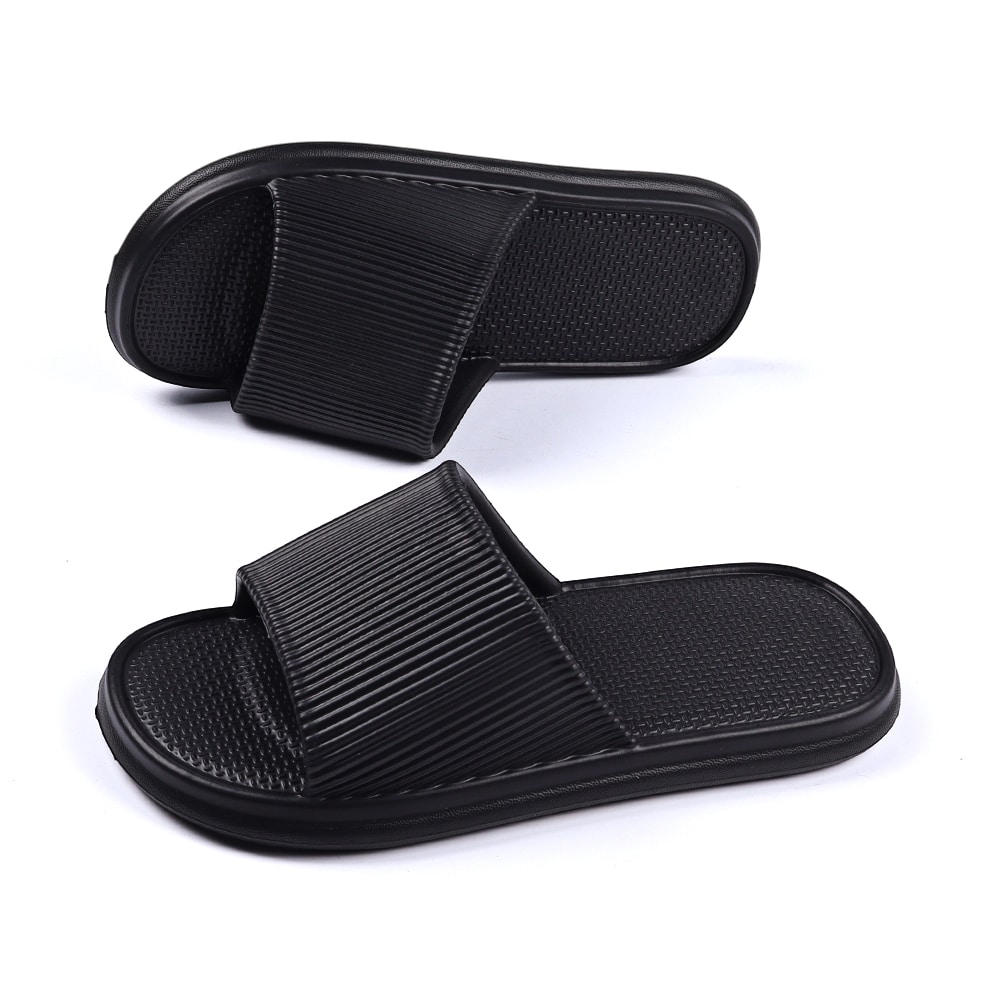
EVA slippers: Feet sweat and slip. Ethylene-vinyl acetate is non-porous, closed-cell foam and does not absorb moisture or allow air circulation. Perspiration. Body heat gets trapped inside the footbed. Because the material can’t wick away sweat, moisture collects on the surface, reducing friction between the foot and the slipper, creating a slippery, uncomfortable sensation with each step.
In this article we will look at the science of EVA material and sweat, examine how ventilation and design play a part in moisture build-up and give practical strategies to help reduce slipping. So, if you’re a B2B buyer looking for slipper suppliers or a consumer looking for a better wearing experience, these sections will give you the whole picture.
Why Does EVA Material Make Feet Sweat?
EVA material is the primary culprit in sweating feet due to its closed cell foam structure that disallows airflow and creates a micro climate of heat around the foot. Unlike natural fibers or open-cell foams that allow heat and moisture to escape, EVA acts as an insulating barrier that traps body heat in and keeps fresh air out.
Ethylene-Vinyl Acetate (EVA) EVA is a copolymer of ethylene and vinyl acetate. The material is made by introducing gas bubbles into the polymer matrix during manufacture, giving it a spongey, light weight feel. But those gas bubbles are trapped inside the cell walls so they don’t connect up to each other. Water cannot pass through the material but air can not pass it.
This closed-cell structure makes EVA slippers waterproof and easy to clean, two of the most valued properties in commercial settings. But this same feature creates a sealed environment around the foot. The body heat radiating naturally from the soles around 32-35 degrees Celsius when indoors has no where to go. The footbed and upper strap trap warm air against the skin, and within minutes, sweat glands kick in to cool the surface.
The sweating response is a normal thermoregulatory response. Each foot has approximately 250,000 sweat glands, one of the highest concentrations in the body. These glands continue to produce sweat in an escalating cycle when they are unable to deliver moisture to the open air. The EVA footbed is non-absorbent, so it leaves all moisture exactly where it falls.
Buying considerations for the properties of EVA material can know that sweating is not a deficiency, but a normal outcome of the material’s natural properties. This knowledge is important in the choice of slippers for different environments and user groups.
How does bad ventilation in EVA slippers make moisture worse?
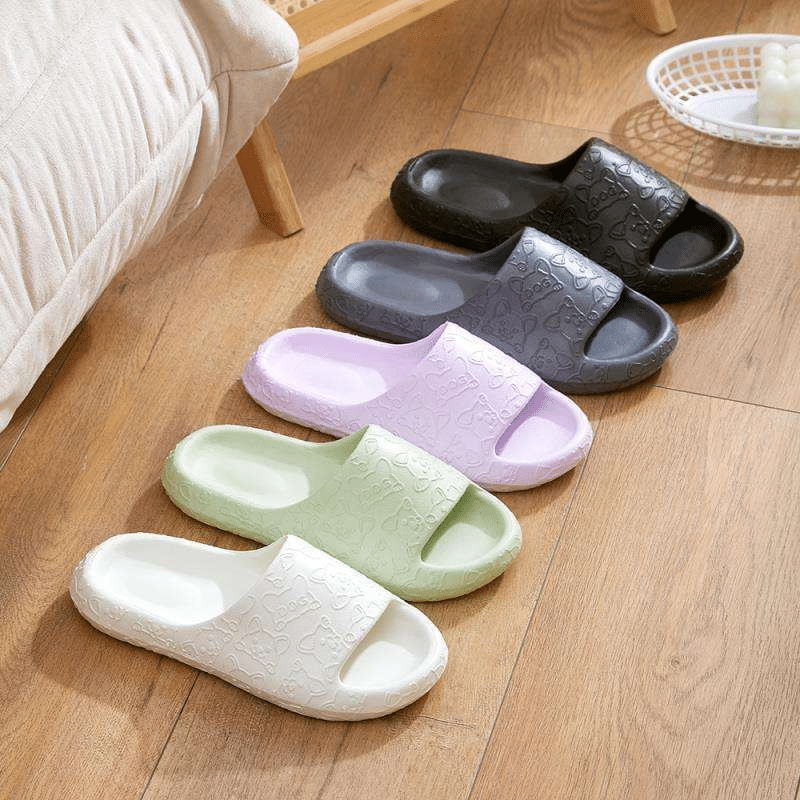
The lack of ventilation in EVA slippers makes moisture worse by creating a stagnant air pocket that limits evaporative cooling. Without air circulation over the surface of the foot, sweat cannot evaporate naturally, so it builds up layer upon layer until the footbed becomes slick and unstable.
Footwear ventilation is a combination of two things: breathability of the upper material and the presence of intentional airflow channels. Most EVA slippers feature a one-piece upper that is molded and usually has a wide strap or closed toe. The designs are visually clean and modern, but have limited openings for air exchange. The strap wraps most of the way around the instep, with the toe and heel partially exposed.
This is a far cry from open sandals or mesh-lined house shoes that let air flow continuously while the wearer moves about. Limited air circulation occurs when walking in EVA slippers due to the tight-fitting upper strap on the skin. In the space between the foot and the slipper, the air stays warm and humid, and is the perfect place for moisture to gather.
The amount of ventilation-related sweating also depends on the ambient conditions. In hot, humid climates such as Southeast Asia or the Middle East in summer, the temperature differential between foot and environment is less, and evaporative cooling is less effective. In a warm indoor environment in winter, the dry air may increase surface evaporation, but the closed-cell footbed still restricts airflow at the contact point.
For procurement managers sourcing non-slip EVA slippers for tropical resorts or humid spa facilities, ventilation performance should be high on the list of selection criteria. Generally, slip-on styles, particularly those featuring cut-out details, perforated uppers or multi-strap designs, are better at reducing moisture buildup than solid one-piece models.
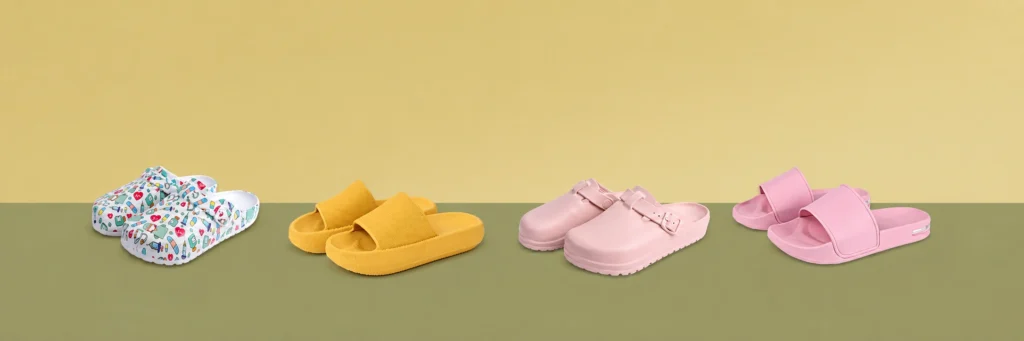
Design Features for Better Ventilation
| Design Element | Usage | Best Use Case |
|---|---|---|
| Perforated upper strap Direct airflow channels across the instep Hot climates, outdoor use | – | – |
| Open-toe profile | More air exposure to forefoot | Summer, indoor casual wear |
| Textured grooves in footbed | Reduces skin/surface contact area | High humidity environments, all day wear |
| Multiple strap or adjustable upper | Permits adjustment of fit, reducing skin seal effect | Hospitality, longer wear |
| Side cut-out vents | Aids cross ventilation when walking | Spa, poolside, bathroom use |
These design features do not change the fundamental nature of EVA as a closed cell material; however, they do make a significant improvement to the microclimate around the foot. Ventilated designs, if of the right size and taken off every now and then when wearing for long periods, can bring down the amount of sweating by an estimated 30 to 50 percent as compared to fully-enclosed EVA slippers.
What happens if sweat accumulates inside EVA slippers?
The sweat that forms between EVA slippers and the foot creates a slippery interface that increases the risk of friction related skin damage and creates a warm moist environment for bacteria and fungi. The result is a cycle of discomfort, odor and potential problems with the health of the foot.
The most obvious and immediate consequence is loss of grip. EVA slippers depend on the surface friction between the footbed and skin to keep the foot steady as you walk. As soon as a thin film of sweat has coated the contact surface the coefficient of friction falls sharply. With each step the foot begins to slide forward and the toes curl to grip the edge of the slipper to compensate. This gripping motion puts stress on the intrinsic foot muscles and can lead to arch fatigue, toe cramps and even plantar fasciitis flare-ups over time.
The slip hazard is more than just discomfort, but safety. When your feet get wet, the smooth EVA soles on tile, laminate or polished concrete floors create a double slippage: your foot slips inside the slipper and the slipper slips on the floor. This is particularly true in areas such as hospital corridors, hotel bathrooms or spa wet areas.
The buildup of sweat also provides the perfect environment for bacteria and fungi to flourish. Odor . The human foot has a diverse microbiome of bacteria that naturally breaks down components of sweat into organic acids , which create the characteristic foot odor . In a well-ventilated shoe, this is limited as sweat evaporates before bacteria can reproduce. But in a sealed EVA slipper environment, sweat pools and bacteria populations explode. You can smell it within hours of continuous wear.
For B2B buyers, opting for antimicrobial footbed treatments will prevent slipper odor effectively, as they inhibit bacterial growth at the material level. These treatments can be added during the manufacturing process and offer long-term protection beyond the results of surface cleaning.
Enhanced Effects of Prolonged Moisture Exposure
- Stage 1 (0-30 minutes): Sweating has begun, footbed slightly damp, grip still good.
- Stage 2 (30-60 minutes): A sweat film develops in contact zones, the foot begins to slide and slight gripping in the toes occurs.
- Stage 3 (1-3 hours): Moisture pools in the arch and heel, significant slippage occurs, rapid multiplication of bacteria begins.
- Stage 4 (over 3 hours): Footbed is saturated, odor is quite developed, risk of skin maceration increases, and blisters may appear because of friction.
Skin maceration is a particularly concerning event. If the outer skin layer absorbs too much water it will become soft, white and wrinkled. Friction is much more likely to damage macerated skin. Macerated skin is very fragile and a small amount of rubbing that would normally cause no issue, can tear the skin open and create a portal for fungal infections like athlete’s foot.
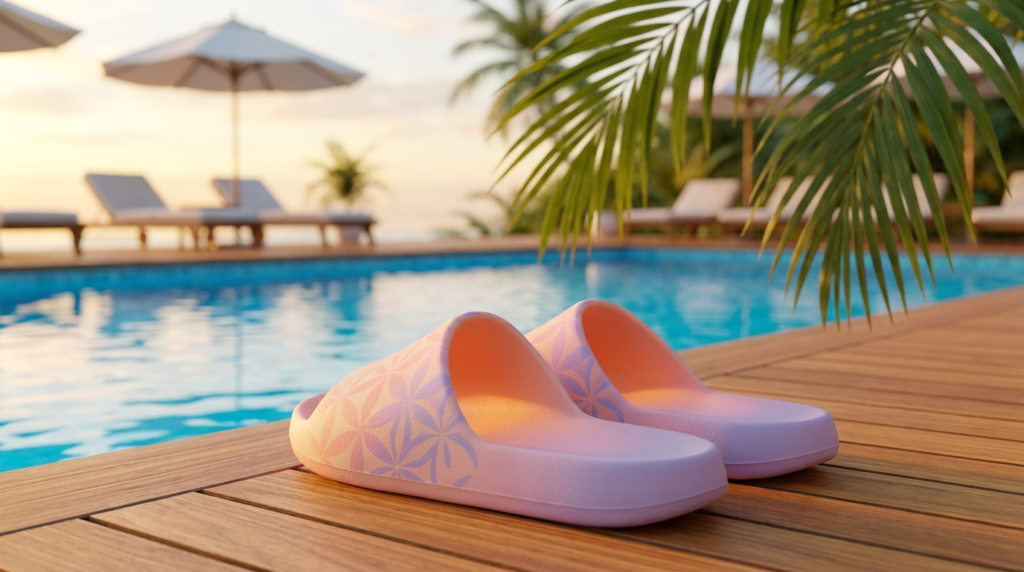
How To Design EVA Slippers To Avoid Sweating & Slipping?
Three important strategies to minimize sweat and slipping in the design of EVA slippers are: textured or grooved footbed patterns to channel moisture away from contact points, open or perforated upper designs to maximize airflow, and anti-slip outsole compounds and tread patterns that maintain grip on the floor even when internal surfaces are damp.
Sweating and slipping are critical intersections with the footbed surface. While smooth, shiny EVA footbeds may appear clean and premium, they perform the worst when wet. A properly engineered footbed should have a micro-texture of shallow ridges, dots or wave patterns to accomplish two functions. First, they reduce the total skin-to-surface contact area, and therefore the area over which sweat film spreads. Second, they create drainage channels that move moisture to the edges of the footbed and keep it from pooling in the middle.
Deep texturing takes it further. Some advanced designs of EVA slippers have a herringbone or honeycomb pattern with 0.5 to 1.5 mm high ridges. The ridges separate the foot from the surface of the base, forming small pockets of air that improve both grip and evaporation. The trade-off for this is that deeper textures can feel slightly rougher underfoot so the pattern depth should be calibrated to the sensitivity of the target user.
The upper design is equally important. The single strap EVA slipper is easy to produce and visually clean but creates an almost airtight seal across the instep. Other options include:
- Removable buckle straps allow you to loosen the fit and let in more air when you need it
- Double-strap setups that minimize the coverage area and still keep the feet in place
- Perforated strap designs with laser cut ventilation holes to let heat escape from the top of the foot
- Open-back mule styles offer maximum airflow to the rear and make the slipper easier to slip on and off for periodic drying
The outsole is the last piece of the puzzle. Even if you slip inside, the high-grip sole prevents the slipper from sliding on the ground. Textured EVA, rubber inserts, or specialized wet weather tread compounds make a measurable difference. When buyers are shopping for the EVA slippers foot health claims from different vendors, the outsole grip coefficient data and the footbed texture depth specifications are good measurements to take during sampling.
To Wear Socks or Go Barefoot in EVA Slippers?
With regard to sweat-related slipperiness, socks with EVA slippers are generally a better choice. Socks provide a moisture-absorbing barrier between the foot and the non-absorbent EVA surface. But effectiveness depends on sock material, thickness, and specific wearing environment.
The sock creates a middle layer that completely changes the moisture dynamics. Cotton and cotton-blend socks wick away sweat from the skin surface and trap it in the fabric fibers, so it doesn’t collect on the EVA footbed. This provides a dry, high-friction interface between sock and slipper and greatly reduces internal slippage.
But not all socks are created equal for this purpose. Below see a comparison of common sock materials in the context of wearing EVA slippers.
| Sock Material | Moisture Absorption | Breathability | Grip on EVA | Best For |
|---|---|---|---|---|
| Cotton | High | Medium | Good | Short indoor wear |
| Merino wool | Very high | Excellent | Very good | Prolonged use, cold climates |
| Bamboo fiber | High | Excellent | Good | Hot weather, sensitive skin |
| Polyester | Low | Bad | Medium | Not suggested |
| Cotton/polyester blend | Moderate | Moderate | Good | Casual wear for day to day |
| Athletic moisture-wicking | Low (intentionally) | High | Moderate | Active movement indoors |
For longer wear situations, merino wool is a standout. It will absorb 35% of its own weight in moisture before feeling damp. It is naturally resistant to bacterial growth so it stays fresher longer, even after hours of wear. Bamboo fiber provides the same benefits, but it is cooler to the touch, making it ideal for use in hot weather.
Wearing barefoot has benefits that should not be overlooked. More sensory feedback and a more natural walking gait are provided through direct contact to the skin. Bare feet inside well-ventilated EVA slippers are rarely a source of significant sweating problems for short-term wear (30 minutes or less). The longer it is worn the worse the problem. For example, B2B buyers who provide slippers for guests in hotels or spas, where the slippers will be worn for 30 to 60 minutes at a time, may accept barefoot performance with slippers that are well designed. But retail workers or home users who wear their slippers for hours or healthcare workers, recommending or including compatible sock options can go a long way to improving the user experience.
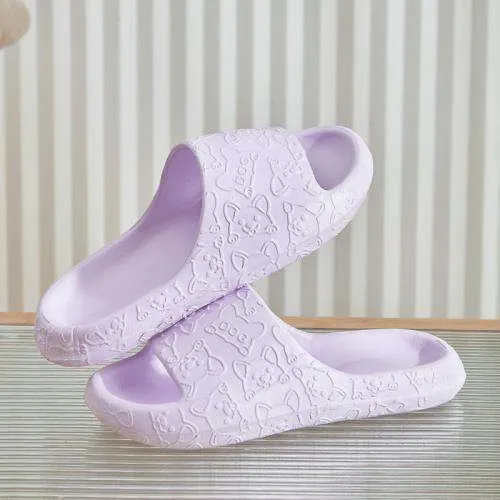
Daily routines to help keep your feet dry and comfy all day long
EVA slippers require some pre-wear preparation, active management during wear, and post-wear care to keep feet dry. Simply by incorporating daily habits such as washing and thoroughly drying your feet before putting on slippers, rotating between multiple pairs, and using foot powder, you can reduce sweating and slipping by more than half.
More than most people realize, it’s the pre-wear routine.” Your feet will already be wet from showering or whatever activity you were doing and will start the sweating cycle almost immediately when enclosed in EVA slippers. Drying the feet thoroughly with a towel, including between the toes, takes about 30 seconds and leaves the feet clean to delay the beginning of sweating.
The best habit when wearing them is to remove them periodically. Take your slippers off for three to five minutes every hour so that the moisture that has built up can evaporate and the surface of the footbed can dry. This simple practice can prevent the sweat buildup from reaching the critical threshold at which point you notice slipping.
Use 2 or more pairs of slippers on alternate days . In this way each pair is given a full 24 hours to dry out completely . This is especially true in humid environments where the internal moisture of EVA slippers will not air dry overnight. If you’re a business supplying slippers for guests, you’ll want to factor this in when considering how many you need to keep in stock for multi-day or extended-stay use.
Foot powder is a very effective tool that is often forgotten. Apply a light dusting of cornstarch-based or talc-free foot powder to dry feet before slipping into EVA slippers. This absorbs moisture as it forms, and maintains a dry contact surface. For B2B applications, individual powder sachets included with slipper packaging offer a premium hospitality touch while solving a real functional problem.
Seasons matter too. In summer, it is more important to choose EVA breathable summer slippers with enhanced ventilation features. Indoors in winter, the heating dries the air out and speeds up evaporation from surfaces, so you don’t tend to slip as much from sweat, but you can get a new problem of static electricity building up on EVA surfaces.
How to Clean & Care for EVA Slippers to Prevent Odor & Slipping
Regular cleaning of EVA slippers removes the sweat residue, skin oils and bacteria that cause both odor and the slick surface film that lessens grip. A simple weekly routine of mild soap and water, and thorough air drying restores the footbed friction and keeps the slippers fresh.
EVA is very easy to clean compared to fabric or leather slippers. Its non-porous surface does not absorb cleaning agents or water and is quick drying when exposed to air. Cleaning itself is easy.
Weekly cleaning routine
- Rinse: Rinse the slippers under lukewarm running water to flush out loose dirt and surface dust.
- Scrub: Lightly rub a mild liquid soap or dish detergent on a soft-bristled brush or sponge. Wipe down the entire footbed, especially the heel and ball-of-foot areas, where sweat residue is prone to build up.
- Deep-clean grooves: Grab an old toothbrush and scrub away bacteria and dead skin cells that accumulate in textured footbed grooves.
- Rinse well: Rinse until soap residue is gone. If it dries, a film of soap can be sticky on the surface.
- Air dry: Put slippers in a well-ventilated place away from direct sunlight. EVA will yellow and degrade over time when exposed to direct sun. Don’t use a hair dryer or put slippers on a radiator, too much heat warps the material.
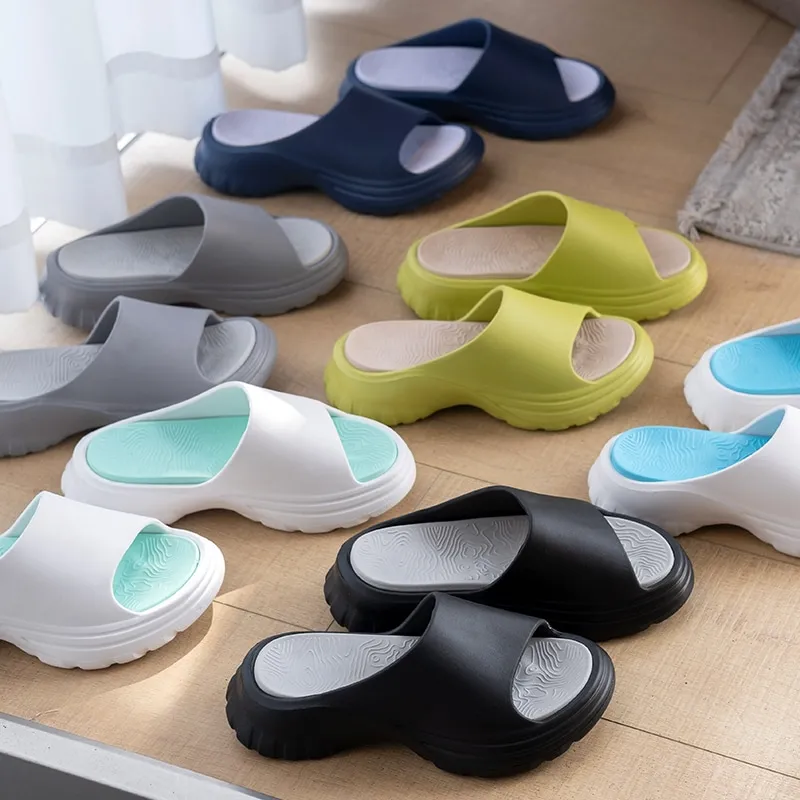
If it still smells after normal cleaning, you can get an extra deodorizing boost by rinsing with a vinegar solution. Mix equal parts white vinegar and water and soak the footbed for 10 minutes. Rinse and dry as normal. The vinegar kills bacteria on the surface and neutralizes alkaline smell compounds. As soon as the slippers are dry, the smell of vinegar is gone.
Never wash EVA slippers with fabric parts in a washing machine or put in a dryer. Mechanical agitation can alter the shape and the dryer heat can permanently deform the material. It’s always the safer way and you can wash your hands in less than three minutes a pair.
Commercial buyers need to know how to care for EVA slippers so that they can teach their customers and ensure satisfaction. Adding simple care instructions to wholesale or retail packaging reduces returns due to early odor or surface degradation. It also boosts the durability and value proposition of the product, especially when sourcing from manufacturers that are committed to quality EVA slipper manufacturing standards.
Summary
Sweating and slippage in EVA slippers is a material problem with clear, actionable solutions. The closed-cell structure that makes EVA waterproof and durable also makes it non-breathable and non-absorbent, creating an ideal environment for moisture buildup and reduced friction. This is not a sign of bad quality manufacturing. This is a predictable property of the material which can be controlled by intelligent design, proper wearing habits and regular maintenance.
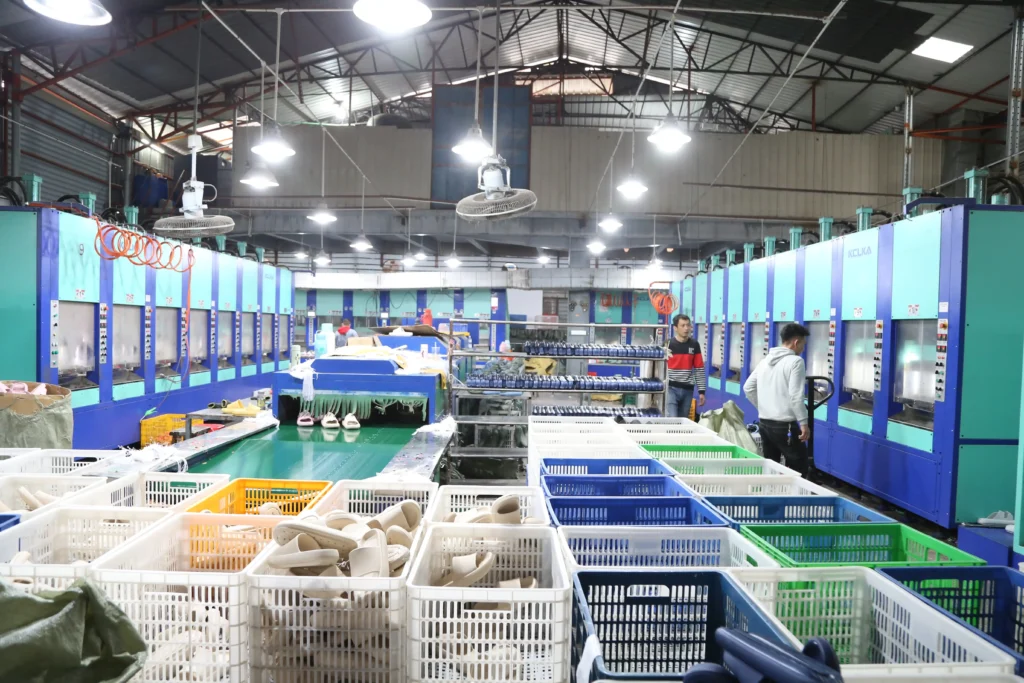
The main thing B2B buyers should remember is that not all EVA slippers are created equal when it comes to moisture management. Suppliers and product lines vary greatly in their texture patterns on the footbed, the design of the upper ventilation, the use of antimicrobial treatments and the technology for the grip of the outsole. When you treat EVA slippers as a generic commodity, you’re missing out on better end-user experiences and stronger brand outcomes. For businesses developing custom wholesale slippers, specifying these features at the sourcing stage ensures the final product matches the exact needs of your target market — whether that means hotel-grade durability, healthcare-grade slip resistance, or retail-ready aesthetics.
For the individual user, a few simple changes in daily habits can make a dramatic difference. Dry Feet Before Wearing. Slippers With Grooved Footbeds. Alternate Pairs. Use Foot Powder When Needed. Clean Slippers Weekly. These habits change the experience of wearing the EVA slipper from irritating to truly comfortable, unblocking the light, cushioned benefits that make EVA such a popular footwear material in the first place.
FAQ
Can I wear EVA slippers outside without my feet sweating too much?
Outdoor wear usually permits better air circulation around the foot than indoor wear, which tends to evaporate sweat before it accumulates. However, the EVA surface gets hot in direct sunlight and this can cause more sweating on the sole contact area. Open-toe or perforated designs are best for outdoor use of EVA slippers.
Do More Expensive EVA Slippers Sweat Less?
Price is more related to brand positioning and finish quality than to sweat performance. A higher price does not mean that you will have a better anti-sweat experience. What really matters is the texture of the footbed depth, the design of the upper ventilation and anti-microbial treatments, all things that can be specified at any reasonable price point in manufacturing.
How will I know if my EVA slippers are damaged with sweat and need to be replaced?
Replace your EVA slippers if the surface of the footbed becomes permanently slick despite thorough cleaning, if the material begins to develop deep cracks from repeated drying cycles, or if odor persists despite regular weekly cleaning. As a general rule of thumb for commercial use, the EVA slippers should be changed every three to six months of daily use or sooner if any visible degradation occurs.