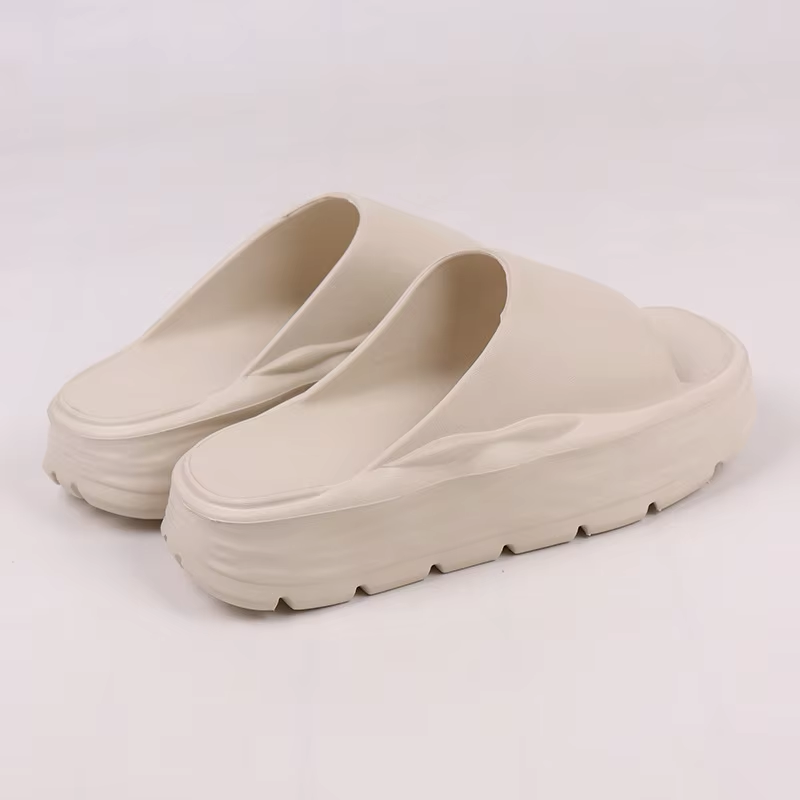
The slipper and house footwear market keeps climbing as comfort footwear moves from the edges of retail to its center. For Amazon sellers and direct-to-consumer (DTC) brands alike, slippers offer a rare combination of strong margins, lightweight shipping, and demand that holds up across seasons. But a generic, off-the-shelf slipper is no longer enough to stand out in a crowded feed. Buyers reward brands that deliver something distinct, and that distinction almost always starts with customization.
The right custom slippers for Amazon and DTC brands are chosen by working through five decisions in order: pick a material that matches your use case and price band, select the correct sourcing model (OEM, ODM, or private label), define your customization details, budget around realistic MOQ and landed cost, and finally vet a manufacturer for compliance and quality control before you commit a single dollar to production.
The sections below walk through each decision in turn, with the compliance and packaging nuances that Amazon sellers and DTC brands cannot afford to overlook.
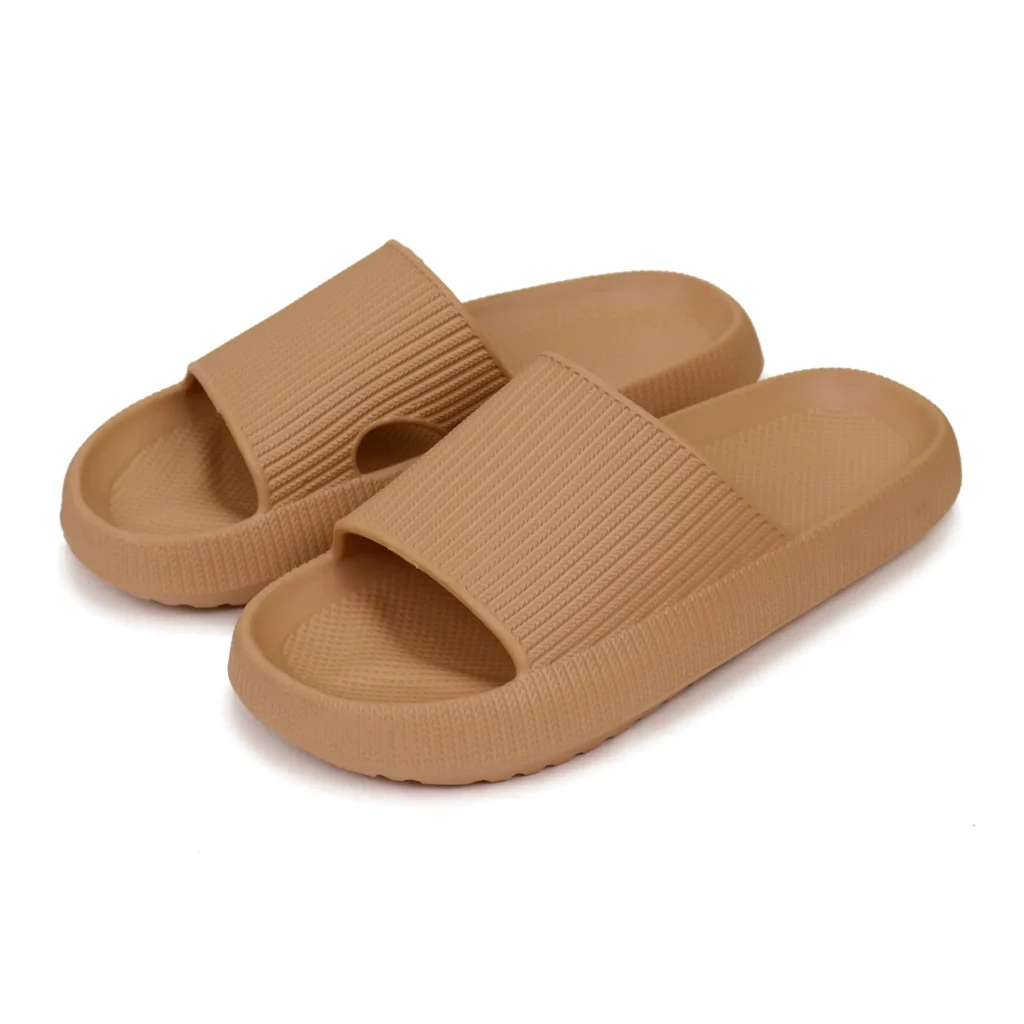
Why Custom Slippers Give Amazon and DTC Brands an Edge
Custom slippers help online brands escape pure price competition, protect their margins, and build a brand identity that plain wholesale stock simply cannot deliver.
The slipper category looks approachable but is deceptively competitive. On Amazon, a single search can surface thousands of near-identical listings, all competing on the same photos, the same materials, and ultimately the same price. DTC brands face the same pressure: when the product is interchangeable, the only lever left is discounting. Customization breaks that cycle. A proprietary colorway, an embossed logo, and packaging designed around your brand give customers a reason to choose you and to remember you after the unboxing.
The economics are just as compelling. Because slippers are lightweight and compressible, they carry low dimensional weight, which keeps Amazon FBA fulfillment fees and DTC shipping costs down while leaving room for healthy gross margins. A well-executed custom slipper routinely supports premium positioning in the range that profitable footwear brands target. For DTC operators specifically, this is the core insight behind the 2026 DTC Profit playbook: a distinctive, brand-owned product converts margin into a defensible business rather than a race to the bottom.
Material First: Choosing the Right Base
EVA is the most popular choice for lightweight comfort and value, PVC suits budget and water-friendly use, memory foam maximizes plush feel, and rubber prioritizes durability and grip.
Material is the single biggest lever on both cost and customer satisfaction, so it should be decided before anything else. Each option trades off comfort, weight, water resistance, and price differently, and the right answer depends on who you are selling to and through which channel.
| Material | Feel | Durability | Water Resistance | Relative Cost | Best For |
| EVA | Soft, springy, lightweight | Good | Excellent | Low to mid | Amazon best-sellers, shower and pool styles |
| PVC | Firm, water-resistant | Good | Excellent | Lowest | Budget lines, bathroom and promotional slippers |
| Memory foam | Plush, cushioning | Fair | Poor (absorbs) | Mid to high | DTC lifestyle and recovery slippers |
| Rubber | Supportive, grippy | Very good | Excellent | Mid to high | Outdoor and high-wear designs |
Material safety is increasingly part of the material decision, especially for slippers worn directly against the skin or supplied to salons, spas, and hotels. Buyers in these categories routinely ask for BPA-free and phthalate-free compounds, non-toxic dyes, and REACH- or CPSIA-compliant materials to avoid skin irritation and chemical odors. Low-grade plastics that off-gas for weeks or irritate the skin are a recurring source of one-star reviews, so confirm material safety documentation before you lock a base rather than after the complaints arrive.
Matching Material to Amazon vs. DTC Use Cases
Amazon rewards materials that are light, durable, and forgiving of sizing. EVA has become the default for top marketplace listings precisely because it is light enough to keep fulfillment costs low and resilient enough to survive returns with fewer complaints. DTC brands, by contrast, can lean into the sensory experience: a memory-foam or plush-lined upper that photographs well and feels premium the moment the box opens can justify a higher price point and stronger brand story. Whichever direction you take, confirm your material against the full Custom Slippers Wholesale range so the factory is quoting a base it already produces at scale rather than prototyping from zero.
OEM vs. ODM vs. Private Label: Picking Your Sourcing Model
OEM suits brands with a finished design and tech pack, ODM lets you adapt an existing mold to your market, and private label is the fastest route to putting your logo on a proven style.
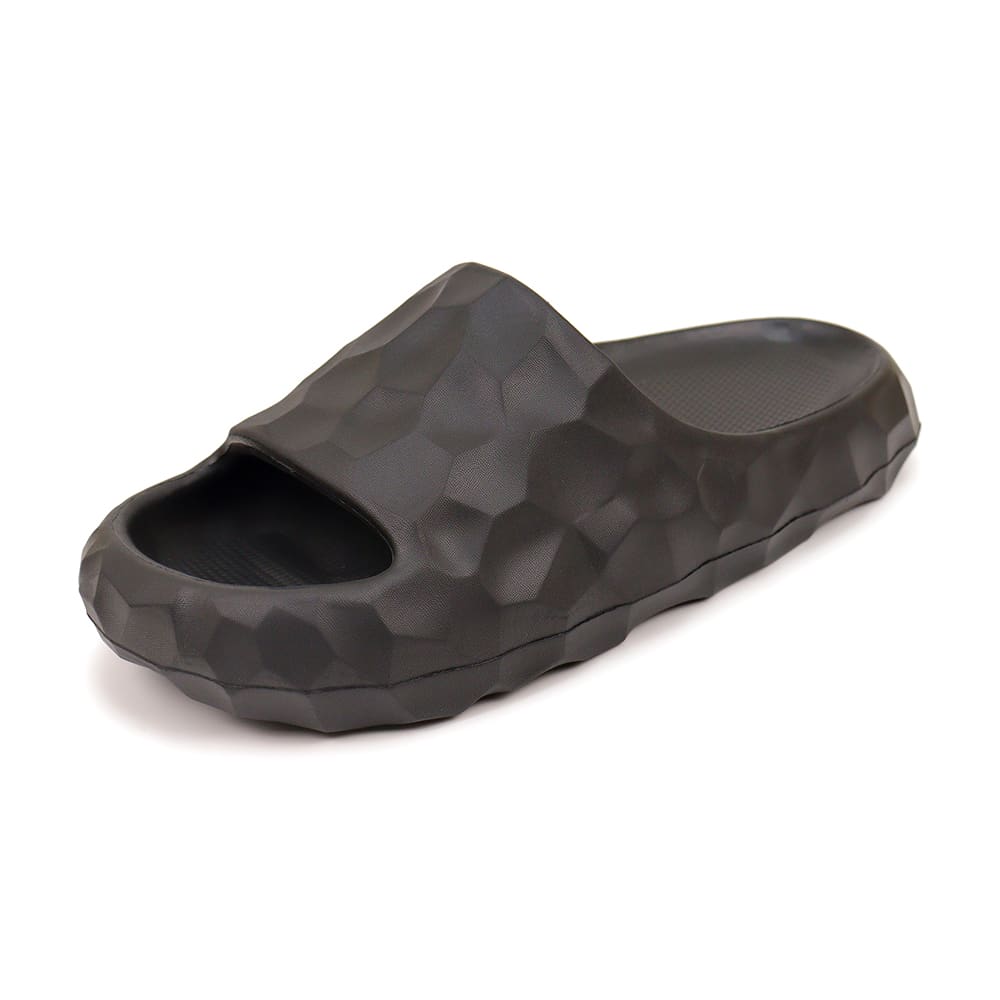
Before asking for a quote, decide how much design work the factory needs to do, because the sourcing model determines sample cost, lead time, and how much risk you carry.
| Model | Who Owns the Design | Best For | Typical Trade-off |
| OEM | You supply design, tech pack, or samples | Established brands with a defined product | Highest control, longer setup and cost |
| ODM | Factory adapts an existing construction | Brands scaling a proven silhouette | Faster, lower cost, less exclusivity |
| Private label | You brand a factory-supported style | Fast market entry and testing | Fastest and cheapest, lowest differentiation |
The difference between these paths matters more than most new sellers expect, and choosing wrong creates avoidable delays. A brand that sends a factory a vague “send me your catalog” request will get a slower, less useful reply than one that knows whether it wants to originate a design or adapt an existing one. If you are still deciding, reviewing the distinction between OEM, ODM, and private mold slippers before you brief a supplier will save several rounds of back-and-forth.
Nailing the Customization Details
The details that matter most are logo method, color matching, and packaging, and each one carries its own cost and minimum quantities.
Customization is where the brand becomes tangible, but it is also where budgets quietly inflate. Work through each layer deliberately so you are paying for impact, not surprises.
Logo and Branding Methods
The logo method should match both the material and the price band. Embossing and debossing press your mark into the surface and read as premium, making them popular for EVA and closed-cell materials. Heat transfer and screen printing reproduce detailed or multi-color artwork but can add per-unit cost and setup charges. Woven labels and footbed printing offer lower-cost touchpoints for fabric uppers and DTC presentation. Whatever the method, prepare vector artwork in the required format before you brief the factory, and always approve a physical stamped or printed sample rather than a digital mockup alone.
Packaging for FBA vs. the DTC Unboxing Moment
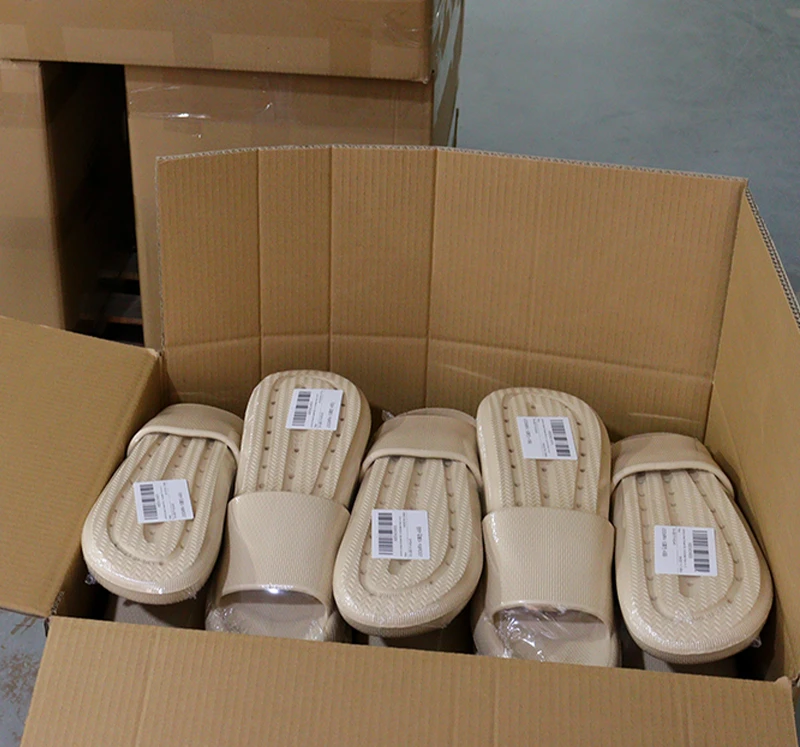
Packaging strategy splits sharply by channel. Amazon FBA packaging is fundamentally about compliance and efficiency: products must be labeled correctly, meet dimensional-weight expectations, and avoid unnecessary bulk. DTC packaging, in contrast, is a brand moment. A branded box, tissue wrap, and an insert card turn a routine delivery into a shareable experience that drives reviews and repeat orders. Many brands source the same EVA Custom Slippers for both channels and simply switch the packaging layer, keeping one production line while serving two customer experiences.
MOQ and Pricing: What to Budget
MOQ varies with material, color count, and customization depth, typically starting around 100 to 500 pairs for stock styles and climbing to 1,000 or more once a fully custom mold is involved.
Minimum order quantity is never a single number, and treating it as one is a common cause of over-committed inventory. A low MOQ is useful, but it should not hide a poor match between your design and the factory’s available components.
How MOQ Breaks Down
| Factor | Effect on MOQ |
| Stock vs. custom mold | Custom molds add tooling and raise minimums |
| Number of colors | More colorways often raise the per-color minimum |
| Logo method | New embossing plates or screens add setup |
| Material sourcing | Rare or eco materials require larger minimums |
| Packaging | Fully custom boxes can add a separate minimum |
The most useful question to ask a factory is not simply “what is your MOQ” but “what in my design drives the MOQ.” A supplier that can explain which component creates the minimum is demonstrating the kind of transparency that predicts a smooth project.
Landed Cost and Margin Math
Price should be evaluated on landed cost, never the factory unit price alone. Add manufacturing, freight, customs, and local delivery, then confirm the result leaves a gross margin that supports your channel. Footwear brands generally target a gross margin comfortably above 40 percent to absorb returns, advertising, and FBA or fulfillment fees. If a quoted unit price seems too good, check what the factory is willing to compromise to hit it, because the answer is usually materials or workmanship.
Compliance and Quality Control for Amazon and DTC
Amazon sellers must satisfy FBA packaging and labeling rules and prepare for product safety expectations, while every brand needs a defined sample approval and quality control process before bulk production begins.
Compliance failures are expensive: rejected inventory, suppressed listings, or account risk. Quality failures are just as costly in a different currency, arriving as one-star reviews that outlive any single shipment.
Amazon FBA Compliance Essentials
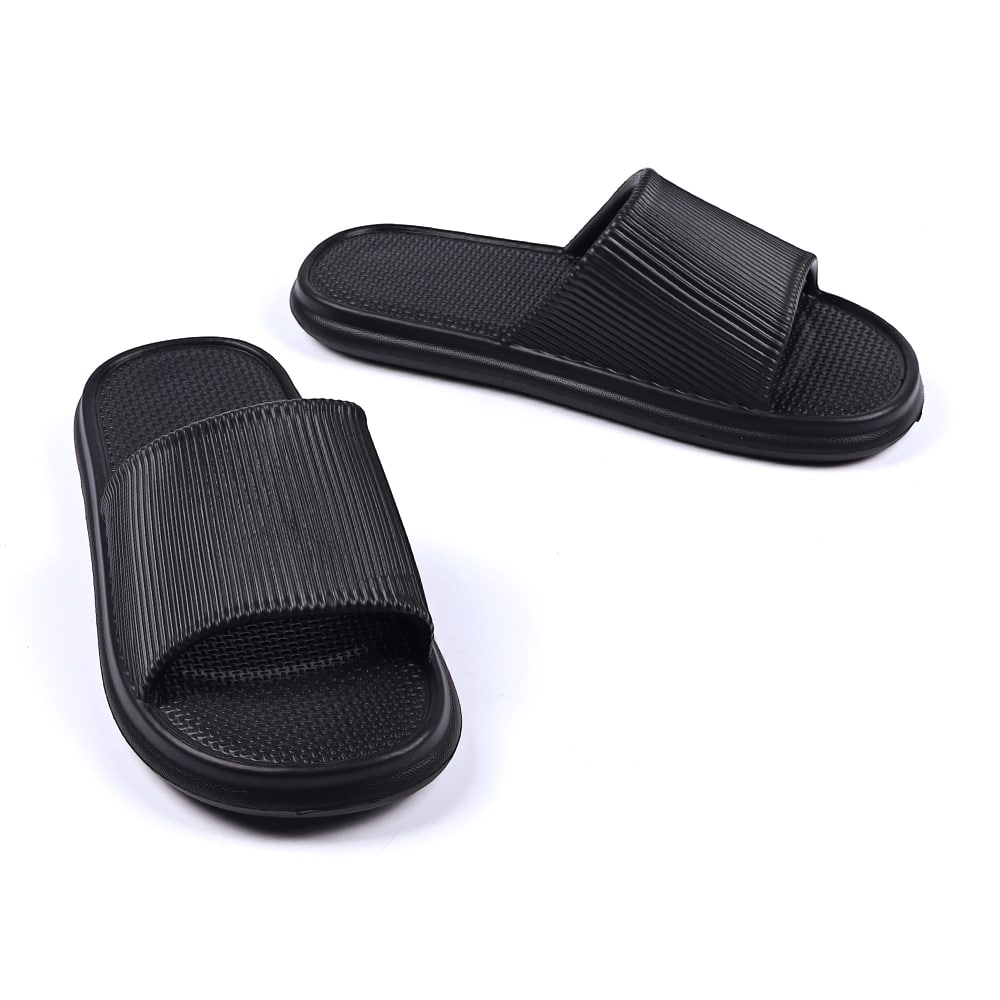
Amazon’s fulfillment network has specific packaging and labeling requirements that change how you spec a product. Items must carry the correct barcode or FNSKU label, polybags require suffocation warnings where applicable, and listings need compliant product identifiers. Because slippers ship so efficiently, a properly spec’d design keeps fulfillment fees low while staying inside Amazon’s prep rules. A proven example of what a compliant, marketplace-ready slipper looks like is the Custom Slippers profile built around an Amazon best-seller construction. Confirm the current prep and packaging requirements directly against Amazon’s seller guidance before finalizing your order.
Certifications and Sample Approval
On the factory side, look for evidence of social and quality audits such as BSCI, SGS, or ISO-aligned inspection, and ask to see recent test reports rather than accepting a homepage badge at face value. Then run sampling as a staged process, not a single yes-or-no: a first sample to confirm direction, a revision sample to correct fit and finishing, a size-set or pre-production sample to lock grading and consistency, and finally a bulk approval only after the physical sample matches the purchase order. Rushing this sequence to save two weeks is how brands end up holding inventory that does not match what they approved.
Slip resistance deserves special attention for commercial and event buyers. For hotels, spas, wedding favors, and hospitality orders, a slip-resistant sole is not a nice-to-have but a safety requirement that protects you from liability. Ask the factory for wet-surface slip-resistance test results or the relevant standards rather than trusting a textured sole at face value, and state the use environment explicitly in your brief so the outsole is specified for the right surface.
Vetting Your Manufacturer: A Repeatable Checklist
A reliable manufacturing partner is found through a consistent vetting process, not luck or a single attractive quote.
Run every shortlisted factory through the same steps and you will eliminate most problems before they start.
- Confirm the business scope actually covers footwear manufacturing, not just trading.
- Verify the factory’s export experience with your target market and its size standards.
- Request recent quality and social audit reports rather than marketing claims.
- Ask for deconstructed samples or existing molds to prove real production capability.
- Break down the MOQ by style, color, and logo to understand where minimums come from.
- Confirm lead times in writing, including sample, production, and shipping windows.
- Clarify mold and tooling ownership in the contract so your investment stays yours.
- Order a small mixed-size batch to test fit and comfort before committing to bulk.
Common Mistakes to Avoid
Most sourcing setbacks trace back to a handful of avoidable mistakes rather than bad luck.
Keep these pitfalls in mind as you shortlist and negotiate:
- Choosing the lowest price without checking what materials were sacrificed to reach it.
- Skipping physical samples and approving bulk from photos or digital mockups.
- Accepting a single MOQ number without understanding which component drives it.
- Ignoring Amazon packaging and labeling rules until inventory is rejected at the warehouse.
- Assuming mold ownership without putting it in writing.
- Overlooking sizing consistency, which shows up later as returns and negative reviews.
Frequently Asked Questions
How much does it cost to custom make slippers?
The per-unit cost depends on material, order quantity, logo method, and packaging. Stock-style custom slippers in EVA typically cost a few dollars per pair at modest quantities, while fully custom molds and premium materials raise both the unit cost and the minimum order. Always calculate on landed cost, which adds freight, customs, and fulfillment on top of the factory price.
What is the best material for custom slippers?
There is no single best material, only the best match for your channel and customer. EVA is the standard for lightweight, water-friendly, and Amazon-friendly slippers; memory foam suits plush DTC positioning; PVC serves budget and bathroom use; and rubber suits outdoor durability. Decide your price band and use case first, then let material follow.
How long does custom slipper production take?
A typical timeline runs from a few weeks to several months depending on customization depth. Sampling alone can take two to four weeks with revisions, and bulk production commonly adds thirty to forty-five days, with longer windows for fully custom molds. Confirm sample, production, and shipping lead times in writing before you commit to a launch date.