Walk through any footwear aisle or scroll through a wholesale catalog, and you will see thick-soled EVA slides everywhere. The global market for these molded foam sandals has exploded, and so has the variety on offer. But within the EVA slides category, two distinct product types serve fundamentally different purposes: recovery slides and regular slides. They look similar at a glance, yet their materials, construction, and intended use are worlds apart. For B2B buyers sourcing for retail, hospitality, or healthcare, understanding this difference determines which product aligns with your customer base and price point.
Recovery slides are engineered with pronounced arch support, deep heel cupping, and multi-layer cushioning to offload stress from feet after physical activity. Regular slides prioritize lightweight, everyday comfort with a flatter footbed and simpler construction. The core difference lies in biomechanical intent: recovery slides actively aid foot recovery through structural support, while regular slides simply provide a soft surface to walk on.
This article breaks down the meaningful differences between these two product types, from material composition and footbed geometry to target demographics and wholesale sourcing considerations.
What Exactly Are Recovery Slides and Regular Slides?
Recovery slides are a specialized category of post-activity footwear designed to reduce foot fatigue and accelerate muscle recovery through structured arch support, deep heel cups, and impact-absorbing midsoles. Regular slides are general-purpose slip-on sandals built for casual daily wear, prioritizing lightweight comfort and simple design over biomechanical correction.
Regular slides have a longer and broader history. They evolved from house slippers and poolside sandals into a global casual footwear category, accelerated by the rise of EVA injection molding technology that made thick, cushioned one-piece sandals affordable to produce at scale. Today, regular slides dominate the mass market, appearing in discount retailers, hotel amenity kits, spa slipper programs, and everyday home use.
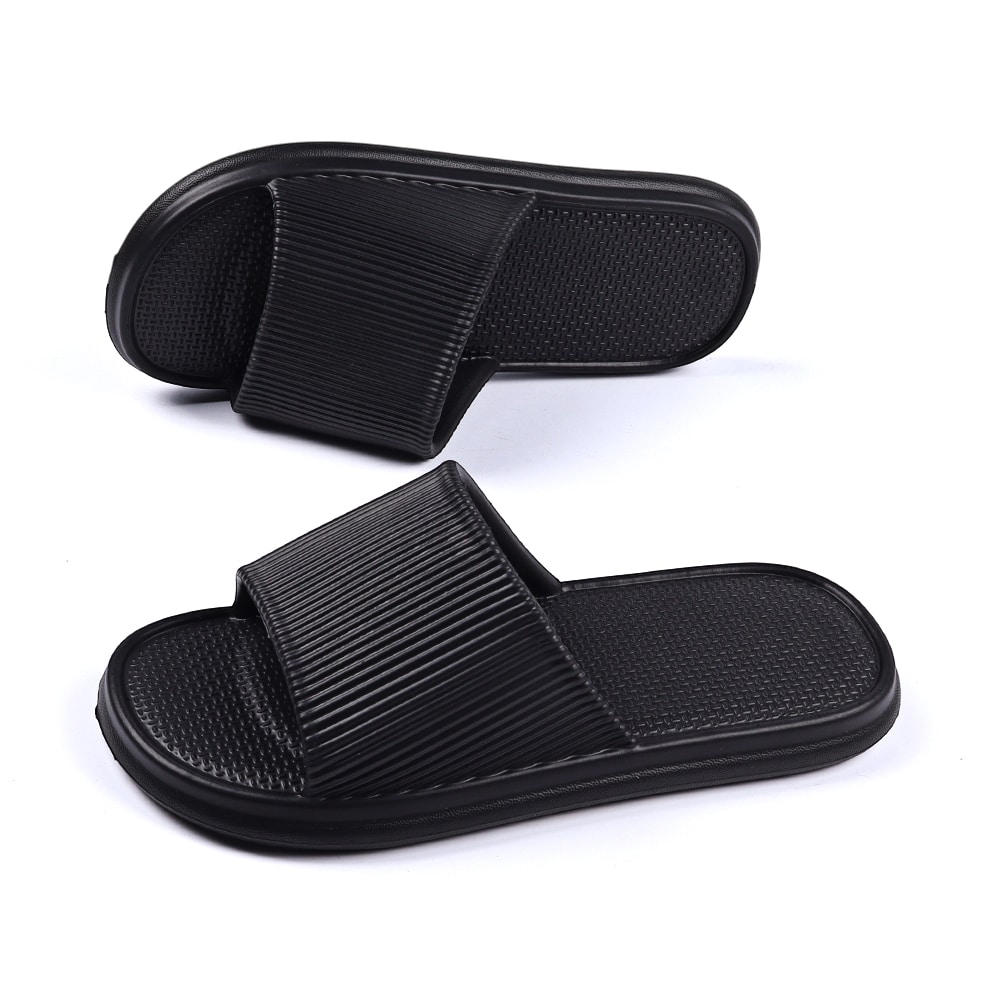
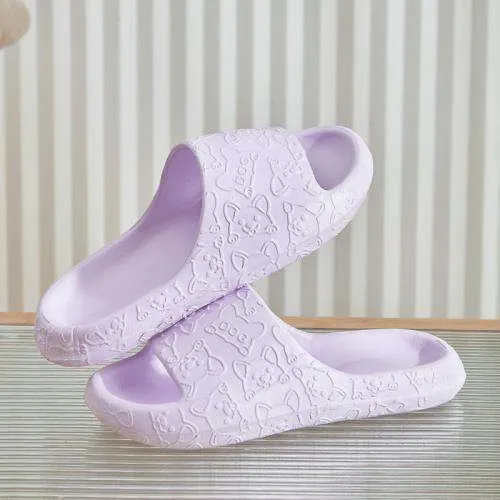
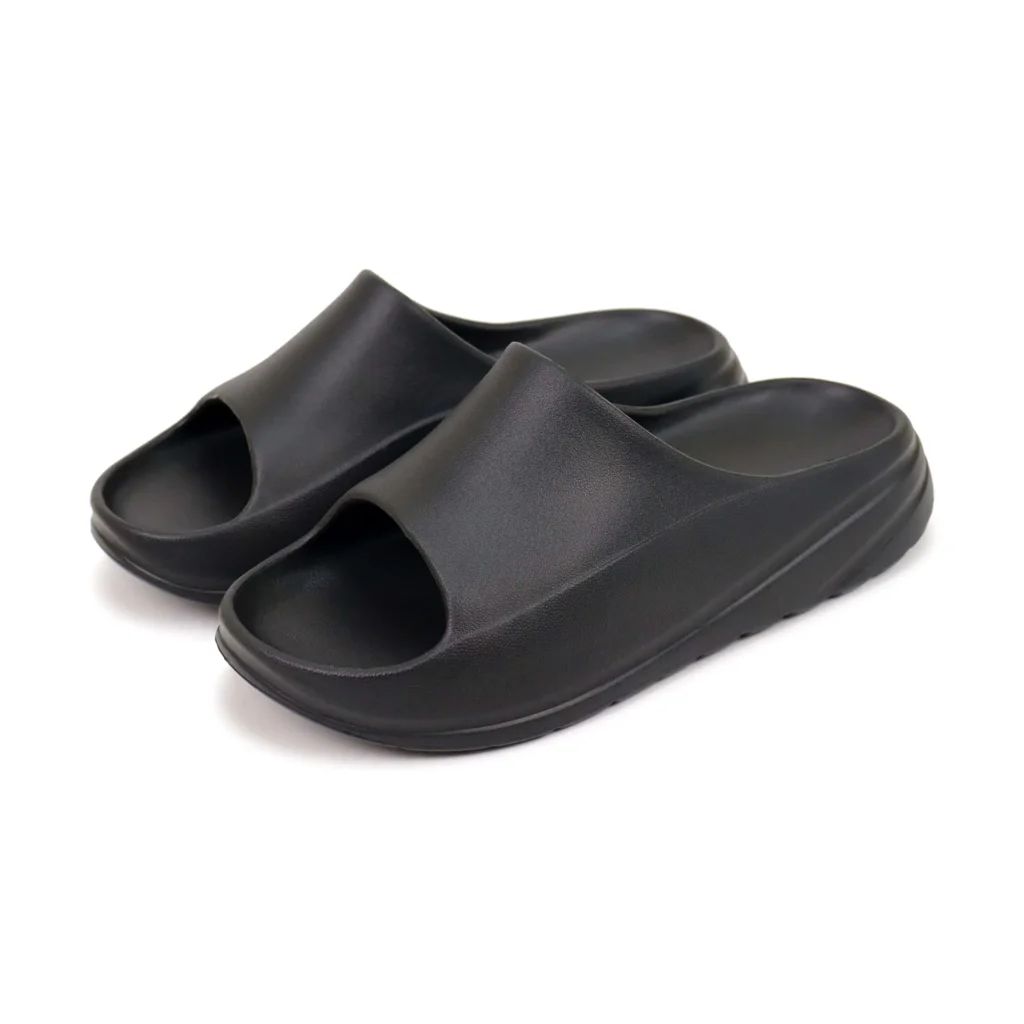
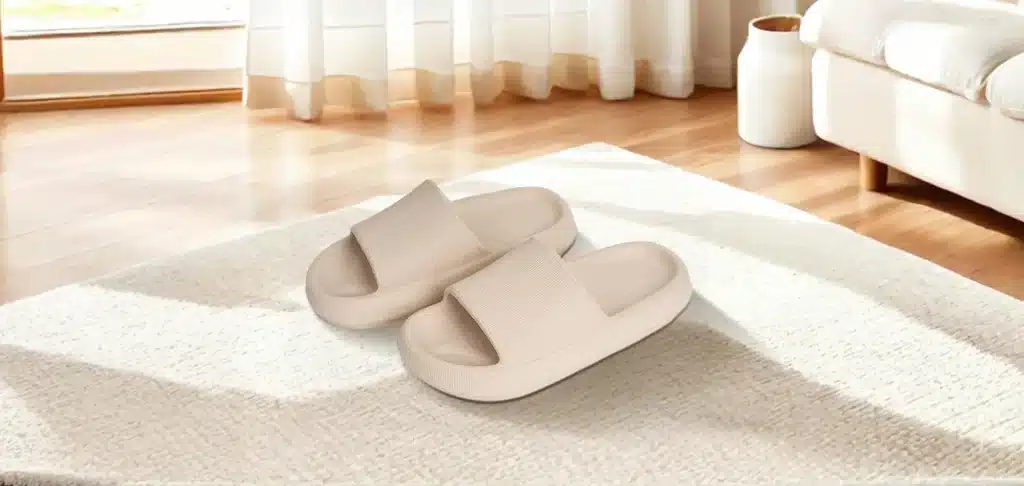
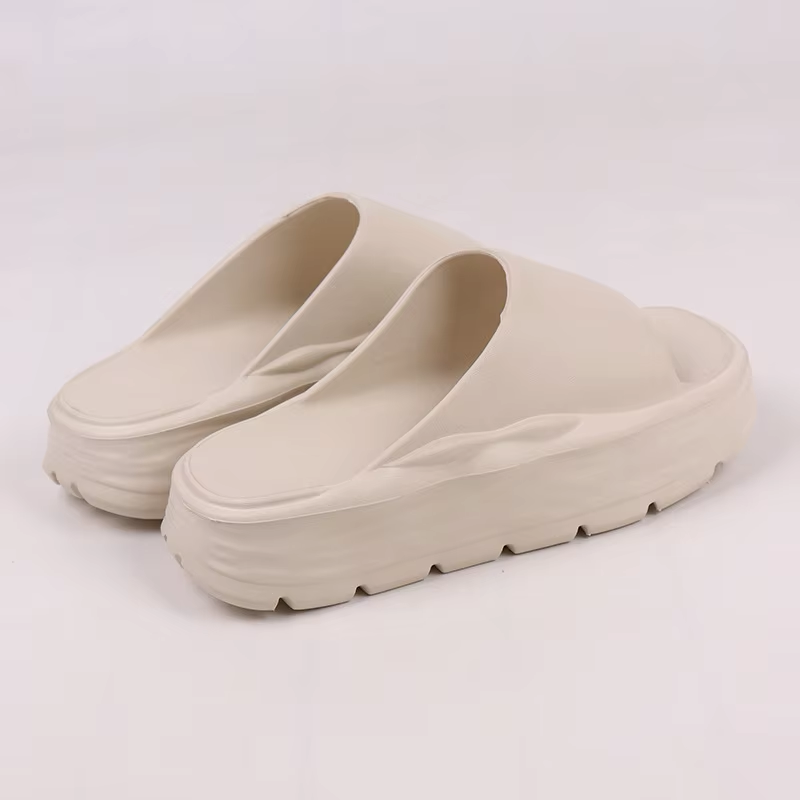
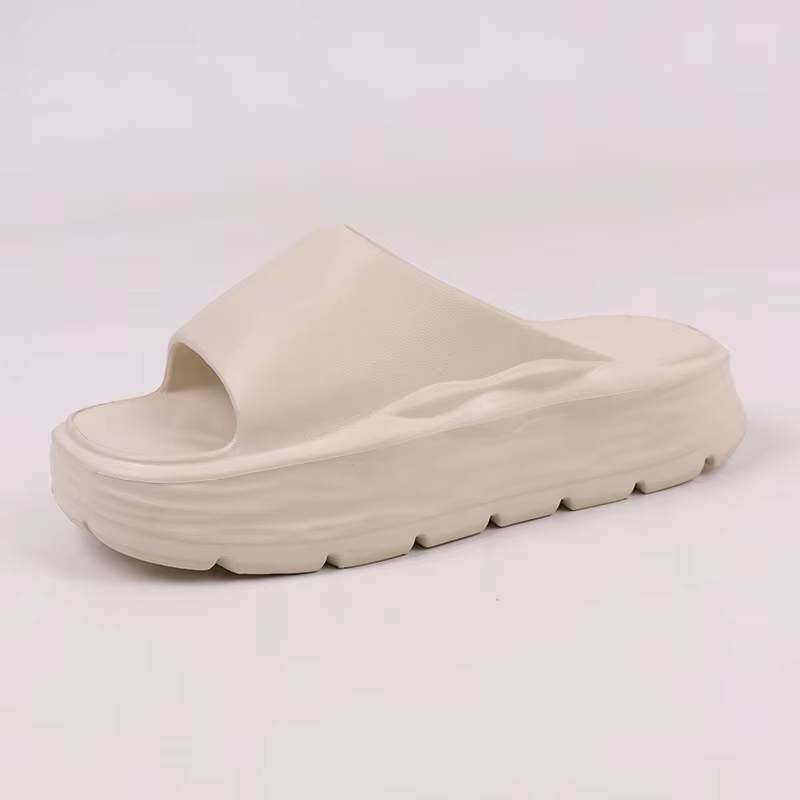
The physical differences are immediately apparent when you place a recovery slide next to a regular slide. Recovery slides are noticeably thicker through the midfoot and heel, with a pronounced sculpted footbed that rises along the medial arch and cups the heel. Regular slides have a flatter profile, often with consistent thickness from toe to heel. The upper strap on recovery slides tends to be wider and more adjustable, while regular slide straps are typically thinner and fixed. These visual cues reflect the underlying engineering priorities: structure versus simplicity.
How Do the Materials and Construction Differ?
Recovery slides and regular slides both commonly use EVA as their base material, but they differ significantly in density, layering, and construction complexity. Recovery slides use higher-density EVA formulations, often combined with rubber outsoles and multi-layer midsoles for targeted support. Regular slides use a single-density EVA foam in a one-piece injection-molded construction that prioritizes lightweight feel and low production cost.
EVA, or ethylene-vinyl acetate, is the dominant material in both categories because of its excellent weight-to-cushioning ratio and water resistance. But EVA is not one material — it spans a wide spectrum. Manufacturers control the hardness, rebound, and compression set by adjusting the vinyl acetate content and the foaming process. Recovery slides sit at the higher end of the density spectrum, typically using EVA with a Shore C hardness of 50 to 60, which provides the structural integrity needed to hold an arch shape under body weight without collapsing. Regular slides use softer EVA, often in the 35 to 45 Shore C range, which feels plush underfoot initially but compresses more over time.
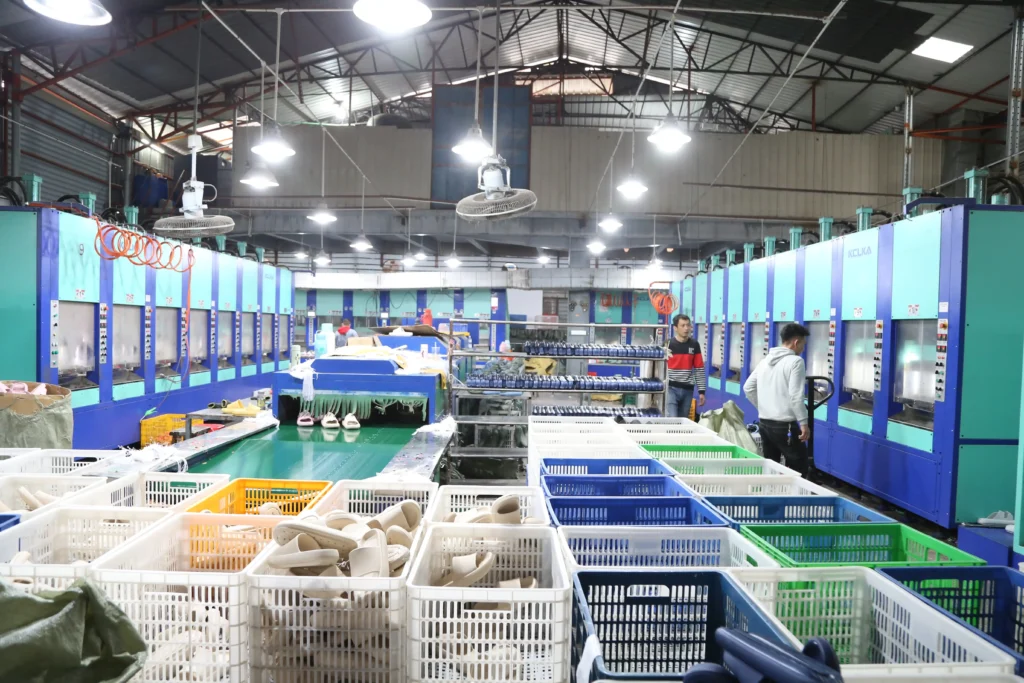
The construction process also diverges. Regular wholesale EVA slides are typically produced through single-step injection molding, where molten EVA compound is injected into a closed mold, expanded, cooled, and ejected as a finished product. This process is highly efficient, with cycle times measured in minutes and per-unit costs that make large-scale bulk production economically viable. The entire slipper, including the upper strap and sole, can be formed in a single shot.
Recovery slides require a more complex manufacturing approach. Many incorporate dual-density or triple-layer construction, where a firmer structural base layer supports a softer comfort layer on top. Some models add a rubber outsole for durability and wet-surface grip, which involves a secondary bonding or overmolding step. Footbed texturing on recovery slides is more aggressive, with deep contouring that cannot be achieved in a simple flat mold. These additional steps increase production cost and cycle time but deliver the biomechanical benefits that define the category.
Material Comparison Table
| Property | Recovery Slides | Regular Slides |
|---|---|---|
| EVA density (Shore C) | 50-60 | 35-45 |
| Typical construction | Multi-layer / dual-density | Single-density injection molded |
| Outsole material | EVA + rubber or high-density EVA | EVA only |
| Footbed contouring depth | 5-12 mm | 0-3 mm |
| Average weight (per pair) | 400-600 g | 250-400 g |
| Production complexity | Moderate to high | Low to moderate |
| Per-unit manufacturing cost | 1.5x to 3x vs regular | Baseline |
Understanding these material and construction differences is critical when comparing EVA slides manufacturing capabilities across suppliers. A factory that excels at single-shot regular slides may not have the equipment or expertise to produce multi-layer recovery slides with the same quality.
Why Does Footbed Design Matter So Much?
Footbed design is the single most important differentiator between recovery slides and regular slides. Recovery slides feature a three-dimensional sculpted footbed with a raised arch contour, deep heel cup, and metatarsal support pad that collectively cradle the foot and distribute pressure. Regular slides have a flat or minimally textured footbed that offers cushioning without structural foot guidance.
This arch contour must be carefully engineered. Too low, and it provides no meaningful support. Too high or too rigid, and it creates a pressure point that causes discomfort rather than relief. The sweet spot for most users is a gradual arch rise of 5 to 8 millimeters above the baseline footbed surface, with the contour extending from the heel through the midfoot. The best recovery slide designs also vary the arch profile across size runs, recognizing that a size 7 foot has different arch geometry than a size 12 foot, rather than simply scaling the same shape.
For procurement teams evaluating arch support slippers for clinical, athletic, or premium comfort applications, footbed depth measurements and arch contour profiles should be requested from suppliers as part of the sampling process. A recovery slide with inadequate arch support is functionally just an overbuilt regular slide with a higher price tag.
Footbed Geometry Comparison
| Footbed Feature | Recovery Slides | Regular Slides |
|---|---|---|
| Arch contour height | 5-8 mm raised | 0-2 mm (essentially flat) |
| Heel cup depth | 4-8 mm | 0-1 mm |
| Metatarsal pad | Often present | Rare |
| Toe bar / grip ridge | Common | Rare |
| Surface texture | Deep grooves / massaging nodes | Light texture or smooth |
| Sizing-specific contours | Common in premium models | Typically uniform scaling |
How Do Cushioning and Shock Absorption Compare?
Recovery slides deliver significantly more shock absorption than regular slides because their thicker midsole and higher-density EVA construction dissipate impact forces more effectively across the entire footbed. Regular slides provide surface-level softness but transfer more ground impact to the foot and joints, especially on hard surfaces.
Each walking step generates an impact force of 1.2 to 1.5 times body weight on the heel, traveling up through ankles, knees, hips, and lower back. Recovery slides reduce peak transmitted force through increased midsole thickness and faster foam rebound between steps. Regular slides feel soft on initial step-in but bottom out under sustained load, at which point the fully compressed foam offers little remaining shock absorption. This is why regular slides feel comfortable for an hour but leave feet fatigued after a full day. On hard surfaces like tile or concrete, the difference is especially pronounced.
Who Should Wear Recovery Slides vs Regular Slides?
After a long run or training session, stepping into recovery slides provides arch support during the critical post-exercise window when tissues are most receptive to recovery positioning. Healthcare workers on 10-12 hour shifts report significant reductions in end-of-shift foot pain when switching to properly contoured recovery slides; the same applies to restaurant and retail staff.
Regular slides have their place: hotel slippers, spa sandals, and short-term guest amenities where a lightweight, waterproof, and inexpensive option for brief wear is exactly what the use case demands. A practical rule of thumb: under one hour of intermittent wear on carpeted floors, regular slides perform well; over two hours of continuous wear on hard surfaces, recovery slides become the objectively better choice for foot health.
Durability and Longevity: Which Slides Last Longer?
Recovery slides generally outlast regular slides by a factor of 1.5 to 2 times because their higher-density EVA resists compression set better, and many models include durable rubber outsoles that prevent tread wear. Regular slides lose their cushioning and traction faster, especially under daily use on rough surfaces.
Compression set is the technical term for the enemy of all EVA footwear. It describes how much a foam permanently deforms after being compressed and released repeatedly. All EVA foam experiences some compression set over time, which is why cushioned footwear eventually feels flat and unresponsive. Higher-density EVA, as used in recovery slides, has a lower compression set rate, meaning it retains its original thickness and rebound properties through more wear cycles.
The durability difference shows up most clearly in three areas. First, the outsole. Recovery slides often feature a dedicated rubber outsole layer or a high-abrasion EVA compound on the bottom that withstands pavement, concrete, and tile without wearing smooth. Regular slides use the same EVA for the entire piece, so the tread pattern wears down with every outdoor step and eventually becomes dangerously slick on wet floors.
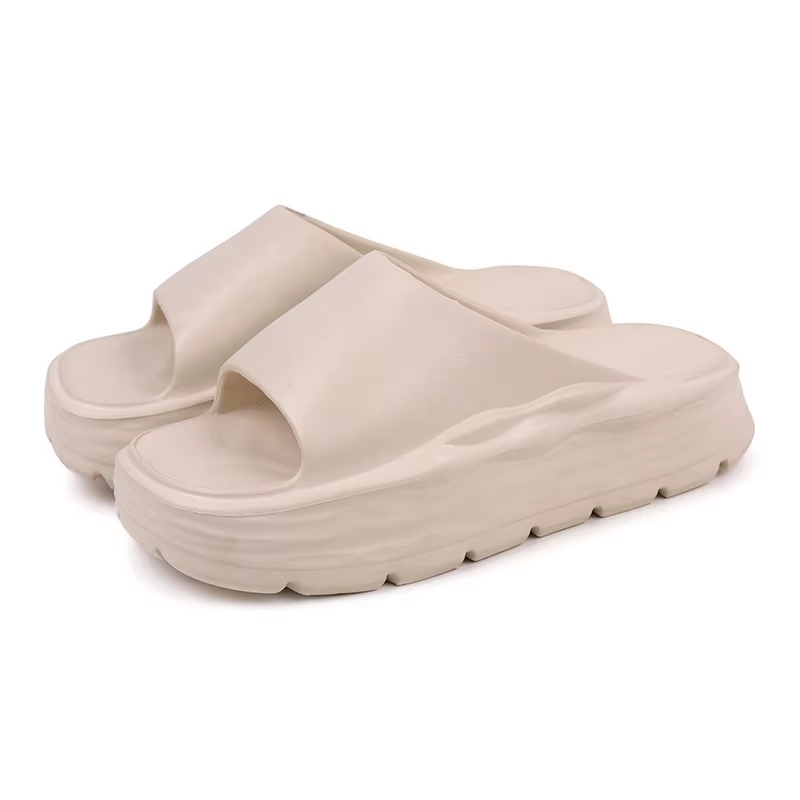
Second, the strap attachment points. Recovery slides typically use a wider strap with reinforced anchor points molded deeper into the midsole, reducing the risk of the strap tearing out. Regular slides, with their thinner straps and shallower anchors, are more prone to strap failure if the wearer pulls hard or catches the strap on an obstacle.
Third, the footbed surface. The deeper texturing on recovery slides takes longer to wear smooth than the shallow texturing or smooth finish on regular slides, maintaining anti-slip grip between the foot and the footbed for more months of use.
For procurement managers, this durability gap has direct implications for warranty claims, return rates, and customer satisfaction. A regular slide that wears out in three months of daily use generates complaints and refund requests. A recovery slide that lasts six to nine months under the same conditions creates repeat customers. The higher initial unit cost of recovery slides is often offset by lower lifetime cost when factoring in replacement frequency.
When Should Businesses Choose Recovery Slides Over Regular Slides?
Businesses should choose recovery slides when their customer base values post-activity recovery, when foot health and arch support are selling points, or when the target market includes athletes, healthcare professionals, or workers who stand for extended periods. Regular slides are the better choice when the priority is maximum affordability, single-use or short-duration applications, or when the customer is not making a foot-health-driven purchase decision.
The business case for recovery slides rests on three pillars: higher perceived value, broader demographic appeal, and premium positioning. A recovery slide commands a retail price 1.5 to 2.5 times that of a comparable regular slide because the consumer perceives the engineering, the thick sculpted design, and the health benefit claims as justifying the premium. This price ceiling creates healthier margins for brands and retailers.
The demographic reach of recovery slides has expanded far beyond the original athlete market. Today, consumers in their 30s, 40s, and 50s increasingly seek recovery slides for everyday comfort, driven by growing awareness of foot health and the normalization of athletic recovery products in mainstream fashion. This is the same demographic shift that turned compression socks from medical devices into lifestyle accessories. Recovery slides sit at the intersection of function and fashion, giving them relevance across fitness, wellness, lifestyle, and even travel retail channels.
Regular slides win on volume and accessibility. In markets where price sensitivity is the dominant factor, such as discount retail, dollar stores, and budget hospitality, regular slides are the only viable option. They also work well for promotional giveaway programs, event swag bags, and other applications where the per-unit cost must be kept to an absolute minimum.
Comparing pillow slides vs cloud slides illustrates how subtle branding distinctions within the slides category can command different price points and customer segments. The same principle applies at the recovery-versus-regular level, where the structural differences justify the tiered pricing.
Business Decision Matrix
| Consideration | Choose Recovery Slides | Choose Regular Slides |
|---|---|---|
| Target customer | Athletes, healthcare workers, comfort seekers | Budget shoppers, casual users |
| Price point | Mid to premium ($15-$40 retail) | Economy to mid ($5-$15 retail) |
| Use duration | 2+ hours continuous wear | Under 1 hour intermittent wear |
| Surface type | Hard floors, outdoor use | Carpet, indoor casual |
| Foot health positioning | Arch support, recovery, plantar fasciitis | Lightweight, waterproof, basic comfort |
| Replacement cycle | 6-9 months daily use | 3-6 months daily use |
| Customization complexity | Higher (multi-layer possible) | Lower (single-shot standard) |
| MOQ expectations | Moderate to high | Low to moderate |
How to Evaluate Recovery Slides for Wholesale Sourcing
Evaluating recovery slides for wholesale sourcing requires examining five key dimensions beyond aesthetics: footbed contour depth and accuracy, EVA density and compression set specifications, strap attachment durability, outsole material and tread pattern, and the supplier’s ability to customize arch profiles for different target markets.
The first dimension is the footbed. Ask suppliers for cross-section measurements of the arch contour at the midfoot, specifically the height of the arch peak above the baseline footbed and the length of the contour along the medial edge. If a supplier cannot provide these measurements or responds with vague assurances about comfort, the slides are likely not engineered to recovery specifications. Legitimate EVA slides have defined, measurable footbed geometry backed by mold specifications.
The second dimension is EVA quality. Request the Shore C hardness specification and, if available, the compression set test results. Compression set is measured by compressing a foam sample to 50 percent of its original thickness for a set period, typically 22 hours at room temperature or 6 hours at elevated temperature, then measuring how much permanent deformation remains. A compression set below 15 percent indicates good resilience. Above 25 percent, the foam will flatten quickly in use.
The third dimension is strap durability. The most common failure point on any slide is the strap pulling out of the sole. Recovery slides should have strap anchors that extend at least 10 millimeters into the midsole, ideally into a reinforced cavity rather than a simple slit. During sampling, pull firmly on the strap at various angles to test for tearing or loosening at the anchor points.
The fourth dimension is the outsole. For recovery slides intended for outdoor or wet-surface use, a rubber or high-density EVA outsole with a tread pattern depth of at least 2 millimeters is strongly recommended. The tread should include channels that direct water away from the contact surface to maintain grip on wet tile or concrete. For indoor-only recovery slides, a textured EVA outsole may be sufficient, but tread depth should still be verified.
The fifth dimension is customization capability. Different markets have different foot shapes. A recovery slide designed for the North American market should accommodate wider feet and higher arches on average, while a slide for the East Asian market may need a narrower last and slightly lower arch profile. Suppliers who offer region-specific footbed molds or at least multiple last options demonstrate a deeper understanding of the product category than those offering a one-shape-fits-all approach.
When sourcing non-slip EVA slides with recovery features, confirm that the anti-slip performance claims apply to both the internal footbed surface and the external outsole. A slide that grips the floor but lets the foot slide internally — or vice versa — defeats the purpose of a recovery design.
Conclusion
The difference between recovery slides and regular slides is not marketing language. It is structural, measurable, and consequential. Recovery slides use higher-density EVA, deeper footbed contouring, multi-layer construction, and often dedicated outsoles to actively support the foot and reduce post-activity strain. Regular slides use simpler single-density injection molding to deliver lightweight, affordable comfort for casual short-duration use.
For B2B buyers, the decision comes down to a clear alignment between product and end-user. If your customers are athletes, healthcare workers, or comfort-conscious consumers who spend hours on hard floors, recovery slides offer the functionality that justifies a premium price and builds brand loyalty. If your customers are price-sensitive, use-case is brief, or the channel is high-volume with low margins, regular slides remain the appropriate choice.
The market is not standing still. As consumers become more educated about foot health and as manufacturing technology makes complex footbed geometries more accessible, the line between recovery and regular slides continues to shift. Recovery features are trickling down into mid-tier products, and regular slides are becoming more contoured than they were five years ago. Staying ahead of that convergence requires understanding exactly what separates the two categories today — so you can make sourcing decisions that match your brand positioning and customer expectations.
FAQ
Can regular slides be used for post-workout recovery if they have thick cushioning?
Thick cushioning alone does not make a regular slide function as a recovery slide. Without structured arch support and deep heel cupping, the foot still works to stabilize itself on a flat surface. Extra cushioning adds comfort but does not address the biomechanical recovery needs that arch support targets. For meaningful post-activity recovery, a slide must combine cushioning with structural footbed contouring.
How long do recovery slides typically last compared to athletic shoes?
Recovery slides generally last six to twelve months of daily wear before the EVA midsole shows noticeable compression set and the footbed contours lose their shape. This is comparable to or slightly longer than the typical lifespan of a daily-use athletic shoe, which is recommended for replacement after 300 to 500 miles of running or roughly six months of regular training. The difference is that recovery slides do not experience the same high-impact forces as running shoes, so their upper and strap components often outlast the midsole cushioning.
Are there any disadvantages to wearing recovery slides all day instead of regular shoes?
Recovery slides are not designed to replace structured shoes for activities that require lateral stability, such as hiking on uneven terrain, lifting heavy objects, or playing sports. The open-back design and strap-only upper provide minimal ankle support and no protection against twisting injuries. Wearing recovery slides for casual walking, standing, and indoor activities is safe and beneficial, but they should not be substituted for activity-specific footwear when the activity demands it.