Most pools post a version of the same rule: change out of street shoes before you reach the deck. The instruction is easy to follow and easy to ignore, because the deck looks clean, the water is treated, and barefoot feels natural next to a pool. What that surface actually is, however, is a continuously wet and heavily shared floor that dozens of pairs of feet cross every hour, and that changes what your feet are standing on.
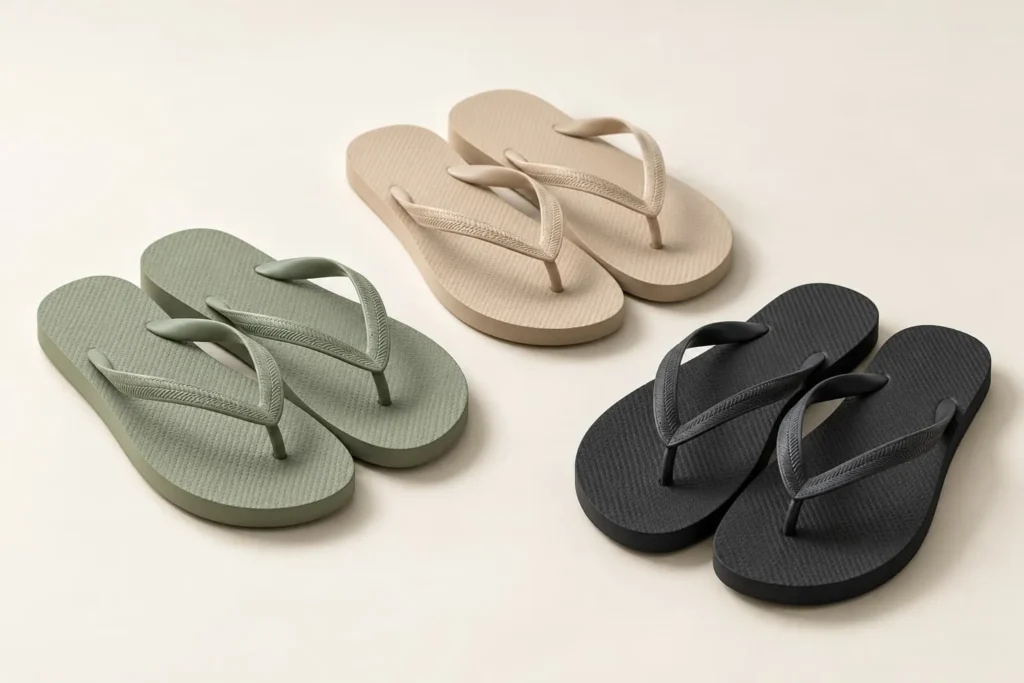
Flip-flops work around a pool because they solve two problems at once: they put a textured rubber or foam outsole between your skin and a wet, contaminated floor, and they keep your foot attached to a sole that grips tile instead of sliding across it. The result is a lower slip risk and a physical barrier against the fungi and bacteria that colonise warm, damp pool surroundings, at a cost low enough that facilities can supply a pair to every guest.
The reasons are worth separating, because the features that prevent a fall are not the same ones that prevent an infection.
What Does Wearing Flip-Flops Around a Pool Actually Protect You From?
Poolside footwear addresses two distinct hazards: loss of traction on wet tile or concrete, and direct skin contact with surfaces where dermatophytes and bacteria survive. Everything else flip-flops do, from comfort to convenience, is secondary to those two functions.
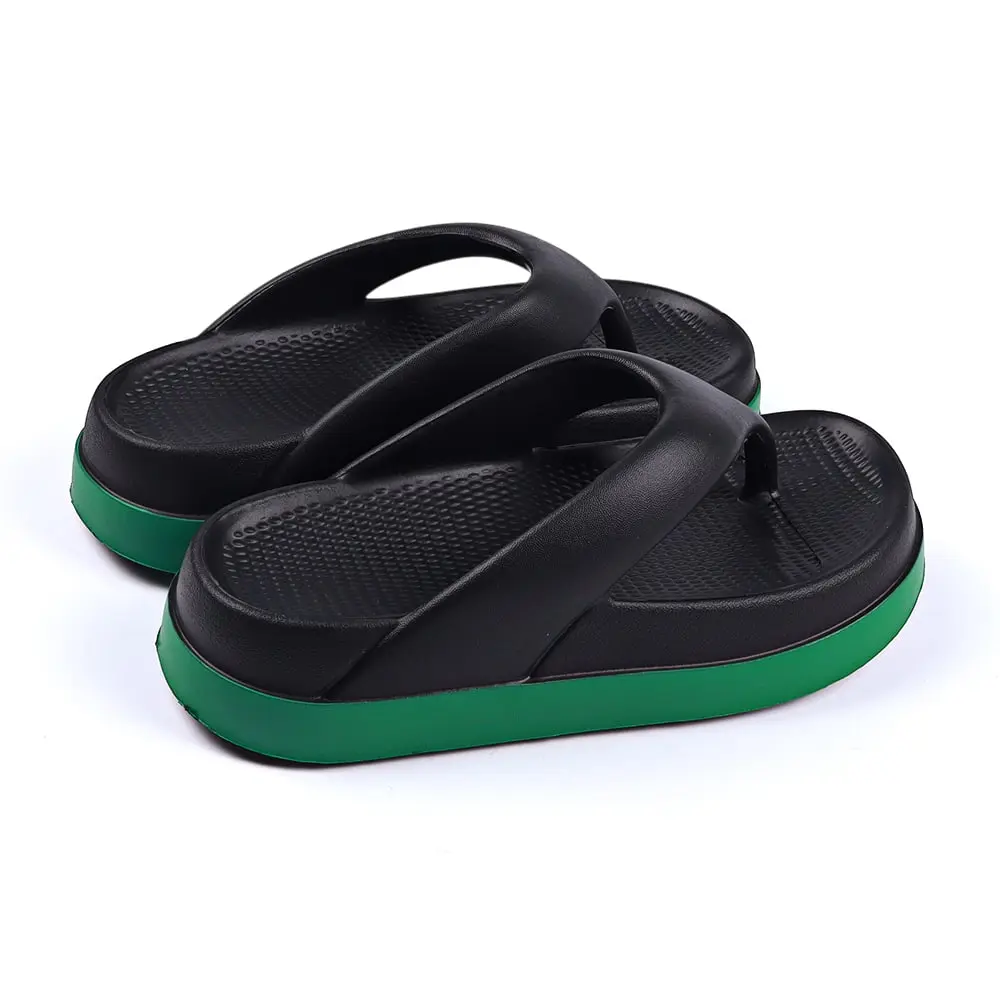
A pool deck is designed to drain, not to grip. Glazed tile, brushed concrete and composite decking all lose a large part of their dry-state friction once a film of water sits on them, and chlorinated splash water leaves exactly that film around the ladders and gutters where people congregate barefoot. The outsole of a flip-flop is the one part of that equation a wearer can control.
Slip and Fall Risk on Wet Pool Decks
Falls are the injury most closely associated with barefoot and minimally supported footwear. In the MOBILIZE Boston cohort of 765 adults, more than half of reported falls occurred while the person was wearing slippers, socks or nothing at all, and those falls carried a higher odds ratio for serious injury than falls in stable shoes (published cohort data). Pool decks concentrate the same conditions: water, smooth hard surfaces, sudden changes of direction and hands that are often holding a child or a bag. Facility managers who have replaced deck footwear after an incident tend to look at the tread first, and the checklist for a genuinely anti-slip slipper is short: pattern depth, compound hardness and drainage.
Fungal, Bacterial and Viral Infections
Warm, wet and porous describes both a pool deck’s grout lines and the ideal growth conditions for the organisms behind the most common pool-acquired foot problems. Four are worth knowing:
- Athlete’s foot (tinea pedis) – dermatophyte fungi that colonise the spaces between the toes and cause itching, scaling and cracking.
- Plantar warts – caused by human papillomavirus entering through small breaks in the skin, usually on weight-bearing areas.
- Toenail fungus – infection under the nail plate that discolours and thickens the nail and resists topical treatment.
- Bacterial infections – staphylococcus and pseudomonas species that enter through cuts, blisters or softened skin.
Bare feet pick these up by contact. A flip-flop sole interrupts that contact, which is why footwear advice in pool hygiene guidance is so blunt.
Do Flip-Flops Really Reduce Infection Risk in Showers and Changing Rooms?
Yes, provided they are worn in the shower, the changing room and the walkways as well as at the pool edge. The footwear only helps where it is actually on the foot, and most exposure happens in the wet rooms around the pool rather than in the water itself.
Treated pool water is not sterile, but it is far less of a transmission route than the floor around it. Chlorine levels are maintained in the basin; the deck, the shower trays, the bench slats and the drain covers are simply wet, and they stay wet between cleanings. Guidance from the Centers for Disease Control and Prevention is explicit that the surfaces around a pool, not only the water, carry contamination risk, so its advice to shower before entering applies to the surroundings as much as to the basin.
The clinical picture supports the same conclusion. Tinea pedis is among the most prevalent fungal skin conditions worldwide, with estimates reaching a quarter of the population at some point in life, and it recurs because the organisms persist in exactly the environments that pools create (clinical reference on tinea pedis). Two habits make the barrier effective rather than symbolic: dry between the toes after showering, and let the footwear dry fully between sessions. A pair stored wet in a gym bag is a culture dish with a strap.
What Can You Wear on Your Feet in a Swimming Pool?
Flip-flops and slides are the standard choice, and both are accepted at almost every public pool. Water shoes and neoprene aqua socks are usually permitted as well, particularly at water parks and on textured pool floors, while rigid everyday shoes are not.
The right option depends on where the wearer is going and how long they will be on their feet, not on style preference. The differences that matter are coverage, drainage and how well the sole holds on a wet surface.
| Footwear | Wet grip | Drainage | Typical use |
| Flip-flops | Good with a textured outsole | Very good, open construction | Deck, showers, changing rooms |
| Slides | Good, wider contact area | Good | Deck, spa, poolside lounging |
| Water shoes | Moderate on tile, better on rough ground | Moderate | Water parks, rocky entries |
| Neoprene aqua socks | Moderate | Good | Chlorine-sensitive skin, children |
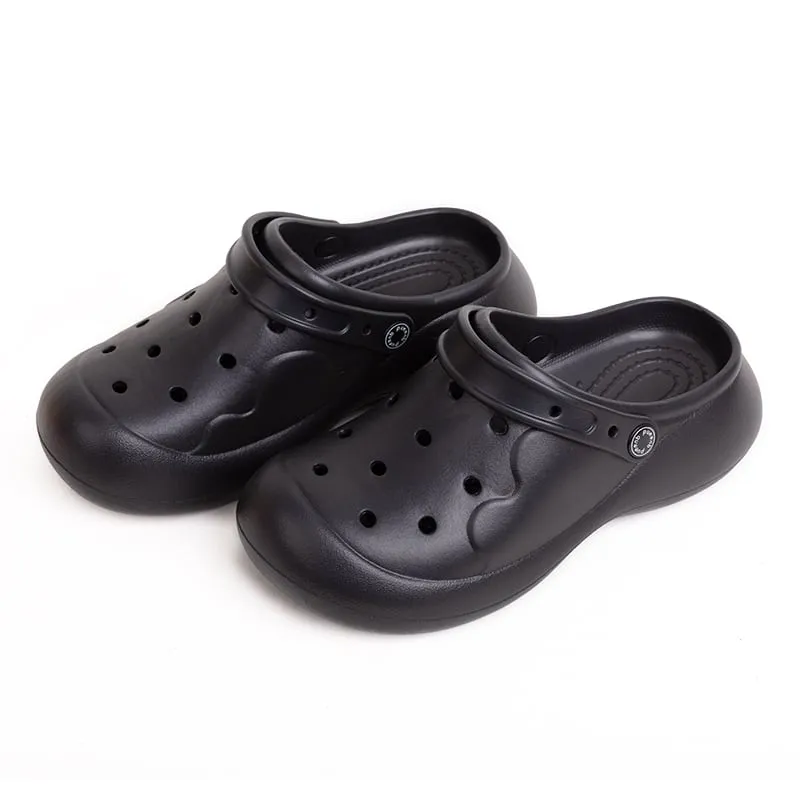
| Clogs with drainage ports | Good | Good | Longer walks to and from the water |
| Bare feet | Poor on wet tile | Not applicable | Not advised on shared decks |
Barefoot deserves to be treated as a choice rather than a default. Where a facility permits it, it still exposes the sole to every surface the previous hundred visitors walked on.
What Should You Never Wear in a Swimming Pool?
Street shoes, cotton socks, running shoes and any footwear with a deep lugged or absorbent sole should stay in the locker room. They track contamination onto the deck, they hold water against the skin for hours, and their outsoles grip wet tile worse than a purpose-made pool sandal.
The rule exists for reasons that have nothing to do with tidiness. A shoe worn in from the car park carries soil, organic debris and whatever was on the pavement, and the moment it crosses the deck it deposits that load where people walk barefoot. Absorbent materials compound the problem by staying wet, which is the condition pathogens need.
- Everyday sneakers – the tread holds water and releases it slowly across the deck.
- Leather or suede sandals – damaged by chlorine and slow to dry.
- Cotton socks worn alone – soak up water, stay damp against the skin and offer no grip.
- Platform or high-heeled fashion sandals – unstable on a wet surface regardless of sole pattern.
- Work boots and heavy closed footwear – a fall risk to the wearer and a hazard on the deck.
Why Do Some Swimmers Wear Socks in Pools?
The socks seen at pools are usually not ordinary cotton socks. Neoprene aqua socks, sometimes sold as pool socks or beach socks, are thin, quick-drying booties with a gripped sole, worn for warmth in cooler water, for extra protection on textured pool floors, or by swimmers whose skin reacts to chlorine. They serve a legitimate purpose and are widely accepted. A cotton sock pulled on under a flip-flop does the opposite of what pool footwear is for: it absorbs water, keeps the skin saturated for the whole session and slides inside the sandal.
When Should You Not Wear Flip-Flops?
Flip-flops are task footwear, not all-day footwear. Take them off for anything longer than a short walk, for driving, for sport and for standing shifts, because without a heel counter or arch support the foot has to grip the sole with its toes on every step.
The grip action is what causes the trouble. To keep a backless sandal on, the toes curl and the gait shortens, which loads the plantar fascia and the Achilles tendon repetitively. Over a summer of daily wear that pattern is associated with plantar fasciitis, tendon inflammation, ankle sprains and metatarsal pain. The same mechanism makes flip-flops a poor choice for anyone with reduced sensation or circulation in the feet, including people with diabetes, who may not notice a cut or a blister until it has become an ulcer.
Situations where a closed shoe or a supportive clog is the better decision:
- Walking more than a few hundred metres to or from the pool.
- Driving, because a loose backless sole slides off the pedals.
- Any sport, including beach volleyball and casual running.
- Standing for a full shift at a pool, bar or reception desk.
- Hot paving or sand where a thin sole offers no insulation from the surface.
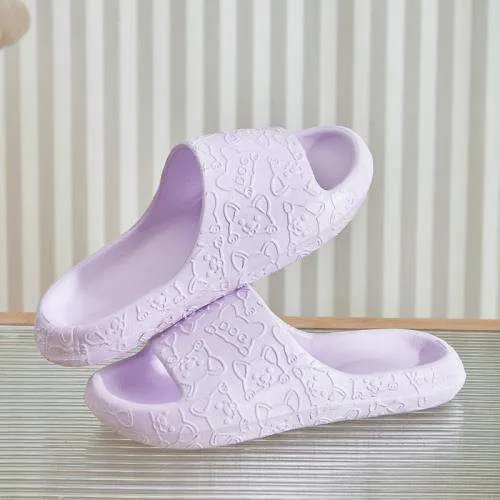
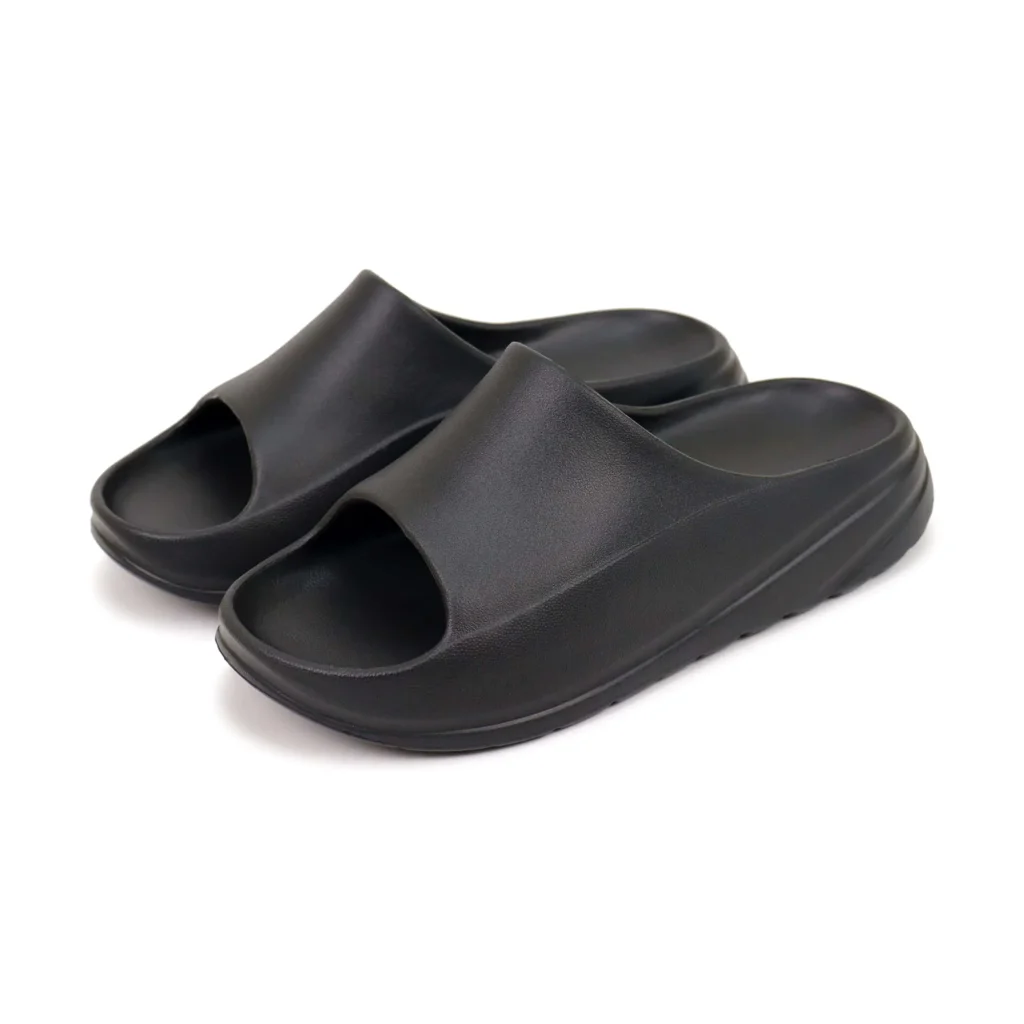
For the walk between the car park and the changing room, a slide with a moulded footbed and a heel lip keeps the foot from sliding forward, and non-slip EVA slides designed for wet surfaces cover that distance comfortably without asking the toes to do the work.
What Design Features Make a Flip-Flop Suitable for Pool Use?
The four features that decide whether a flip-flop is safe around water are outsole tread geometry, drainage, compound hardness and strap fit. Quick-drying upper materials and chlorine resistance decide how long the pair stays usable.
A pool sandal is a simple product, which is why small specification differences show up quickly in use. The points below are worth writing into a purchase specification rather than leaving to a supplier’s default.
| Feature | What to specify | Why it matters |
| Outsole tread | 2 to 3 mm deep, directional grooves, rubber or high-friction EVA | Thin smooth soles hydroplane on wet tile |
| Drainage | Open toe, side ports or perforated footbed | Standing water inside the sole destroys grip |
| Compound hardness | Mid-range shore hardness with a textured footbed | Too soft rolls under load, too hard loses wet friction |
| Strap and thong | Snug instep fit, no gap over the toes | Loose straps let the foot slide off the sole |
| Upper material | PVC, EVA or rubber, non-absorbent | Fabric uppers stay wet and hold odour |
| Chemical resistance | Chlorine and saltwater stability | Deck and spa water degrade weak compounds quickly |
When tread pattern, compound and strap geometry are specified together by a flip flops manufacturer, the sandal behaves predictably on wet tile instead of only looking the part.
How Should Facilities and Buyers Specify Pool Flip-Flops?
Buy to a written specification and a replacement cycle rather than to a unit price. Pool footwear fails through tread wear and strap failure long before the upper looks worn, so the useful metrics are abrasion resistance, strap pull strength and the number of sessions a pair survives.
Three practical points cover most purchasing decisions:
- Size coverage. Order full size runs, or split packs if the venue knows its own distribution; a deck stocked only in medium and large sends guests back to bare feet.
- Colour coding. Assign a colour per size so staff can restock a rack in seconds and guests can find their pair in a busy changing room.
- Volume and replenishment. Guest footwear at a busy pool has a short service life, so agree a reorder schedule with the first order instead of discovering the gap mid-season.
Properties that run both a pool deck and a spa often buy a mixed programme, adding EVA clogs wholesale for staff and maintenance teams alongside guest flip-flops.
Cleaning and Storage Between Sessions
Rinse in fresh water after every use to remove chlorine, salt and sunscreen residue, then air-dry in shade. Sealed bags and long exposure to direct sun both shorten the life of the compound, and a pair that never dries fully will hold a chlorine smell and grow organisms on the footbed within a few weeks.
FAQ
Three questions tend to come up once the main reasons are settled.
Are flip-flops safe for children around pools?
They are safer than bare feet on a shared deck, but fit matters more than it does for adults. A child who has to clench the toes to keep a sandal on will trip, so choose a strap that sits close to the instep and replace the pair as soon as the foot outgrows it. Children still need supervision on wet tile whatever they are wearing.
How long does a pair of pool flip-flops last?
For a facility supplying guests, expect a service life measured in weeks to a few months rather than years. The tread goes first: once pattern depth drops below about a millimetre the sole loses wet grip even though it looks intact. Pairs used only on holiday usually last several seasons.
Can you swim wearing flip-flops?
No. Flip-flops are for the deck, the showers and the walkways, and they come off at the water’s edge. Swimming in them creates drag, the sole can slip off mid-stroke, and a loose sandal in deep water is a distraction at exactly the wrong moment. Water shoes exist for swimmers who need protection in the water itself.