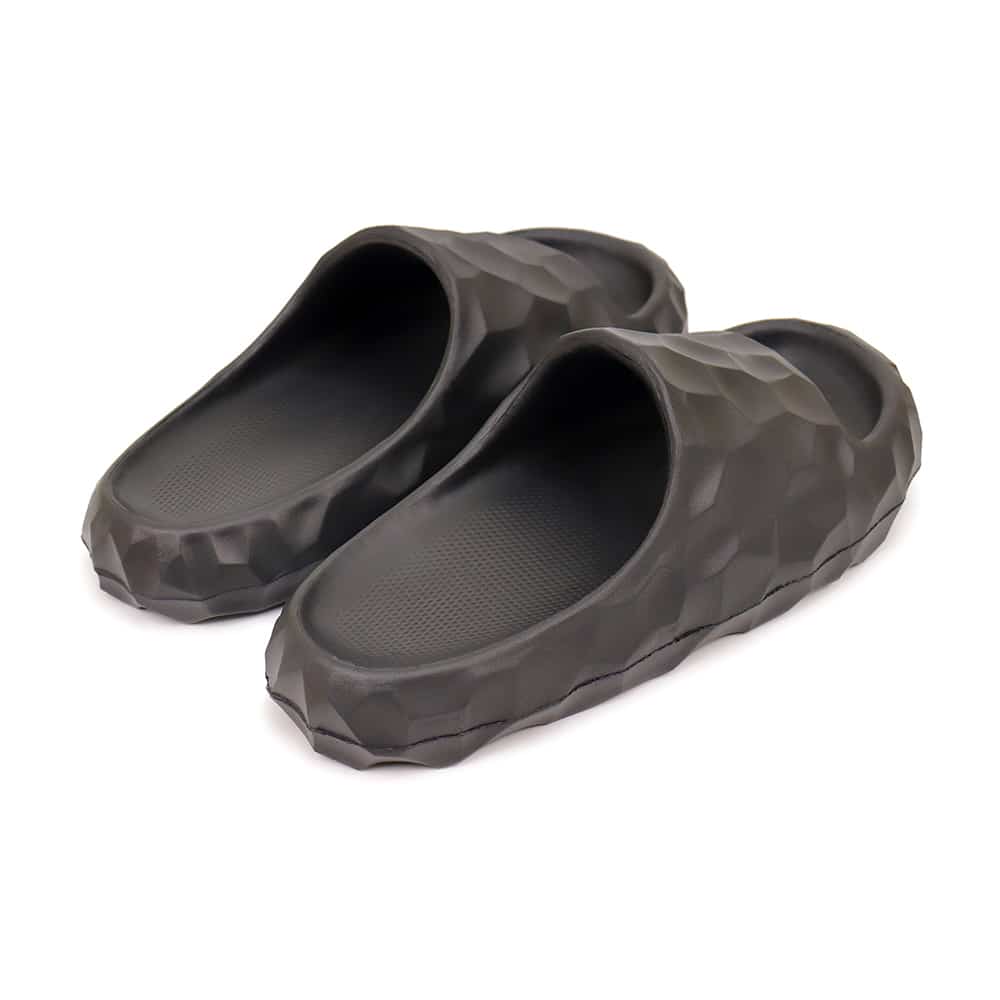
A public locker room is one of the few places where a smooth, wet surface stays in constant contact with hundreds of bare feet a day, and few of those feet leave the floor clean. Between the pool deck, the shower stalls and the tiled path to the sauna, the floor collects skin flakes, nail clippings and the moisture that holds them in place, while facility managers mop on a schedule and users walk through in a hurry.
You should wear shower shoes in a public locker room because they place a continuous barrier between your skin and a floor that carries live fungal spores, wart-causing virus and bacteria, while also giving you grip on tile that is genuinely slippery. The protection is mechanical rather than chemical: the sole blocks contact, and contact is the only way athlete’s foot and plantar warts are acquired in these spaces.
The sections below cover what the floor actually carries, what a shower shoe has to do to earn the name, and how buyers who supply these facilities should specify them.
What Is Actually Living on a Locker Room Floor?
A locker room floor carries dermatophytes, the fungi behind athlete’s foot and fungal nail infection, along with human papillomavirus and bacteria. They persist because the environment is warm, damp and out of daylight, and they spread by direct contact rather than through the air.
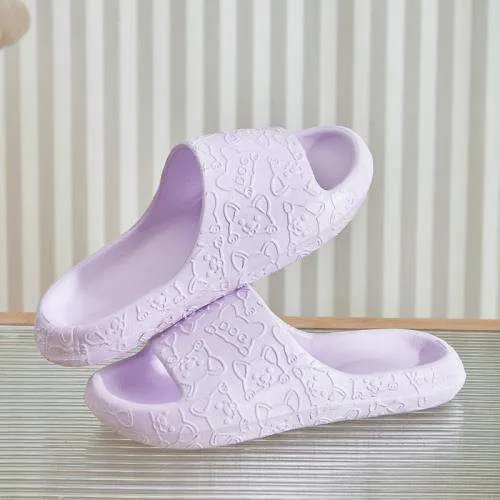
Dermatophytes feed on keratin, the protein in skin, hair and nails, which is why shed skin is not harmless debris but a food source. Tinea pedis is the most common fungal skin infection, affecting up to 25 percent of adults worldwide, and the American Academy of Dermatology names pool decks, gyms, shower areas and locker rooms as the places where most people pick it up, recommending shower shoes or sandals as the standard precaution. The same wet floor carries the virus behind plantar warts, which enters through small breaks in softened skin, plus bacteria that produce persistent odor. Clinical references on tinea pedis also note how readily the infection spreads to the nails and other parts of the body.
Three conditions make the transmission chain work:
- Moisture: water softens the outer layer of the sole, lowering the barrier that intact dry skin provides.
- Warmth: heated changing rooms hold the temperature range dermatophytes grow in fastest.
- Keratin supply: skin flakes in drains, grout lines and mats concentrate the food source exactly where feet land.
Remove any one of the three and the risk drops sharply, which is why showers and pool surrounds, not dry corridors, carry most exposures.
How Long Can a Spore Survive Between Users?
Fungal spores remain viable on wet surfaces for days to weeks, and on damp fabric or foam for longer, so a floor does not have to be busy at the moment you step on it to be a risk. Wet tile and grout hold spores far longer than dry tile, and rubber mats, wooden benches and shared foam footwear act as reservoirs because they never fully dry between uses. A floor can look immaculate after mopping and still carry what the previous hundred users left behind, because cleaning removes soil, not necessarily viable fungus.
Why Do People Wear Shoes in Public Showers?
People wear shoes in public showers for four reasons: to block fungal and viral transmission, to keep grip on slick tile, to avoid the sharp, unsupported feeling of standing on hard wet floors, and to remove the discomfort of skin contact with a surface used by strangers. The first carries clinical evidence; the other three explain why the habit persists.
Bare skin on a contaminated surface is direct exposure, and a sole a few millimeters thick changes the contact from skin to material. What matters is that the barrier is continuous and stays in place while the foot is wet. Cotton socks and paper slippers fail this test: socks absorb water and become a wet compress against the skin, while paper slippers disintegrate at the first puddle and offer no grip. A shower shoe works because it is water-resistant, retains the foot and covers the sole completely. The other motives are practical: wet tile with soap residue is among the more slippery surfaces an adult meets in a week, and a textured sole with drainage channels beats bare skin.
What Should a Shower Shoe Do Before It Earns the Name?
A shower shoe has to deliver four things at once: reliable wet grip, fast drainage and drying, complete coverage with a secure hold, and low enough weight that it is actually carried to the gym. Miss one and the shower shoe fails in use, usually by being left in the bag.
Grip depends on tread geometry and compound hardness, not on the phrase printed on a label. Shallow, wide channels shed water and let the sole settle on tile instead of hydroplaning on a film; deep, fine grooves hold water and cut the contact area. A softer compound grips better on smooth wet tile but wears faster, which matters where one pair serves hundreds of people. Custom Non Slip EVA Slides show the balance most buyers settle on: mid-hardness foam, a raised directional tread pattern, and a channel under the arch where water collects.
Drainage is the second requirement. Water that cannot leave the footbed keeps the skin soaked for the whole walk back to the locker, reproducing the exact condition the shoe was meant to prevent. Perforations, side ports or a sloped footbed all work; a solid cupped footbed does not. A shower shoe still wet twelve hours later cultures fungus between sessions.
What Is the Healthiest Shoe for Your Feet?
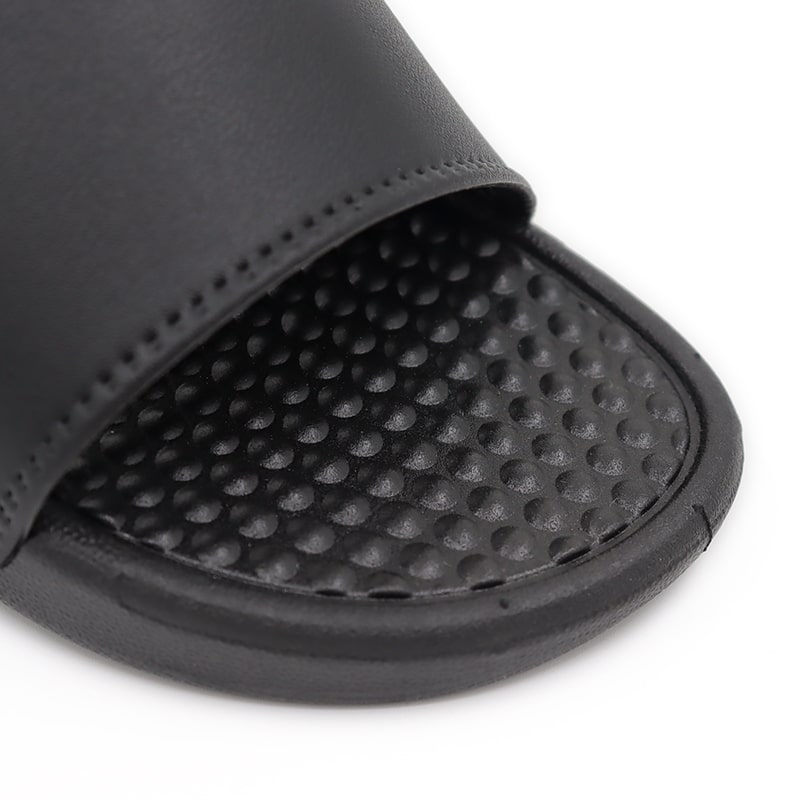
For everyday wear, the healthiest shoe has a firm heel counter, a sole that resists twisting, moderate cushioning, a low heel and a fastening that holds the foot in place; for wet public areas, the healthiest choice is a quick-drying slide that meets those same structural tests at lower weight.
A shower shoe is worn for minutes, so grip and drainage matter more than arch support; a house shoe is worn for hours, so support and shock absorption move to the front. Confusing the two is the common error of buying an ultra-soft slide for all-day indoor wear.
Which Material Holds Up Best in a Wet Changing Room?
Ethylene vinyl acetate foam, known as EVA, is the best all-round material for shower shoes in shared wet areas: light, closed-cell, water-resistant and still grippy when wet. Polyvinyl chloride is cheaper and harder wearing but heavier and less comfortable, rubber offers the best wet traction at the cost of weight, and textile uppers should be avoided.
| Material | Strength in wet areas | What to watch |
| EVA foam | Closed-cell, does not absorb water, light, good wet grip, dries fast | Compresses over time; cheap grades tear at the strap |
| PVC | Low cost, rigid, easy to mold, holds its shape | Heavy, hard underfoot, slippery once the tread wears smooth |
| Rubber | Highest wet traction, durable tread | Weight, heat build-up, slower drying |
| Textile or knit | Breathable for dry indoor use | Absorbs water, stays damp, unsuitable for showers |
Most wholesale slides shoes sold into gyms, pools and spas use a single-material injected construction, with no seams to fail and no lining to stay wet. Two-material builds, a foam footbed over a rubber outsole, trade weight for traction and suit polished stone rather than matte tile. Antimicrobial additives bound into foam have limited effect at the surface; the structure of the sole does more for hygiene than any label.
What Do Facility Buyers Get Wrong When Specifying Them?
Buyers most often get four things wrong: they treat the shower shoe as an accessory rather than a safety item and buy on unit price, they specify too narrow a size range for a mixed population, they ignore drainage and tread depth because neither shows up in a photo, and they set no replacement cycle, so worn pairs stay in service after the grip has gone.
A workable specification covers tread depth and pattern, compound hardness, footbed drainage, weight per pair, a size band from the smallest to the largest user, color fastness under chlorine, and the wet slip test method. Requiring a stated test method, rather than accepting the phrase anti-slip, is what separates a purchase order from a marketing conversation. Custom Slides Wholesale programs typically let the tread, footbed and strap be specified independently, which is the practical way to match the shower shoe to the floor it will be used on.
How Many Pairs Does a Facility Actually Need?
Estimate in three steps rather than guessing from floor area:
- Peak concurrent users. Count the busiest hour, not the daily total, because the shower shoe pool has to cover the peak.
- Turnaround time. Measure how long a pair needs to dry in the storage conditions the facility actually has; damp storage doubles it.
- Attrition rate. Track how many pairs are lost, taken or retired per month, then add that to the pool.
Should Seniors Go Barefoot at Home?
No. For older adults, bare feet, socks and loose slippers account for a disproportionate share of falls at home and roughly twice the odds of serious injury when a fall happens, so supportive footwear indoors is the safer default.
The clearest evidence comes from the MOBILIZE Boston study, which followed 765 adults, mostly 70 and older, for a median of about two and a half years: 51.9 percent of in-home falls occurred while the person was barefoot, in socks or in slippers, while only about 10 percent named one of those as their usual footwear, and the adjusted odds ratio for serious injury was 2.27 compared with other shoes worn at the time of the fall. The mechanism is not mysterious. Age thins the fat pad under the heel, dulls sensory feedback from the sole and reduces ankle range, so an unsupported foot on tile has less margin before a slip becomes a fall.
This does not mean every senior needs a rigid orthopedic shoe indoors, only that the indoor pair should have a firm sole, a closed back or a strap and real tread.
What Percentage of Americans Wear Shoes in Their House?
National polling puts the share of Americans who wear shoes inside their home at roughly one in three, while about two in three prefer a shoes-off household; the gap between those two numbers lies in guests, since fewer than half of shoes-off households ask visitors to remove their shoes.
That pattern matters for anyone selling into this category. A household that removes outdoor shoes at the door has already accepted the logic of a dedicated indoor pair, which makes it the natural buyer for a house slide; a household that keeps them on is buying comfort rather than cleanliness.
How Do You Keep the Shower Shoe From Becoming the Problem?
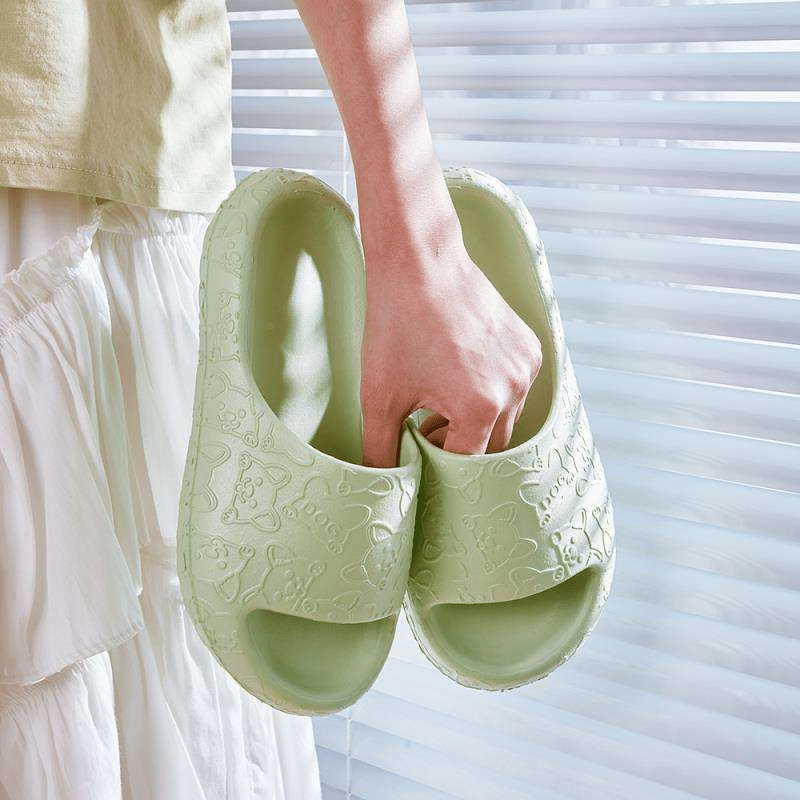
A shower shoe becomes a reservoir if it is stored wet, so the maintenance routine is short and non-negotiable: rinse the sole and footbed after use, dry the pair sole-up in open air, disinfect on a fixed schedule, and replace it once the tread pattern flattens.
The sequence that works in practice:
- Rinse both surfaces under running water before leaving the wet area, so debris does not dry into the foam.
- Shake off excess water and dry the pair sole-up, which lets the footbed drain instead of pooling.
- Store in a ventilated mesh bag, never a sealed plastic bag, which holds humidity and heat together.
- Disinfect weekly with a product labeled for hard surfaces, then dry fully before the next use.
- Retire the pair when the tread under the heel and ball is visibly smooth, when odor persists after cleaning, or when the footbed cracks and holds water.
Facilities face the same problem at scale, which is why wholesale spa slippers intended for reuse are specified with a replacement interval in months rather than a wear indicator. A reusable shower shoe is a managed asset with a service life, not a one-off purchase.
FAQ
Three questions come up repeatedly once the case for shower shoes is accepted, and each one is about the exceptions rather than the rule.
Can You Still Get Athlete’s Foot While Wearing Shower Shoes?
Yes, because the shoe covers only part of the exposure. Spores can be picked up on the hands, on a towel that touches the floor, or on the skin at the edge of the footbed, and moisture trapped between the toes afterwards matters as much as the shower itself. Drying thoroughly between the toes completes what the shoe starts.
How Often Should a Gym Replace Its Shower Shoes?
Replace on condition first and calendar second. A pair used daily in a busy facility typically loses meaningful tread within three to six months, and compressed foam no longer drains or cushions. Inspect the heel and ball area monthly and retire any pair whose pattern has gone flat.
Are Reusable Hotel and Spa Slippers Safe?
They are safe when washed and dried to a defined standard between guests, unreliable when simply wiped. Reusable pairs need a closed-cell material that tolerates hot washing, plus a drying cycle that clears the footbed, not just the surface. Where that infrastructure does not exist, a single-use pair is the more honest specification.