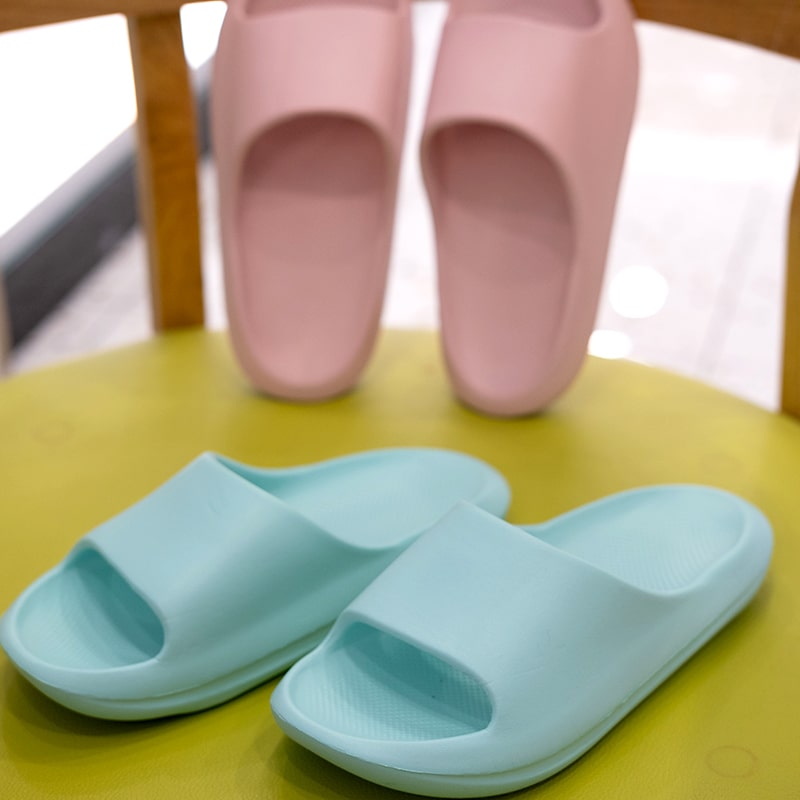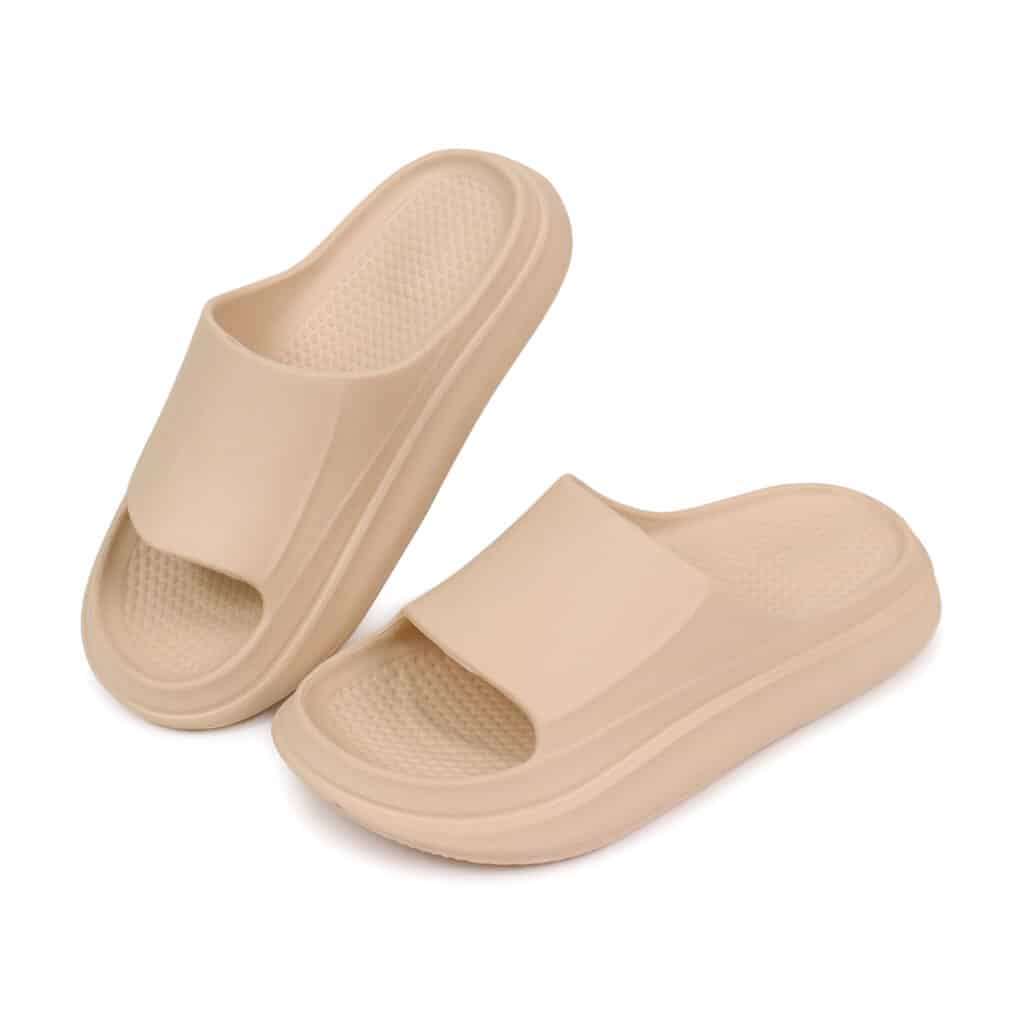
Public bathhouses, spas, gyms and hotel changing rooms all solve the same problem the same way: a rack of slippers by the door, worn by whoever walks in next. The floor gets washed between guests. The slippers usually do not. For operators this is a supply and protocol question, and for guests it is one of the very few pieces of shared equipment that touches bare skin directly and is almost never inspected.
Sharing slippers at a public bathhouse is not automatically unhygienic, but the shared pair is usually the weakest link in an otherwise well-run wet area. A pair that stays damp, is worn against bare skin and gets skipped by the cleaning schedule can carry live dermatophytes and yeast from one guest to the next, while a pair that is rotated, washed and fully dried between users carries very little.
This guide separates what the microbiology actually shows from what habit assumes, then turns both into specifications a buyer can act on.
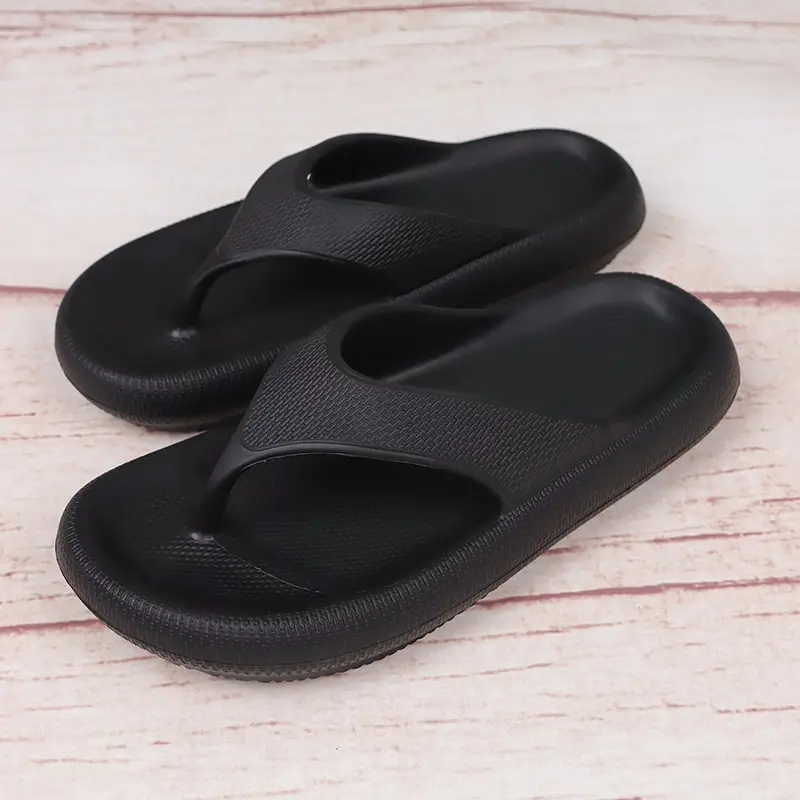
What Actually Lives on a Shared Pair of Slippers?
A shared pair is a better microbial reservoir than the floor it is meant to protect you from, because it is porous, warm, worn against skin and rarely part of the floor-cleaning routine. The clearest evidence comes from a mycological survey of two public hammams in Bolu, Turkey, where researchers took 209 samples from floors, tools and surfaces. Dermatophytes and yeasts were recovered from the slippers, including Trichophyton rubrum, Trichophyton mentagrophytes, Epidermophyton floccosum and two Candida species. The marble floors of the bathing halls, the central massage platforms and the towels produced no fungal growth at all. The authors concluded that frequent cleaning and high surface temperatures kept the building itself low-risk, but that shared tools such as slippers were an important source of contamination.
The floor is washed dozens of times a day and dries fast; the slipper sits in a locker, still damp, holding a film of sweat and shed keratin.
Fungi are not the only passengers. Human papillomavirus, which causes plantar warts, survives on damp flooring and shared footwear, a route that public health guidance on verrucas treats as common. Opportunistic bacteria such as Staphylococcus aureus settle in the same film and enter through a cracked heel or a softened toe web.
Why Slipper Surfaces Hold More Than Floors
Three material properties explain the difference. First, structure: foamed midsoles are frequently open-cell, so water enters the wall of the material rather than sitting on top of it. Second, contact geometry: the footbed presses against the arch and heel, trapping moisture exactly where skin is thickest and most easily macerated. Third, geometry of cleaning: tread grooves, strap anchors and debossed logos create channels that a mop or a spray never reaches.
Does Exposure Always Mean Infection?
No. Exposure in a public bathhouse is routine and infection is comparatively rare, because transmission requires four conditions to line up at once, and most visits satisfy only one or two of them.
Those conditions, in order of how often they decide the outcome:
- A viable load on the surface, which depends on how recently an infected guest wore the pair and how the pair was stored afterwards.
- A breach in the barrier, most often macerated skin after a long soak, a cracked heel or a fissure between the fourth and fifth toes.
- Contact time and pressure, which is why a slipper worn for twenty minutes transfers more than a bench touched for two seconds.
- Host susceptibility, including diabetes, poor peripheral circulation, immunosuppression and a history of previous fungal infection.
The Centers for Disease Control and Prevention lists public showers and locker rooms used without protective footwear as a risk factor for ringworm, alongside tight shoes, excessive sweating and shared towels, and notes that people with weakened immune systems develop severe forms more often.
One practical point is often missed: a guest with an active infection sheds far more than a healthy carrier, so the risk profile of a slipper rack depends on the behaviour of the few.
Where the Real Risk Sits: Slippers, Floors or Benches?
Floors and benches carry comparable or higher risk than slippers, which makes barefoot bathing a false economy rather than a safe alternative. The intuition that avoiding the shared pair avoids the problem ignores what the pair was standing on.
| Surface | What it typically carries | Relative risk | Why |
| Wet tile near drains and shower plinths | Dermatophytes, HPV, biofilm | High | Constant moisture, high traffic, intermittent cleaning |
| Wooden or stone benches | Fungal spores, skin scales | Medium to high | Bare skin contact, rarely dried between users |
| Shared foam slippers | Dermatophytes, yeast, bacteria | High when damp | Porous, occlusive, often outside the cleaning schedule |
| Shared towels and mats | Fungi, bacteria | Medium | Absorbent, stored damp |
| Your own slippers, dried daily | Minimal | Low | Known user, controlled drying |
The Barefoot Assumption
The common failure is a binary choice between the facility’s slippers and no footwear at all. Neither is a control measure. What actually reduces exposure is a pair that belongs to one person, drains and dries quickly, and grips a wet surface, which is the functional definition of bathroom slippers as opposed to house slippers worn into a shower.
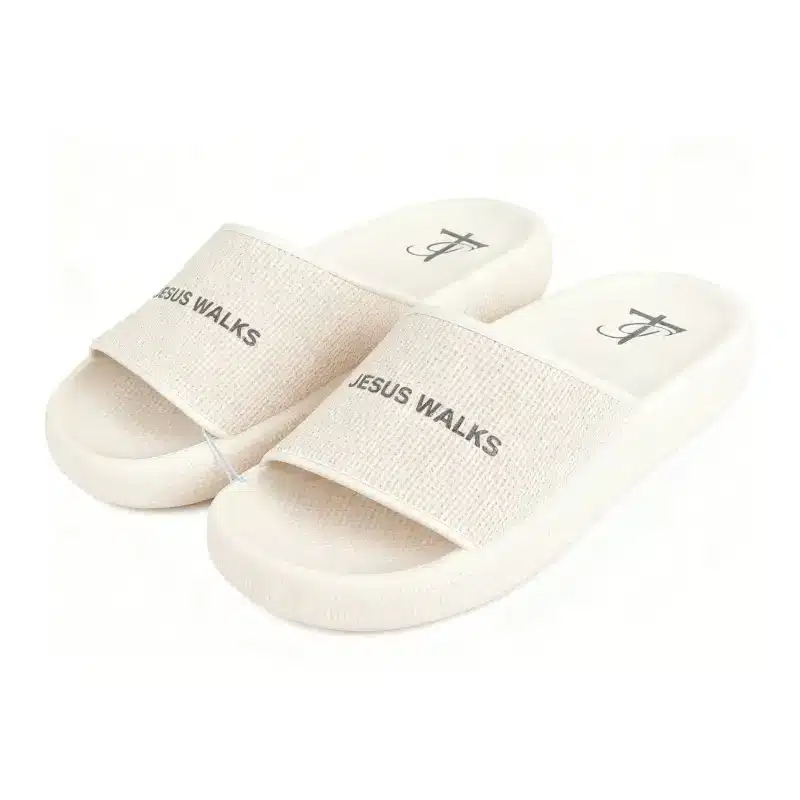
Why Do People Wear Slippers in Public Showers at All?
The first reason is grip, the second is a clean boundary and the third is comfort, and in that order. Wet tile plus soap plus a hot room produces a large number of falls, and reviews of sauna and spa injuries consistently find that slips and trips, not burns, account for most of them. A textured rubber or EVA outsole is a traction device before it is a hygiene product.
The boundary function comes second. A slipper marks where the wet zone ends, so that whatever the floor carries does not travel to the locker, the bench or the changing room carpet. Comfort is the visible reason and the least important: cold tile and standing queues make footwear pleasant, but neither justifies nor prevents an infection.
Shoes, Slippers and the Threshold
The threshold logic explains why people wear footwear of some kind into public showers rather than treating the space as a room. A shower hall is a threshold, and footwear that can be removed at the door expresses that. Outdoor shoes fail the job on every count: they track street soil inward, hold water, offer no drainage and become dangerously slick when soaked.
Why Do Japanese Bathhouses Use Slippers in the Bathroom?
Because Japanese spatial practice does not draw a single clean line; it draws several, and each threshold is marked with its own pair of footwear. The entrance step, the hallway, the tatami room, the toilet and the bathing hall are treated as zones with different cleanliness status, and moving between them means changing what is on your feet.
The toilet slipper is the clearest example. A dedicated pair sits inside the toilet door, is worn only there and is left there on the way out. The convention descends from a long-standing separation of clean and unclean space, reinforced by the practical fact that toilet floors stay wet in ways that hallway floors do not. In a ryokan or a public bath, the same logic produces guest slippers for corridors, no slippers on tatami, and bare feet in the bathing hall itself, where continuous washing and drainage do the work a slipper cannot.
The mistake visitors remember is walking back into the changing room still wearing the toilet pair. It is harmless in microbial terms and unambiguous as a signal: the system is about containing a zone, not about trusting a slipper. That distinction matters commercially, because it tells an operator what the product is for.
Is It Socially Acceptable to Wear Slippers in Public?
In wet shared facilities, slippers are the norm and bare feet are the exception; outside those spaces, the expectation reverses almost completely. Acceptability tracks whether a space is coded as wet and communal, not whether the footwear looks casual.
| Setting | Prevailing norm | Note |
| Bathhouse, spa, pool deck | Slippers expected | Barefoot in wet circulation areas reads as careless |
| Hotel room | Slippers provided | Often single-use, sometimes reusable |
| Gym changing room | Slippers or flip-flops common | Increasingly stated in house rules |
| Office, restaurant, shop | Not acceptable | Indoor or outdoor shoes |
| Beach promenade, street | Slides acceptable | Context-dependent, never in wet areas |
Regional practice varies in emphasis, not principle. Japanese and Korean facilities build slipper use into the architecture. Turkish hammams and Finnish saunas pair slip-resistant footwear in circulation areas with bare feet on heated stone, reasoning that the hot surface is self-cleaning. Russian banyas lean barefoot inside the steam room and shod outside it. Western gyms increasingly state the rule on signage, the simplest way to make a norm enforceable.
How to Protect Your Feet in Public Showers
Bring your own pair, keep them dry and clean them the same day, because the failure mode is almost always a damp pair stored in a bag. Seven habits cover most of the exposure a guest can control, and the order matters, because most risk sits in the transitions.
- Choose closed-cell, quick-drying footwear with a textured outsole, not a flat fashion slide.
- Wear them from the moment you enter the wet zone, including the walk to the shower and the bench.
- Never walk barefoot between the shower and the locker, even for a few steps.
- Dry the feet thoroughly afterwards, spending most of the time between the toes rather than on the soles.
- Rinse and air-dry your slippers before they go back into a bag, and never store them wet.
- Keep towels, nail clippers and socks personal, since they carry the same organisms.
- Cover any cut or cracked heel before entering, and treat early itching or scaling rather than waiting.
If You Have to Use the Facility’s Pair
Inspect before wearing: a cold, dry, rigid pair beats a warm, soft, faintly damp one. Wipe the footbed if a disinfectant wipe is available, and treat socks as partial protection at best, because thin cotton wicks moisture and holds it against the skin. Afterwards, wash and dry the feet and your own socks, and watch the toe webs for a week. Persistent odour is often the first visible signal that a pair has been holding moisture, and the measures that fix smell also cut microbial load, as covered in this guide to getting odour out of slippers.
What Bathhouse and Spa Operators Should Specify
Risk is decided by three procurement decisions, not by the price of the pair: whether the material can be disinfected, whether rotation is actually enforced, and whether there is drying capacity between users. A specification that ignores the third point fails regardless of the first two, because a wet slipper returned to a rack is a culture plate with a logo on it.
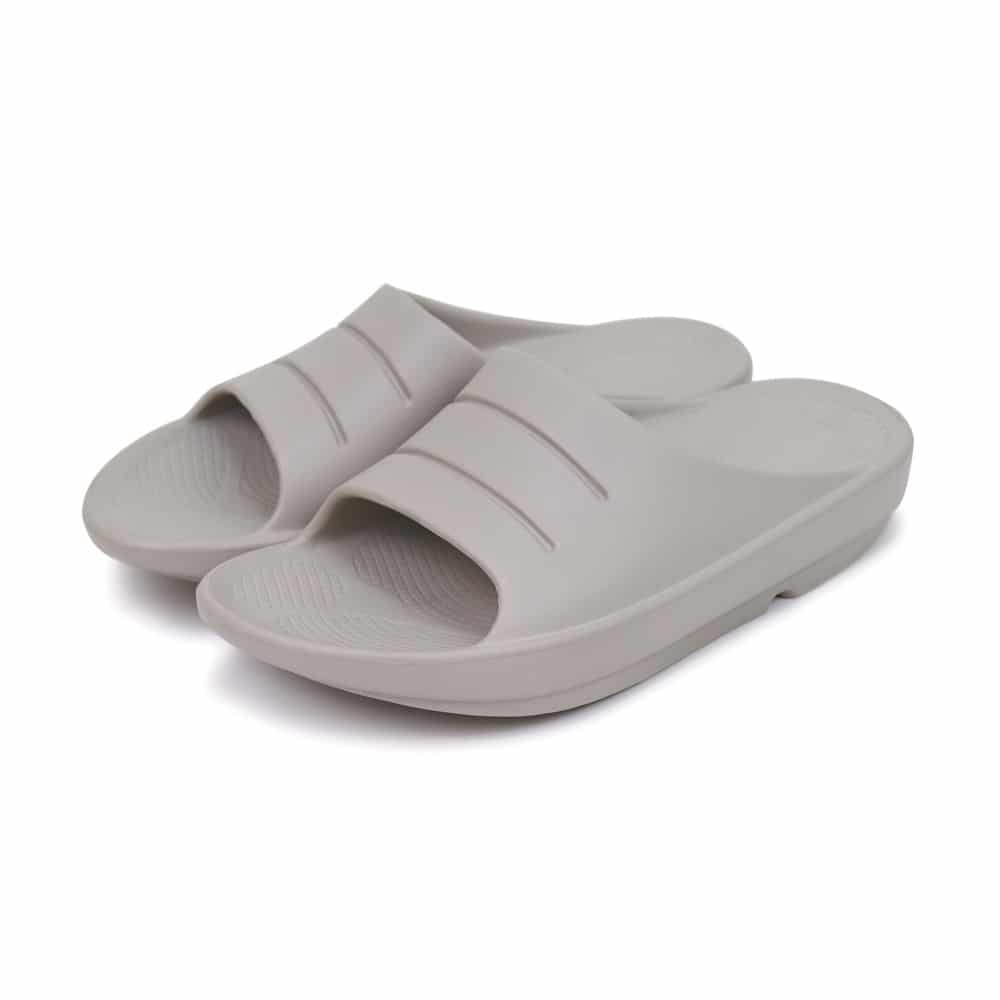
| Material | Disinfectability | Drying speed | Best use |
| Closed-cell EVA | High, tolerant of chlorine and heat | Fast | High-traffic wet areas, reusable programmes |
| PVC | High, but heavier and less flexible | Medium | Budget reusable stock |
| Natural rubber | High, good wet grip | Medium | Shower and pool decks |
| Fabric or terry upper | Low, holds moisture in the pile | Slow | Dry indoor zones only |
| Non-woven disposable | Single use, no disinfection needed | Not applicable | Guest rooms, low-grip-risk areas |
Specification details that decide outcomes include a closed-cell footbed, drainage channels that do not trap water, tread depth adequate for wet tile, heat tolerance for hot-water immersion, and a size run wide enough that no guest is forced into a pair that slips off mid-step. Anti-slip construction built for wet rooms is worth more than a decorative upper, which is why bathroom anti-slip slippers are specified as a separate line from general house footwear.
On protocol, the CDC notes that diluted chlorine bleach and strong detergents kill the fungus that causes ringworm, and immersion above 60 degrees Celsius achieves the same on heat-tolerant material. Ultraviolet cabinets help on exposed surfaces but are limited by shadowing inside the footbed, so they supplement washing rather than replace it. Drying capacity, enforced one-guest-one-pair rotation and a documented cleaning log do more than any device. Buyers sourcing at volume can benchmark a slippers manufacturer against these criteria rather than unit price.
FAQ
Three questions come up after the protocol is agreed, and each one changes a different part of the specification.
Do socks inside shared slippers stop transmission?
Only partly, and thin cotton is the worst option because it wicks moisture and holds it against the skin. A waterproof sock or a barrier layer performs better. Socks reduce direct skin contact but do not eliminate the damp environment that keeps organisms viable.
Can reusable slippers be disinfected at home after a visit?
Yes, on heat-tolerant material: wash with detergent, then either immerse in hot water above 60 degrees Celsius or use a diluted chlorine solution according to the label, and dry completely, preferably in direct sun. The step that is usually skipped is drying, and a pair that goes back into a gym bag still damp undoes the rest.
Are disposable slippers automatically the safer choice for guests?
No. They remove cross-contamination but often add a slip hazard, since thin non-woven soles offer little grip on wet tile and tear when soaked. For a bathhouse floor, a reusable closed-cell pair with a real tread and a documented rotation is usually the lower-risk option; disposables suit dry guest rooms better than wet circulation areas.