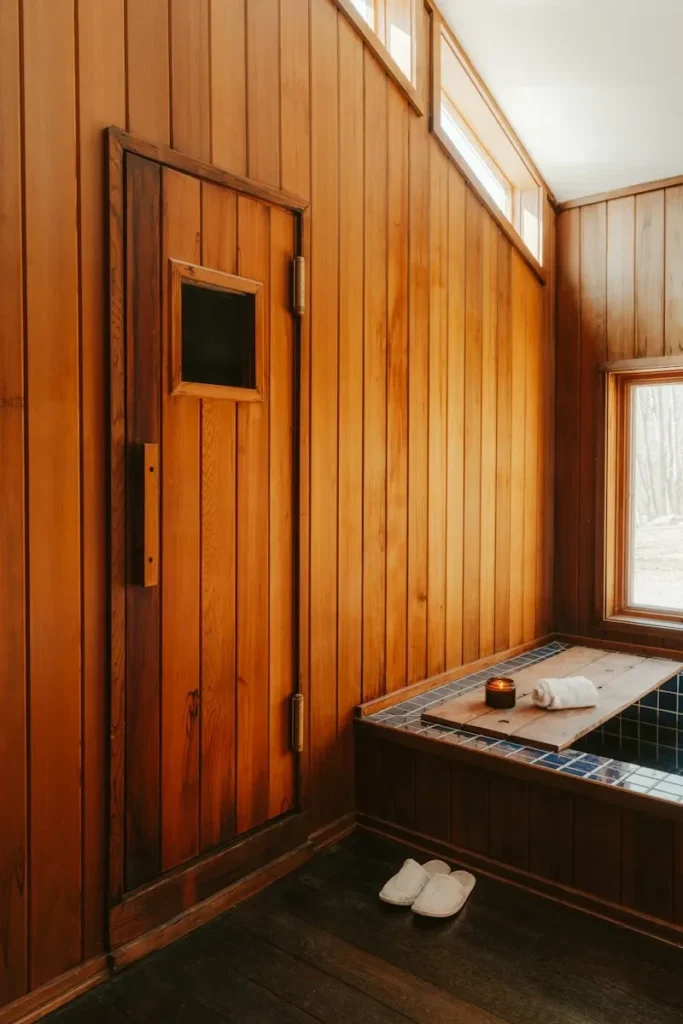
Spas and wellness centers occupy a unique position in hospitality. Guests arrive expecting relaxation, cleanliness, and attention to detail from the moment they leave the locker room, and footwear plays a surprisingly large role in that first impression. Visitors spend most of their stay in slippers, walking between treatment rooms, wet areas, and lounges, which means every pair you provide must deliver comfort on hard floors, traction on wet tile, and visible hygiene, all while quietly reinforcing the polished atmosphere your brand has built.
The best slippers for spas and wellness centers combine five qualities: zone-matched materials suited to wet and dry areas, non-slip soles for guest safety, supportive footbeds for lasting comfort, a reusable or disposable hygiene model that fits your operations, and customization options that carry your brand. Choosing well means weighing these factors against guest volume, laundry capacity, and budget instead of defaulting to the cheapest pair on a supplier list.
The sections below break down each factor in turn so you can build a shortlist and brief a supplier with confidence.
Why Spa Slippers Matter for Guest Experience
Guests judge a spa by the details they can touch, and slippers are the one amenity every visitor handles, wears, and remembers. A pair that is soft, stable, and spotless raises perceived value immediately, while a thin, slippery, or worn-out pair quietly undermines even excellent treatments.
Consider how often this touchpoint repeats. A guest on a half-day package may wear your slippers for three or four hours, through changing, treatments, steam sessions, and relaxation time. Online reviews of spas and resorts frequently mention the comfort and cleanliness of provided footwear, because it is experienced directly rather than merely observed. Staff footwear matters too, since therapists on their feet all day need the same cushioning and grip your guests do. That is why experienced operators treat slippers as a procurement decision, not an afterthought, and typically source them from a dedicated slippers manufacturer rather than a general amenity supplier, where material consistency and repeat quality can be verified.
Match Slippers to Each Spa Zone
No single slipper suits every area of a wellness facility. The right approach is to map your floor plan first, then specify footwear by zone, because the demands of a pool deck and a massage room are almost opposites.
Start with a simple audit of where guests walk and what conditions their feet encounter:
| Zone | Conditions | What to prioritize |
| Pool decks, showers, steam rooms | Constant moisture, slick tile | Waterproof EVA or rubber soles, deep tread, quick-drying uppers |
| Saunas and heat rooms | High temperature and humidity | Heat-tolerant closed-cell foam, minimal fabric |
| Treatment and massage rooms | Dry floors, quiet ambiance | Soft cushioned soles, noise-dampening construction, plush uppers |
| Locker rooms and lounges | Mixed moisture, extended wear | Terry or waffle fabric, machine washable, moderate grip |
Style follows function. Open-toe designs and slides suit pedicures and foot treatments where therapists need access, while closed-toe, closed-heel styles give better protection and warmth in corridors and colder lounges. Backless mules are convenient for guests slipping footwear on and off, but a snug heel strap or enclosed back is safer on stairs, which many multi-floor spa facilities have.
Choosing the Right Materials
Material is the single biggest driver of comfort, safety, and lifespan in spa slippers. Terry cloth and waffle weave dominate dry areas, EVA and molded foams own the wet zones, and nonwoven fabrics serve single-use amenity programs.
Terry Cloth and Waffle Weave
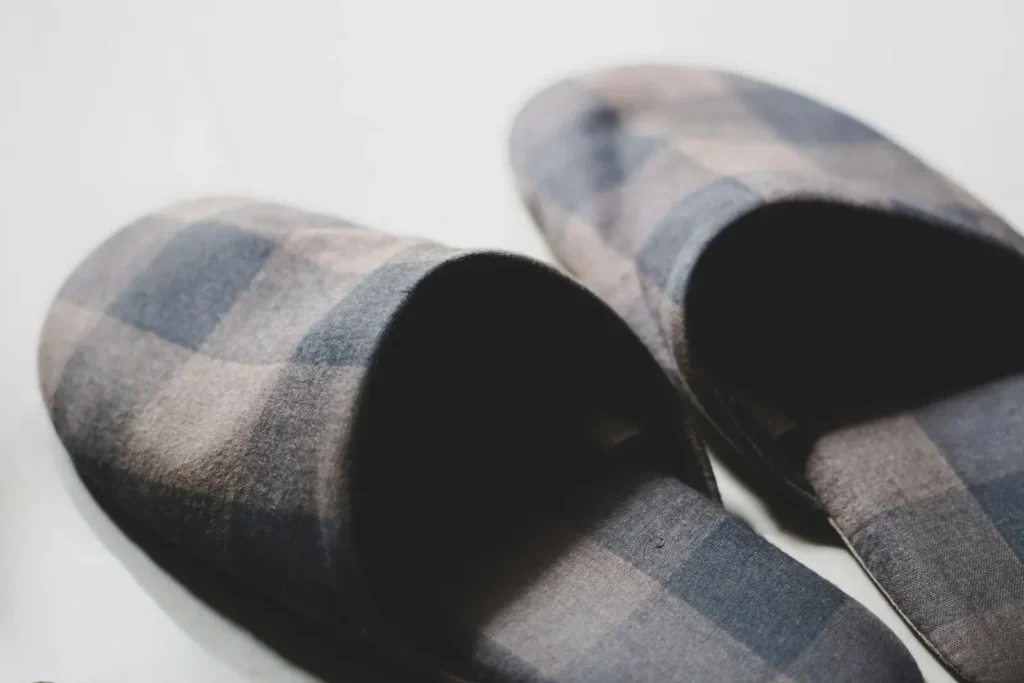
Terry cloth is the classic spa choice: a cotton loop pile that feels soft against skin, absorbs moisture quickly, and survives commercial laundering. Waffle weave offers a lighter, more breathable alternative that dries faster between guests, making it popular in humid climates and for locker room use. Both fabrics accept logo embroidery and screen printing well, which matters for branding.
EVA and Molded Foams
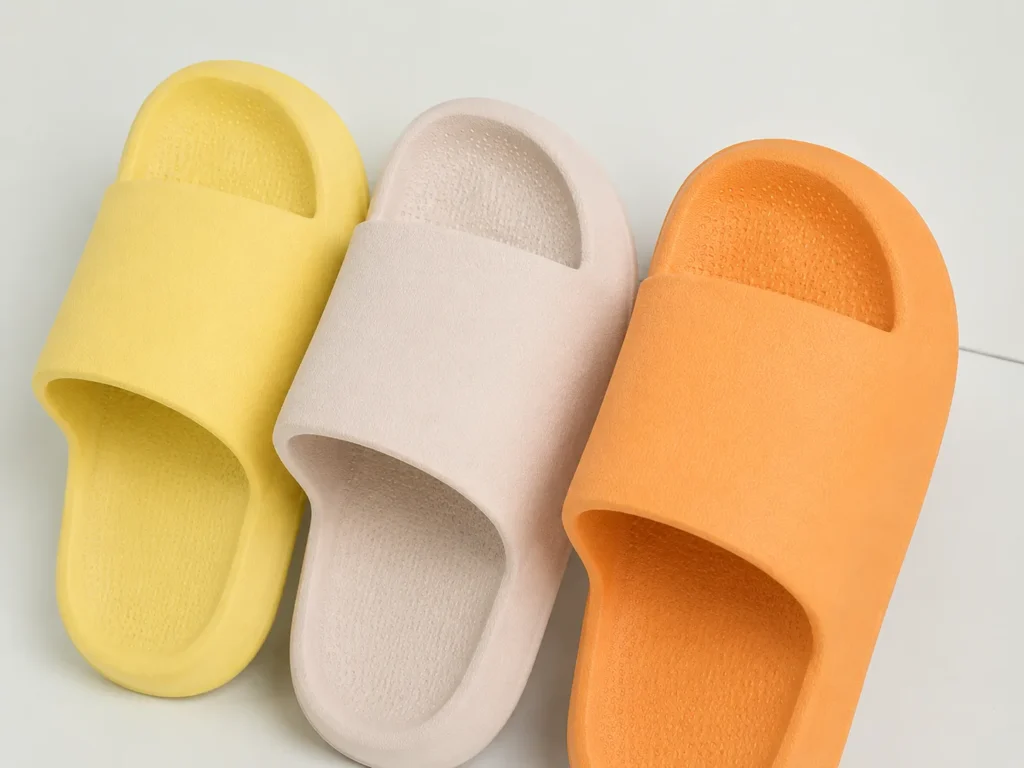
Ethylene vinyl acetate, known as EVA, is a closed-cell foam prized in footwear for being lightweight, waterproof, flexible, and shock-absorbing. Molded EVA slippers shrug off pool water, resist bacteria growth better than absorbent fabrics, and can be rinsed and dried in minutes, which is why they are the default choice for wet areas, saunas, and high-traffic facilities.
Nonwoven and Disposable Options
Nonwoven polypropylene slippers are inexpensive, individually wrappable, and eliminated after a single guest, removing laundry from the equation entirely. They trade durability for hygiene certainty, which suits medical spas, clinics, and facilities with unpredictable turnover.
| Material | Comfort | Durability | Best use |
| Terry cloth | Soft, absorbent | Good, washable | Lounges, relaxation areas |
| Waffle weave | Light, breathable | Good, fast drying | Locker rooms, warm climates |
| EVA foam | Firm, cushioned | Very high | Pool decks, saunas, wet zones |
| Nonwoven | Basic | Single use | Disposable amenity programs |
Comfort and Support: What Podiatrists Recommend
Podiatrists consistently recommend slippers with a contoured arch, a deep or enclosed heel cup, a sole that bends only at the ball of the foot, and cushioning firm enough to keep its shape. The same standards you would apply to a walking shoe apply to footwear guests wear for hours on hard floors.
This question of what foot specialists look for matters more in a spa than most managers realize. Wellness clientele skew toward longer visits, older guests, and people already managing conditions such as plantar fasciitis or flat feet, and thin flat slippers offer those feet no help. Footwear carrying recognition from the American Podiatric Medical Association must demonstrate features the association evaluates for foot health, which is a useful shortcut when comparing suppliers. For support and comfort together, look for a molded footbed with visible arch contour, a heel that holds the foot rather than letting it slap the ground with each step, and midsole foam that resists compression. Ultra-soft marshmallow cushioning feels luxurious for five minutes, then collapses under body weight and leaves arches unsupported for the rest of the visit.
Breathability rounds out the health picture. Slippers with moisture-wicking or open construction keep skin drier during long treatments, and dry skin is far less hospitable to the fungal and bacterial organisms that linger in shared bath environments. For guests with circulation concerns or diabetes, a roomy closed-toe design without pressure seams is the healthier choice over narrow straps.
Safety and Slip Resistance
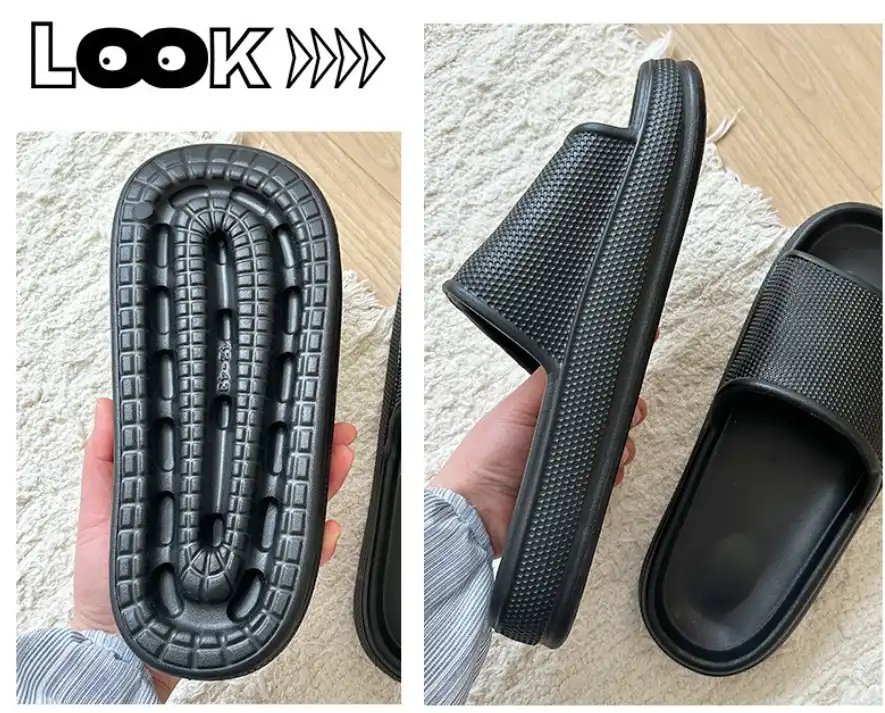
Wet flooring is the primary fall hazard in any spa, so slip resistance should be treated as a non-negotiable specification, not a marketing bonus. The safest spa slippers pair a textured rubber or EVA outsole with a tread pattern that channels water away under the foot.
Evaluating grip before you buy is straightforward. Ask suppliers for samples and test them on wet tile or a damp stainless surface, tilting gradually to see where the sole loses traction. Deep, multi-directional tread grooves outperform flat or lightly embossed soles, and molded bathroom anti-slip slippers built for wet environments demonstrate the tread geometry worth asking about. Also consider liability from the other direction: guests who find provided slippers unsafe will simply walk barefoot, transferring your risk from footwear to bare skin on tile. Comfortable, grippy slippers are not only an amenity but an active part of your safety management, alongside mats, signage, and floor maintenance.
Remember that grip is also a maintenance item, not just a purchase specification. Tread grooves collect residue from the oils and lotions common in spa environments, and smoothed soles lose their water-channeling action long before the uppers look damaged. Build sole inspection into your replacement cycle rather than judging retirement by fabric appearance alone.
Hygiene and Lifecycle: Reusable or Disposable?
Both models can be hygienic when managed correctly: reusable slippers work if you operate a real laundering and inspection program, and disposable slippers work if volume justifies their ongoing cost. The wrong choice is reusable footwear without the washing discipline to back it.
Do Spas Reuse Slippers?
Yes, many full-service spas and hotel wellness centers do reuse fabric and EVA slippers, but only within a controlled cycle: collection after each guest, washing at high temperature, complete drying, and inspection before re-issue. The health logic behind that discipline is well documented. The Centers for Disease Control and Prevention notes that the fungi responsible for athlete’s foot thrive in warm, dark, moist environments such as communal bath areas, and recommends keeping feet clean and dry and using protective footwear in shared wet spaces. Your slippers are exactly that protective layer, provided they do not themselves become a vector.
| Model | Upfront cost | Ongoing cost | Best fit |
| Reusable terry or waffle | Higher | Laundry labor and utilities | Full-service spas with in-house laundry |
| Reusable EVA | Moderate | Rinse, dry, inspect cycles | Pools, saunas, high-traffic wet zones |
| Disposable nonwoven | Low per pair | Continuous repurchase | Medical spas, clinics, high turnover |
Whichever model you choose, set a replacement calendar. Fabric slippers flatten and fray after dozens of wash cycles, and EVA footbeds compress long before the upper looks worn.
Branding, Customization, and Sustainability
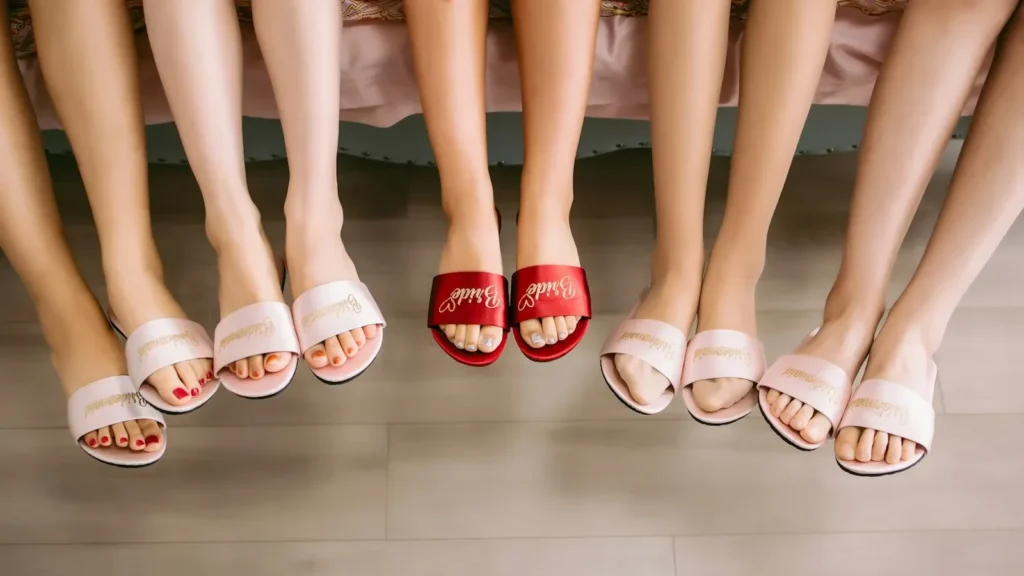
Customization turns a hygiene item into a marketing asset. Logo printing, brand colors, and individual packaging keep your identity in front of guests for the length of their visit, and increasingly, eco-certified materials do the same for the values-minded segment of your clientele.
Practical options include embroidered or heat-transfer logos on terry straps, debossed marks on molded EVA, and Pantone-matched colors across sizes. Individual wrapping, whether paper sleeves or reusable pouches, also signals freshness at handout and doubles as a small branding surface. Sustainability is now part of the same conversation rather than a premium extra. Guests notice single-use plastic waste, and facilities that switch to recycled foams, biodegradable nonwovens, or washable programs that cut disposal volume can communicate that credibly. Facilities planning a green transition often start by reviewing an eco-friendly EVA slippers guide to compare recycled content, certifications, and compliance documentation before committing to a bulk order.
Sizing, Budgeting, and Bulk Buying Strategy
Buy sizes and quantities from actual guest data, not guesswork. Most facilities settle on a unisex one-size range covering the middle of the distribution, add a smaller and larger size for the tails, and budget on total cost per guest visit rather than price per pair.
One-size-fits-all slippers simplify inventory but fit poorly at the extremes, and oversizing is itself a tripping hazard. A common compromise is a three-tier size set with adjustable or open designs that tolerate width variation. On cost, calculate the full lifecycle: a washable pair costing several times a disposable one may still be cheaper after thirty guest cycles once laundry costs are included, while disposables eliminate labor and equipment entirely. When you are ready to compare suppliers on minimum order quantities, sampling policies, lead times, and per-unit pricing tiers, sourcing dedicated wholesale spa slippers from a manufacturer with hospitality experience shortens that evaluation considerably. Request physical samples of every material and size before signing, since tactile quality is impossible to judge from a catalog page.
Frequently Asked Questions
Can guests take spa slippers home?
With disposable slippers, yes, and many properties encourage it, since the pair travels as a branded reminder of the visit. With reusable premium slippers, most spas collect them at checkout and some sell retail versions at reception instead, preserving amenity stock while still capturing the gift purchase.
How should spa slippers be stored and dispensed?
Store clean stock in a closed, dry cabinet away from wet-area humidity, and keep new pairs sealed or individually wrapped until handout. Dispense at check-in or locker assignment rather than from open baskets, and provide a clearly marked collection bin at checkout so worn pairs never re-enter clean inventory. A first-in, first-out rotation keeps older stock moving forward so no pair sits in storage past its hygiene window.
What is a typical lead time for custom spa slipper orders?
Customized production generally runs four to eight weeks from approved sample to delivery, depending on decoration method, order volume, and shipping mode. Logo embroidery and stock colors ship fastest, while Pantone-matched dyeing, custom molds, or packaging add time, so order well ahead of seasonal openings and holiday peaks.