A pair of slippers is one of the first things a guest touches when settling into a treatment room, changing into a robe, or stepping from a steam room onto tile. For spa operators, hotel amenity buyers, and wellness facility managers, this small touchpoint carries an outsized weight: it signals cleanliness, shapes perceived quality, and quietly drives annual procurement budgets. The central decision nearly every buyer faces is whether to issue a fresh disposable pair to each guest or invest in reusable slippers that are collected, laundered, and redeployed.
For most operations, the right choice depends on positioning and laundry capability rather than price alone. Choose disposable spa slippers when turnover is high, laundry capacity is limited, and a sealed single-guest pair is the clearest hygiene signal. Choose reusable spa slippers when the property can support a documented washing program, wants a more premium underfoot experience, and needs lower cost per guest and less waste over time. Many operators run both formats side by side in a hybrid program, and wholesale spa slippers collections built for commercial use cover every combination.
The comparison below walks through materials, hygiene, cost, comfort, sustainability, and operational fit so you can match the format to your facility with confidence.
What Are Disposable and Reusable Spa Slippers?
Disposable and reusable spa slippers are two distinct product categories defined by their materials, construction, and intended service life. A disposable pair is a lightweight, individually sealed slipper issued once and retired with the guest, while a reusable pair is a fabric or molded slipper engineered to survive 30 to 50 commercial wash cycles before replacement.
The distinction matters because the two categories cannot be swapped freely. An individually packaged slipper is not automatically disposable, and a machine-washable label does not automatically qualify a slipper for commercial redeployment. Confirm the designation of the exact option being ordered.
Disposable Spa Slippers
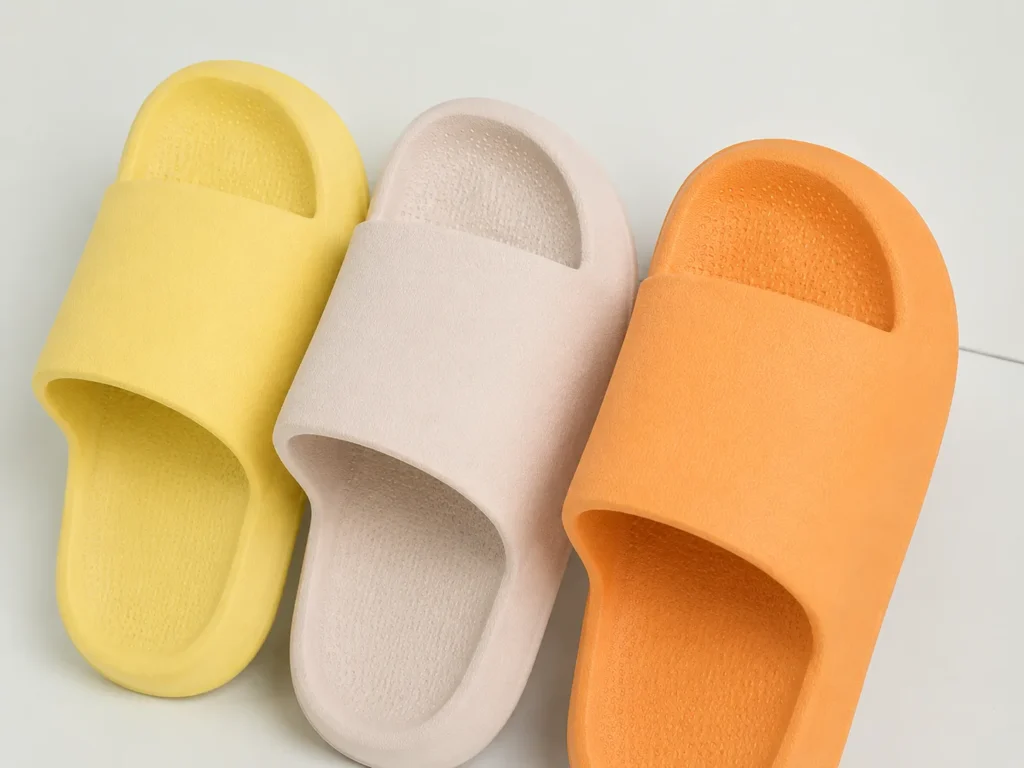
Most disposable pairs combine a thin EVA foam sole with a non-woven polypropylene or coral fleece upper. They ship flat and compact, arrive sealed in individual bags, and require no laundering at all. Guests typically use them for a single visit and either leave them behind or take them home. The construction is deliberately minimal, which keeps unit cost low and makes the format practical to issue at high volume.
Reusable Spa Slippers
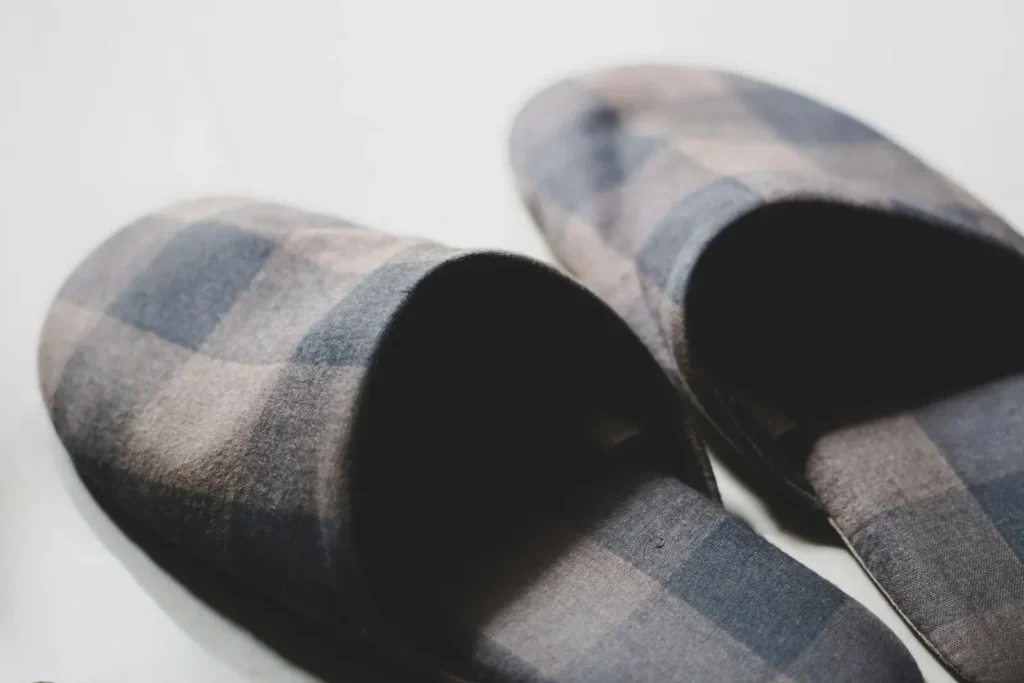
Reusable spa slippers use terry cotton loop, waffle weave, or washable molded EVA in a stitched construction with a cushioned, non-slip outsole. They are produced in defined sizes rather than a single universal fit, hold their shape through repeated laundering, and are processed exactly like bath linen: collected after each guest, washed at high temperature, dried, inspected, and returned to circulation.
| Format | Typical construction and service model |
| Disposable | EVA foam sole, non-woven upper, sealed in individual packaging, one guest per pair |
| Reusable | Terry cotton or waffle upper, cushioned non-slip sole, laundered between guests |
Do Spas Reuse Slippers?
Yes, spas reuse slippers, but only reusable formats and only inside a controlled laundering workflow. Terry cotton and waffle slippers are collected after each guest, machine washed at 60 degrees Celsius or higher with commercial detergent, dried, inspected, and stored in a clean area before reissue. Disposable EVA and non-woven pairs are never reused between guests, because their materials cannot survive commercial laundering.
Industry hygiene guidance is consistent on this point: any slipper that touches a client’s skin must be changed before the next client is admitted, and items used by one client must never pass to another without laundering, a standard set out in the health and hygiene guidelines published by the New Zealand Association of Registered Beauty Therapists. Facilities that cannot guarantee this cycle, such as high-turnover day spas with stretched housekeeping teams, are usually better served by disposables.
The same logic answers the related question of whether hotels reuse hotel slippers. Hotels reuse only the washable terry and waffle formats found in suites, club floors, and spa areas, and only where an in-house or supervised commercial laundry can process them on a defined schedule. Operators introducing a reuse program for the first time should start by reviewing how to wash slippers correctly, since water temperature, detergent, drying method, and inspection standards together determine whether a reusable pair stays guest-ready through its full service life.
Reusable vs. Disposable Spa Slippers: Full Comparison
Across the seven factors that matter most to buyers, the two formats trade places: disposables win on simplicity and upfront price, while reusables win on cost per guest, comfort, waste volume, and branding potential. Neither format is objectively better; each fits a different operating model.
| Factor | Disposable spa slippers | Reusable spa slippers |
| Unit price | Low | Higher |
| Cost per guest served | High at volume | Low across the wash life |
| Service life | One guest | 30 to 50 wash cycles |
| Hygiene model | Sealed bag, single use | Laundering protocol |
| Comfort | Thin, flat cushioning | Structured, cushioned support |
| Annual waste volume | Thousands of pairs | Hundreds of pairs |
| Branding options | Minimal | Embroidery, logos, custom packaging |
Two practical notes sit behind the table. First, laundry dependency is the hidden cost of the reusable column: every wash cycle consumes labor, water, electricity, and detergent, and a facility without commercial laundry equipment should treat that gap as a real barrier. Second, guest perception is not symmetrical. A disposable pair reads as standard practice in an economy setting and as a cost cut in a luxury one, while a well-made reusable pair reads as intentional design in almost any setting.
Cost Analysis: Price Per Pair vs. Price Per Use
On price per pair, disposables are far cheaper. On price per use, reusables usually win: a washable pair that survives 40 cycles delivers each guest service at a small fraction of its purchase cost, while a disposable pair is fully consumed by every arrival. The correct comparison is total annual spend, not the number on the quotation.
Consider a day spa that receives 60 guests per day and issues a fresh pair to each. That is more than 15,000 pairs per year, all consumed and discarded. A reusable program covering the same guest count needs only a few hundred pairs plus the laundry, labor, and replacement costs of washing them, and well-run programs at this scale typically recover their higher purchase investment within 12 to 18 months of operation. The larger the guest volume and the longer the operating season, the faster the reusable math closes the gap.
Do Hotels Charge for Disposable Slippers?
Most full-service hotels and spas do not charge separately for disposable slippers; the cost is absorbed into the room rate or treatment price as a standard amenity. Budget properties, hostels, and some resort spas do sell pairs at the front desk or in the retail area. Luxury spas increasingly treat slippers as a retail product in their own right, where markups on comfortable, attractive pairs can turn an amenity line into a genuine revenue stream, and a branded reusable pair is the far stronger retail product.
Hygiene, Comfort, and Guest Experience
Both formats can deliver a hygienic and comfortable guest experience when matched to the right workflow. The disposable format achieves hygiene through sealing and retirement, the reusable format achieves it through laundering discipline, and comfort favors reusables in nearly every measurable dimension.
Hygiene Protocols for Shared Environments
A sealed polybag is a visible hygiene signal that many guests value, particularly in medical spas, clinics, and high-turnover properties where travelers want proof no previous occupant has touched the item. A laundered reusable pair is not inherently less hygienic: cotton and waffle slippers wash at the same 60 to 90 degree Celsius temperatures used for bath towels and sheets, so any facility already running commercial laundry for linens has the necessary equipment. What disposables remove is process risk, because no washing, drying, inspection, or clean-storage step can be skipped or rushed when the pair is simply retired.
Foot Health and Comfort
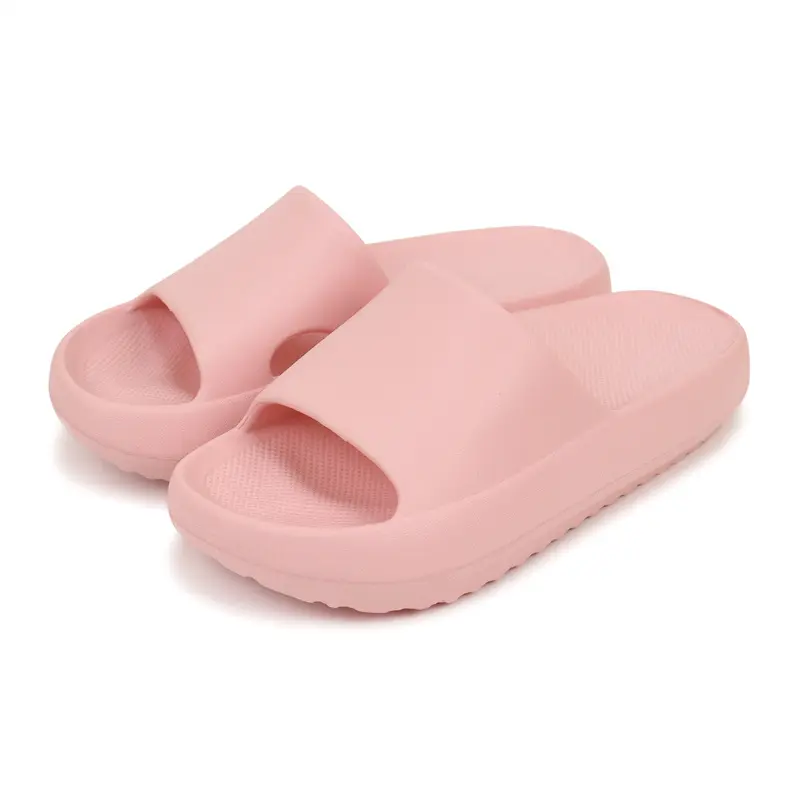
The American Podiatric Medical Association emphasizes that supportive footwear matters whenever people spend extended time on hard surfaces, and indoor footwear is no exception. A thin disposable slipper with a flat foam sole offers no arch contour and almost no shock absorption, and guests who wear one through a long spa afternoon on hard flooring experience the same unsupported mechanics that strain the plantar fascia at home. Reusable slippers are structurally closer to what foot health professionals recommend: the cushioned sole, defined sizing, and stitched construction hold their shape under repeated use, and the thicker outsole provides genuine grip on wet tile, which is also a slip-and-fall safety consideration for operators.
Environmental Impact and Sustainability
Reusable spa slippers generate dramatically less waste over their service life, with one laundered pair replacing 30 to 50 manufactured, packaged, shipped, and discarded disposables. For facilities tracking sustainability targets, the switch is one of the simplest waste reductions available in the amenity budget.
A 200-room hotel at high occupancy discards more than 50,000 disposable pairs per year, most of them non-woven polypropylene or EVA that municipal recycling streams reject because the materials are light, mixed, and contaminated after use. Regulation is moving in the same direction: the European Commission’s single-use plastics framework has already restricted a range of single-use plastic products across the EU, and buyers increasingly factor ESG reporting and green certification goals into amenity specifications. Reusables are not impact-free, since washing consumes water, electricity, and detergent, but the honest comparison of one laundered pair against dozens of manufactured and discarded ones favors the reusable side comfortably. Facilities that must remain disposable can specify biodegradable or recycled-content materials to soften the footprint.
What Type of Slippers Should You Buy?
Buy disposables if your facility has high turnover, limited laundry capability, and a budget-driven amenity model. Buy reusables if you operate a premium, wellness-focused property with reliable laundry and want better comfort, lower waste, and stronger branding. If neither description fits exactly, run a hybrid program and assign each format to the guest segment where it performs best.
When Disposable Slippers Make Sense
Budget hotels, economy chains, airport properties, motels, medical and clinical lodging, and high-volume day spas benefit most from disposables. Turnover is fast, guests often stay a single visit, the sealed wrap provides the hygiene proof those guests expect, and procurement scales up or down with seasonal demand without any laundry dependency.
When Reusable Slippers Make Sense
Luxury hotels, boutique properties, destination spas, resorts, wellness centers, and extended-stay properties get the most from reusables. The slipper feels like part of the room design rather than a wrapped afterthought, embroidery and logo options build brand equity, and guests who keep a comfortable branded pair continue advertising the property after checkout. Washable molded EVA designs also serve pool decks and wet spa areas where fabric pairs are impractical.
Hybrid Programs and a Sourcing Checklist
A practical middle path places disposables in standard rooms and reusables in suites, club floors, spa treatment areas, and long-stay units, capturing cost discipline where guests notice least and comfort where it counts most. Before ordering either format, confirm the supplier’s designation of disposable versus reusable for the exact option, the packaging format, whether one-size-fits-most coverage is acceptable or multiple sizes are needed, the case pack and storage footprint, and minimum order quantities. Requesting pre-production samples and working with an established slippers manufacturer that documents material composition and wash testing prevents most specification errors. For premium placements, review the features that separate high-end hotel bathroom slippers from commodity pairs before finalizing the order.
Frequently Asked Questions
These answers address the follow-up questions buyers most often ask after comparing the two formats, covering take-home policy, wash longevity, and end-of-life disposal for spa slippers.
Can guests take spa slippers home?
Disposable pairs are designed as take-home items and guests are generally welcome to keep them. Reusable pairs are usually retained as property assets and laundered for the next guest, though some luxury properties gift a branded reusable pair at checkout as a deliberate marketing gesture.
How many wash cycles do reusable spa slippers survive?
Most commercial terry and waffle pairs survive 30 to 50 wash cycles when laundered at the correct temperature and dried gently. Retire a pair as soon as cushioning flattens, fabric pills, the sole loses grip, or an odor persists after washing.
Can disposable spa slippers be recycled?
In practice, rarely. Non-woven polypropylene uppers and EVA soles are technically polymers, but they are light, mixed, and often contaminated after use, so most municipal programs reject them. Specifying biodegradable or recycled-content disposables reduces, though does not eliminate, the footprint.