Most people spend more time choosing their outdoor shoes than the slippers they wear for hours at home every single day. Yet indoor footwear plays a surprisingly important role in foot health, especially for anyone who stands on hard tile or wood floors for long periods, deals with plantar fasciitis, or simply wants their feet to feel good at the end of the day. The footbed, the part of the slipper your sole rests on, is the single most important component in that equation, and it is also where the most confusion happens. Shoppers are constantly forced to choose between two appealing but seemingly opposite promises: plush, pillow-soft cushioning on one side, and firm, structured support on the other. For buyers sourcing slippers for a brand, hotel line, or retail collection, understanding this trade-off is essential, because the footbed construction you select determines how your customers’ feet actually feel after weeks of wear, which is why it should be a central conversation with any slippers manufacturer before production begins.
The short answer: soft cushioning and firm support are not actually opposites, and the best slipper footbed combines both. Cushioning describes how the surface yields under pressure and absorbs impact, while support describes how the structure keeps your arch, heel, and alignment in a stable position. A well-designed footbed uses a modestly soft contact layer on top of a firmer, contoured base, delivering immediate comfort without letting your arch collapse. If you must lean one way, choose firmer support for all-day wear, existing foot pain, flat feet, or hard floors, and choose softer cushioning for short, casual wear and pressure-sensitive feet. The real mistake is not picking the wrong firmness level, it is buying a footbed that is uniformly soft with no structure at all.
Below, we break down what each term means, how different footbed constructions behave, and how to match a footbed to your foot type, your daily routine, and the floors in your home.
What Soft Cushioning and Firm Support Actually Mean
Cushioning and support are two different engineering jobs, not two points on one scale. Cushioning is about how the footbed absorbs and disperses impact, while support is about how it holds your foot in a stable, well-aligned position. A footbed can be soft and supportive, firm and unsupportive, or any other combination, which is why judging a slipper by pressing the surface with your thumb tells you very little.
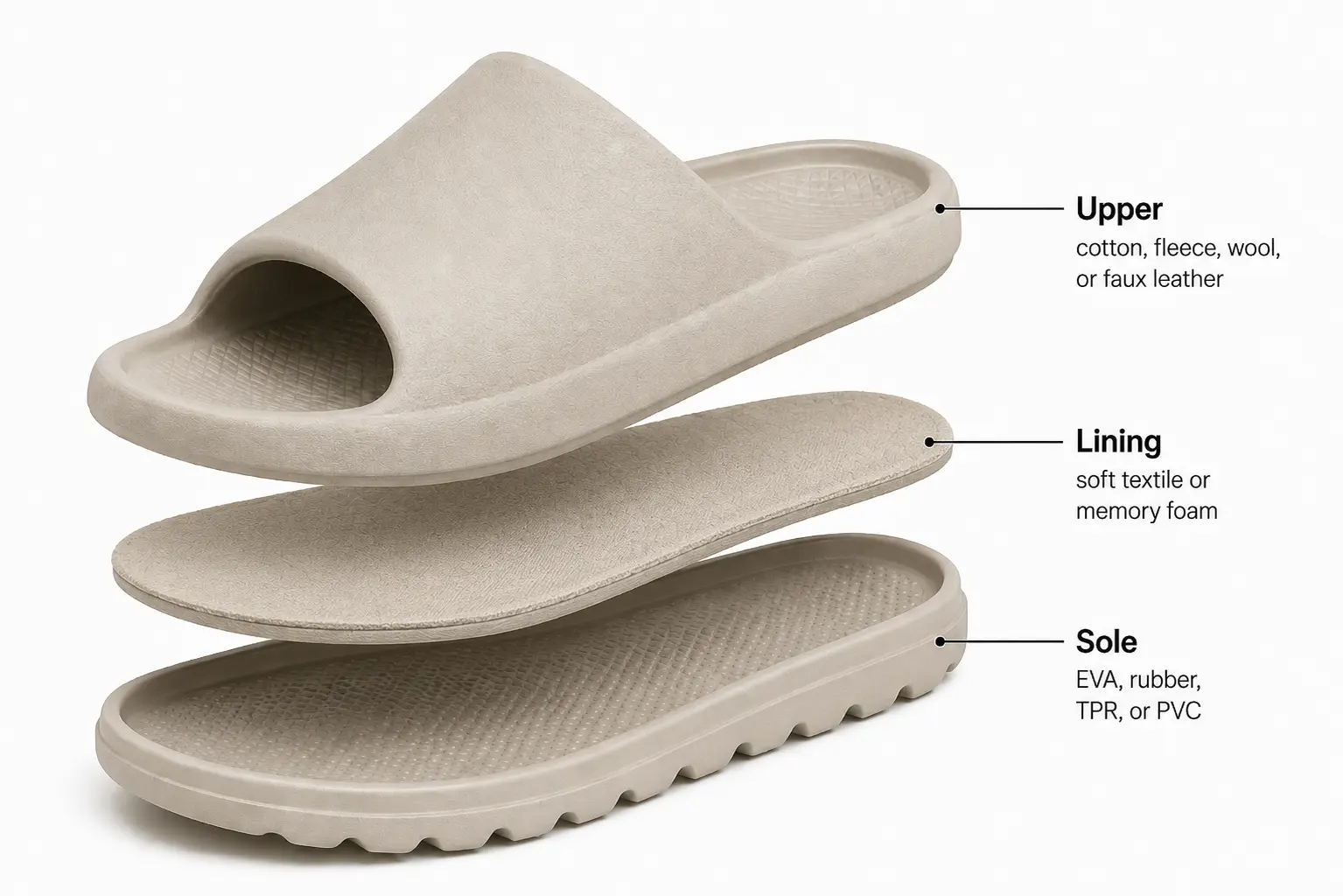
When you walk, each foot absorbs forces equivalent to roughly two to three times your body weight, and on hard indoor surfaces there is no forgiving ground to help dissipate that load. Cushioning materials, typically foams such as EVA, polyurethane, or memory foam, compress under pressure and spread that load over a larger area of your sole. Support, by contrast, comes from geometry and structure: a raised arch region that matches the curve of your midfoot, a heel cup that keeps the fat pad of your heel centered, and a midsole firm enough to resist excessive twisting.
Cushioning and Support Are Two Different Jobs
Because the two properties work through different mechanisms, maximizing one does not maximize the other. A thick layer of very soft memory foam can feel luxurious for the first ten minutes but compress flat under your full standing weight, leaving your arch unsupported and your plantar fascia overstretched. Meanwhile, a hard, flat footbed resists compression but does nothing to cradle your arch, so pressure concentrates at the heel and forefoot. Perceived softness is also not the same as energy return: some materials feel plush but stay flattened, while others feel firmer to a slow squeeze yet rebound quickly when you lift your foot.
How a Footbed Combines Both
The most effective designs layer materials with different stiffnesses. A common construction uses a soft top layer for contact comfort, a mid-density foam for shock absorption, and a firmer contoured base that carries the arch profile and heel cup. Material choice matters here, and EVA slippers illustrate the principle well, because EVA foam can be molded into a shaped footbed at densities ranging from pillow-soft to quite firm. The table below compares the common options:
| Material | Cushioning Feel | Support Potential | Best Suited For |
| Memory foam | Very soft, molds to foot | Low unless layered | Short casual wear, pressure-sensitive feet |
| Low-density EVA | Soft with some rebound | Moderate with contouring | Around-the-house comfort |
| High-density EVA | Medium-firm | High with molded arch | All-day wear, hard floors |
| Polyurethane | Plush but resilient | Moderate to high | Durable everyday comfort |
| Cork-latex blend | Firm, molds slowly | Very high | Long-term structural support |
Are Firm or Soft Insoles Better?
Neither is universally better. Firm footbeds are generally better for all-day wear, people with flat feet or overpronation, anyone with heel or arch pain, and use on hard floors, while softer footbeds suit shorter wearing periods, high-arched feet that need pressure relief, and people with tender or swollen feet. The correct answer depends on your foot type, how long you wear the slippers, and what problem you are trying to solve.
The case for firm support rests on stability. A firmer midsole slows the inward roll of overpronation, keeps the heel aligned in the heel cup, and reduces how much the plantar fascia stretches with each step. Foot-health professionals consistently emphasize that structure, not surface plushness, is what prevents fatigue over hours of standing. The case for cushioning is about impact and pressure distribution. Softer foam reduces peak pressure under the heel and forefoot, which matters for feet that are sensitive, arthritic, or carrying high body weight.
The following comparison summarizes the practical trade-offs:
| Factor | Softer Footbed | Firmer Footbed |
| Immediate comfort | Higher out of the box | Needs a short break-in |
| Arch stability | Lower, arch can sink | Higher, holds alignment |
| Fatigue over long wear | Increases as foam packs down | Stays consistent |
| Pressure relief on tender spots | Better | Moderate |
| Suitability for hard floors | Weaker | Stronger |
| Durability of the feel | Degrades as foam compresses | Holds shape longer |
Is Too Much Cushioning Bad for Your Feet?
Yes, it can be. When a footbed is excessively soft, your foot sinks in under body weight, the arch collapses into the foam, and the muscles and tendons of your feet and lower legs must work harder to stabilize every step, which over time can contribute to arch fatigue, overpronation, and strain on the plantar fascia.
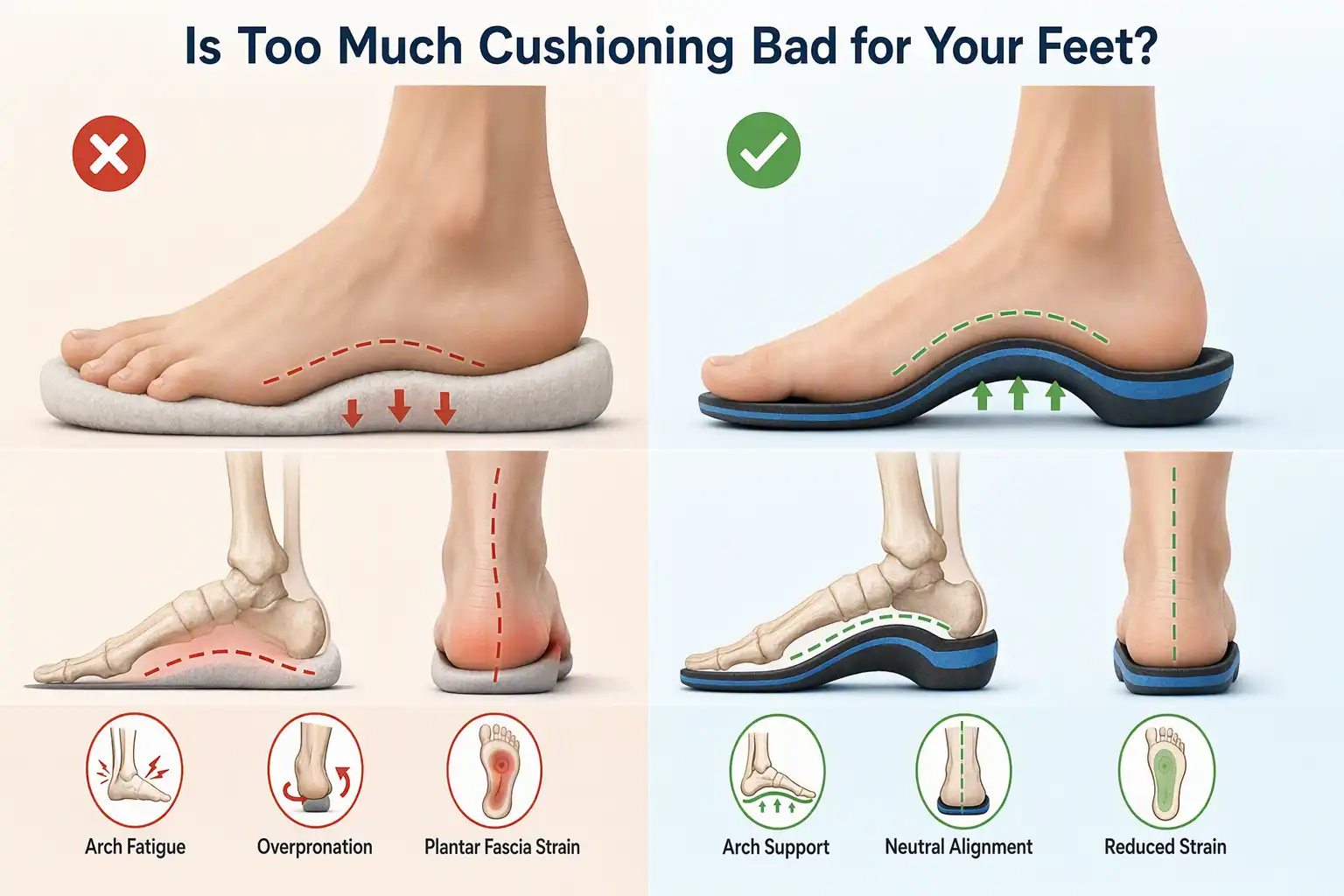
The mechanism is well documented. A finite element analysis published in Scientific Reports found that insoles with very low stiffness allow substantial arch deformation under load, concentrating stress in the plantar fascia and metatarsal region, while moderately increasing stiffness reduces stresses on key foot structures (Nature Scientific Reports). In everyday terms, when the foam does the collapsing instead of the supporting, your foot does the compensating. The small intrinsic muscles of the foot, the Achilles tendon, and even the calves take on extra work, which many people experience as a vague ache in the arch or a heavy, tired feeling after a day at home.
There is also a sensory component. An overly thick, soft layer muffles proprioception, your body’s sense of where your foot is in space and how it is contacting the ground. On soft, thick platforms, balance reactions slow down, which is a genuine concern for older wearers. Note that this cuts both ways: an extremely thin, rigid footbed is equally problematic because it transmits every bit of floor impact straight into the heel. The goal is a middle zone, structured cushioning, not a mattress under your foot.
What Type of Slippers Are Best for Feet?
The best slippers for foot health are structured cushioning models: a contoured footbed with a defined arch region, a heel cup that stabilizes the rearfoot, a shock-absorbing midsole of moderate density, a non-slip outsole, and a secure but roomy fit. A secure upper, closed back, or adjustable strap matters too, because it prevents the toe-gripping that open slides demand.
Each feature solves a specific problem. The contoured arch keeps the midfoot from collapsing, which reduces tensile strain on the plantar fascia, the thick connective band that runs from heel to toes and whose irritation is the classic cause of morning heel pain (plantar fasciitis). The heel cup keeps the fatty pad under your heel bone centered so it can do its natural shock-absorbing job. A mid-density midsole takes the edge off hard floors without letting the foot sink, and a rubberized outsole provides traction on tile or wood, particularly important for nighttime trips to the bathroom. Buyers evaluating slippers with arch support should check that the arch profile is actually molded into the footbed rather than added as a thin, flat cushion layer that flattens within weeks.
Matching the Footbed to Your Foot Type
Your foot shape is the most reliable guide to which direction to lean:
- Flat feet or low arches: favor a firmer footbed with a pronounced medial arch to control overpronation, because the softest foams accelerate the collapse of an already low arch.
- High arches: favor a moderately cushioned footbed, since rigid high arches transmit impact rather than absorb it, and the forefoot and heel take disproportionate pressure.
- Neutral arches: a medium-density contoured footbed balances both needs comfortably.
- Plantar fasciitis or heel pain: prioritize firm arch structure plus localized heel cushioning, and put the slippers on before your first steps in the morning.
- Swollen or arthritic feet: favor softer contact layers with an adjustable upper, but keep a supportive base underneath.
What Shoes Do Podiatrists Say Not to Wear?
Podiatrists most often warn against footwear with no structure at all: flat foldable ballet-style shoes, thin unsupportive flip-flops, completely flat slippers with soft floppy soles, ultra-high heels, and worn-out shoes whose cushioning has died. The common thread is that none of them hold the foot in a stable position.
The specific warnings are worth knowing because the same principles apply to slippers:
- Flat, ultra-soft slippers: the soft footbed lets the arch sag all day, a frequent contributor to arch ache and first-step heel pain in the morning.
- Thin flip-flops worn for long periods: no arch support, no heel stability, and toes must grip to keep them on, straining tendons over time.
- Shoes you can roll or fold: if the sole twists or folds effortlessly, it provides neither shock absorption nor stability.
- High heels: shift body weight onto the forefoot, crowding toes and loading the metatarsal heads.
- Worn-out favorites: midsole foam that has compressed past usefulness no longer absorbs impact, even if the upper still looks fine.
The takeaway for indoor footwear is direct: the flimsy slipper category is essentially a softer version of the shoes foot specialists warn about, and upgrading to a structured footbed is one of the easiest preventive changes most people can make.
How to Test a Slipper Footbed Before You Commit
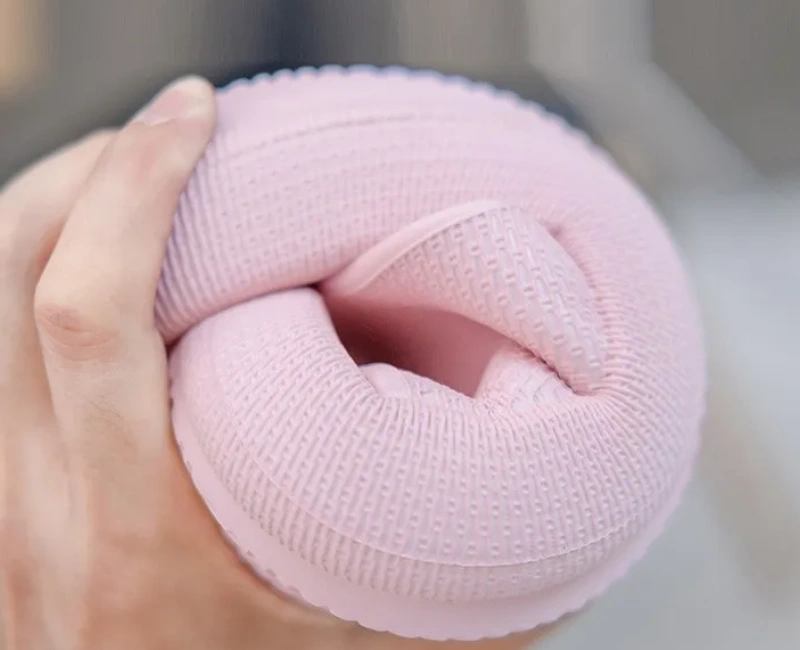
Evaluate structure first and plushness second, using four quick checks: press the footbed with your thumb to see how far it compresses, twist the midsole to gauge resistance, stand on both feet to feel whether the arch meets your foot, and walk to confirm the heel stays seated. A good footbed should compress slightly, resist folding, and hold your heel without gripping your toes.
Follow this sequence in the store or when evaluating samples:
- Press test: press your thumb into the arch and heel. A shallow, quick-recovering imprint suggests supportive density; a deep, slow-recovering crater suggests the foam will pack out fast.
- Twist test: hold the toe and heel and twist gently. Some give is healthy, but the footbed should not wring like a towel.
- Standing test: stand with full weight on each foot separately. The arch region should meet your midfoot, not sit empty below it, and you should not feel your heel rolling inward.
- Walk test: take at least twenty steps. Watch for heel slippage at the back, toes clawing to keep the slipper on, and any wobble side to side.
Fit details matter as much as structure. Try slippers with the socks you actually wear indoors, shop late in the day when feet are slightly larger, and leave about a finger’s width of space in front of the toes. A structured footbed in the wrong size loses most of its benefit, because the arch ends up in the wrong place under your foot.
FAQs
How often should slipper footbeds be replaced?
With daily wear, most foam footbeds give their best support for roughly six to twelve months. Two signs mean it is time to replace them: visible compression lines or a flattened footprint in the arch area, and cushioning that no longer rebounds when pressed. Since worn footbeds lose support long before they look old, rotating two pairs extends the useful life of both. For guidance on choosing replacements, a resource on podiatrist-recommended slippers can help you prioritize structure over surface softness.
Do memory foam slippers provide enough support?
Memory foam alone does not. It is a comfort material with excellent pressure distribution but low structural integrity, so it compresses flat under standing body weight. Memory foam slippers work well when the foam is a thin top layer bonded over a firm, contoured base such as high-density EVA. In that layered construction you get the instant comfort memory foam is known for plus the arch and heel stability your foot needs for hours at home.
Is a firm footbed uncomfortable at first?
A short adjustment period is normal and usually fades within one to two weeks. If your feet have spent years on flat, soft slippers, the muscles that support your arch are conditioned to doing less work, so a structured footbed can initially feel foreign or even slightly firm under the arch. Ease in by wearing the new pair for an hour or two a day and increasing gradually. Persistent pain beyond two weeks, however, is a signal to check the arch height and your size, or to consult a foot specialist about your specific foot structure.