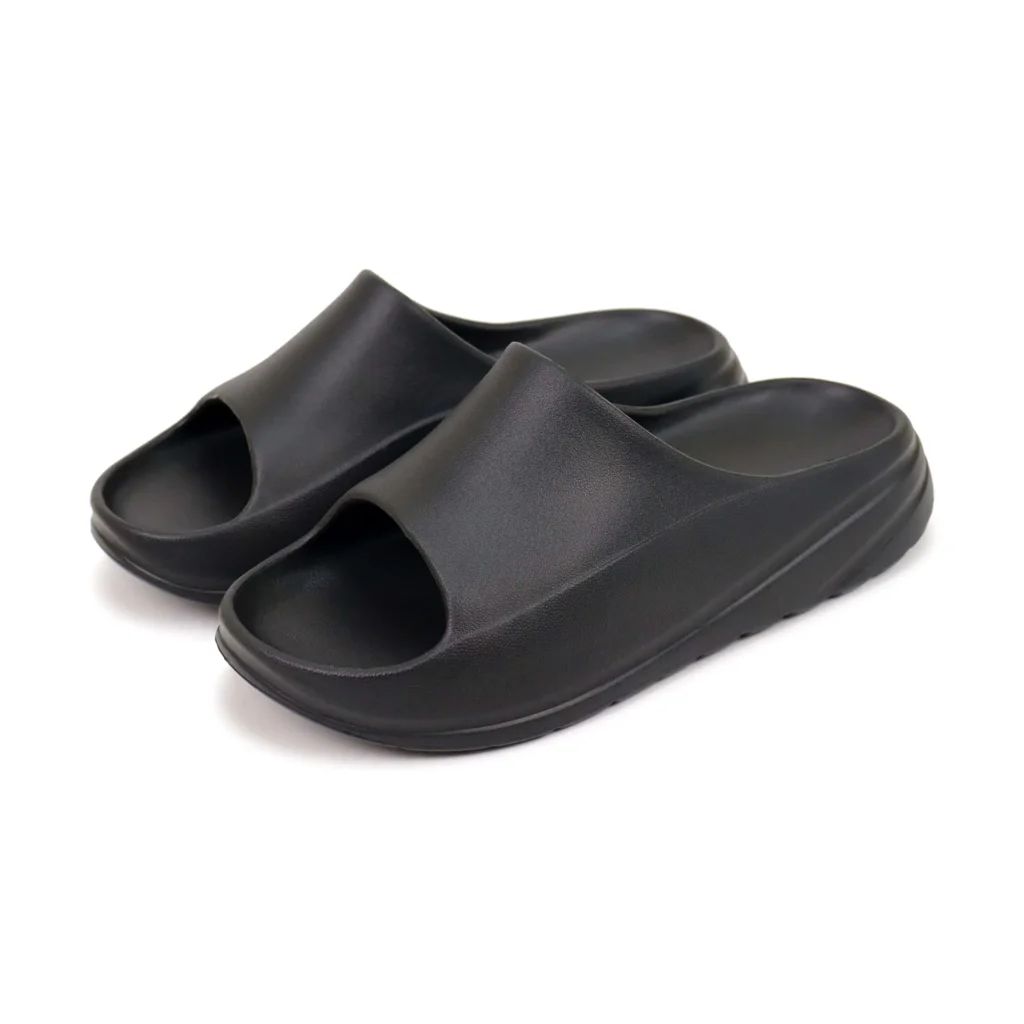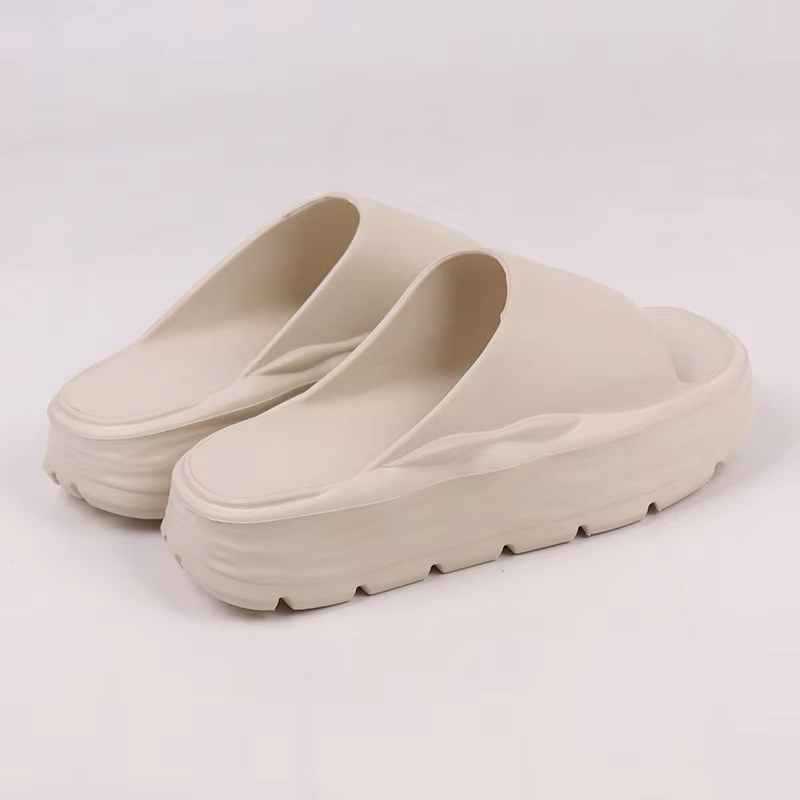
Walk through any grocery store, airport, or beach in summer, and you will see the same material under most people’s feet. Chunky slides, lightweight clogs, hotel slippers, and recovery sandals all rely on one foam that quietly dominates casual footwear. Buyers and brands know the abbreviation EVA, but few can explain what the material actually is, why it feels the way it does, or when it is the right choice for a product line. For anyone sourcing slippers, clogs, or slides in bulk, that gap in knowledge leads to confused sampling, mismatched quality expectations, and avoidable returns.
EVA, short for ethylene-vinyl acetate, is a soft, lightweight, closed-cell foam used in footwear for midsoles, outsoles, and one-piece molded bodies. It delivers the cushioning, waterproofing, and durability that make modern slippers, clogs, sandals, and flip flops comfortable, while keeping production simple and cost-effective.
This guide breaks down what EVA in footwear really means, the properties that drive its popularity, its practical benefits, and the most common ways manufacturers use it.
What Is EVA?
EVA is a copolymer of ethylene and vinyl acetate that becomes a flexible, sponge-like foam when expanded with a blowing agent, giving footwear a light and resilient structure.
In its raw form, EVA is a plastic similar to polyethylene, but the vinyl acetate component softens the material and adds elasticity. When manufacturers mix the resin with a foaming agent and heat it inside a mold, gas expands inside the polymer and creates millions of tiny air cells. The result is a closed-cell foam, meaning each cell is sealed, which explains two of the material’s defining traits: it cannot soak up water easily, and it compresses under load before springing back.
The foam can be produced as sheets that are cut and laminated, or as molded one-piece components. In footwear, the most common approach is direct molding, where the entire sole or even the whole slipper body is formed in a single step. That process is why EVA footwear can look seamless and why factories can turn out consistent pairs at high volume. To understand the full journey from resin to finished product, it helps to look at how EVA footwear manufacturing works step by step.
Key Properties of EVA in Footwear
EVA stands out because it combines lightness, shock absorption, waterproofing, and flexibility in one material, a combination that few alternatives match at the same cost.
The table below summarizes the core properties that matter most for footwear applications.
| Property | What It Means in Footwear |
|---|---|
| Low density | Featherlight feel that reduces foot fatigue |
| Closed-cell structure | Water-resistant and quick to dry |
| Shock absorption | Soft landing that cushions each step |
| Flexibility | Foam bends with the foot instead of fighting it |
| Shape recovery | Returns to form after compression |
| Colorability | Accepts pigments and printed branding easily |
| Thermal insulation | Provides a soft, warm feel against the skin |
Lightweight Comfort
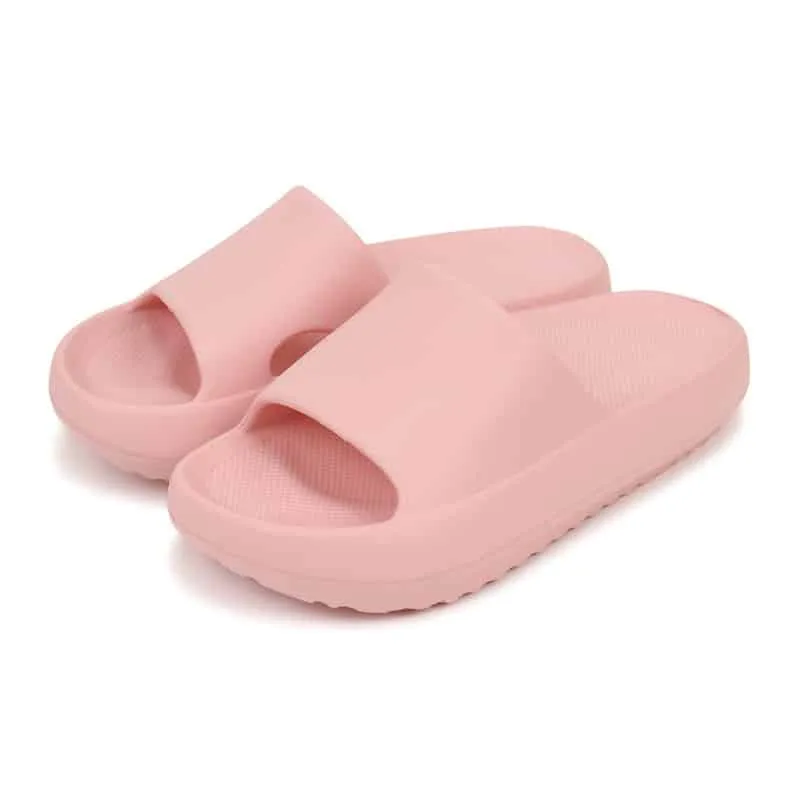
EVA foam typically weighs far less than rubber or PVC of the same volume. A molded EVA slipper can feel almost weightless on the foot, which matters for long wear, travel, and any application where heavy shoes cause fatigue. This property is the reason lightweight EVA slides and cloud-style sandals became bestsellers rather than niche products.
Shock Absorption and Cushioning
The closed cells inside EVA act like thousands of tiny air cushions. When the foot strikes the ground, the foam compresses and absorbs part of the impact, then recovers when the weight shifts. This cushioning effect protects joints during standing and walking, which is why EVA appears in recovery slides, medical clogs, and podiatrist-oriented product lines.
Water Resistance and Easy Care
Because the cells are closed, EVA does not absorb water the way fabric or open-cell foam does. Wet surfaces, bathroom floors, and poolside use are no problem, and cleaning is simply a matter of rinsing. This combination of waterproofing and low maintenance makes the material the default for bathroom slippers, spa footwear, and outdoor styles.
Flexibility and Shape Recovery
EVA flexes easily along the ball of the foot, allowing a natural walking motion, yet it returns to its original shape after each step. Repeated bending does not leave permanent creases as quickly as it does in stiffer materials, which extends the usable life of the product.
Benefits of EVA in Footwear
For both wearers and brands, EVA delivers comfort that sells, durability that satisfies, and manufacturing economics that keep unit costs low.
Comfort That Drives Repeat Purchase
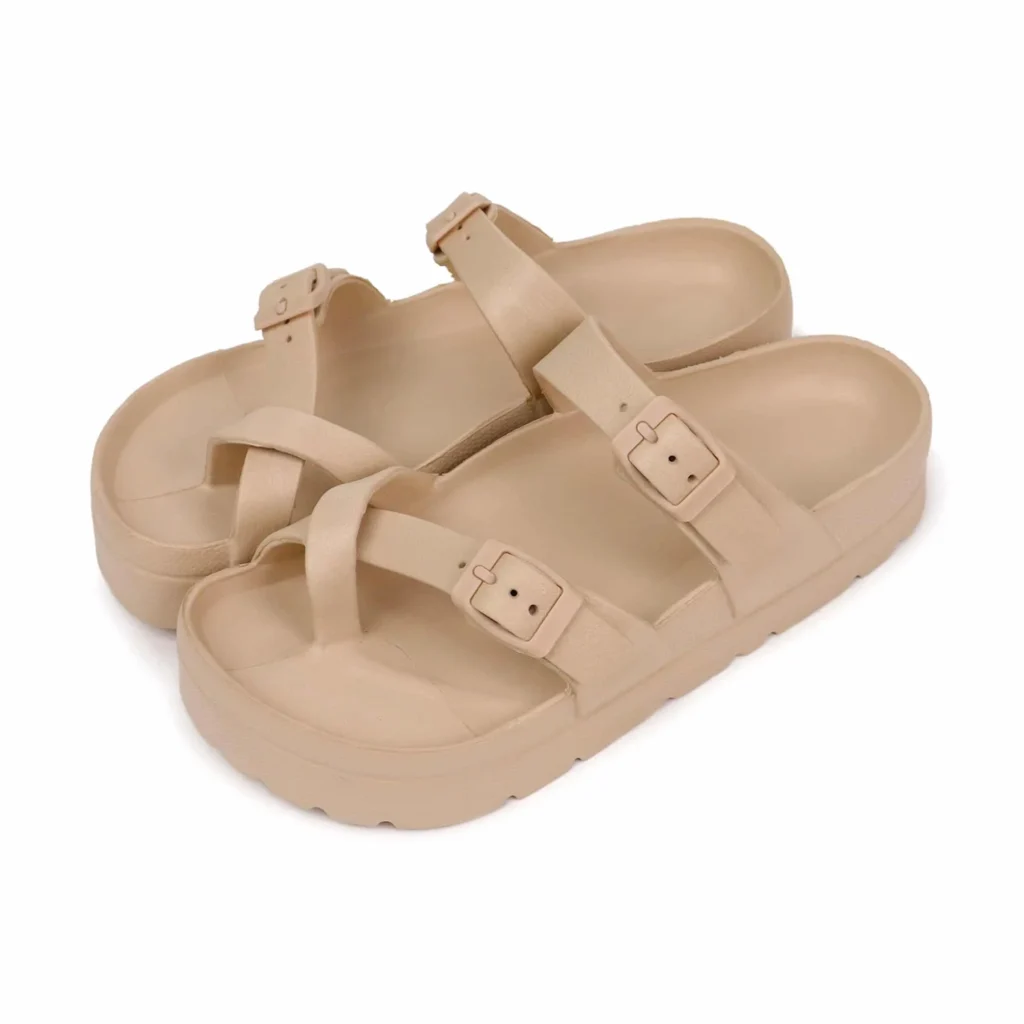
Consumers remember how a shoe feels more than how it looks. EVA’s soft, plush step creates an immediate impression of quality, and that feel is the main reason customers repurchase and recommend a brand. Footwear brands that build their line around this foam, from EVA comfort clogs to cloud slippers, consistently win on comfort reviews.
Durability That Survives Real Use
EVA resists cracking in normal temperature ranges, survives repeated compression, and handles water exposure without degrading. A well-molded EVA sole holds its shape through a full season of daily wear. The material also tolerates colorants well, so logos and patterns stay vivid rather than fading quickly.
Cost and Manufacturing Efficiency
EVA molding is a fast, high-volume process. One mold can produce thousands of identical pairs per day, and the material itself is relatively inexpensive. That efficiency keeps wholesale prices low while leaving room for customization, which is why custom EVA slippers are the most common private-label program in the slipper industry.
Common Uses of EVA in Footwear
EVA appears wherever lightweight cushioning and waterproof construction matter most, from home slippers to professional clogs.
Typical applications include:
- Molded house slippers and cloud-style slides for indoor comfort
- Beach and pool sandals that need quick-drying, waterproof construction
- Bathroom and spa slippers for hotels, resorts, and wellness centers
- Clogs for medical, culinary, and hospitality workers who stand for long shifts
- Recovery slides and post-workout sandals that prioritize shock absorption
- Children’s footwear, where low weight and softness reduce injury risk
- Flip flops that combine affordability with a cushioned footbed
Within a single product category, the material’s flexibility allows many variations. EVA flip flops can be molded as one-piece sandals, while clogs can combine an EVA sole with fabric uppers, fuzzy liners, or adjustable straps. The design space is wide, which is why wholesalers keep returning to the material for new collections.
EVA vs. Other Sole Materials
EVA wins on weight, cushioning, and price, but rubber and PVC beat it on grip and certain durability measures, so the right choice depends on the use case.
| Material | Weight | Cushioning | Water Resistance | Grip | Cost |
|---|---|---|---|---|---|
| EVA | Very light | Excellent | Excellent | Moderate | Low |
| PVC | Moderate | Low | Excellent | Moderate | Low |
| Rubber | Heavy | Good | Good | Excellent | Higher |
| PU foam | Light | Excellent | Moderate | Moderate | Higher |
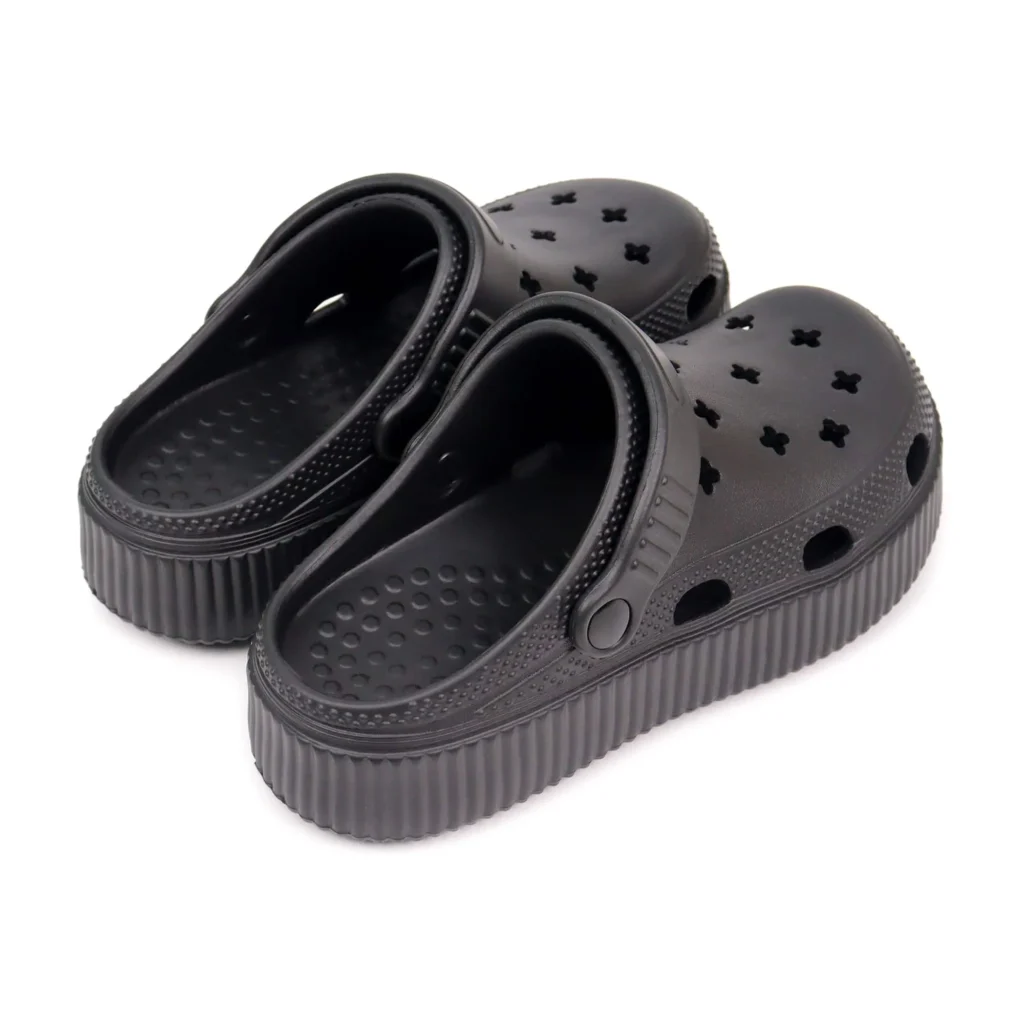
Rubber outsoles remain the standard for performance footwear and wet-floor safety, and some premium slides combine an EVA midsole with a rubber outsole to get both comfort and traction. PVC offers similar waterproofing to EVA but feels harder and heavier, making it a budget alternative. For buyers who want the softest, lightest product at the best price, wholesale slippers built on EVA are usually the right starting point.
How to Choose EVA Footwear for Your Product Line
Match the EVA density and molding quality to your target market, and verify the supplier’s manufacturing standards before committing to a bulk order.
Understand Density and Firmness
EVA comes in different densities. Low-density foam feels plush and cloud-like but compresses faster, while higher-density foam feels firmer and lasts longer under heavy use. A recovery slide for athletes may need firmer support, while a hotel slipper can use soft foam that feels luxurious for a single stay. Request density and hardness data from the supplier instead of relying on touch alone.
Check the Manufacturing Quality
Quality differences between factories show up in cell structure, surface finish, and consistency. A poorly foamed EVA product can have uneven density, visible bubbles, or weak spots that crack early. Evaluate samples, inspect the molding line, and confirm the factory has experience with EVA specifically. Choosing the right EVA footwear manufacturer matters more than the raw material price, because molding discipline determines whether the finished pair meets your standards.
Plan Customization Early
EVA accepts heat transfer printing, screen printing, digital printing, and laser engraving, so branding options are broad. Decide the decoration method during product development, because the molding process and the printing surface affect each other. Factories that specialize in EVA can usually guide this choice, and most offer private mold slippers development when you need an exclusive design.
FAQ
Is EVA the same as rubber in footwear?
No. Rubber is a natural or synthetic elastomer with high grip and abrasion resistance, while EVA is a lightweight foamed plastic with superior cushioning and water resistance. Many shoes combine both, using EVA for the midsole and rubber for the outsole.
Does EVA foam break down over time?
EVA degrades slowly under normal use, but prolonged heat and UV exposure can accelerate the process, causing the foam to soften, warp, or yellow. Keeping EVA footwear away from hot cars and direct sunlight for long periods extends its life.
Can EVA footwear be recycled?
Some EVA scrap can be reground and reused in lower-grade products, but standard EVA is not easily biodegradable. The industry is exploring recycled and bio-based EVA blends, so brands focused on sustainability should ask suppliers about eco-friendly alternatives and certifications.