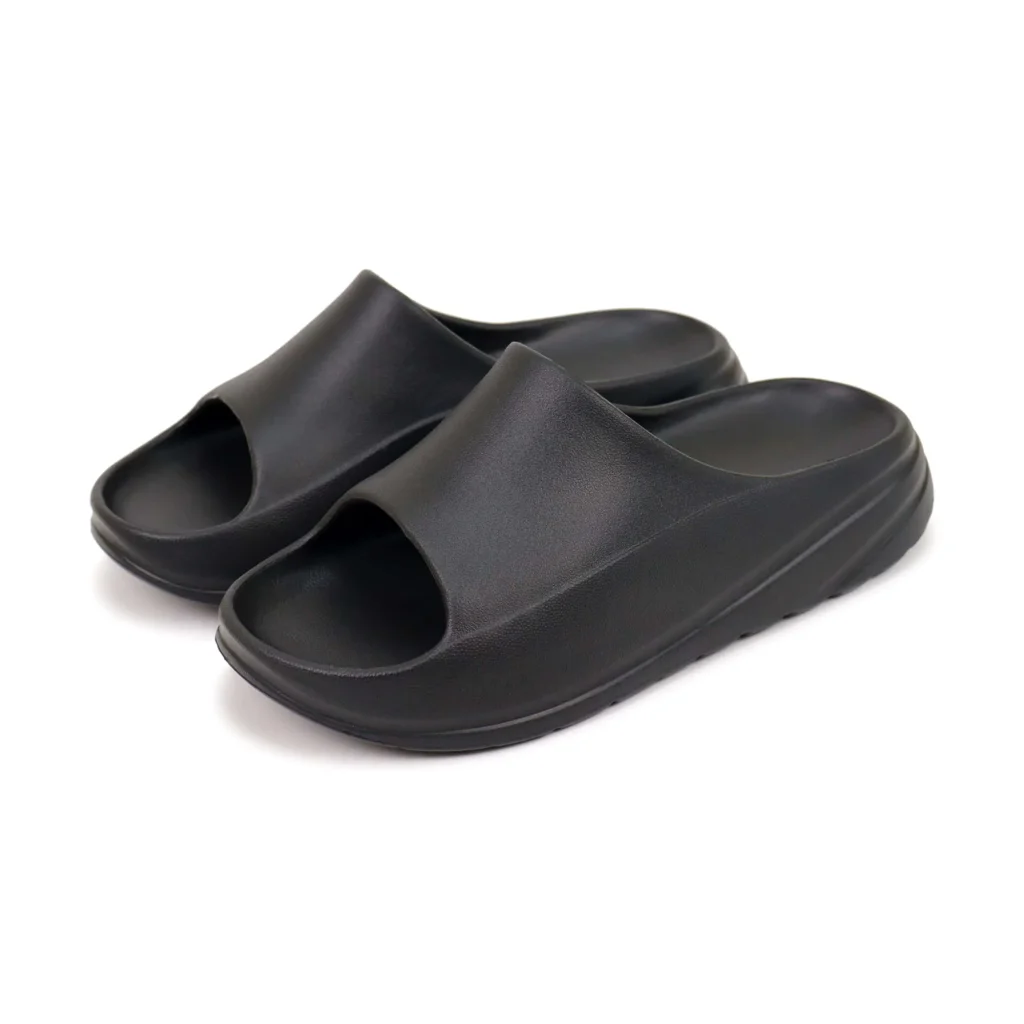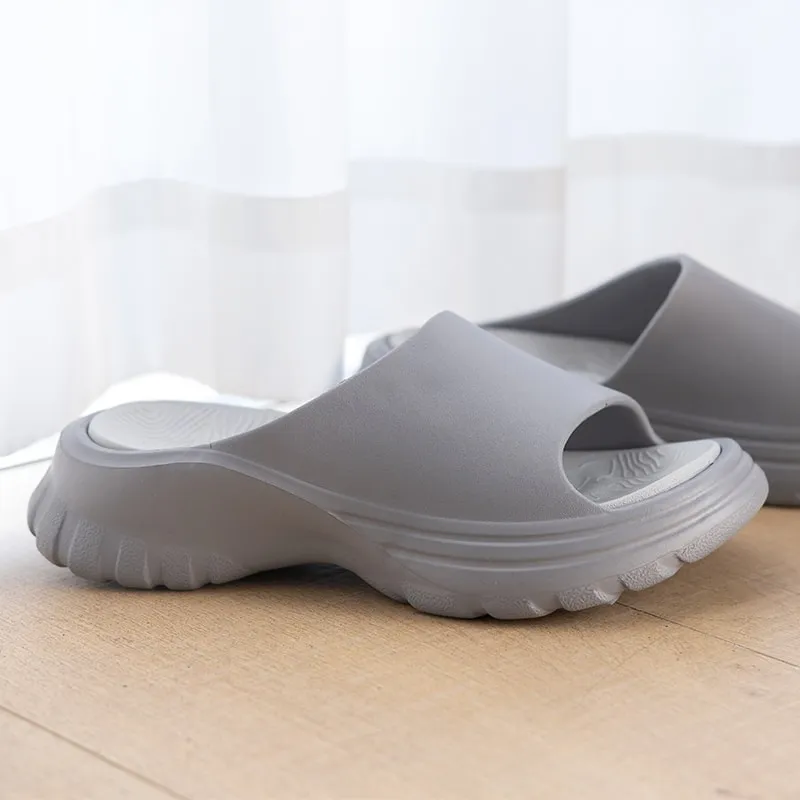
Poolside areas are among the most demanding environments in any resort. Guests move constantly between wet decks, sun loungers, pool bars, and air-conditioned lobbies, while housekeeping teams face a daily cycle of moisture, sunscreen, chlorine, and heavy foot traffic. Footwear that soaks up water, becomes slippery, or wears out within weeks creates safety risks and operational costs, which is why amenity footwear has become a serious procurement decision rather than an afterthought.
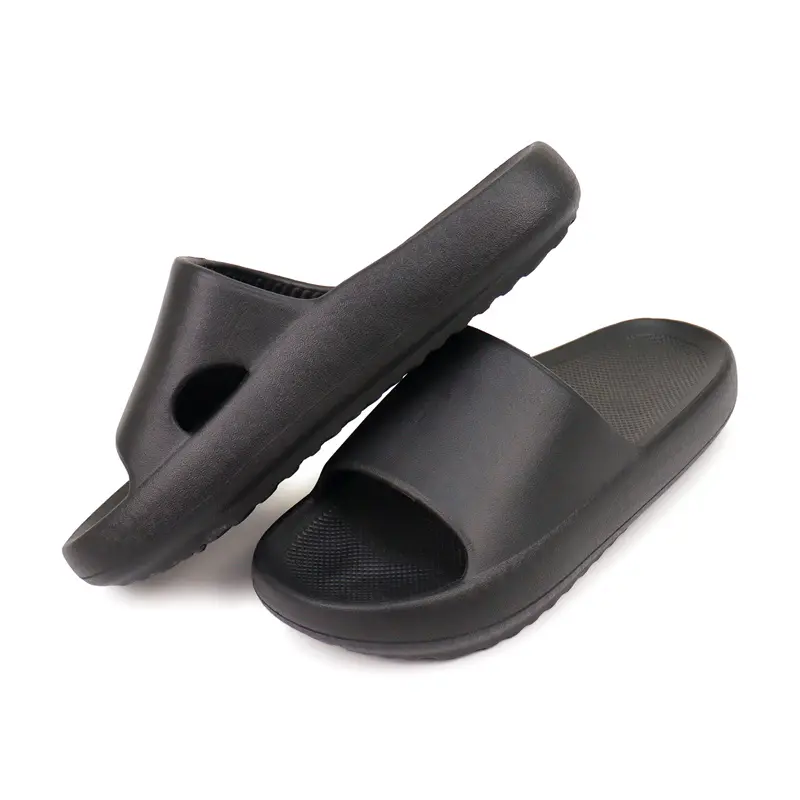
Resorts choose EVA slides for poolside areas because the material offers a rare combination of qualities that wet environments demand: closed-cell EVA foam repels water and dries within minutes, the lightweight cushioned sole keeps guests comfortable across long pool days, textured outsoles provide reliable grip on wet tile and concrete, and the molded one-piece construction withstands chlorine, salt water, and repeated rinsing. Add low unit costs at wholesale volumes and easy logo customization, and EVA slides deliver more operational value per dollar than almost any other poolside amenity.
The following sections break down exactly how EVA slides perform in each of these areas, how they compare with common alternatives, and what buyers should consider before placing an order.
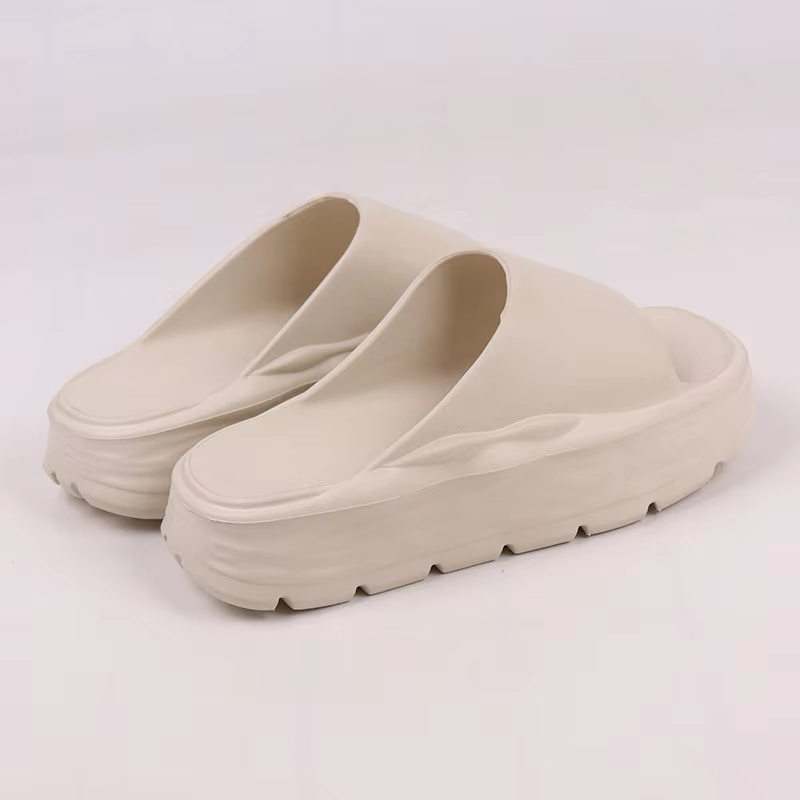
What Makes EVA Slides Ideal for Poolside Environments?
EVA slides are ideal for poolside use because ethylene vinyl acetate is a closed-cell foam: the air pockets inside the material are sealed off from each other, so water cannot penetrate the sole the way it does with fabric or open-cell foam footwear. A pair that gets soaked at the pool deck sheds water almost immediately, weighs barely anything, and returns to service the same day.
EVA, short for ethylene vinyl acetate, is a copolymer foam widely used in midsoles, sandals, and amenity footwear. According to Wikipedia’s overview of the material, its toughness, flexibility, and low water absorption are exactly the properties that made it a standard choice in sports and casual footwear. For a resort, those translate into three practical advantages:
- Water resistance: pool water, rain, and splashes sit on the surface instead of soaking in
- Quick drying: no squeezing, no dripping trails through the lobby, no mildew smell
- Chemical tolerance: molded EVA handles chlorine and salt water better than fabric or leather alternatives
The same foam structure gives EVA slides their signature feel. The material compresses under each step and rebounds immediately, absorbing impact on hard pool decks. Guests who walk all day between the pool, the beach, and the restaurant notice the difference compared with thin rubber thongs.
Is EVA Good for Sandals and Slides?
Yes, and for poolside use in particular. EVA can be molded into contoured footbeds with built-in arch support, produced in a full palette of colors, and adjusted in hardness to balance softness with shape retention. It is no accident that most premium pool slides and recovery sandals on the market are built on an EVA base. If you want a deeper look at whether EVA material for sandals makes sense for your program, the material evidence is strongly in its favor for wet, warm-weather settings.
How Do EVA Slides Improve Guest Safety Around the Pool?
EVA slides improve poolside safety primarily through traction. Manufacturers mold anti-slip tread patterns into the outsole, and because the entire slide is one molded piece, the tread is part of the sole itself rather than a glued-on layer that can peel away. On wet tile, brushed concrete, and composite decking, that grip meaningfully reduces slip incidents for guests and staff alike.
Slips and falls around swimming pools are a well-documented liability exposure for hospitality operators, since water on smooth surfaces is nearly always present. Footwear is one of the few variables a resort directly controls. When evaluating pool slides, professional buyers look beyond marketing claims and ask how grip is actually measured. The recognized benchmark in North America is ASTM F2913, a whole-shoe test that measures the dynamic coefficient of friction between footwear and flooring under dry, wet, and oily conditions; you can review the scope of the ASTM F2913 test method directly from the standards body.
For procurement purposes, the practical checklist looks like this:
- Request wet-surface slip test data from the supplier, not just dry-surface results
- Inspect tread depth and channel design, since grooves that evacuate water perform better on flooded decks
- Test samples on the actual surfaces used at your property, including pool tile and textured concrete
- Replace stock on a set schedule once tread wears smooth, because grip fades before the slide looks worn out
Specifying a model designed for wet environments, such as custom non-slip EVA slides, lets resorts address safety at the sourcing stage instead of reacting after an incident.
Why Are EVA Slides Cost-Effective for Resort Operations?
EVA slides are cost-effective because they check every operational box at a low total cost: the per-pair price drops sharply at wholesale volumes, molded construction means fewer failure points, cleaning requires only a rinse and air dry, and the featherweight, stackable design cuts storage and logistics costs. For amenities deployed by the hundreds or thousands, those small margins compound quickly.

The economics work at three levels. First, acquisition: EVA foam is efficient to mold at scale, so resorts ordering in volume secure unit prices that make widespread distribution, one pair per guest per stay, financially realistic. Second, maintenance: housekeeping can rinse slides clean in seconds, sanitize them in bulk, and return them to circulation without laundering, drying racks, or dedicated staff. Third, replacement: because wear is visible and predictable, operators can rotate stock on a schedule instead of reacting to complaints.
Understanding how EVA footwear is made helps buyers see why: one compression or injection molding run produces a finished slide with no stitching, adhesives, or assembled components, which removes most of the labor and failure points that drive up the cost of other footwear categories.
| Cost Factor | Operational Impact |
| Unit price at wholesale volume | Enables one-pair-per-guest distribution |
| One-piece molded construction | Fewer components to fail or detach |
| Rinse-and-dry cleaning | No laundering cost or turnaround delay |
| Lightweight, stackable form | Lower shipping and closet storage costs |
| Predictable wear pattern | Scheduled replacement instead of emergency buys |
How Do EVA Slides Strengthen Resort Branding?
EVA slides strengthen resort branding because the material takes customization exceptionally well: logos can be embossed directly into the footbed or strap during molding, printed in full color with UV techniques, or laser-etched for a premium finish. A pool slide stops being a generic amenity and becomes a visible, photographable extension of the property’s identity.
Guests carry pool slides everywhere during their stay, from breakfast to the beach, and they appear constantly in vacation photos and social media posts. Every logo impression is free advertising in exactly the context where guests are relaxed and receptive. Beyond the logo itself, EVA accepts custom colors matched to brand palettes, custom tread patterns, and custom packaging, so the amenity can align with the property’s design language rather than fight it.
There is also a commercial angle. Many resorts sell branded slides through the pool shop or gift store, turning an amenity cost into a retail margin. Properties pursuing sustainability goals can go further by sourcing slides with recycled or bio-based EVA content and documented certifications, which supports corporate responsibility reporting while appealing to environmentally conscious travelers.
Slides or Flip Flops: Which Is Better for Poolside Use?
For poolside use, slides are generally the better choice. The wide single strap holds a slide on the foot without forcing toes to grip, the thicker molded sole offers more cushioning and stability on wet decks, and the absence of a toe post means less friction and fewer blisters during all-day wear. Flip flops remain fine for short trips, but slides win for the extended use patterns typical of resort guests.
The comparison comes down to how each design handles a full day in a wet environment:
| Feature | EVA Slides | Flip Flops |
| Strap design | Wide band over the instep | Y-strap with toe post |
| Required foot motion | Toes relax naturally | Toes must grip to keep them on |
| Sole profile | Thicker, often contoured | Thinner and flatter |
| Wet-deck stability | Wide base, confident stride | Narrower contact, less stable |
| All-day comfort | High, minimal pressure points | Toe post friction over long wear |
| Cleaning | Rinse and dry | Rinse and dry |
For beach use specifically, both designs work in water, but the extra support and secure fit of a slide pays off on the longer walks guests make around a resort, from the pool bar to the room and back. That is why properties sourcing wholesale slides shoes for poolside programs generally standardize on slides rather than thongs.
EVA Sole vs PVC Sole: Which Should Resorts Choose?
For poolside applications, EVA is the stronger choice. It is dramatically lighter than PVC, stays flexible in air conditioning and heat alike, contains no plasticizers, and offers far better cushioning. PVC competes mainly on abrasion resistance and rock-bottom price, which matters more for heavy industrial use than for resort amenity programs where comfort, safety, and guest perception drive value.
The two materials sit at different points on the cost-performance curve:
| Property | EVA Sole | PVC Sole |
| Weight | Very light closed-cell foam | Noticeably denser and heavier |
| Underfoot feel | Soft, cushioned, flexible | Harder, less forgiving |
| Water behavior | Repels water, quick drying | Waterproof but slow to feel dry |
| Cold flexibility | Stays soft | Can stiffen and crack in cold |
| Additives | No plasticizers needed | Typically contains plasticizers |
| Best use case | Pool, spa, beach, comfort wear | Budget and utility applications |
Guests feel the difference immediately: an EVA sole cushions across hot concrete, while a PVC sole transmits it. Operators also notice that EVA slides survive repeated cleaning cycles without the surface stiffening or cracking that aging PVC can show. Where budget constraints force a PVC mix, many properties reserve it for back-of-house areas and keep EVA for guest-facing poolside zones.
What Are the Disadvantages of EVA Soles?
The main disadvantages of EVA soles are moderate abrasion resistance, gradual compression set, and sensitivity to sustained high heat. On rough surfaces the tread wears faster than rubber or PVC, the foam slowly loses rebound after many months of compression, and prolonged exposure to intense sun or enclosed heat can shrink or deform the sole. None of these are dealbreakers, but they must be managed deliberately.
For resorts, each weakness has a straightforward operational answer. Abrasion is managed by using slides on pool decks and walkways rather than on abrasive outdoor trails, and by inspecting tread during routine housekeeping rounds. Compression set is managed through stock rotation: spreading wear across a larger pool of pairs keeps any single pair from flattening early. Heat sensitivity is managed in storage, keeping spare stock in shaded, ventilated rooms rather than hot containers or direct sun, and never machine-drying washed slides.
Honest buyers treat these limits as scheduling inputs rather than flaws. A realistic replacement cycle, planned in the annual budget, keeps every pair in circulation safe and presentable while still costing far less over its life than higher-priced alternatives that offer no better experience in this specific environment.
Frequently Asked Questions
Can EVA slides be reused across multiple guests?
Yes, when the property runs a managed reuse program. Because molded EVA has no fabric lining or absorbent layers, it can be washed, sanitized, inspected, and returned to circulation. Successful programs define clear cleaning procedures, set inspection criteria for tread wear and deformation, and retire pairs on a fixed schedule. Single-pair guest gifting remains the premium option, but controlled reuse is common at spas and hot spring properties.
What sizes should a resort stock for guest slides?
Most properties cover the guest base with a small set of molded sizes, typically three to five, spanning smaller women’s sizes through larger men’s sizes. Because slides have open toes and a forgiving instep strap, exact sizing matters less than with closed shoes. Operators should track which sizes run out fastest at their property and adjust the mix seasonally, since family resorts and adults-only properties show very different size distributions.
How should EVA slides be stored between peak seasons?
Store them in a cool, shaded, ventilated space, loose or lightly stacked rather than compressed under heavy objects. Long compression flattens the foam, and enclosed heat, such as a sealed container in summer sun, can shrink or warp molded EVA. Brought out for the next season, correctly stored slides rebound to full cushioning and present as new stock, protecting the investment made at purchase.