Few purchases seem as simple as a pair of slippers, yet few generate as many returns and as much second-guessing. Because slippers are worn indoors, often without socks and on relaxed feet, the fit behaves differently from everyday footwear. A pair that feels fine for ten seconds in the living room can pinch after an hour, while an oversized pair turns every hallway into a minor hazard. Add in thick linings, stretchy uppers, and letter-based sizing, and the question of whether to buy slippers bigger or smaller becomes genuinely difficult for most shoppers.
In most cases, you should buy slippers in your true size or half a size larger, and you should almost never size down. A snug slipper may stretch slightly with wear, but a slipper that is too small causes pressure, cold feet, and toe problems, while a slipper that is slightly roomy is usually the safer and more comfortable mistake. The only common exceptions are narrow feet, stretchy natural materials like sheepskin, and people who deliberately want a more secure fit.
The sections below break down exactly when to size up, when to stay at your regular size, how material and style change the answer, and how to test the fit of a pair you already own.
Is It Better to Size Up or Down for Slippers?
For the majority of wearers, the best strategy is to start at your measured foot size and round up, not down, whenever you fall between two sizes. Sizing up by half a size accommodates foot swelling, socks, and thick linings, and it rarely causes problems. Sizing down, by contrast, is only advisable for narrow feet or materials that are known to stretch.
The reason tilts toward sizing up is physiological as much as mechanical. Feet are not a fixed size; they expand over the course of the day as fluid pools in the lower limbs, and they widen slightly under body weight when you stand. Indoor footwear is also worn for long, continuous stretches, often during evening hours when feet are at their largest. A slipper that is marginally too generous leaves room for all of these variables, while one that is marginally tight allows for none of them.
That said, “bigger” has a limit. A full size or more of extra length causes the foot to slide forward, the heel to slip off the footbed with every step, and the gait to shorten into a shuffle. The goal is a half step of slack at most.
When Sizing Up Makes Sense
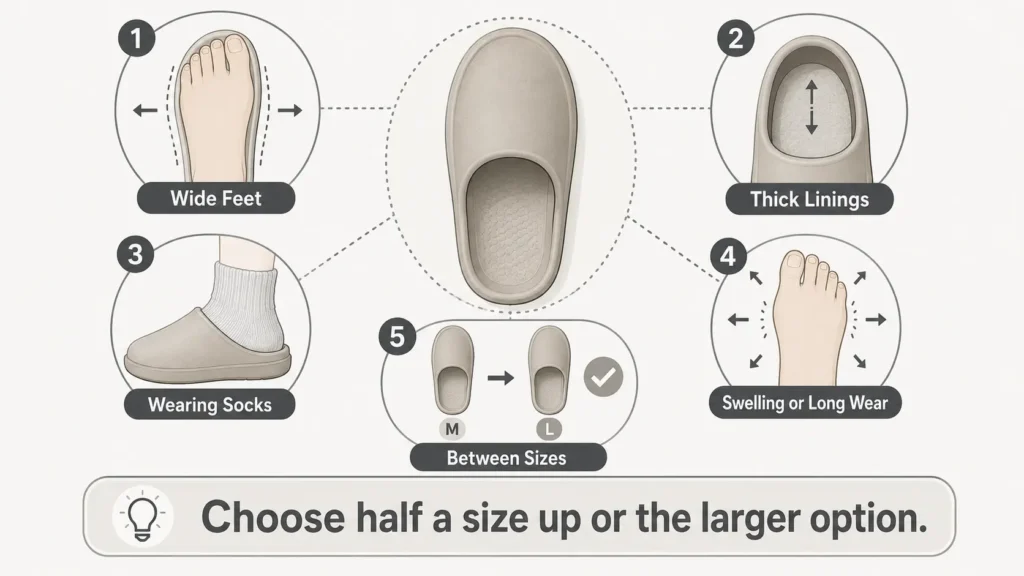
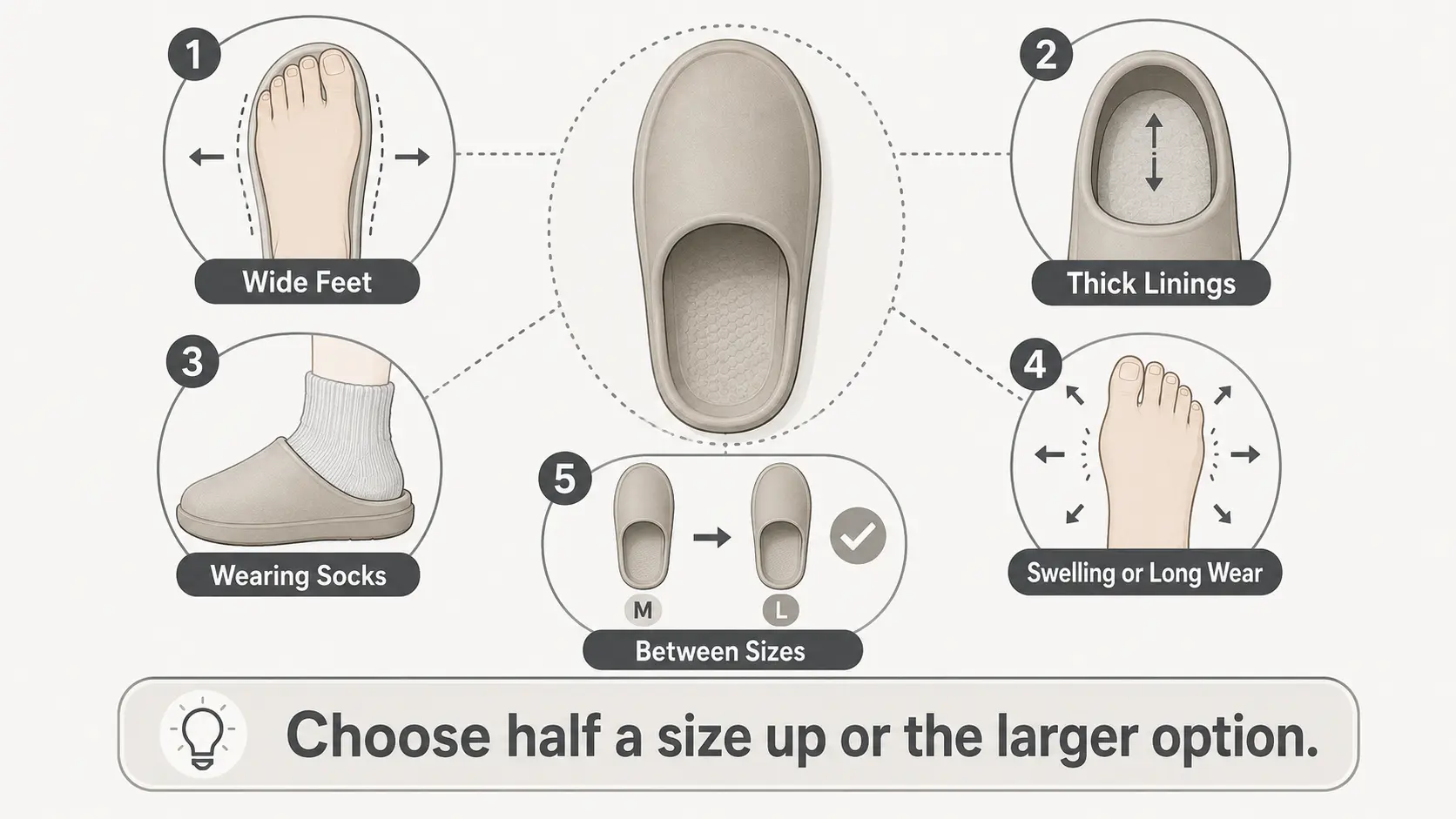
Size up by half a size, or choose the larger option in a letter range, when any of the following apply:
- Wide feet: Extra length usually comes with extra width across the ball of the foot, which relieves pressure on the sides.
- Thick or plush linings: Shearling, faux fur, and padded fleece take up internal volume that would otherwise hold your foot.
- Wearing socks: If you plan to wear slippers with socks, even occasionally, thick socks alone consume close to half a size of interior space.
- Swelling or long wear: People who stand or walk at home all day, or whose feet swell due to heat, pregnancy, or circulation issues, need room for expansion.
- Between sizes on enclosed styles: For closed-toe and closed-heel designs, the enclosed upper makes a tight fit far less forgiving than on open styles.
When to Stay True to Size or Size Down
There are legitimate cases for staying at your regular size or even going smaller:
- Narrow feet: A roomy slipper on a narrow foot slides around and offers almost no support, so a trimmer fit is safer.
- Stretchy natural materials: Sheepskin and leather uppers relax and mold to the foot with wear, so a snug new pair often becomes a perfect pair within weeks.
- Open-toe slides and thongs: With no closed toe box, there is no pinching risk, so extra length mostly just creates flop and drag.
- A deliberate snug fit: Some wearers, particularly on hard floors, prefer a slipper that grips the foot for stability.
Is Your Slipper Size the Same as Your Shoe Size?
Your slipper size is usually close to your shoe size, but it is not guaranteed to be identical. Slippers are often built on flexible, unstructured uppers, sold in letter ranges rather than precise sizes, and sized to account for barefoot or socked wear, so your regular shoe size is a starting point rather than an answer.
Outdoor shoes are engineered around a structured last, a snug heel grip, and a durable sole, and they are sized to be worn with socks. Slippers relax almost every one of those assumptions. Many manufacturers use a simple lettered scale covering several shoe sizes at once, which means two people with quite different feet can share the same label. Before relying on any chart, it pays to consult a detailed slipper size guide and measure your feet directly rather than assuming your dress shoe size transfers perfectly.
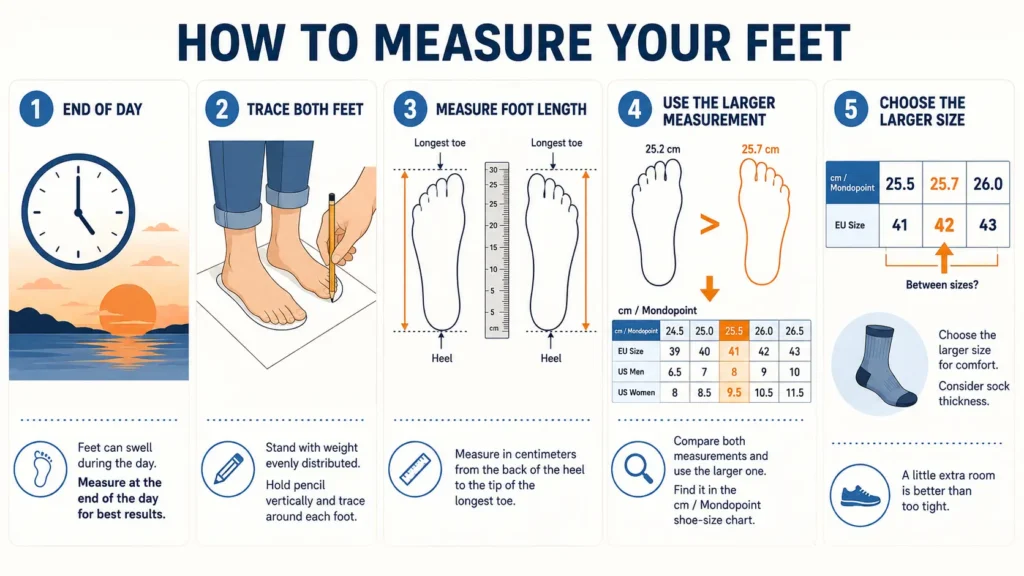
Measuring takes two minutes and removes most of the guesswork. Foot health guidance from the NHS recommends trying footwear later in the day, when feet are at their largest, and checking that there is space beyond the longest toe rather than a tight, edge-to-edge fit. Trace each foot while standing, measure heel to longest toe, and size to the larger foot, since asymmetry of a half size between feet is common.
Typical letter sizing for adult slippers maps roughly as follows:
| Slipper Size | Typical US Shoe Size Range | Approx. Foot Length |
| S | 5 to 6 | up to 9.1 in / 23 cm |
| M | 7 to 8 | 9.2 to 9.6 in / 23.5 to 24.5 cm |
| L | 9 to 10 | 9.7 to 10.2 in / 24.6 to 26 cm |
| XL | 11 to 12 | 10.3 to 10.8 in / 26.1 to 27.5 cm |
Ranges vary between manufacturers, so treat the chart as a filter rather than a rule, and always check the specific product’s measurements when they are published.
How Material and Construction Affect the Fit
The single biggest predictor of whether you should size up or down is the material, because different materials change shape at very different rates over the life of the slipper. Some stretch, some compress, and some hold their exact molded shape forever, and each behavior calls for the opposite sizing decision.
How Common Slipper Materials Behave
| Material | Out of the Box | After Weeks of Wear | Sizing Approach |
| Sheepskin / shearling | Snug | Lining compresses and upper relaxes | True size; expect it to loosen |
| Leather | Firm | Molds and stretches to the foot | True size; half down only if between sizes |
| Molded EVA foam | Exact | Holds its shape indefinitely | True size; size up for wide feet |
| Memory foam footbed | Snug | Foam compresses under weight | Half size up if between sizes |
| Knit or terry fabric | Stretchy | May stretch further or shrink in the wash | True size; air dry to avoid shrinkage |
The practical takeaway is that a tight natural-fiber slipper is often a temporary problem that solves itself, while a tight synthetic or molded slipper is a permanent one. When in doubt with non-stretch materials, the extra half size is the safer bet.
How Slipper Styles Change the Math
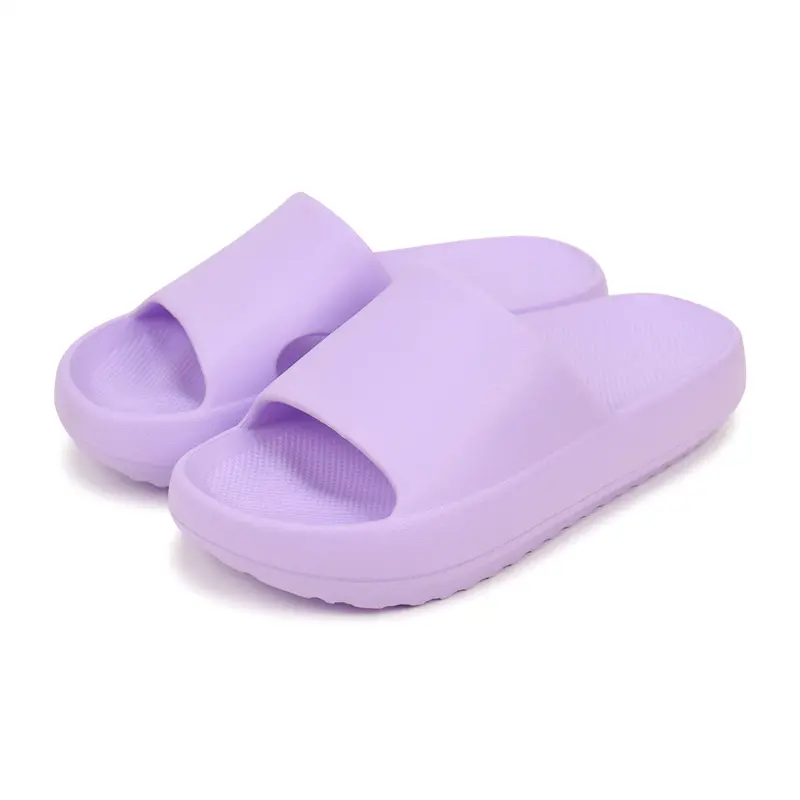
Construction matters as much as fabric. Enclosed moccasins and booties wrap the entire foot, so any shortfall in length or width is felt immediately, and buyers between sizes should always round up. Open-back clogs and mules relieve pressure at the heel but demand that the foot sit fully on the footbed, with no heel overhang past the sole. Slides and similar open designs are the most forgiving, provided the strap does not press across the instep. Molded foam designs sit somewhere in between, and understanding how EVA clogs fit is useful for anyone considering that style, since their roomy toe boxes often make them feel bigger than the label suggests.
How to Know If Slippers Are Too Small
The clearest signs that slippers are too small are toes pressing against the front edge, the heel hanging over the back of the sole, and red pressure marks or numbness after a short period of wear. Any one of these is enough to go up a half size, because none of them improve with time unless the upper is a stretchy natural material.
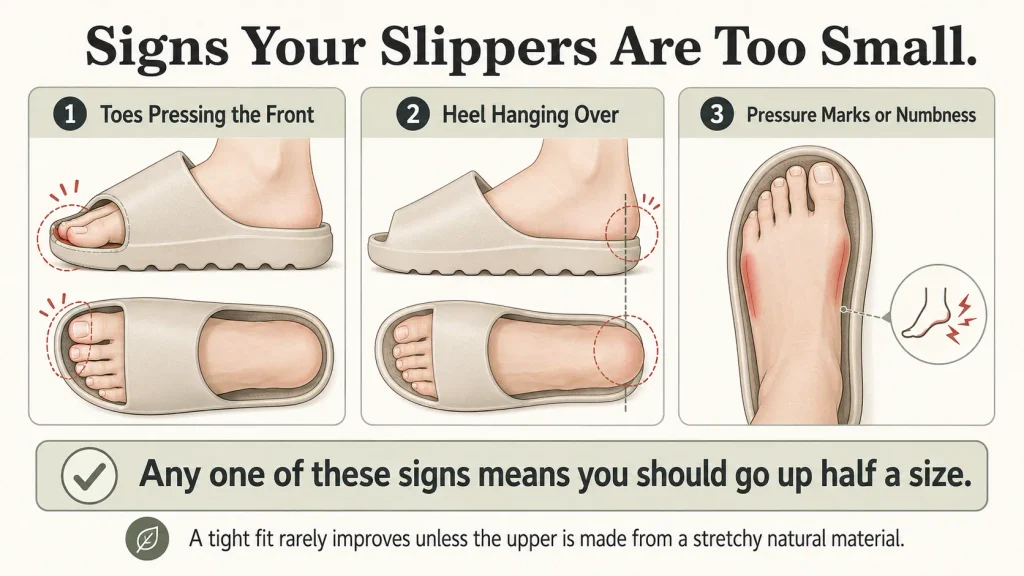
Signs of a Too-Small Fit
- Toes touch, curl, or press against the front seam
- The heel rides over the rear edge of the sole, wearing the lining down quickly
- Red marks, indentation lines, or aching across the ball of the foot after removal
- Cold or tingling toes, which indicates restricted circulation
- The upper stretches visibly taut across the widest part of the foot
Signs of a Too-Large Fit
- The heel lifts out of the slipper with every step
- The foot slides forward until the toes push against the front
- Walking becomes a shuffle or drag, and stairs feel unstable
- The arch support, if present, sits behind or ahead of the actual arch
- Frequent tripping or sliding on smooth floors, since an ill-fitting sole cannot grip as designed; slip resistance is measured on the sole and outsole as a system under standards such as ASTM F2913, and excess movement undermines it
The One-Finger Fit Test
A quick home test settles most borderline cases:
- Put the slippers on with the socks you would normally wear indoors.
- Slide your foot forward until your toes just touch the front of the slipper.
- Check the space behind your heel: you should be able to fit one finger snugly in the gap.
- Stand and walk a few paces; the heel should stay seated and the toes should never feel the seam.
Less than a finger of space means too small; enough room for two fingers or a slipping heel means too big.
What This Means for Wholesale and Bulk Buyers
For retailers and brands ordering stock, the sizing question scales into a planning problem: buy to a realistic size distribution rather than an even split, confirm fit with physical samples before mass production, and treat consistent lasts as a supplier requirement rather than a bonus.
Consumer returns in footwear concentrate heavily on fit, and slippers are especially exposed because so many people buy them as gifts or order online without trying them on. A sensible approach is to weight orders toward the middle of the size range, where most adult feet cluster, while still stocking the extremes. Before committing to a production run, ordering sample pairs in two or three adjacent sizes makes it possible to verify length, width, and last consistency against the published chart. Working with an experienced slipper manufacturer also reduces drift between production batches, since a factory with its own lasts and molds can hold tolerances that outsourced production cannot. For a deeper walkthrough of planning size ratios and reducing fit-related returns, it is worth reviewing guidance on choosing wholesale slipper sizes before finalizing an order.
FAQs
Do slippers get bigger or smaller over time?
Natural materials like sheepskin, shearling, and leather stretch and compress to the shape of the foot, so those slippers effectively get slightly bigger with wear. Molded EVA and most synthetics hold their original shape, while knit and terry fabrics can shrink if washed in hot water or machine dried, which makes them effectively smaller.
Should you wear socks with slippers, and does it change sizing?
It is a matter of personal preference and climate rather than a rule. If you do wear socks regularly with slippers, account for roughly half a size of extra interior volume, either by sizing up or by choosing an open style where thickness matters less.
How often should house slippers be replaced?
Most everyday slippers last somewhere between six months and a year of regular indoor wear. Flat compressed insoles, smooth worn-out outsoles, lingering odor that survives cleaning, and linings that have packed down unevenly are all signs that the pair has stopped supporting the foot properly, regardless of how it still looks.